

The Indian two-wheeler industry, often regarded as the primary barometer of the nation’s economic health and rural-urban consumer sentiment, has demonstrated remarkable resilience and a shifting paradigm in May 2026. According to the latest industry data, the market has not only expanded in volume but has also begun to signal a profound structural shift toward premiumization and electrification.
In May 2026, the combined sales of India’s top 10 best-selling two-wheelers reached a staggering 1,268,886 units. This figure represents a significant jump from the 1,176,627 units recorded in the same month of the previous year, translating to a volume gain of 92,259 units and a healthy year-on-year (YoY) growth of 7.84%. When looking at the broader market beyond just the top ten, the total domestic sales surged by 14.79% to reach 1,902,209 units, indicating that the mid-tier and niche segments are also finding substantial traction.
Main Facts: The Pillars of the Market
The May 2026 sales report highlights three critical pillars that currently define the Indian two-wheeler market: the continued dominance of the Hero Splendor, the aggressive expansion of the scooter segment, and the exponential rise of electric mobility led by the TVS iQube.
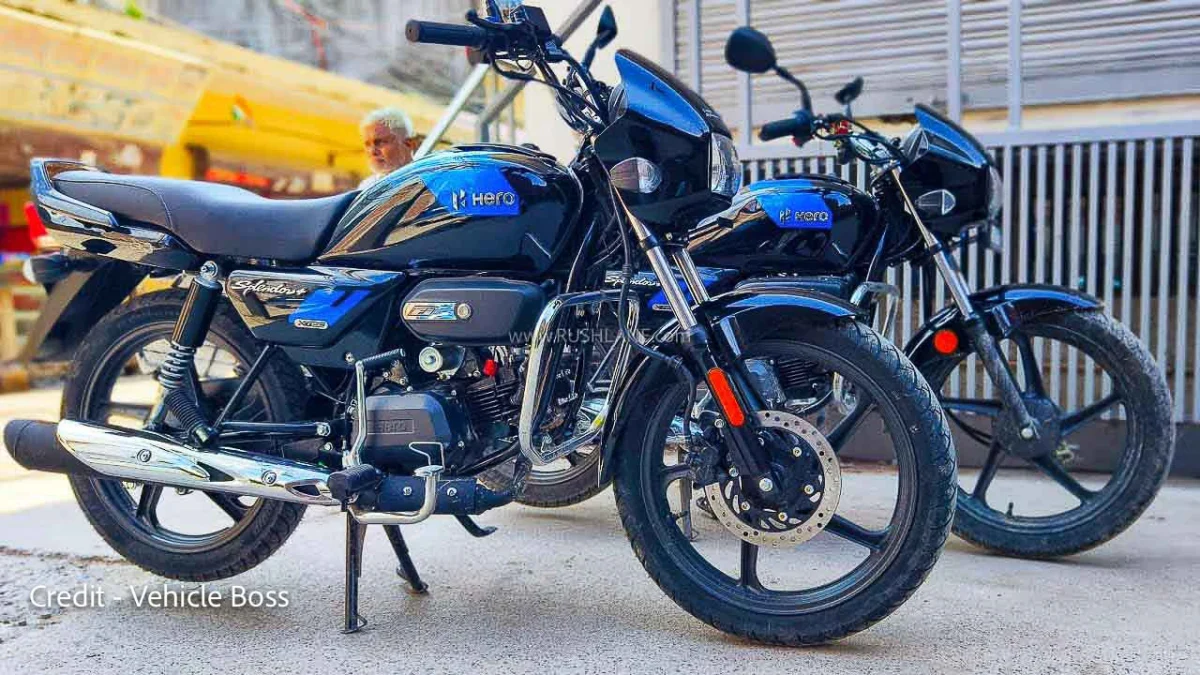
Hero MotoCorp’s Splendor remains the undisputed king of the Indian roads. With 348,115 units sold in May 2026, it accounted for over 27% of the total sales within the top 10 list. Despite the influx of newer, more technologically advanced models, the Splendor’s reputation for fuel efficiency and low maintenance continues to resonate with the masses, particularly in the rural heartlands.
However, the real "growth engine" of the month was the scooter segment. Led by the Honda Activa and TVS Jupiter, scooters outpaced motorcycles in terms of growth percentage. The segment saw a sharp 27.38% increase, reaching 739,667 units. This trend suggests a growing preference for "twist-and-go" convenience in India’s increasingly congested urban centers.
Perhaps most notably, the TVS iQube emerged as the fastest-growing model among the top performers. With a YoY growth of 52.64%, the iQube is no longer a niche electric alternative but a mainstream volume driver, signaling that the Indian consumer is finally embracing the EV transition at scale.
Chronology of Performance: A Model-by-Model Breakdown
To understand the nuances of the May 2026 performance, one must look at the trajectory of the individual models that define the top 10 rankings.
1. Hero Splendor: The Unshakeable Leader
Hero Splendor registered sales of 348,115 units in May 2026, compared to 310,335 units in May 2025. This 12.17% growth is particularly impressive given the high base from the previous year. The Splendor gained 37,780 units in absolute volume, solidifying its position as the backbone of Hero MotoCorp’s domestic portfolio.

2. Honda Activa: The Urban Staple
Securing the second spot, the Honda Activa posted sales of 228,955 units. This represents a robust 20.05% growth over the 190,713 units sold in May 2025. The Activa remains the primary choice for Indian households looking for a versatile family vehicle, adding 38,242 units to its tally.
3. Honda Shine: Facing Headwinds
While Honda’s scooter outperformed, its flagship 125cc motorcycle, the Shine, faced a slight setback. It recorded 155,441 units, a marginal decline of 1.79% from the 158,271 units sold in the previous year. Analysts suggest this dip may be due to internal competition from other Honda models or a shift in consumer interest toward the performance-oriented 150cc-160cc segment.
4. TVS Jupiter: The Rising Star
The TVS Jupiter continued its stellar run, recording 124,767 units—a 27.83% growth over the 97,606 units sold in May 2025. As India’s second best-selling scooter, the Jupiter has successfully positioned itself as a feature-rich alternative to the Activa, appealing to a younger demographic.
5. Bajaj Pulsar: The Performance Benchmark
The Bajaj Pulsar range, a perennial favorite in the sports-commuter category, saw modest growth of 1.73%, with 124,270 units sold. While the growth rate was lower than the market average, the Pulsar brand maintains a loyal following, and its consistent numbers provide Bajaj Auto with a stable revenue stream.
6. Suzuki Access: Holding Steady
Suzuki’s flagship scooter, the Access, saw largely flat sales. It moved 75,729 units in May 2026, a negligible decline of 49 units compared to May 2025. The Access remains a preferred choice for buyers seeking a blend of classic styling and Japanese engineering.
7. Hero HF Deluxe: The Biggest Decline
The most significant outlier in the top 10 list was the Hero HF Deluxe. Sales plummeted by 38.09%, falling from 107,768 units in May 2025 to just 66,722 units in May 2026. This steep drop of over 41,000 units suggests a potential migration of entry-level buyers toward more premium 125cc motorcycles or electric alternatives.
8. TVS Apache: Powering Through
The TVS Apache series recorded 53,900 units, up 9.78% from 49,099 units a year ago. The Apache’s growth reflects the increasing appetite for performance motorcycles among India’s youth.
9. TVS XL: The Rural Workhorse
Defying the trend of declining entry-level utility vehicles, the TVS XL moped saw a healthy 30.34% growth, rising to 48,569 units. This highlights a localized demand for affordable, heavy-duty transport in semi-urban and rural trade hubs.

10. TVS iQube: The EV Disruptor
Rounding out the top 10, the TVS iQube registered 42,192 units. Its 52.64% growth rate is the highest in the list, proving that electric scooters are now a formidable force in the high-volume segment.
Supporting Data: Segmental Shift and Market Share
A deeper dive into the data reveals that while motorcycles still hold the largest share of the market, their dominance is being challenged by the rapid rise of scooters.
- Motorcycles: In May 2026, motorcycles accounted for 58.56% of the total market share with 1,113,973 units sold. While this was a 7.20% YoY increase, it lagged behind the overall market growth rate of 14.79%.
- Scooters: The scooter segment was the primary driver of market expansion. With 739,667 units sold, the segment grew by 27.38%. Scooters now represent nearly 39% of the total two-wheeler market, up from roughly 35% just a year ago.
- Mopeds: Although a smaller slice of the pie, mopeds grew by 30.34%, reaching 48,569 units, almost entirely driven by the TVS XL.
The data indicates a "barbell" growth pattern: high demand for entry-level utility (TVS XL) and high demand for premium/convenience (Scooters and EVs), while the traditional entry-level motorcycle segment (HF Deluxe) is feeling the squeeze.
Official Responses and Industry Sentiment
While official statements from individual manufacturers for May 2026 emphasize "cautious optimism," industry analysts point toward several external factors that influenced these numbers.
A spokesperson from the Society of Indian Automobile Manufacturers (SIAM) noted, "The growth in May 2026 is a testament to the improving rural economy and the increasing penetration of financing options. However, the decline in some entry-level models suggests that consumers are now looking for more value, features, and better technology, even in the commuter segment."
Market analysts from leading brokerage firms have attributed the scooter surge to the "urbanization of the Indian workforce." With more people returning to offices and the expansion of Tier-2 and Tier-3 cities, the convenience of automatic scooters has become a priority. Furthermore, the aggressive marketing and infrastructure development for EVs have finally started to pay off, as seen in the iQube’s performance.
Honda Motorcycle and Scooter India (HMSI) representatives highlighted that their focus on the 125cc segment and the continued reliability of the Activa brand have been key to their 20% growth. Meanwhile, TVS Motor Company officials expressed satisfaction with their "multi-fuel" strategy, where they are seeing success in ICE (Jupiter/Apache) and EV (iQube) platforms simultaneously.
Implications for the Future
The May 2026 sales data carries several long-term implications for the Indian automotive industry:

1. The "Premiumization" of the Commuter:
The decline of the HF Deluxe and the stagnation of the Honda Shine suggest that the 100cc-110cc "budget" motorcycle segment is under pressure. Consumers are increasingly willing to spend a bit more for 125cc bikes or feature-rich scooters. Manufacturers will likely pivot their R&D budgets away from basic commuters toward more "lifestyle" and "performance" oriented models.
2. The EV Tipping Point:
TVS iQube’s entry into the top 10 with over 50% growth indicates that the "early adopter" phase of EVs is over. Electric two-wheelers are now a mainstream choice. If this trajectory continues, we could see two or three EV models in the top 10 list by 2027, potentially challenging the dominance of traditional ICE models like the Access or the Pulsar.
3. Hero vs. Honda: The Battle Intensifies:
Hero MotoCorp remains the leader in total volume, but Honda is closing the gap in the high-margin scooter and 125cc segments. Hero’s heavy reliance on the Splendor is a double-edged sword; while it provides massive volume, the brand needs to find a "second Splendor" in the scooter or EV space to ensure long-term dominance as consumer preferences evolve.
4. Rural Recovery and Infrastructure:
The growth of the TVS XL and the Hero Splendor suggests that rural purchasing power is stable. However, the future of these models will depend on the government’s continued push for rural infrastructure and the volatility of fuel prices. If petrol prices remain high, the rural market might skip the "premium ICE" phase and jump directly to affordable electric motorcycles.
In conclusion, May 2026 has set a high benchmark for the Indian two-wheeler industry. It is a market in transition—one that is moving away from purely utilitarian transport toward vehicles that offer a blend of convenience, performance, and environmental sustainability. As the monsoon season approaches, the industry will be watching closely to see if this momentum can be sustained into the second half of the year.
