

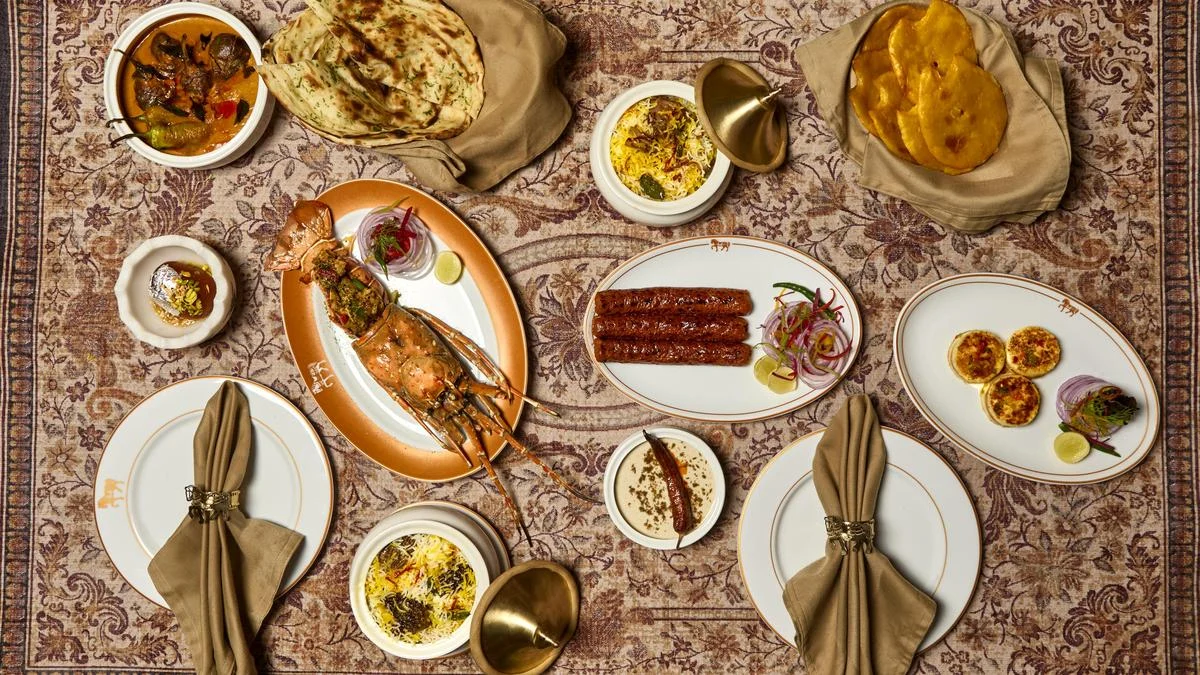
ASSAGAO, GOA – In the rapidly evolving culinary landscape of Goa, where beach shacks and trendy bistros often dominate the narrative, a new establishment is seeking to anchor the region’s fine-dining scene in centuries of royal tradition. Kesar Bagh, the latest venture by Chef Azaan Qureshi, has emerged as a landmark destination for authentic Awadhi cuisine, blending the sophisticated flavors of the Lucknowi courts with the architectural charm of a colonial-era Portuguese villa.
As the grandson of the legendary Padma Shri awardee Chef Imtiaz Qureshi—the visionary behind iconic institutions like Bukhara and Dum Pukht—Azaan Qureshi carries a heavy mantle of culinary heritage. At Kesar Bagh, this lineage is not merely a marketing tool but the soul of the kitchen, where the slow-cooked "dum" style and the delicate "galawat" technique are practiced with a level of reverence rarely seen in modern commercial kitchens.
Main Facts: A Pedigree of Excellence
Kesar Bagh represents a significant shift in Goa’s Food and Beverage (F&B) sector. While the state has long been celebrated for its seafood and Indo-Portuguese fusion, the arrival of a high-end Awadhi specialist signifies the growing appetite for diverse, heritage-driven regional Indian cuisines among both domestic tourists and the burgeoning expat community in North Goa.
The Qureshi Lineage
The restaurant’s identity is inextricably linked to the Qureshi family, a name synonymous with the refinement of North Indian cuisine. Chef Imtiaz Qureshi is credited with elevating the "Dum Pukht" style—cooking in sealed heavy-bottomed pots—to a global stage during his tenure at ITC Maurya in Delhi. Azaan’s father, Chef Ghulam Qureshi, continued this legacy, further perfecting the nuances of spice blending and meat tenderization.

Azaan Qureshi, having spent 15 years honing his craft within the ITC hotels ecosystem, has now stepped out to establish his own flagship. Kesar Bagh is his tribute to the flavors of Qaiser Bagh, the legendary palace complex built by Wajid Ali Shah, the last Nawab of Awadh.
Architectural Splendor
Located in Assagao, often referred to as the "South Kensington of Goa," Kesar Bagh is housed in a meticulously renovated 180-year-old Portuguese bungalow. The property spans half an acre and manages a delicate balance between its European structural roots and its North Indian thematic soul. The restaurant seats 120 guests across a series of interconnected indoor rooms and two expansive al fresco dining areas.
The design palette is a sophisticated mix of light salmon pink and teal, punctuated by high-tiled roofs and vintage chandeliers. The walls are adorned with vibrant paintings by the renowned artist Thota Vaikuntam, creating a space that feels more like a private collector’s residence than a public eatery.
Chronology: From Gurugram to the Goan Coast
The journey of Kesar Bagh was not a direct path to the palm-fringed lanes of Assagao. Originally, Chef Azaan and his business partner, Priyank Sukhija—the CEO and Managing Director of First Fiddle F&B—had scouted locations in Gurugram. The intention was to cater to the high-density corporate and residential market of the National Capital Region (NCR).

However, the trajectory changed when the duo encountered the 19th-century bungalow in Goa. "We stumbled upon what we call ‘the perfect property,’" Azaan explains. The charm of the heritage structure, combined with Goa’s post-pandemic transformation into a year-round lifestyle hub, convinced them to shift their flagship’s debut to the coast.
The restaurant officially opened its doors in April, timed to coincide with the beginning of the summer season. Since its launch, it has quickly become a "poster kid" for the Assagao dining circuit, attracting a clientele that values the slow-food movement and historical authenticity.
Supporting Data: The Science and Art of the Awadhi Kitchen
The menu at Kesar Bagh is a masterclass in the technical demands of Lucknowi cooking. Unlike many commercial "North Indian" restaurants that rely on heavy creams and generic tomato-onion gravies, Kesar Bagh focuses on the chemical processes of tenderization and the aromatic complexity of spice infusions.
The Technical Mastery of Kebabs
The centerpiece of the menu is the Kakori Kebab, a dish that requires a specific technique known as galawat. This involves the use of enzymes from raw papaya to break down the connective tissues of the lamb, resulting in a texture so delicate it literally melts on the tongue. According to the kitchen team, this specific recipe has been refined over a 30-to-50-year period within the Qureshi family.

Other notable technical achievements include:
- Takka Paisa Kebab: A dish named after a specific pan-grilling technique where mashed potato is wedged between roundels of cottage cheese. It requires extreme precision to ensure the components remain cohesive during the high-heat searing process.
- Harra Kebab Awadhi: A spinach and Bengal gram patty that conceals a core of roasted cashews and khoya, providing a textural contrast between the earthy exterior and the rich, sweet center.
- Murgh Chandi Tikka: A chicken preparation wrapped in edible silver foil, emphasizing the visual opulence associated with the Nawab’s table.
The Philosophy of Dum
Central to the main courses is the dum technique. Azaan emphasizes that this process allows for a "less is more" approach to spices. By sealing the vessels with dough and cooking the ingredients in their own juices over slow heat, the flavors become more concentrated and complex without the need for excessive seasoning.
The Gucchi-Subz-E-Zar is a prime example of this philosophy. Utilizing jumbo-sized morels (Gucchi)—one of the world’s most expensive fungi—the dish is stuffed with clotted cream and potato, then simmered in a salan-style gravy. This dish is particularly significant as it represents the Qureshi family’s historical interaction with global culinary trends; Imtiaz Qureshi was reportedly inspired to incorporate morels into Indian cooking after observing their use in French haute cuisine.
Official Responses: The Vision of Azaan Qureshi
In a series of discussions regarding the restaurant’s mission, Chef Azaan Qureshi highlighted the cultural responsibility he feels as a custodian of the Qureshi name.

"In Awadhi cuisine, it’s not just the masalas but the dum technique that is special," Azaan noted. "It makes even less spices seem more complex in the longer process. If I don’t [preserve and promote this], who will?"
Azaan’s partnership with Priyank Sukhija of First Fiddle F&B—a group known for high-volume, high-energy brands like Lord of the Drinks and Plum by Bent Chair—marks a unique marriage of traditional culinary arts and modern hospitality management. Sukhija’s expertise in creating "vibe-driven" spaces is evident in the transition from the serene marble fountain courtyard to the "Kesar" outdoor bar, which serves contemporary cocktails like the Mango Kesar Spritzer and the curry-leaf-infused Picante.
The Chef’s ambition extends beyond the borders of Goa. While Awadhi food has found pockets of success in international hubs like Tokyo and New York, Azaan believes there is still a significant mission to be accomplished within India: re-educating the domestic palate on what constitutes authentic royal cuisine versus the "Mughlai" hybrids found in most city centers.
Implications: A New Era for Goan Gastronomy
The success of Kesar Bagh carries several implications for the local and national dining industry.

1. The Diversification of Goa’s Identity
For decades, Goa’s culinary identity was synonymous with the sea. However, the influx of high-end regional Indian restaurants like Kesar Bagh suggests that Goa is becoming a "culinary microcosm" of India. Tourists are no longer visiting solely for the beach experience but for a world-class gastronomic tour that spans from the mountains of Kashmir to the plains of Awadh.
2. Heritage Conservation through Commerce
By repurposing a 180-year-old Portuguese bungalow, Kesar Bagh provides a template for sustainable heritage conservation. Rather than allowing these historic structures to fall into disrepair, the F&B industry is providing the capital necessary to maintain the architectural integrity of Goa’s ancestral homes, albeit with modern updates like teal-colored walls and high-end sound systems.
3. The Institutionalization of Family Legacies
Kesar Bagh represents the transition of Indian culinary "secrets" from the domestic kitchens of master chefs to institutionalized brand concepts. By blending the Qureshi family’s oral traditions with professionalized service and standardized techniques, Azaan is ensuring that the "kebabchi" culture survives in an era of fast-paced, industrialized food production.
Conclusion
Kesar Bagh stands as a testament to the enduring power of slow-cooked tradition in a fast-moving world. As Azaan Qureshi polishes the legacy of his grandfather under the tiled roofs of an Assagao bungalow, he is doing more than just serving kebabs; he is bridging the gap between the Nawabi courts of the 19th century and the sophisticated diners of the 21st. For those visiting Goa, the restaurant offers a rare opportunity to witness time standing still—one bite of a Kakori kebab at a time.

Logistics:
- Location: 5, Saunto Waddo, Anjuna Mapusa Road, Assagao, Goa.
- Average Cost: ₹4,000 for two people.
- Signature Experience: The Kakori Kebab paired with Saffron-rich Sheermal.
