

By Investigative Climate Desk
NEW DELHI / GENEVA — The global meteorological community has issued a definitive confirmation: El Niño has returned. As the equatorial Pacific Ocean undergoes a significant warming phase, the India Meteorological Department (IMD) and international agencies like the World Meteorological Organization (WMO) and the National Oceanic and Atmospheric Administration (NOAA) are warning that this developing event could intensify into a "moderate to strong" phenomenon by the end of 2026.
For India, a nation where the economy remains inextricably linked to the vagaries of the southwest monsoon, the news serves as a critical early warning. While experts urge against panic or the use of sensationalist labels, they emphasize that the 2026-27 El Niño represents a serious climate risk that demands immediate, data-driven planning to safeguard agriculture, water resources, and urban infrastructure.
I. Main Facts: The 2026-27 El Niño Event
El Niño, the warm phase of the El Niño-Southern Oscillation (ENSO), is characterized by the unusual warming of surface waters in the eastern and central tropical Pacific Ocean. This shift in ocean temperatures triggers a domino effect in global atmospheric circulation, altering rainfall patterns and temperature regimes across continents.
The current consensus among the world’s leading climate authorities—including the Copernicus Climate Change Service and the IMD—is that El Niño conditions are not only present but are poised to strengthen. According to the IMD’s June bulletin, these conditions will likely intensify as the southwest monsoon progresses through the Indian subcontinent.

"The emerging 2026-27 El Niño should be treated as a serious climate risk," says Roxy Mathew Koll, a climate scientist at the Indian Institute of Tropical Meteorology (IITM). "If it strengthens as forecast, this period could push global temperatures to new record levels, because El Niño will be acting on top of an already warmer climate system caused by human-induced greenhouse gas emissions."
The primary concern for the current cycle is its timing. Unlike some previous events that developed late in the year, the 2026 cycle is gaining momentum just as India enters its most critical agricultural window.
II. Chronology of Development: From Probability to Presence
The evolution of the 2026 El Niño has followed a trajectory that climate models began picking up early in the year, despite the challenges of the "spring predictability barrier."
- March – May 2026: Initial signals of warming in the Niño 3.4 region (a specific area of the central Pacific used as a global benchmark) began to emerge. However, during this "spring transition," models often struggle with accuracy.
- June 2026: The WMO and NOAA officially confirmed that El Niño conditions had manifested. Barbara Tapia Cortes, WMO Technical Coordinator, noted a high likelihood (approximately 80%) of the event developing fully during the June-August period.
- July – August 2026: Probabilities for the continuation of El Niño conditions have surged to over 90%. This period is critical for India, as it coincides with the peak of the southwest monsoon.
- November 2026 – January 2027: Current projections indicate that this is when the event will likely reach its peak intensity. NOAA data suggests a 63% chance of the event reaching "very strong" status during this window.
Historically, El Niño events peak during the Northern Hemisphere winter, but their influence on the Indian monsoon is felt most acutely during the preceding months of June through September.
III. Supporting Data: Measuring the Intensity
To understand the potential impact, scientists look at the Relative Oceanic Niño Index (RONI) and sea-surface temperature (SST) anomalies.

Temperature Thresholds
An El Niño is generally declared when SSTs in the Niño 3.4 region remain at least 0.5°C above the 30-year average for five consecutive, overlapping three-month periods. Currently, the region has recorded a warming of +0.7°C, placing it firmly above the threshold.
Historical Context and Comparisons
The intensity of El Niño is categorized as follows:
- Weak: +0.5°C to 0.9°C
- Moderate: +1.0°C to 1.4°C
- Strong: +1.5°C to 1.9°C
- Very Strong: ≥ 2.0°C
Only a few "very strong" events have been recorded in modern history: 1982–83, 1991–92, 1997–98, and 2015–16. These years were marked by catastrophic droughts in parts of Asia and Africa, devastating floods in South America, and massive coral bleaching. The more recent 2023–24 event nearly breached the 1.5°C mark, contributing significantly to 2024 becoming one of the hottest years on record.
The concern for 2026 is that the baseline global temperature is now higher than it was during the 2015–16 "Godzilla" event, meaning even a "moderate" El Niño today could have the destructive power of a "strong" event from decades past.
IV. Official Responses: Preparedness Over Alarm
International and national agencies are shifting their communication strategy away from alarmism toward "risk-informed decision-making."

The WMO’s Stance
Barbara Tapia Cortes emphasizes that while the onset is confirmed, the exact impact on specific regions remains subject to variables like duration and interaction with other climate drivers. She warns against the use of sensationalist terms like "Super El Niño" or "Godzilla El Niño," which are not recognized scientific terms.
"These terms can oversimplify a complex phenomenon and create unnecessary alarm," Cortes explains. "The focus should be on early warnings and preparing sectors like agriculture, health, and disaster management."
The India Meteorological Department (IMD)
The IMD has been closely monitoring the "Niño 3.4" region and the Southern Oscillation Index (SOI). Their recent forecasts indicate a delayed and potentially below-normal rainfall pattern for the 2026 monsoon. However, they also point to a potential "saving grace": the Indian Ocean Dipole (IOD).
The IOD is often called the "Indian Niño." A positive IOD (warmer western Indian Ocean) can sometimes offset the drying effects of an El Niño. While current IOD conditions are neutral, the IMD suggests they may turn positive in the coming months, which could provide much-needed rainfall to central and southern India.
V. Implications for India: A Multi-Front Challenge
The return of El Niño poses a multi-dimensional threat to India’s stability, affecting everything from food security to urban water management.

1. Agricultural Vulnerability and Food Inflation
Agriculture remains the backbone of the Indian economy, with over 50% of the workforce dependent on it. El Niño typically results in a "weak" monsoon, leading to crop stress.
- Case Study: In early 2026, parts of Karnataka already saw the precursor effects of erratic weather. Extreme heat followed by intense pre-monsoon hailstorms devastated mango crops in regions like Gauribidanur. One farmer reported a yield drop from an expected 5.3 tons to just 3.3 tons—a 37% loss caused by physical damage from hailstones that only became apparent during ripening.
- Staple Crops: A deficit in rainfall during the July-August sowing window could lead to reduced yields in rice, pulses, and oilseeds, potentially driving up food inflation in the fourth quarter of 2026.
2. The Urban Water Crisis
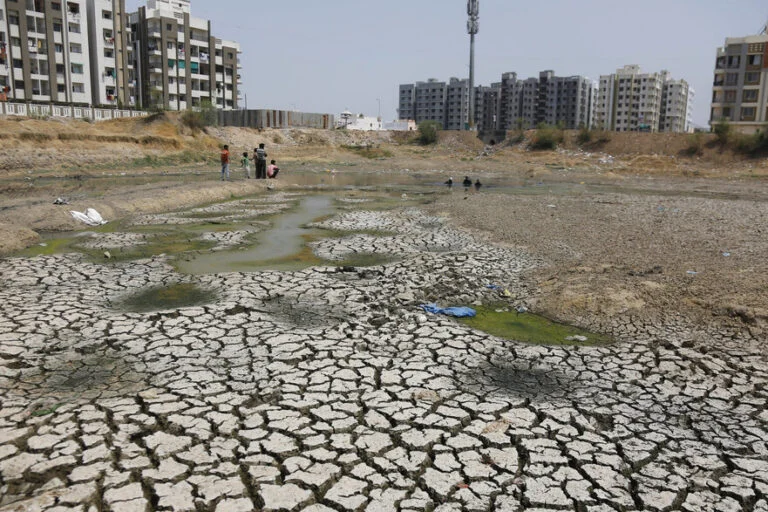
Major metropolitan hubs like Bengaluru, Hyderabad, and Pune are already grappling with stressed groundwater reserves.
- Bengaluru: The city’s dependence on the Cauvery River and depleting borewells makes it highly susceptible to a weak monsoon. In early 2026, tanker demand surged as residents faced a deepening water crisis.
- Infrastructure Stress: If El Niño results in "dry extremes," these cities will face acute shortages. Conversely, if it causes "wet extremes" (intense, short-duration rainfall), the aging drainage systems of Indian cities could succumb to catastrophic urban flooding.
3. Heatwaves and Public Health
El Niño is known to amplify heatwaves. In southwest India, the phenomenon weakens cloud formation, allowing more solar radiation to reach the ground. Combined with a warming Indian Ocean—which is currently in a state of near-permanent marine heatwave—this could lead to prolonged periods of record-breaking temperatures, increasing the risk of heatstroke and putting immense pressure on the power grid.
4. The "Double Whammy" of Climate Change
Roxy Mathew Koll points out that India must prepare for "both dry and wet extremes at the same time." While the overall monsoon may be weak, the warmer atmosphere can hold more moisture, leading to localized "cloudburst" events. This paradox—drought-like conditions interrupted by sudden, devastating floods—is becoming the new hallmark of El Niño in a warming world.
VI. Conclusion: The Path Forward
The confirmation of El Niño in 2026 is not a prophecy of doom, but it is a call to action. The difference between a manageable setback and a national crisis lies in the speed of the policy response.

Key recommendations from climate experts include:
- Securing Water Reserves: Implementing aggressive rainwater harvesting and rejuvenating urban lakes to reduce dependence on seasonal rainfall.
- Crop Diversification: Encouraging farmers to switch to climate-resilient, short-duration crops that require less water.
- Early Warning Systems: Expanding the "Early Warnings for All" initiative to ensure that even the most remote farming communities receive real-time weather updates on their mobile devices.
- Economic Buffers: Strengthening crop insurance schemes to protect small-scale farmers from the irreversible damage of hailstorms and droughts.
As the WMO prepares its next update in September 2026, the global community will have a clearer picture of whether this El Niño will rank among the "strongest on record." Until then, India’s strategy must remain one of "planning, not panic." The warning signs are clear; the window for preparation is still open.
