

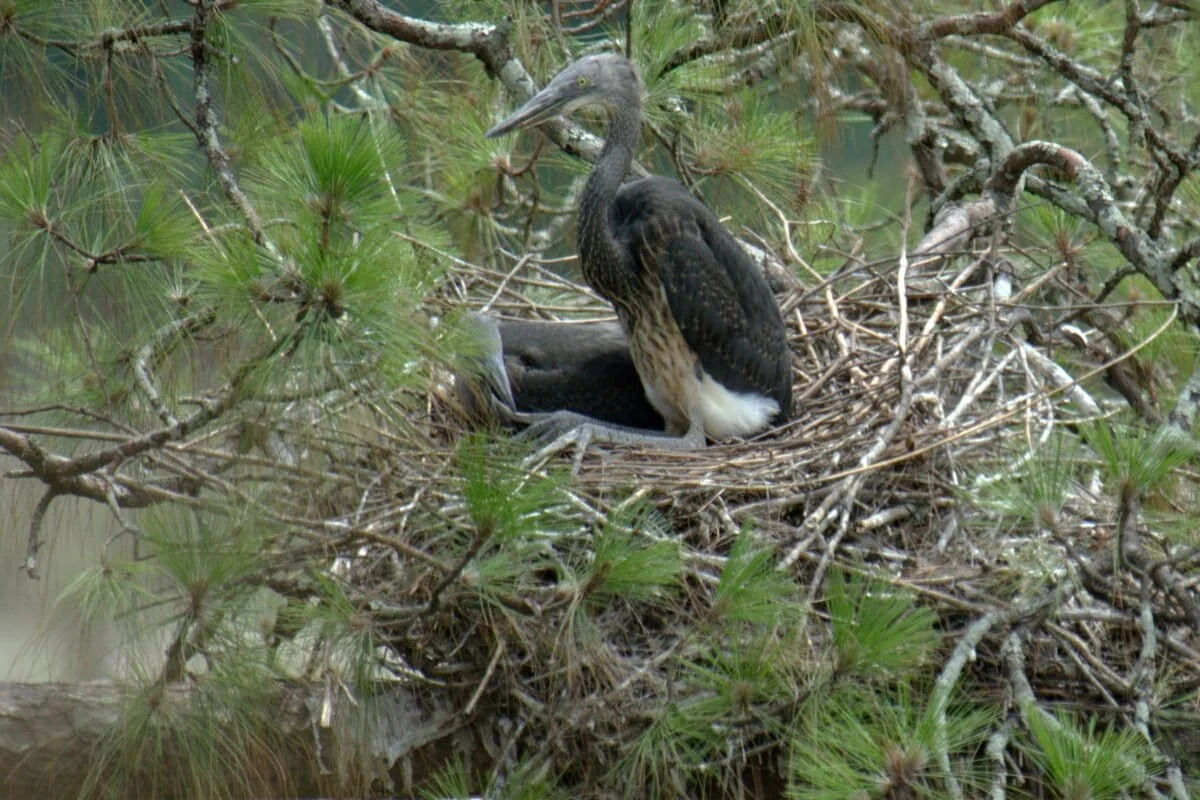
In the remote, mist-shrouded valleys of Arunachal Pradesh, where the Lohit River carves its path through the Eastern Himalayas, a high-stakes conflict between industrial development and biological survival has reached a critical juncture. The Forest Advisory Committee (FAC), a statutory body under India’s Ministry of Environment, Forest and Climate Change (MoEFCC), has granted “in-principle” approval for the Kalai II hydroelectric power plant (HEP).
While the 1,200-megawatt project is framed as a cornerstone of India’s renewable energy transition, it sits at the heart of a habitat belonging to one of the rarest birds on Earth: the white-bellied heron (Ardea insignis). With a global population estimated at fewer than 60 individuals in 2015, and perhaps as few as six to nine remaining in Arunachal Pradesh, the project’s approval has ignited a firestorm of criticism from conservationists. The controversy is further deepened by a decision to offset the destruction of thousands of Himalayan trees by planting a new forest over 1,500 kilometers away in the dry landscapes of Madhya Pradesh—a move experts have dismissed as ecologically “futile.”
Main Facts: The Project and the Price of Progress
The Kalai II HEP is a massive "run-of-the-river" dam proposed for the Lohit River, a major tributary of the Brahmaputra. Situated in the border district of Anjaw, the project is being developed by THDC Limited in partnership with the Arunachal Pradesh state government. The project’s scale is significant, not only in its power generation capacity but also in its environmental footprint.
According to official documents, the dam will necessitate the felling of 33,338 trees. These trees are part of a complex ecosystem comprising tropical wet and dense mixed forests, situated within the Eastern Himalaya biodiversity hotspot—one of the most biologically diverse regions on the planet.
The primary points of contention include:
- The Critical Status of the White-bellied Heron: Listed under Schedule I of India’s Wildlife Protection Act, the bird enjoys the highest level of legal protection. It is currently categorized as "Critically Endangered" by the IUCN.
- Environmental Oversight: The initial Environmental Impact Assessment (EIA) failed to mention the heron’s presence, an omission that critics claim undermines the entire regulatory process.
- Geographic Disconnect in Mitigation: To compensate for the loss of pristine Himalayan forest, the FAC has approved compensatory afforestation in Guna, Madhya Pradesh. Experts argue that a central Indian deciduous forest cannot replace the ecological functions of a Northeast Indian tropical rainforest.
Chronology: From Proposal to Approval
The trajectory of the Kalai II project reflects the long-standing tensions over hydropower development in Northeast India.
- 2008: The project is first proposed as part of a broader push to harness the hydroelectric potential of Arunachal Pradesh, often referred to as India’s "powerhouse."
- August 2025: A public hearing is held in the Anjaw district. Local community leaders and residents raise concerns regarding inadequate biodiversity surveys and potential pollution. During this period, Roshman Tawsik, a local leader, files a legal notice alleging that portions of the EIA report were "copy-pasted" from previous documents.
- October 2025: Opposition intensifies as local residents realize the extent of the land submergence and the potential impact on their livelihoods.
- May 8, 2026: The FAC convenes to evaluate the proposal. Despite the identified risks to the white-bellied heron and other endemic species, the committee grants "in-principle" approval for the diversion of forest land.
- Present: The project awaits final clearances, contingent upon a Wildlife Management Plan to be vetted by the Wildlife Institute of India (WII).
Supporting Data: An Ecosystem Under Siege
The ecological stakes of the Kalai II project extend far beyond a single species. The Lohit River basin is a corridor for numerous rare and endemic animals.

The White-Bellied Heron’s Fragile Existence
The white-bellied heron is an "indicator species," meaning its presence signifies a pristine, undisturbed environment. Unlike more adaptable heron species, Ardea insignis requires very specific conditions: clear, fast-flowing, shallow rocky streams for foraging.
“They wait for the fish to come, and unlike other herons, they don’t move around too much,” explains Yumlam Benjamin Bida, a project manager at ATREE. “Their inability to adapt to changing habitats comes down to this foraging behavior. Fish is their only form of nutrition, and if there is any disturbance, it will reduce their energy intake drastically.”
In the early 20th century, the bird’s range spanned from Nepal to Myanmar. Today, it has vanished from almost all its historical range, clinging to survival in tiny pockets of Bhutan, Myanmar, and Arunachal Pradesh.
Broader Biodiversity Impacts
The dam site is strategically located near several protected areas:
- Namdapha Tiger Reserve: 26.5 kilometers away.
- Kamlang Wildlife Sanctuary: 11 kilometers away.
Beyond the heron, the EIA identifies several other significant species that will be affected, including the Takin (a large, vulnerable ungulate), the Large Indian Civet, the Assamese Macaque, and the Jungle Cat. While the project has allocated ₹100 lakhs (approximately $120,000) for a Takin conservation plan, experts question whether financial allocations can truly mitigate the loss of physical habitat.
The Afforestation Paradox
The FAC’s decision to allow compensatory afforestation in Guna, Madhya Pradesh, highlights a controversial trend in Indian environmental policy. The 51 patches of land identified in Guna are primarily degraded dry mixed deciduous forests.
Umesh Srinivasan, an Associate Professor at the Indian Institute of Science (IISc), points out the fundamental flaw in this logic: “The white-bellied heron requires habitats with fast-flowing rivers and forest, and Madhya Pradesh is simply out of that habitat range. Even if afforestation is done scientifically, it will bring back diversity native to Madhya Pradesh, not Arunachal Pradesh.”

Official Responses and Defensive Measures
In response to the mounting criticism, government bodies and the project developer, THDC Limited, have defended the project’s necessity and the rigor of their planning.
The Developer’s Stance
THDC emphasizes the socio-economic benefits. A central government press release highlights a financial assistance package of ₹1,300 crores ($156 million) for the state. The project is expected to result in:
- 29 kilometers of new roads and bridges.
- Direct and indirect employment for the local population.
- Corporate Social Responsibility (CSR) initiatives targeting education and healthcare.
WAPCOS and the EIA
The EIA was prepared by WAPCOS, a consultancy under the Ministry of Jal Shakti. Addressing the "copy-paste" allegations and the omission of the heron, state officials argued that the bird was not recorded specifically at the project site during their survey window.
However, when confronted with evidence that the bird exists just 50 kilometers upstream in Walong, WAPCOS maintained that their proposed "oil and grease separator units" would prevent aquatic pollution, thereby protecting the downstream ecology. They also noted the inclusion of the Mishimi Teeta, a medicinal plant endemic to the region, into their revised conservation lists.
The FAC’s Conditional Approval
The FAC did not grant a blanket clearance. Their approval is conditional upon the Wildlife Institute of India (WII) reviewing the Wildlife Management Plan. The committee has insisted that the WII assessment must place "special emphasis" on the heron’s habitat. However, for many conservationists, this is a case of "too little, too late," as the structural changes to the river flow caused by a 1,200-MW dam are largely irreversible.
Implications: Energy Security vs. Ecological Integrity
The Kalai II project is a microcosm of a much larger debate currently unfolding across the Global South: How does a developing nation balance the urgent need for carbon-neutral energy with the moral and ecological imperative to prevent extinction?
The Hydropower Push
India has identified the Northeast as a vital hub for hydropower to meet its goal of 500 GW of non-fossil fuel capacity by 2030. Large dams are classified as "renewable," yet their impact on local biodiversity is often as permanent as the fossil fuels they replace. The Kalai II project is just one of dozens planned for the Brahmaputra basin, leading to fears of "cumulative impacts" that no single EIA can fully capture.

Community Fractures
The project has also divided the local population. Approximately 33 villages will be directly or indirectly affected. While some see the project as a ticket to modern infrastructure and economic stability, others, like Roshman Tawsik, see it as a threat to their ancestral heritage.
“We have opposed the project since 2008,” Tawsik stated. “We don’t want to sacrifice so much of our land and watch it get submerged.” The apprehension regarding noise, water pollution, and the influx of outside labor remains a significant point of local friction.
A Precedent for Biodiversity
The ultimate fate of the white-bellied heron may serve as a legal and ethical precedent for India. If a Schedule I species—afforded the same legal status as the Tiger—can have its habitat disrupted for an infrastructure project based on an EIA that initially ignored its existence, the strength of India’s environmental laws will be called into question.
As the Wildlife Institute of India begins its vetting process, the eyes of the global conservation community remain fixed on the Lohit River. For the white-bellied heron, a bird that has survived in the shadows of the Himalayas for millennia, the next few years of construction may determine whether it remains a living part of India’s natural heritage or becomes a mere footnote in a report on energy production.
