

New Delhi, India — As India accelerates its ambitious roadmap toward energy self-reliance, the automotive sector finds itself at a critical crossroads. The central government’s aggressive push for higher ethanol-to-petrol blending ratios—moving beyond the current E20 standard toward E22, E25, E27, and even E30—has sparked a complex debate regarding technical feasibility, consumer protection, and the longevity of the nation’s existing vehicular fleet.
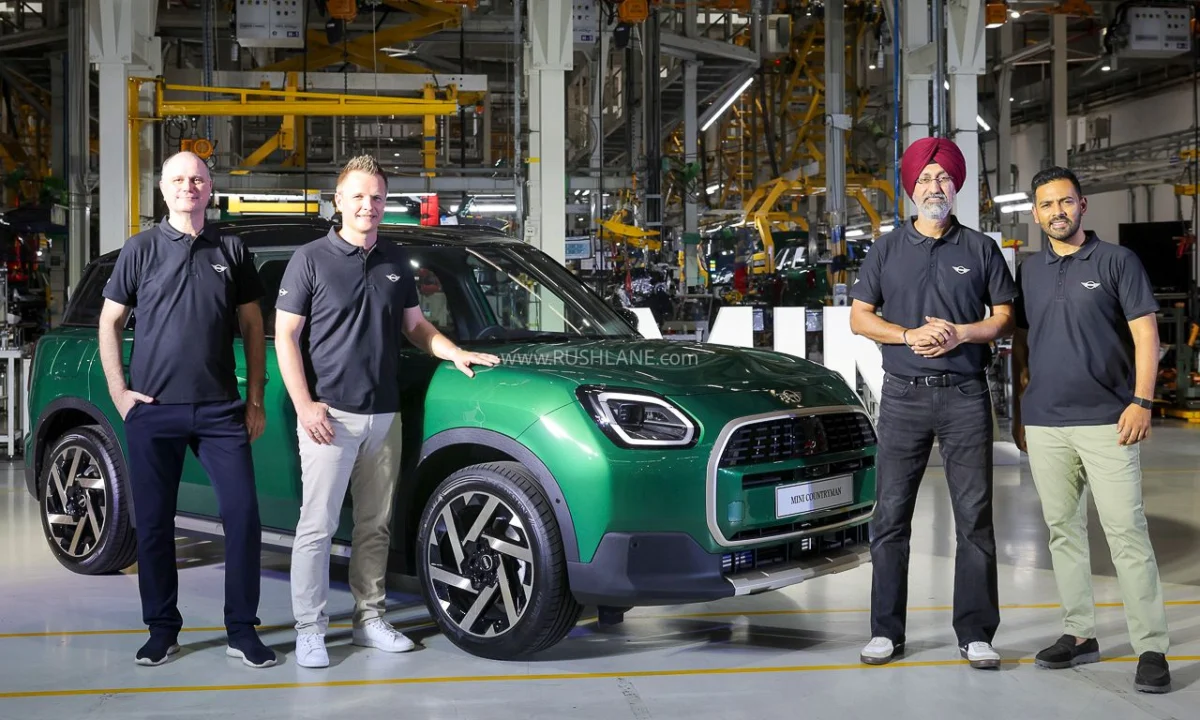
In a recent industry dialogue, Hardeep Singh Brar, President and CEO of BMW Group India, provided a sobering reality check on the prospects of retrofitting or upgrading existing internal combustion engine (ICE) vehicles to accommodate these higher ethanol concentrations. His insights come at a time when the MINI brand, under the BMW Group umbrella, is eyeing its most significant growth phase in the Indian market, punctuated by the launch of the localized Countryman C.
The Ethanol Evolution: A Chronology of India’s Green Fuel Mandate
To understand the current tension between policymakers and automakers, one must look at the rapid trajectory of India’s ethanol blending program.
- 2014–2021: The Formative Years: India began with a modest ethanol blending percentage of approximately 1.5%. Through incentives for sugar mills and distilleries, this figure climbed steadily to 5% and then 10% (E10).
- April 2023: The E20 Milestone: The government mandated that all new vehicles manufactured from April 1, 2023, must be E20 compliant. This required significant engineering changes to fuel lines, seals, and engine mapping to prevent the corrosive effects of ethanol.
- 2024 and Beyond: The Surplus Dilemma: With a surplus of ethanol production and a volatile geopolitical situation in the Middle East threatening oil prices, the government has begun exploring "intermediate" blends like E22 through E30. This is seen as a stepping stone toward the ultimate goal of E85 flex-fuel vehicles.
While the environmental and macroeconomic benefits—such as a reduced oil import bill and lower carbon emissions—are undeniable, the pace of the transition is outstripping the lifecycle of the average Indian automobile.
The Technical Wall: Why E30 Isn’t a Simple Software Update
The primary concern voiced by BMW Group India revolves around the chemical properties of ethanol. Unlike pure gasoline, ethanol is hygroscopic, meaning it absorbs moisture from the atmosphere. It is also a solvent that can degrade certain types of rubber, plastic, and metal components found in older fuel systems.
In his interview with Car and Bike, Hardeep Singh Brar was unequivocal: existing cars cannot be simply upgraded to support E30 blends.
“We need to study the impact of newer fuels on existing vehicles,” Brar noted, highlighting a massive demographic of "legacy" vehicles. Millions of cars currently on Indian roads were designed for E5 or E10 standards. Even the most modern cars sold just two years ago were only validated for E20.
The Engineering Challenges of E30 Compatibility:
- Material Integrity: Seals, gaskets, and fuel hoses in older vehicles are prone to swelling and cracking when exposed to ethanol concentrations above 10-20%.
- Calorific Value: Ethanol has a lower energy density than petrol. Running a high ethanol blend in a non-optimized engine leads to a significant drop in fuel efficiency and power output.
- Corrosion: Ethanol can cause galvanic corrosion in fuel tanks and injectors if the materials are not specifically coated or treated.
- Cold Start Issues: High ethanol blends have lower volatility, making it difficult for engines to ignite in colder climates, a significant factor for Northern India’s winter months.
Brar’s warning underscores a potential crisis for the second-hand car market and long-term owners: if E30 becomes the solitary fuel standard at the pump, older vehicles could face catastrophic engine failure or prohibitively expensive hardware overhauls.
Official Responses: A Call for Policy Predictability
The BMW Group’s stance is not one of opposition to green energy, but rather a plea for a "Just Transition." Brar emphasized that government agencies must ensure the introduction of new fuels does not render the existing fleet obsolete.
The "Dual-Fuel" Strategy
Reports suggest the government is considering a multi-nozzle approach at fuel stations. This would allow owners of older vehicles to continue using E10 or E20, while newer, compliant vehicles could opt for E30 or Flex-Fuel. However, the logistics of maintaining three or four different grades of petrol nationwide presents a massive infrastructural challenge for Oil Marketing Companies (OMCs).
The Demand for Timelines
“The government should provide advance timelines when new fuels are to be introduced,” Brar stated. For global manufacturers like BMW and MINI, product development cycles last five to seven years. A sudden shift in fuel standards requires recalibrating global engine platforms specifically for the Indian market, a move that adds cost and complexity. Clarity and "lead time" are the two most requested commodities from the automotive lobby today.
MINI’s Strategic Pivot: Growth Amidst Uncertainty
Despite the looming challenges of fuel standards, the MINI brand is experiencing a renaissance in India. The brand’s strategy is currently resting on three pillars: localization, geographic expansion, and premium positioning.
1. The Countryman C: A Localization Milestone
The recently launched MINI Countryman C represents a shift in MINI’s Indian operations. With approximately 50% localization and local assembly at the BMW Group plant in Chennai, the vehicle has been launched at a competitive price point of ₹47.5 Lakh (ex-showroom).
By moving away from the Completely Built Unit (CBU) model for its core volume drivers, MINI can mitigate the impact of high import duties, making the "Go-Kart feeling" accessible to a broader demographic of luxury buyers. The brand aims to sell 1,000 units this year—a landmark figure that would represent its highest-ever annual sales in India.
2. The Tier II and Tier III Surge
The luxury landscape in India is no longer confined to the "Big Four" metros. Brar highlighted a significant uptick in demand from emerging urban centers. MINI is aggressively expanding its footprint into:
- North: Jaipur, Jodhpur, and Patna.
- East: Ranchi.
- South: Calicut, Vijayawada, and Mangalore.
These cities are seeing a rise in "new money" and a younger generation of entrepreneurs who value the distinct aesthetic and compact luxury that MINI offers over traditional executive sedans.
3. The India-UK FTA Nuance
While there has been much speculation regarding the India-UK Free Trade Agreement (FTA) and its potential to slash prices for British-made goods, Brar tempered expectations. He clarified that because MINI’s production is globally distributed—with significant components and assembly happening outside the UK (including India and Germany)—the FTA may not result in a direct price drop for Indian consumers. However, he noted that if policy changes occur within the next six months, the company remains open to adjusting its pricing strategy or issuing refunds where applicable.
Implications for the Indian Consumer and Environment
The push toward E30 is a double-edged sword. On one hand, it supports the Indian agrarian economy by creating a massive market for sugarcane and grain-based ethanol. On the other, it creates a "technological debt" for the automotive industry.
The Risk of Stranded Assets
If the transition to E30 is handled without a "grandfather clause" for older vehicles, India risks creating millions of "stranded assets"—cars that are mechanically sound but lack the compatible fuel to run safely. This would not only hurt the consumer’s pocket but could also lead to an environmental backlash if perfectly functional cars are scrapped prematurely.
The Competitive Landscape
BMW and MINI’s cautious approach to E30 puts them in a delicate position compared to mass-market players like Maruti Suzuki and Toyota, who are already showcasing flex-fuel prototypes. However, for the luxury segment, where engine precision and longevity are paramount, the stakes are higher. A MINI owner expects the vehicle to perform flawlessly for decades; a compromised fuel blend threatens that brand promise.
Conclusion: A Balanced Road Ahead
As Hardeep Singh Brar and the BMW Group have signaled, the path to a greener India must be paved with technical realism. While the surplus of ethanol provides a golden opportunity to reduce the nation’s carbon footprint and trade deficit, it cannot come at the expense of the existing automotive ecosystem.
The success of brands like MINI—which is currently enjoying record-breaking interest and expanding into the heartland of India—depends on a stable regulatory environment. For the Indian car buyer, the message is clear: the future is green, but the transition will require careful navigation between the fuel pump and the engine bay. The government’s next move in providing clear, long-term roadmaps for E30 will determine whether this transition is a smooth acceleration or a bumpy ride for the Indian motorist.
