

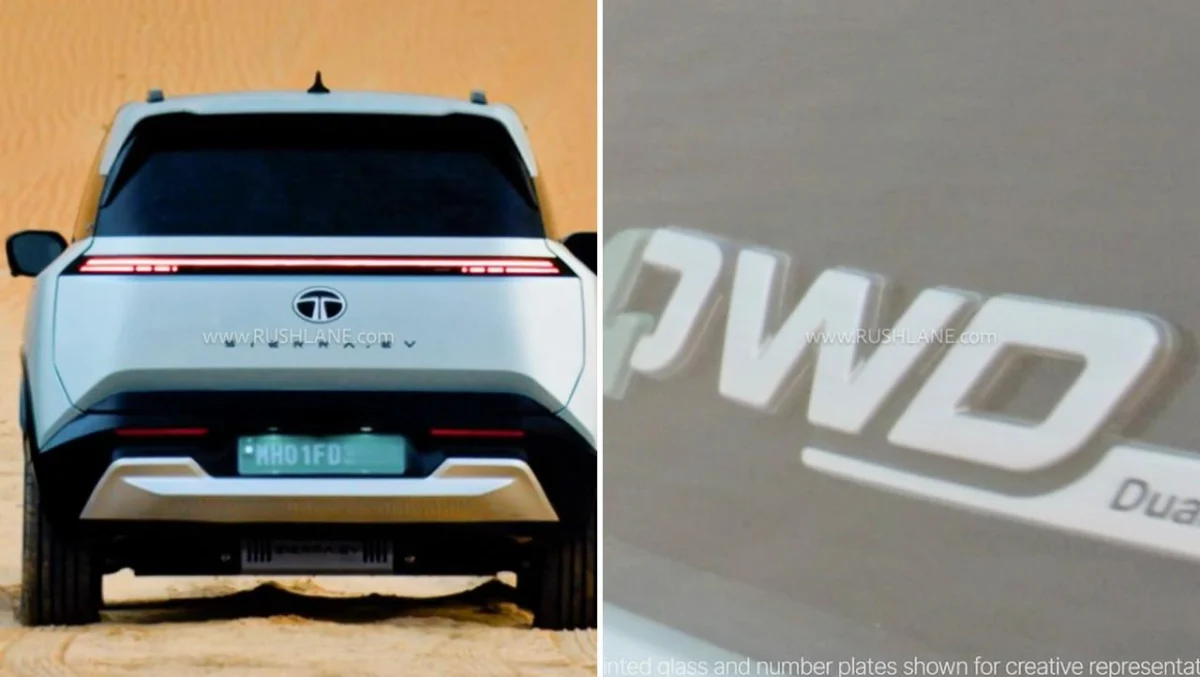
MUMBAI – In a move that blends nostalgic heritage with cutting-edge electrification, Tata Motors has officially commenced the final countdown for the launch of the much-anticipated Sierra EV. Scheduled for a high-profile debut on June 30, 2026, the latest teaser campaign from India’s leading electric vehicle manufacturer has sent shockwaves through the industry by confirming a flagship "QWD" (Quad Wheel Drive) dual-motor configuration.
The Sierra nameplate, which originally defined the lifestyle SUV segment in India during the 1990s, is being resurrected not merely as a retro-tribute, but as a technological powerhouse designed to compete with global luxury EV offerings. The latest promotional footage showcases the Sierra EV conquering punishing desert terrain, signaling Tata’s intent to move beyond urban mobility and into the realm of genuine off-road capability.
Main Facts: The Return of the Legend
The Tata Sierra EV represents the pinnacle of Tata’s "Acti.ev" architecture, a dedicated born-electric platform that allows for greater modularity and performance than previous internal combustion engine (ICE) conversions.
Key highlights confirmed by the latest teaser include:
- Launch Date: June 30, 2026.
- Powertrain Confirmation: A prominent "QWD Dual Motor" badge on the tailgate confirms an All-Wheel Drive (AWD) system powered by two independent electric motors—one on each axle.
- Off-Road Credentials: The teaser depicts the SUV effortlessly navigating deep sand dunes and loose gravel, highlighting sophisticated traction management.
- Design Heritage: The production model retains the iconic "Alpine Windows"—the curved glass panels over the rear quarters—that made the original 1991 Sierra a design cult classic.
- Market Positioning: The Sierra EV will sit above the Safari and Harrier EVs, acting as the brand’s "lifestyle flagship."
Chronology: From Concept to Production Reality
The journey of the Sierra EV has been one of the most closely watched narratives in the Indian automotive sector over the last half-decade.

- Auto Expo 2020 (The Spark): Tata Motors surprised the world by unveiling the Sierra EV Concept. It was a three-door design that focused heavily on the "Lounge on Wheels" concept, featuring a unique rear seating arrangement.
- Auto Expo 2023 (The Evolution): Following massive public demand, Tata showcased a more production-ready five-door version. This iteration addressed practical concerns regarding ingress and egress while maintaining the signature aesthetic.
- Late 2024 – 2025 (Testing Phase): Camouflaged test mules were frequently spotted across various terrains in India, from the high-altitude passes of Ladakh to the humid coastal regions, testing battery thermal management.
- June 2026 (The Reveal): The final teaser campaign shifts focus from design to raw performance, confirming that the Sierra EV will be the second vehicle in Tata’s portfolio to feature QWD technology, following the Harrier EV.
Supporting Data: Technical Specifications and Performance Expectations
While Tata Motors has kept the final spec sheet under wraps, industry analysts and leaked data suggest that the Sierra EV will set new benchmarks for the brand.
Powertrain and Battery
The Sierra EV is expected to be equipped with a high-density battery pack, likely in the 72 kWh to 80 kWh range. Given the dual-motor QWD setup, the vehicle is anticipated to deliver a combined power output exceeding 200 kW (approx. 270 hp). More impressively, the instantaneous torque provided by the dual motors is expected to approach the 500 Nm mark, allowing the SUV to achieve 0–100 km/h in under 6.5 seconds.
Range and Efficiency
On the ARAI (Automotive Research Association of India) cycle, the Sierra EV is targeted to achieve a range of 500+ kilometers on a single charge. Real-world range is expected to hover around 400 km, depending on the drive mode and terrain. The vehicle will support DC fast charging, capable of replenishing the battery from 10% to 80% in approximately 35 minutes using a 60 kW+ charger.
Off-Road Capability
The "QWD" system is more than just a badge. Unlike mechanical AWD systems that rely on a drive shaft and differentials, the Sierra EV’s dual-motor setup allows for millisecond-precise torque vectoring. By independently controlling the power sent to the front and rear wheels, the onboard computer can prevent wheel spin on loose surfaces like sand or snow far more effectively than a traditional 4×4.
Official Context: Tata’s "Digital Soul" Design Philosophy
Tata Motors’ Design Director, Martin Uhlarik, has previously described the Sierra as having a "Digital Soul." The production model features a cleaner, more minimalist aesthetic compared to its ICE counterparts.

The front fascia is characterized by a closed-off grille to improve aerodynamics, flanked by ultra-slim LED DRLs connected by a light bar that performs a "welcome" animation. The rear features a similar "Horizon" light bar, emphasizing the vehicle’s width. Inside, the "Lounge" DNA remains. The cabin is expected to feature:
- Triple-Screen Dashboard: A digital instrument cluster, a central 12.3-inch infotainment system, and a dedicated screen for the front passenger.
- Immersive Audio: A soundbar-integrated dashboard with JBL speakers and Dolby Atmos support.
- Luxury Materials: A heavy focus on sustainable and "vegan" leather interiors, recycled plastics, and mood lighting that changes based on the driving mode.
Implications: Reshaping the Indian EV Landscape
The launch of the Sierra EV with QWD is a strategic masterstroke for Tata Motors for several reasons:
1. Defending Market Leadership
Tata Motors currently commands over 70% of the Indian electric passenger vehicle market. However, with the impending entry of the Maruti Suzuki eVX and Mahindra’s "Born Electric" (BE) range, competition is intensifying. By launching a high-performance, lifestyle-oriented SUV like the Sierra, Tata is moving upmarket to capture the premium segment before global players like Tesla or Hyundai expand their local EV manufacturing.
2. The Lifestyle Shift
The Indian consumer is increasingly moving away from purely utilitarian vehicles toward "lifestyle" products. The Sierra EV caters to the "weekend adventurer" demographic—buyers who want a sophisticated city commuter during the week but require a capable off-roader for weekend escapes to the desert or mountains.
3. Technological Halo Effect
The introduction of QWD technology serves as a "halo" for the entire Tata EV brand. It proves that the company can produce vehicles that are not just environmentally friendly, but also superior in performance to traditional ICE vehicles. This technological leap is essential for convincing traditional SUV buyers to make the switch to electric.

4. Economic Impact
The Sierra EV is expected to be priced in the ₹25 lakh to ₹32 lakh (ex-showroom) bracket. At this price point, it will compete directly with premium ICE SUVs like the Jeep Compass and top-end variants of the Mahindra XUV700, potentially disrupting the mid-to-high-end SUV market.
Conclusion: A New Era for the "Summits of Adventure"
As the June 30 launch date approaches, the Sierra EV stands as a symbol of Tata Motors’ evolution from a manufacturer of rugged commercial vehicles to a leader in high-tech, sustainable mobility. The confirmation of the QWD dual-motor system ensures that the Sierra EV will not just be a "mall-crawler," but a legitimate successor to the rugged legacy of its predecessor.
With its blend of 90s nostalgia, futuristic design, and all-terrain capability, the Sierra EV is poised to be more than just a car; it is a statement of intent from the Indian automotive industry to the rest of the world. On June 30, we will see if the "legend" can truly live up to the electrified future it has promised.
About Tata Motors:
Tata Motors Limited, a USD 44 billion organization, is a leading global automobile manufacturer of cars, utility vehicles, pick-ups, trucks, and buses. Part of the Tata group, Tata Motors is at the forefront of India’s EV transition, holding a dominant market share through its "Tata EV" subsidiary.
