

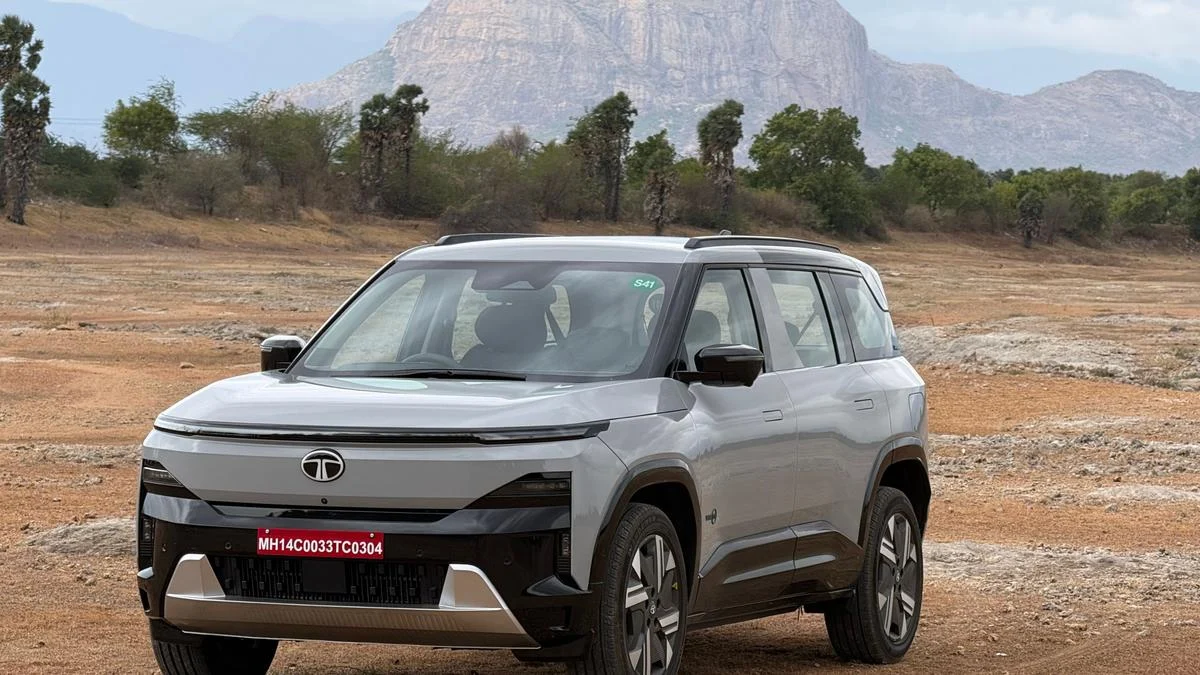
The automotive landscape in India is currently undergoing a seismic shift, transitioning from the loud, mechanical charm of internal combustion engines to the silent, instantaneous torque of electric mobility. Amidst this transformation, few names carry as much nostalgic weight as the "Sierra." When Tata Motors first introduced the Sierra in the 1990s, it was a vehicle ahead of its time—a three-door SUV with wrap-around rear glass that looked like nothing else on the road. Today, that legacy has been reimagined.
After an intensive day of testing in and around Coimbatore—spanning congested city arteries, open highways, a high-speed test track, and a grueling off-road course—it is clear that the Tata Sierra.ev is not merely a nostalgic tribute. It is a sophisticated, high-performance machine that represents the pinnacle of Tata’s engineering capabilities to date.
Main Facts: The Specifications of a Flagship
The Tata Sierra.ev is positioned as the flagship of Tata’s "Acti.ev" dedicated electric platform. Unlike previous conversions of petrol cars, this vehicle is built from the ground up to optimize the advantages of electric propulsion.
- Variants and Power: The range is headlined by a 75 kWh variant featuring a sophisticated dual-motor Quad Wheel Drive (QWD) system. This setup delivers a combined output of 372 bhp (234 bhp rear / 138 bhp front) and a massive 504 Nm of peak torque. A more accessible 63 kWh single-motor, rear-wheel-drive version is also available for those prioritizing efficiency over raw power.
- Performance: The dual-motor version claims a 0-100 km/h sprint in just 5.8 seconds, placing it in the upper echelons of performance vehicles currently available in the Indian market.
- Range and Charging: The 75 kWh battery offers a certified MIDC range of 665 km. In real-world mixed driving conditions, this translates to a reliable 450-500 km. Furthermore, its fast-charging architecture allows for an injection of 263 km of range in a mere 15 minutes using a compatible DC fast charger.
- Pricing: The Sierra.ev enters the market with a competitive price bracket of INR 18.79 – 24.79 Lakh (ex-showroom), directly challenging both established EV players and premium mid-sized petrol/diesel SUVs.
Chronology of the Drive: From Urban Commute to Rugged Trails
Phase 1: The Urban Jungle
The test began in the heart of Coimbatore. In an environment defined by stop-and-go traffic and narrow lanes, the Sierra.ev immediately displayed its "dual personality." Despite its imposing road presence, the steering is tuned for effortless low-speed maneuverability. The light touch required for U-turns and parking belies the vehicle’s weight.

One of the most immediate takeaways was the refinement of the "Creep Mode" and the progressive nature of the accelerator. Many EVs suffer from a "jerky" start; the Sierra.ev, however, glides forward with a silkiness that makes urban commuting far less fatiguing.
Phase 2: Highway Cruising and High-Speed Stability
Leaving the city limits, the Sierra.ev was given the opportunity to stretch its legs. As speeds climbed, the steering gained a reassuring weight, eliminating the "floaty" feel often associated with SUVs. The low center of gravity—a natural byproduct of placing the heavy battery pack beneath the floor—ensures the vehicle remains planted.
On the highways, the High-Speed Stability was exemplary. Even when overtaking heavy vehicles at triple-digit speeds, the Sierra.ev tracked arrow-straight. However, this phase also revealed the vehicle’s primary Achilles’ heel: wind noise. Above 100 km/h, there is a perceptible whistle around the A-pillars that slightly disrupts the otherwise serene cabin atmosphere.
Phase 3: The Test Track and Dynamic Handling
At the test track, the focus shifted to raw performance and safety. The 0-100 km/h dash was achieved with a sustained surge of power rather than an intimidating jolt. More impressive, however, was the braking performance. Repeated hard braking from high speeds showed no signs of brake fade. The transition between regenerative braking (which captures energy to charge the battery) and the mechanical friction brakes was seamless, providing the driver with a natural pedal feel.

Phase 4: Off-Road Prowess
The day concluded with a demanding off-road course. While many "SUVs" in this segment are essentially raised hatchbacks, the Sierra.ev’s Quad Wheel Drive system proved it has genuine "Go-Anywhere" DNA. The instant torque from the electric motors allowed the vehicle to crawl up steep, rocky inclines without the need for a traditional low-range transfer case. The electronic traction control systems reacted within milliseconds to wheel slip, directing power to the tires with the most grip.
Supporting Data: Engineering the "Perfect" Ride
The standout feature of the Sierra.ev’s mechanical package is the Frequency Dependent Damping (FDD) suspension. This technology allows the dampers to change their characteristics based on the frequency of the road inputs.
| Feature | Performance/Data |
|---|---|
| Suspension Tech | Frequency Dependent Damping (FDD) |
| Chassis | High-rigidity dedicated EV platform |
| Weight Distribution | Near 50:50 (estimated) due to battery placement |
| Braking | Disc brakes on all four wheels with i-VBAC technology |
| Wheelbase | Optimized for maximum cabin "Lounge" space |
The FDD system is specifically calibrated for the unique challenges of Indian infrastructure. During the drive, broken patches and sharp expansion joints were "rounded off" with remarkable composure. Instead of the jarring "thud" typical of many stiffly-sprung EVs, the Sierra.ev absorbs the energy, keeping the cabin level and the occupants isolated from the road’s imperfections.
Official Responses: Tata’s Design and Tech Philosophy
While Tata Motors has focused heavily on the mechanicals, their official design philosophy for the Sierra.ev centers on the "Digital Lounge" concept. The interior is a radical departure from the utilitarian cabins of the past.

The Triple-Screen Ecosystem
The dashboard is dominated by three high-definition displays. Rather than being a mere gimmick, these screens serve distinct purposes:
- Driver’s Display: Focuses on essential telemetry and navigation.
- Central Infotainment: Houses vehicle settings and media.
- Passenger Display: Features "AirConsole" integration, allowing passengers to play multiplayer games using their smartphones as controllers during charging stops.
Audio and Comfort
Tata’s partnership with JBL has resulted in a Dolby Atmos-enabled audio system that is arguably the best in its class. The soundstage is expansive, with a depth of clarity that rivals luxury German marques.
Furthermore, Tata officials have emphasized the "Indianization" of the vehicle’s HVAC (Heating, Ventilation, and Air Conditioning) system. The Sierra.ev features a high-capacity compressor designed to cool the cabin from 50°C to a comfortable 22°C in record time, a critical feature for the subcontinent’s climate.
Implications: A Paradigm Shift in the EV Market
The arrival of the Tata Sierra.ev has significant implications for the Indian automotive market and its competitors.

1. Pressure on the Competition
The Sierra.ev enters a "war zone" occupied by the Hyundai Creta EV, Mahindra BE 6, and the MG ZS EV. By offering a dual-motor AWD system and a premium interior that avoids "cheap plastics," Tata is moving the goalposts. Competitors will now be forced to justify their pricing or upgrade their tech suites to match the Sierra’s "complete package" feel.
2. The Death of Range Anxiety
With a realistic 500 km range and the ability to add over 250 km of range in 15 minutes, the Sierra.ev effectively neutralizes "range anxiety" for the average buyer. It transforms the EV from a "city-only second car" into a "primary long-distance tourer."
3. Elevating the Brand
For Tata Motors, the Sierra.ev is a brand-shaping tool. It demonstrates that the company can produce a vehicle with world-class fit and finish, sophisticated electronics, and mechanical maturity that rivals global manufacturers. It moves Tata away from being seen as a "value-for-money" brand to a "premium technology" leader.
Conclusion: The Verdict
The Tata Sierra.ev is a rare achievement in the automotive world. It manages to balance the weight of a legendary nameplate with the forward-looking requirements of a sustainable future. It is not without its minor flaws—the wind noise at high speeds and a slightly finicky one-touch window sensor were noted—but these are small blemishes on an otherwise sterling canvas.

It offers the performance of a sports car, the comfort of a luxury sedan, and the ruggedness of a traditional SUV. For the buyer who refuses to compromise, the Sierra.ev stands as perhaps the most complete vehicle Tata has ever produced. In a segment where many cars excel in one or two areas, the Sierra.ev excels in almost all of them. It is not just a great electric car; it is a great car, period.
