

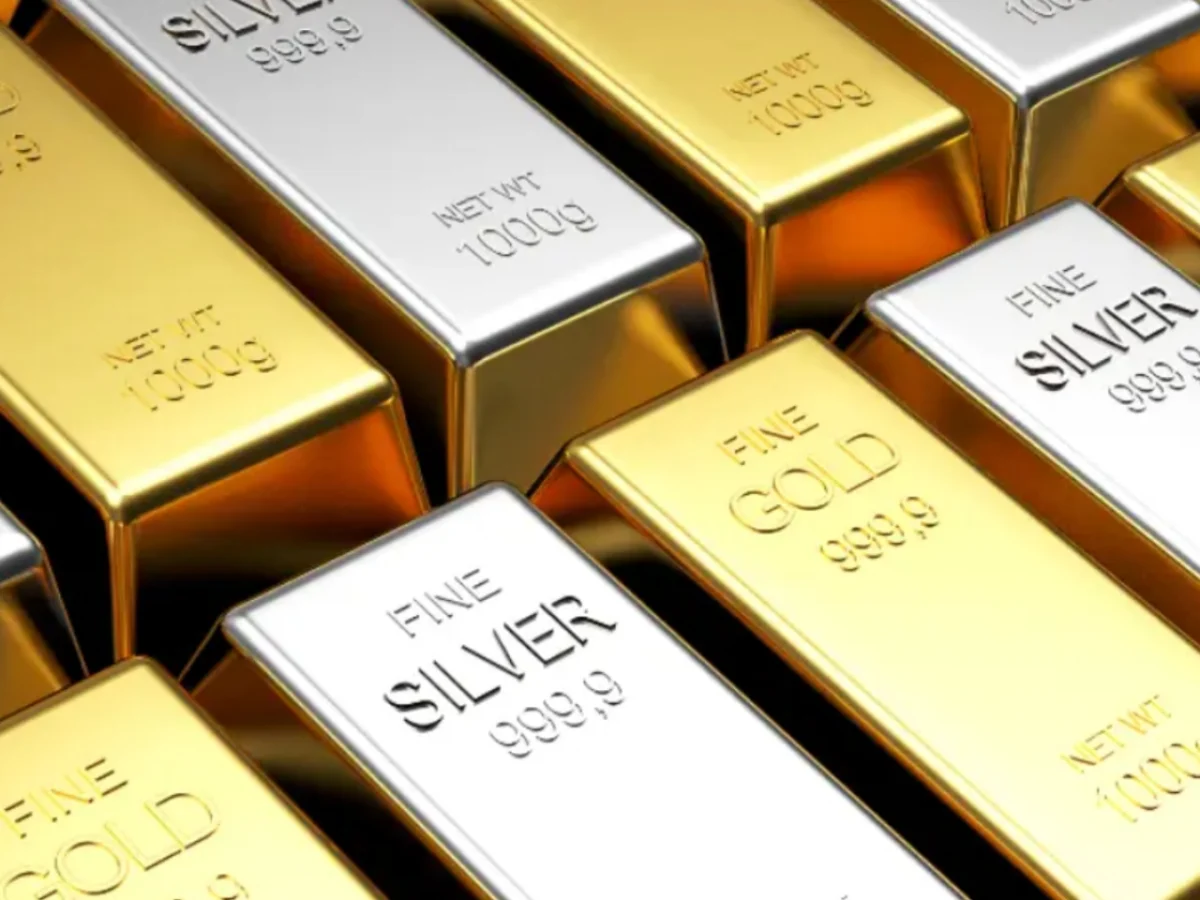
Mumbai, India – June 19, 2026 – India’s vibrant precious metals market continues to exhibit dynamic shifts, reflecting a complex interplay of international economic forces, robust domestic demand, and fluctuating currency valuations. As of Thursday, June 19, 2026, both gold and silver prices have shown distinct trends, with gold registering a slight uptick driven by inflationary pressures and global safe-haven buying, while silver maintains its dual appeal as an investment and industrial commodity. This detailed analysis delves into the current price landscape, the factors shaping these valuations, and the broader implications for consumers, investors, and the Indian economy.
Main Facts: A Snapshot of Today’s Market
On June 19, 2026, the Indian market witnessed gold prices experiencing a modest increase. The benchmark price for 24K gold (999 purity) settled at approximately Rs 14,950 per gram, while 22K gold, widely favoured for jewellery, was quoted at Rs 13,704 per gram. Silver, often seen as gold’s more volatile counterpart, stood at Rs 2,59,900 per kilogram for 999 purity, with sterling silver (925 purity) at Rs 2,59,000 per kilogram. These figures underscore the continued importance of precious metals in India’s financial and cultural fabric, influenced by a confluence of global market trends, the strength of the Indian Rupee against the US Dollar, and persistent local demand, particularly in anticipation of upcoming festive and wedding seasons. City-wise variations, primarily due to local taxes, transportation costs, and regional demand patterns, also remained a notable feature of today’s pricing structure.
Chronology: Tracing the Trajectory of Precious Metals in 2026
The journey of gold and silver prices in India leading up to June 19, 2026, has been marked by several significant global and domestic developments. The year 2026 began with a cautious optimism in global markets, following a period of sustained inflation in late 2025 that had already pushed precious metal prices to elevated levels. Central banks worldwide, including the Reserve Bank of India (RBI), had adopted a measured approach to monetary policy, balancing inflation control with economic growth stimulation.
Early 2026: January and February saw gold prices consolidating after their late-2025 rally. Geopolitical tensions in Eastern Europe and the Middle East, while not escalating dramatically, provided a consistent undercurrent of safe-haven demand, preventing any significant downward correction. Silver, benefiting from its industrial applications, saw increased demand from the burgeoning renewable energy sector, particularly solar panel manufacturing, which provided a floor to its prices.
)
Q2 2026: As spring arrived, global economic data began to paint a mixed picture. While some major economies showed signs of cooling inflation, others continued to grapple with persistent price pressures, leading to renewed discussions about the timing and magnitude of potential interest rate adjustments by key central banks like the U.S. Federal Reserve and the European Central Bank. This uncertainty created a volatile environment for currencies, directly impacting the INR-USD exchange rate, a crucial determinant for landed gold prices in India.
By April and May, a subtle shift occurred. Concerns over a potential slowdown in global growth, coupled with sustained government spending in several nations, rekindled inflation expectations. This sentiment, combined with central banks’ continued accumulation of gold reserves as a diversification strategy, began to push gold prices upwards. Silver, while still influenced by industrial demand, increasingly mirrored gold’s safe-haven appeal during periods of market apprehension.

June 2026: The current month has seen these trends solidify. Global investment flows into gold-backed exchange-traded funds (ETFs) have shown resilience, indicating continued investor confidence in gold as a store of value. Domestically, the approaching monsoon season, often a precursor to robust agricultural incomes and subsequent rural demand for gold, has started to influence market sentiment. The slight increase observed today, June 19, 2026, is thus a culmination of these ongoing global and local dynamics, reflecting a market that is highly sensitive to both economic indicators and investor psychology.
Supporting Data: A Detailed Look at Today’s Rates and Influencing Factors
The current prices of gold and silver on June 19, 2026, are not merely arbitrary figures but are the result of a complex interplay of supply, demand, and macroeconomic factors.
)
Gold Prices on June 19, 2026: An In-Depth Analysis
As of today, the price of 24K gold (999 pure gold) stands at Rs 14,950 per gram. This represents the purest form of gold available and is typically used for bullion, coins, and investment purposes. For consumers, the more relevant figure is often 22K gold, or 91.67% pure gold, which is commonly used in traditional Indian jewellery due to its durability. This is currently priced at Rs 13,704 per gram. The difference in price reflects the purity level, with 22K gold containing alloys (like copper or silver) to enhance its strength.
Factors Driving Gold Prices:
)
- International Gold Price (COMEX/LBMA): Indian gold prices are intrinsically linked to global benchmarks, primarily the COMEX futures market in New York and the London Bullion Market Association (LBMA) spot prices. Any movement in these international prices, driven by global economic data, interest rate expectations, and geopolitical events, directly translates to Indian markets. Today’s slight increase aligns with firming international spot gold prices.
- USD-INR Exchange Rate: Since India imports almost all of its gold, the exchange rate between the US Dollar and the Indian Rupee plays a pivotal role. A weakening Rupee against the Dollar makes gold imports more expensive in Rupee terms, thus pushing up local prices, even if international prices remain stable. Conversely, a stronger Rupee can soften local prices. The current Rupee stability has allowed global price movements to be the primary driver today.
- Inflationary Pressures: Gold is historically viewed as a hedge against inflation. With persistent inflationary concerns globally, investors are increasingly turning to gold as a store of value, contributing to its upward price trajectory. The slight increase observed today is partly attributable to these ongoing inflationary expectations.
- Domestic Jewellery Demand: India’s insatiable appetite for gold, particularly for weddings, festivals (such as Diwali, Akshaya Tritiya, and Dhanteras), and as a traditional asset, significantly influences local prices. While today isn’t a major festive day, underlying demand remains robust, providing a strong floor for prices.
- Central Bank Buying: Many central banks around the world have been consistently increasing their gold reserves over the past few years, diversifying away from fiat currencies. This institutional buying adds significant demand to the global market, indirectly supporting prices in India.
- Government Policies: Import duties on gold imposed by the Indian government also impact local prices. Any changes in these duties can directly influence the landed cost of gold in India.
City-Wise Gold Rates Today (as per Good Returns):
The slight variations in gold prices across major Indian cities reflect local market dynamics, including transportation costs, local taxes (like GST), and regional demand-supply imbalances.
)
-
Gold prices in Delhi:
- 24K Gold: Rs 14,965 per gram
- 22K Gold: Rs 13,719 per gram
- Analysis: Delhi, a major consumption hub, often sees prices slightly above the national average due to consistent demand from the National Capital Region.
-
Gold prices in Mumbai:
)
- 24K Gold: Rs 14,950 per gram
- 22K Gold: Rs 13,704 per gram
- Analysis: Mumbai, being the financial capital and a significant trading centre for bullion, often sets the benchmark for national prices, reflecting the base rate with minimal local premiums.
-
Gold prices in Kolkata:
- 24K Gold: Rs 15,950 per gram
- 22K Gold: Rs 13,704 per gram
- Analysis: The higher 24K gold price in Kolkata (and Chennai) compared to Mumbai and Delhi is notable. This could be attributed to higher local demand, specific regional taxes, or logistical costs. It indicates a strong regional market premium for pure gold in Eastern India.
-
Gold prices in Chennai:
)
- 24K Gold: Rs 15,217 per gram
- 22K Gold: Rs 13,949 per gram
- Analysis: Chennai, a key market in South India, traditionally a high gold-consuming region, also shows a premium, especially for 24K gold, indicative of robust local purchasing power and cultural significance of gold.
Silver Prices on June 19, 2026: A Dual-Purpose Metal
As of today, the price of 999 pure silver in India is approximately Rs 2,59,900 per kilogram. For Silver 925, or sterling silver, often used in jewellery and silverware, the rate is Rs 2,59,000 per kilogram. While generally less expensive than gold, silver holds significant importance as both an investment vehicle and an industrial metal.
Factors Influencing Silver Prices:
)
- Industrial Demand: Unlike gold, a substantial portion of silver’s demand comes from industrial applications. Its excellent electrical conductivity and photosensitivity make it crucial in electronics, solar panels, medical instruments, and automotive components. Strong global manufacturing data or technological advancements can significantly boost silver demand and prices. The ongoing push for green energy solutions, particularly solar power, has been a consistent driver for silver.
- Investment Demand: Similar to gold, silver is also considered a safe-haven asset, albeit with higher volatility. Investors often turn to silver during periods of economic uncertainty or as a hedge against inflation.
- Gold-Silver Ratio: Analysts often look at the gold-silver ratio (how many ounces of silver it takes to buy one ounce of gold) to gauge relative value. A high ratio might suggest silver is undervalued compared to gold, and vice versa.
- Global Market Trends: Like gold, international silver prices (COMEX futures, LBMA spot) dictate local Indian prices, adjusted for the USD-INR exchange rate and import duties.
City-Wise Silver Rates Today:
-
Silver price in Delhi today:
)
- Silver 999: Rs 2,599 per 10 grams
- Analysis: Consistent with Mumbai and Kolkata, indicating a relatively uniform national wholesale price, likely due to lower transport costs relative to value compared to gold.
-
Silver price in Mumbai today:
- Silver 999: Rs 2,599 per 10 grams
- Analysis: Mumbai, being a major trading hub, often reflects the base national rate for silver.
-
Silver price in Kolkata today:
)
- Silver 999: Rs 2,599 per 10 grams
- Analysis: Uniform pricing with Delhi and Mumbai suggests efficient supply chains for silver across these major cities.
-
Silver price in Chennai today:
- Silver 999: Rs 2,699 per 10 grams
- Analysis: Chennai shows a notable premium for silver, similar to gold. This reinforces the idea of strong regional demand and potentially higher local logistical costs or taxes in South India for precious metals.
Official Responses: Expert Perspectives on the Market Outlook
Market analysts and industry experts offer varied perspectives on the current trajectory and future outlook for gold and silver, emphasizing the complex interplay of global macroeconomics and local dynamics.
)
Mr. Alok Sharma, Chief Precious Metals Strategist at Zenith Financial Services, commented on the gold market: "The slight increase in gold prices today is a clear indicator of sustained inflationary concerns globally and a cautious approach by central banks. We are seeing a gradual accumulation by institutional investors who view gold as a reliable hedge against currency depreciation and economic uncertainty. For the latter half of 2026, we anticipate gold to maintain its upward momentum, possibly testing new highs if geopolitical stability remains elusive or if major economies show signs of slowing growth, prompting a ‘flight to safety’."
Dr. Priya Singh, Senior Economist at the Indian Institute of Economic Studies, highlighted the role of the Rupee: "While international prices are dominant, the stability of the INR-USD exchange rate has been crucial in insulating Indian consumers from sharper price shocks. The Reserve Bank of India’s vigilant monetary policy and foreign exchange management will continue to be critical. Any significant depreciation of the Rupee could rapidly push up local gold and silver prices, regardless of global trends, making imports more expensive and impacting India’s current account deficit."
)
Regarding silver, Ms. Rina Das, Head of Commodities Research at Global Insights Group, noted: "Silver’s dual identity as an industrial metal and a safe-haven asset makes its price more volatile than gold. The robust demand from the green technology sector, particularly for solar PV and electric vehicles, is providing a strong fundamental floor. However, a global economic slowdown could temper industrial demand, making its price more reliant on its investment appeal. We project silver to outperform gold in periods of strong industrial growth but might lag in times of pure safe-haven buying."
Mr. Suresh Jain, President of the All India Jewellers Association, provided a perspective on domestic demand: "Despite the elevated prices, consumer demand for gold jewellery remains resilient, especially in the lead-up to the festive season. Gold is not just an ornament; it’s a deeply ingrained cultural asset and a traditional form of savings for Indian households. While price sensitivity exists, particularly for daily wear, demand for wedding jewellery and investment-grade gold coins continues unabated. The regional variations we see today are also testament to the diverse purchasing patterns across India."
)
Implications: Navigating the Future of Precious Metals
The current market trends and expert analyses carry significant implications for various stakeholders in India.
For Consumers and Households:
- Purchasing Power: Elevated gold and silver prices mean that consumers will need to allocate a larger budget for jewellery purchases, particularly for weddings and festivals. This might lead to a shift towards lighter jewellery designs or a preference for 22K gold over 24K for ornamental purposes.
- Traditional Savings: For millions of Indian households, gold remains a preferred form of savings and financial security. Rising prices enhance the value of their existing gold holdings but also make fresh accumulation more challenging for lower-income groups.
- Inflation Hedge: Gold’s role as a hedge against inflation becomes particularly relevant. As daily expenses rise, owning physical gold provides a tangible asset that historically tends to retain or increase its value during inflationary periods.
For Investors:
- Safe-Haven Appeal: Gold continues to solidify its position as a primary safe-haven asset, attracting investors seeking to protect their wealth amidst global economic uncertainties and market volatility.
- Diversification: Both gold and silver offer valuable diversification benefits within an investment portfolio, often moving inversely or independently of traditional assets like stocks and bonds.
- Investment Avenues: Investors have various options beyond physical gold, including gold exchange-traded funds (ETFs), sovereign gold bonds (SGBs) issued by the government, digital gold platforms, and gold futures contracts. SGBs, in particular, offer the dual benefit of price appreciation and a fixed interest rate, making them an attractive option.
- Silver’s Potential: Silver, with its industrial demand drivers, offers a higher growth potential but also higher volatility. Investors with a greater risk appetite might find silver an attractive long-term investment, especially with the global shift towards green technologies.
For the Indian Economy:
- Current Account Deficit: India is one of the world’s largest importers of gold. High international gold prices, coupled with strong domestic demand, can lead to a significant outflow of foreign exchange, widening the current account deficit (CAD). The government remains watchful of this, often adjusting import duties to manage inflows.
- Household Savings and Capital Formation: While gold is a traditional saving instrument, excessive investment in physical gold can divert funds from more productive assets that contribute to capital formation and economic growth. Government initiatives like the Gold Monetisation Scheme aim to bring idle gold into the formal financial system.
- Jewellery Industry: The organized jewellery sector in India, a significant employer, is directly impacted by price fluctuations. While high prices can deter some buyers, the industry adapts by innovating designs and offering schemes to sustain demand.
Global Economic Context:
- Monetary Policy: The stance of major central banks on interest rates and quantitative easing will continue to be a dominant factor. Higher real interest rates generally make non-yielding assets like gold less attractive, while lower rates or expectations of rate cuts tend to support gold prices.
- Geopolitical Stability: Ongoing geopolitical tensions in various regions of the world provide consistent underlying support for safe-haven assets. Any escalation could lead to sharp spikes in gold and silver prices.
- Industrial Growth: The health of the global manufacturing sector, particularly in electronics and renewable energy, will significantly influence silver demand and, consequently, its price.
In conclusion, the Indian precious metals market on June 19, 2026, reflects a mature yet dynamic environment. While global macroeconomic factors set the broader trend, local demand, currency rates, and government policies intricately shape the final prices experienced by consumers and investors across India’s diverse cities. As the year progresses, stakeholders will continue to monitor these multifaceted influences to navigate the evolving landscape of gold and silver.
