

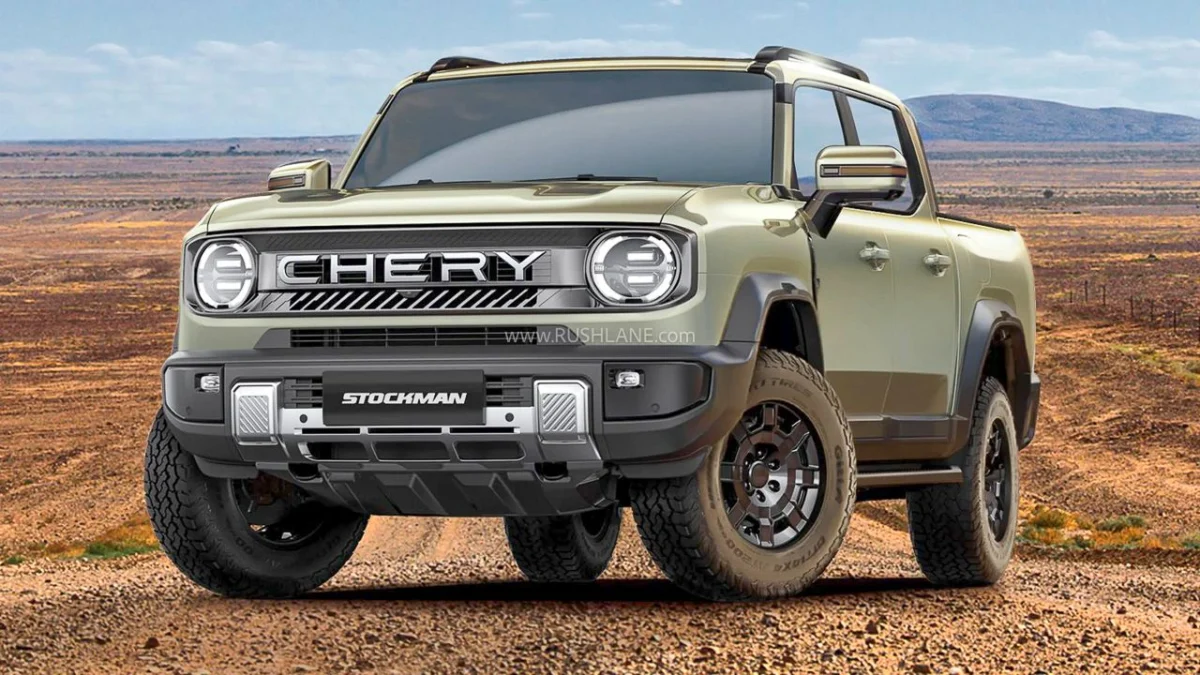
Australia’s automotive landscape, long dominated by the rugged charm of the "ute," is on the precipice of a technological revolution. While the industry has seen a surge in petrol-based Plug-in Hybrid Electric Vehicles (PHEVs) and pure Battery Electric Vehicles (BEVs), a significant gap has remained for those who demand the long-distance reliability and high-torque performance of a diesel engine combined with modern electrification.
That gap is set to be bridged by Chery, the Chinese automotive giant, with the upcoming launch of the Chery Stockman. As a turbodiesel PHEV pickup, the Stockman represents a potential world-first in the mid-size dual-cab category, specifically tailored to the unique demands of the Australian Outback and the modern tradesperson.
Main Facts: A Powerhouse Performance Profile
The Chery Stockman is not merely another entry into the crowded pickup segment; it is a calculated attempt to solve the "range anxiety vs. capability" dilemma that has slowed EV adoption in rural sectors. At the heart of the Stockman lies a sophisticated 2.5-litre turbocharged diesel engine integrated with a high-output electric motor.
The Power of Hybridization
The combined system output is nothing short of staggering for its class. The Stockman delivers a peak power of 350 kW (476 hp) and a massive 800 Nm of torque. To put these figures into perspective, the Stockman outmuscles many of the current V6 diesel leaders in the segment, providing the kind of low-end grunt essential for heavy-duty towing and technical off-roading.
Range and Efficiency
Equipped with a robust battery pack, the Stockman offers a pure electric range of 100 km (based on the NEDC cycle). This allows urban owners to complete their daily commutes or site visits entirely on electric power, significantly reducing running costs. When the battery is depleted or when heading into the deep bush, the 2.5L turbodiesel engine takes over, offering the range security that only liquid fuel can currently provide in remote regions.
Built for the Bush
Understanding that an Australian ute is only as good as its utility, Chery has built the Stockman on a traditional ladder-frame platform. It features a sophisticated 4WD system and boasts a ground clearance of 247 mm even under full load. Its towing credentials are equally impressive, featuring a 3,500 kg braked towing capacity, aligning it with the industry gold standard set by the Toyota HiLux and Ford Ranger.
Chronology: From Concept to the "Stockman" Identity
The journey of Chery’s entry into the Australian ute market has been a strategic exercise in community engagement and brand building.

The Naming Contest
In an unusual move for a major manufacturer, Chery decided to crowdsource the name for its new flagship pickup. Recognizing the fierce loyalty Australian ute owners have for their vehicles, the company organized a public contest to find a moniker that resonated with the local culture. After thousands of entries and a rigorous shortlisting process, "Stockman" emerged as the winner.
The term "Stockman" is deeply embedded in the Australian lexicon, traditionally referring to a person who looks after livestock, often on large stations. It evokes images of grit, reliability, and hard work—qualities Chery intends to mirror in the vehicle’s performance.
A Surprising Heritage
The "Stockman" name carries a curious historical weight. Automotive historians will recall that the name was previously utilized by both Suzuki and Mahindra. The India-made Maruti Gypsy was famously sold as the "Stockman" in Australia during the 1990s, and Mahindra used the name for its Jeep-based models in various global markets.
However, in a surprising twist of corporate oversight, neither Suzuki nor Mahindra maintained a valid trademark on the name in the Australian jurisdiction. This legal opening allowed Chery to secure the name, effectively inheriting a piece of Australian automotive nostalgia while moving it into a high-tech future.
Launch Timeline
Following the finalization of the name and the unveiling of the prototype specifications, Chery is currently in the final stages of local testing. The vehicle is expected to make its official Australian debut later this year, with a petrol-based PHEV variant slated to follow in 2025 to compete with the likes of the BYD Shark 6.
Supporting Data: Dimensions and Design
The Chery Stockman is designed to be a "big" mid-size ute, pushing the boundaries of the category to provide maximum cabin space and tray utility.
Physical Dimensions:

- Length: 5,450 mm
- Width: 2,010 mm
- Height: 1,890 mm
- Wheelbase: 3,250 mm
- Ground Clearance: 247 mm (Fully Loaded)
Aesthetic and Interior Comfort
Visually, the Stockman strikes a balance between retro-ruggedness and modern sleekness. The front fascia is dominated by circular headlamps featuring integrated LED Daytime Running Lights (DRLs), a nod to classic off-roaders but executed with modern LED technology.
Inside, the Stockman moves away from the "workhorse" austerity of old. The cabin is lined with premium materials, including leather-appointed seats and suede accents on the dashboard, roof lining, and door cards.
Key Interior Features Include:
- Ventilated front seats for the harsh Australian summer.
- A flat rear floor, enhancing storage and passenger comfort.
- Dual-zone climate control and a premium sound system.
- A comprehensive digital cockpit with wireless charging capabilities.
At launch, the vehicle will be offered in four distinct colorways: White Opal, Serpentine, Sandstone, and Obsidian, with premium metallic finishes available as optional extras.
Official Responses: A Gracious Handover
The adoption of the Stockman name could have been a point of contention between manufacturers, but the response from the industry has been surprisingly harmonious.
Suzuki, the previous holder of the "Stockman" identity in Australia, issued a statement expressing their approval of the name’s revival. A spokesperson for Suzuki noted that they were "delighted" to see the popular nameplate continue to be a part of the Australian automotive scene, acknowledging its legacy as a symbol of rugged utility.
Chery Australia’s leadership has emphasized that the Stockman is not just a global product being "dumped" into the local market, but a vehicle that has undergone specific tuning to handle the corrugated roads and extreme temperatures characteristic of the Australian environment.

Implications: A Game-Changer for the "Ute" Nation
The introduction of the Chery Stockman turbodiesel PHEV has profound implications for the Australian automotive market, the environment, and the future of the pickup segment.
Solving the Rural EV Problem
For years, the primary criticism of electric pickups in Australia has been the lack of charging infrastructure in the "Red Centre" and the impact of heavy towing on battery range. By utilizing a diesel engine as part of the PHEV powertrain, Chery has bypassed these concerns. Diesel fuel is more readily available than high-octane petrol in remote stations, and the inherent efficiency of a diesel engine under load makes it the ideal partner for a hybrid system.
Competitive Pressure
The Stockman enters a market that is suddenly becoming very crowded with "New Energy" utes. It will face off against:
- BYD Shark 6: A petrol PHEV that has already garnered significant interest.
- Ford Ranger PHEV: The electrified version of Australia’s best-selling vehicle.
- GWM Cannon Alpha: Another strong contender from China offering hybrid technology.
By being the only one in this group to offer a diesel PHEV, Chery occupies a unique niche that appeals to traditionalists who aren’t ready to give up the benefits of compression-ignition engines but want to lower their carbon footprint and fuel bills.
Environmental Impact and Fleet Standards
With the Australian government introducing stricter New Vehicle Efficiency Standards (NVES), manufacturers are under pressure to lower their average fleet emissions. The Stockman allows Chery to offer a high-performance, heavy-duty vehicle that contributes positively to these targets. The 100 km EV range means that for a large portion of its life, the Stockman could operate as a zero-emissions vehicle, while still retaining the "go-anywhere" capability required by Australian industries.
Conclusion
The Chery Stockman is more than just a new car; it is a laboratory for the future of the Australian utility vehicle. By combining a high-torque 2.5L turbodiesel with a powerful electric motor, Chery is offering a "no-compromise" solution for the modern stockman, farmer, and adventurer.
If the vehicle lives up to its on-paper specifications of 800 Nm and 3,500 kg towing capacity, it may well force the established "Big Three"—Toyota, Ford, and Isuzu—to accelerate their own electrification plans. As the Stockman prepares to hit Australian shores later this year, the message is clear: the era of the diesel-electric ute has arrived, and it is ready to work.
