

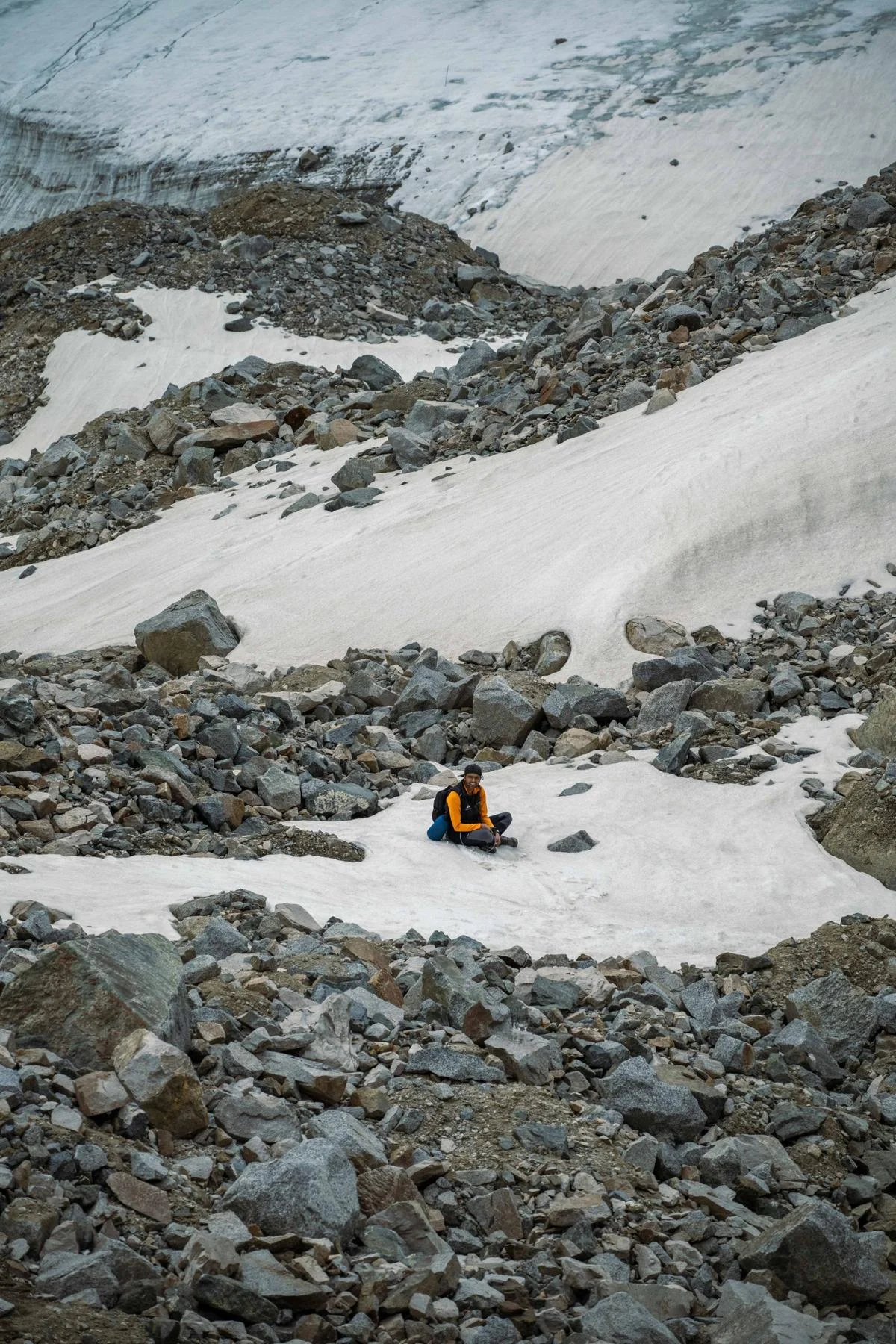
KATHMANDU/NEW DELHI – In the high-altitude "Death Zone" of the Himalayas, the margin between a triumphant summit and a tragic end is often no thicker than a climbing rope. For Anurag Maloo, a seasoned mountaineer and social entrepreneur, that margin vanished on April 17, 2023, on the treacherous slopes of Mt. Annapurna. What followed was not only a medical miracle that defied the boundaries of science but the birth of a mission to save the world’s "Water Towers" before they disappear forever.
I. Main Facts: Survival Against All Odds
In April 2023, Anurag Maloo, an Indian mountaineer with over 15 years of experience in the startup and venture capital ecosystems, found himself 150 meters shy of the 8,091-meter summit of Annapurna I—statistically one of the world’s most dangerous peaks. Confronted by deteriorating weather, Maloo made the pragmatic decision to turn back. However, during his descent from Camp 3, a momentary technical error—clipping into a wrong, unsecured fixed rope—sent him plummeting 70 meters into a deep, vertical crevasse.
Maloo remained trapped in the "frozen gut" of the glacier at an altitude of approximately 6,000 meters for three days. With temperatures plummeting to -40°C and no access to food, water, or communication, his survival was deemed impossible. When rescuers finally extracted him on the fourth day, he was clinically dead.
Today, Maloo is not only a survivor but a leading voice in climate advocacy. As the founder of The Voice of Glaciers Foundation (TVGF) and a World Economic Forum Young Global Leader (2025), he has transitioned from surviving a glacier to fighting for the survival of glaciers themselves.
II. Chronology of a Miracle: 72 Hours in the Abyss
The Fall and the Silence
On the afternoon of April 17, 2023, as Maloo descended toward Camp 2, the routine of mountaineering became a nightmare. The "wrong clip" is a mistake that usually ends instantly in the Himalayas. Maloo fell into a crevasse—a labyrinthine crack in the glacier—landing on a ledge 70 meters below the surface.

For the next 72 hours, Maloo existed in a state of suspended animation. "I had only my GoPro for company," he recalls. Inside the glacier, the world was a monochromatic blue-white, silent except for the groaning of moving ice. He recorded messages, documenting his thoughts and reflections, assuming they would be his final words. The extreme cold, while life-threatening, likely induced a state of profound hypothermia that slowed his metabolic rate, a factor that would later prove crucial to his resuscitation.
The Rescue Operation
The rescue was a feat of extraordinary bravery. A team of Polish climbers, including Adam Bielecki and Mariusz Hatala, alongside Nepali Sherpas, braved the unstable terrain to descend into the crevasse. On the morning of the fourth day, they located Maloo’s body. He was unresponsive, pulseless, and showed no signs of life.
The Medical Resurrection
Upon being airlifted to a hospital in Pokhara, doctors faced a grim reality. Maloo was clinically dead. However, refusing to give up, a medical team began what would become one of the longest successful Cardiopulmonary Resuscitation (CPR) efforts in documented history. For nearly four hours—approximately 240 minutes—doctors performed continuous chest compressions and advanced life support.
Against every statistical probability, Maloo’s heart began to beat again. His recovery was long and arduous, involving multiple surgeries and months of rehabilitation, but the cognitive and physical restoration was near-total.
III. Supporting Data: The Melting Sentinel
Maloo’s personal brush with the ice highlighted a much larger, systemic catastrophe: the rapid disappearance of the world’s glaciers. The data regarding the Hindu Kush Himalaya (HKH) region—often called the "Third Pole"—is staggering.

- Ice Volume Loss: Himalayan glaciers have lost more than 40% of their ice volume since the year 2000.
- Acceleration: The rate of ice loss in the HKH region has doubled in the last two decades compared to the period between 1970 and 2000.
- The 2100 Forecast: Scientists estimate that at current warming trajectories, at least half of the world’s glaciers could vanish by the end of the century.
- Water Insecurity: Glaciers serve as upstream "water towers" for nearly 2 billion people. They regulate the flow of major river systems including the Indus, Ganges, and Brahmaputra, which sustain agriculture, hydropower, and drinking water for a significant portion of the global population.
"I was fortunate to have those 72 hours in the glacier to be saved," Maloo says. "But these glaciers may not even have 72 years if we continue on our current path."
IV. Official Responses and Scientific Recognition
The medical community has treated Maloo’s case as a landmark study in human physiology and extreme resuscitation. His survival and recovery have been meticulously documented and published in prestigious peer-reviewed journals, including:
- The Air Medical Journal: Analyzing the logistics of high-altitude rescue and the efficacy of prolonged CPR in hypothermic patients.
- ScienceDirect: Focusing on the physiological limits of the human body and the "Lazarus-like" recovery following deep hypothermic arrest.
Medical experts note that Maloo’s case redefines the "golden hour" of resuscitation. In cases of extreme cold, the traditional window for CPR is vastly extended because the brain’s oxygen requirement is drastically reduced.
Furthermore, Maloo’s appointment as a Young Global Leader by the World Economic Forum in 2025 serves as an official endorsement of his shift from mountaineer to a systemic change-maker. His background in venture capital and social impact has allowed him to speak a language that resonates with both climate scientists and global investors.
V. The Implications: From Survival to Sustainability
The founding of The Voice of Glaciers Foundation (TVGF) in 2025 marks the transition of Maloo’s experience into a structured fight against climate change. The foundation is built on three strategic pillars designed to address the "action gap" in glacier preservation.

1. Elevating Public Consciousness
Glaciers are often viewed as remote, abstract entities. TVGF aims to bridge this psychological distance. Through "Glacier Festivals," public art installations, and the release of accessible data, Maloo seeks to make the "Third Pole" a household priority. The goal is to make the urban dweller in Delhi or Dhaka realize that their tap water is directly linked to a melting block of ice hundreds of miles away.
2. Digital Public Infrastructure (DPI) for Risk
In his 15 years working with startups, Maloo learned the power of data. TVGF is advocating for and helping build "Digital Twins" of glacier systems—virtual models that can simulate the impact of climate change.
- Multi-Hazard Warning Systems: Developing AI-driven platforms to predict Glacier Lake Outburst Floods (GLOFs), which threaten downstream communities.
- Glacier Risk Intelligence: A national open platform that translates complex satellite imagery into actionable intelligence for local governments and farmers.
3. Mobilizing Capital
Perhaps the most ambitious goal is the financial one. Maloo argues that glacier preservation must be elevated to the same level of corporate and philanthropic priority as ocean plastic or reforestation.
"I want upstream mountain ecosystems to be an integral part of corporate sustainability commitments (CSR) and ESG (Environmental, Social, and Governance) spending," Maloo explains. By framing glacier loss as a threat to global supply chains and water security, TVGF is positioning the crisis as a "civilizational emergency" rather than just an environmental one.
Conclusion: The Survivor’s Responsibility
Anurag Maloo’s story is no longer about a fall into a crevasse; it is about the climb out of a global crisis. His survival is a testament to human resilience and medical advancement, but his subsequent work is a reminder of human responsibility.
"During my recovery, when even standing felt like an impossible peak, I focused only on the next immediate step," Maloo says. "The world is currently standing at the edge of a crevasse. We cannot afford to look back or ask ‘why’ indefinitely. We must ask ‘what next?’"

As the Himalayan peaks continue to lose their white shrouds at an unprecedented rate, Maloo’s voice serves as a haunting and hopeful resonance from the deep ice—a reminder that while he was pulled out of the glacier, the glacier itself still needs a savior. The mission of TVGF is to ensure that the "Voice of Glaciers" is heard before the silence of the ice becomes permanent.
