

TOKYO — There is a specific, heart-stopping moment—occurring somewhere between the first aggressive weight transfer and the second lungful of acrid tire smoke—when drifting ceases to be mere automotive theater and begins to make profound, visceral sense.
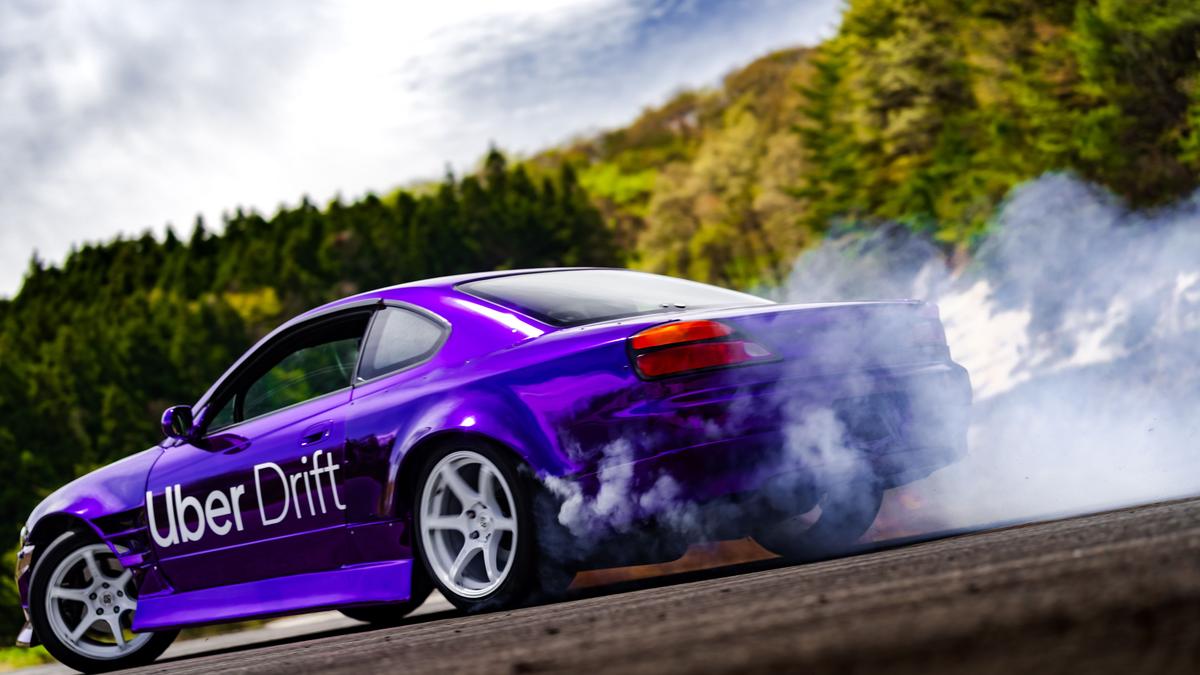
At the Mobara Twin Circuit, located approximately 90 minutes outside the neon-lit sprawl of Tokyo, this realization manifests with jarring intensity. Strapped into the bucket seat of a Nissan Silvia S15—a car that serves as the holy grail for enthusiasts of Japanese Domestic Market (JDM) machinery—the world outside the windshield becomes a blurred periphery. Fausto, a reigning Drift Champion, initiates a slide that feels mechanically defiant. He holds the car at an angle that mocks the laws of physics, balancing opposite lock with millimetric precision.
Through the side window, another drift car hovers inches away in a "tandem" run, its proximity so close that the vibrations of its engine resonate through the S15’s roll cage. The rear tires are not merely spinning; they are evaporating into a thick, white shroud. The engine sits hard against the rev limiter, a rhythmic hammering of mechanical stress. Every biological instinct screams that a catastrophic collision is imminent. Yet, within the cabin, the atmosphere is one of clinical, organized composure.
This is the paradox of drifting in Japan: a discipline that, from a distance, appears as unbridled chaos, but up close reveals itself to be one of the most rigorous and technical forms of driving on the planet. It is precision disguised as violence, and commitment masquerading as madness.
Main Facts: The Intersection of Technology and Tradition
The contemporary drifting scene in Japan is currently undergoing a significant transition. While its roots remain firmly planted in the underground "touge" (mountain pass) culture of the 1980s, the sport has evolved into a multi-million-dollar industry and a cornerstone of Japanese tourism.
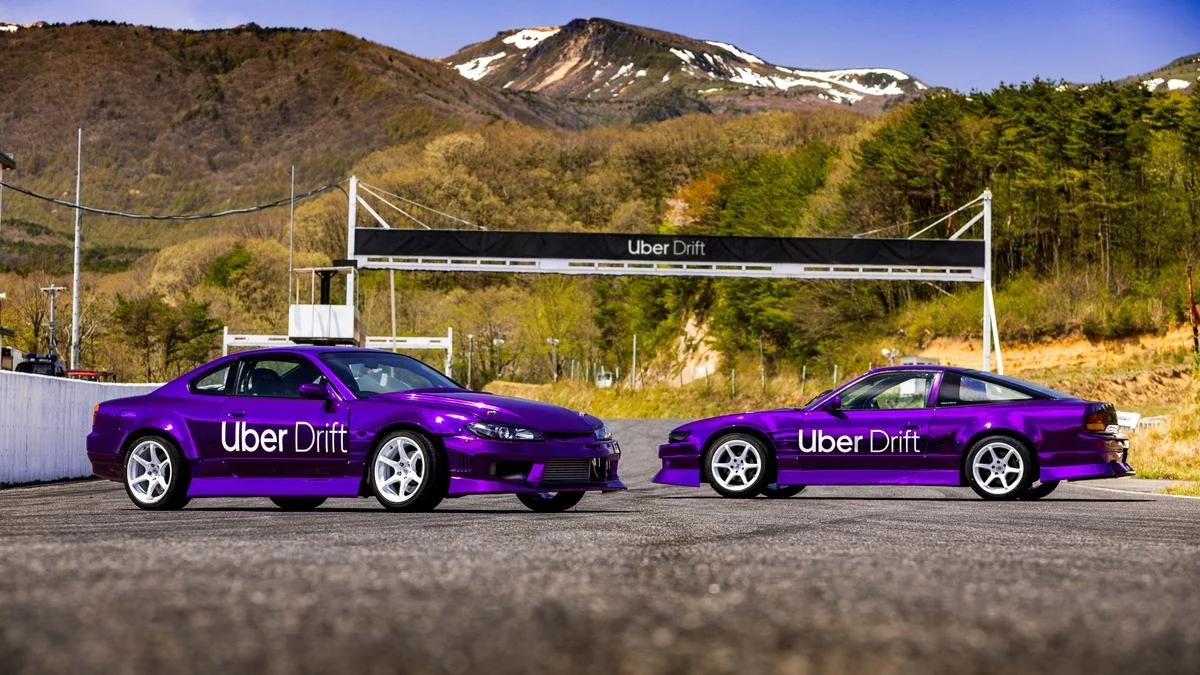
The latest development in this evolution is the "Uber Drift" initiative. Part of Uber’s limited-edition "Go Anywhere" series of global experiences, the program seeks to bridge the gap between curious international travelers and the often-impenetrable world of Japanese motorsport. By providing an "Uber Black" transport from central Tokyo to the Mobara Twin Circuit, the service offers enthusiasts a curated entry point into a subculture that has historically been guarded by local practitioners.
At the circuit, guests are paired with Formula Drift licensed professionals. These are not mere enthusiasts but elite athletes who command vehicles engineered specifically for "controlled oversteer." Unlike traditional circuit racing, which prioritizes the "friction circle" to maintain maximum grip, drift cars are built to break it.
Key components of a modern drift car include:
- Steering Angle Kits: Specialized suspension components that allow the front wheels to rotate up to 60 or 70 degrees, far beyond the 30-degree limit of a standard road car.
- High-Torque Powerplants: Engines, often the legendary SR20DET or 2JZ-GTE, tuned to provide immediate bursts of torque to keep tires spinning regardless of speed.
- Hydraulic Handbrakes: Used to lock the rear wheels instantly to initiate or adjust the car’s angle.
Chronology: From Mountain Passes to Global Phenomenon
To understand the current state of Japanese drifting, one must trace the timeline of its development from a rebellious pastime to a sanctioned sport.
The 1970s and 80s: The Touge Era
Drifting was born on the narrow, winding mountain roads of Japan. In the 1970s, street racers known as Hashiriya discovered that by intentionally sliding the rear of the car through tight downhill hairpins, they could maintain higher engine RPMs and exit corners with more momentum. What began as a tactical maneuver for speed soon evolved into an aesthetic pursuit. Drivers began to compete not just for the fastest time, but for the most "stylish" slide.
The Rise of the "Drift King"
In the late 1980s, professional racer Kunimitsu Takahashi became a legend for using drifting techniques in the Japanese Touring Car Championship to gain an edge. However, it was Keiichi Tsuchiya—famously known as the "Drift King"—who brought the art form to the masses. Tsuchiya’s "Pluspy" video, which featured him drifting his Toyota AE86 on public mountain roads, became a viral sensation in the pre-internet era, leading to the first organized drift competitions.
2001: The D1 Grand Prix
The formalization of the sport culminated in the launch of the D1 Grand Prix in 2001. This was the first professional drifting series, establishing a judging criteria based on speed, angle, and "clipping points." This shifted drifting from the shadows of illegal street meets into the spotlight of international stadiums.
The Modern Era: Globalization and Tourism
Today, drifting is a global export. The Fast & Furious franchise (specifically Tokyo Drift) and the Initial D anime series have turned Japanese car culture into a massive soft-power asset for the country. This has led to the current era of "automotive tourism," where fans travel from across the globe to witness the "Mecca" of drifting firsthand.
Supporting Data: The Physics of the Slide
The technicality of drifting is often overshadowed by the spectacle of smoke and noise. However, the data behind a successful run reveals a high-speed exercise in fluid dynamics and weight transfer.
In a professional tandem run, the "lead" car sets the line and pace, while the "chase" car must mimic the lead car’s movements as closely as possible. Judges look for several key metrics:
- Angle: The degree to which the car is sideways relative to its direction of travel. Greater angle is more difficult to maintain and thus earns higher points.
- Line: Following a predetermined path that takes the car’s bumper within inches of "clipping zones" at the edge of the track.
- Proximity: In tandem drifting, the chase car is expected to stay within centimeters of the lead car.
- Fluidity: Any "corrections"—such as the driver jerking the steering wheel or the car losing its smooth arc—result in heavy point deductions.
According to telemetry data from professional drift sessions, drivers make dozens of micro-corrections per second. They are simultaneously managing the throttle to control the radius of the slide, the steering to catch the car’s rotation, and the foot brake to adjust the distance between them and the car in front.
Official Context: Uber’s Strategic Entry into Subculture
The "Uber Drift" experience represents a broader shift in how global tech companies are approaching the Japanese market. Uber, which has faced stiff competition from local taxi apps in Japan, has pivoted toward "experiential luxury" to differentiate its brand.
"The goal of the ‘Go Anywhere’ series is to provide access to experiences that are quintessentially Japanese but often out of reach for the average visitor," an Uber spokesperson noted during the launch. "Drifting is a vital part of Japan’s modern heritage. By partnering with professional circuits and licensed drivers, we are offering a safe, professional, yet raw look at this culture."
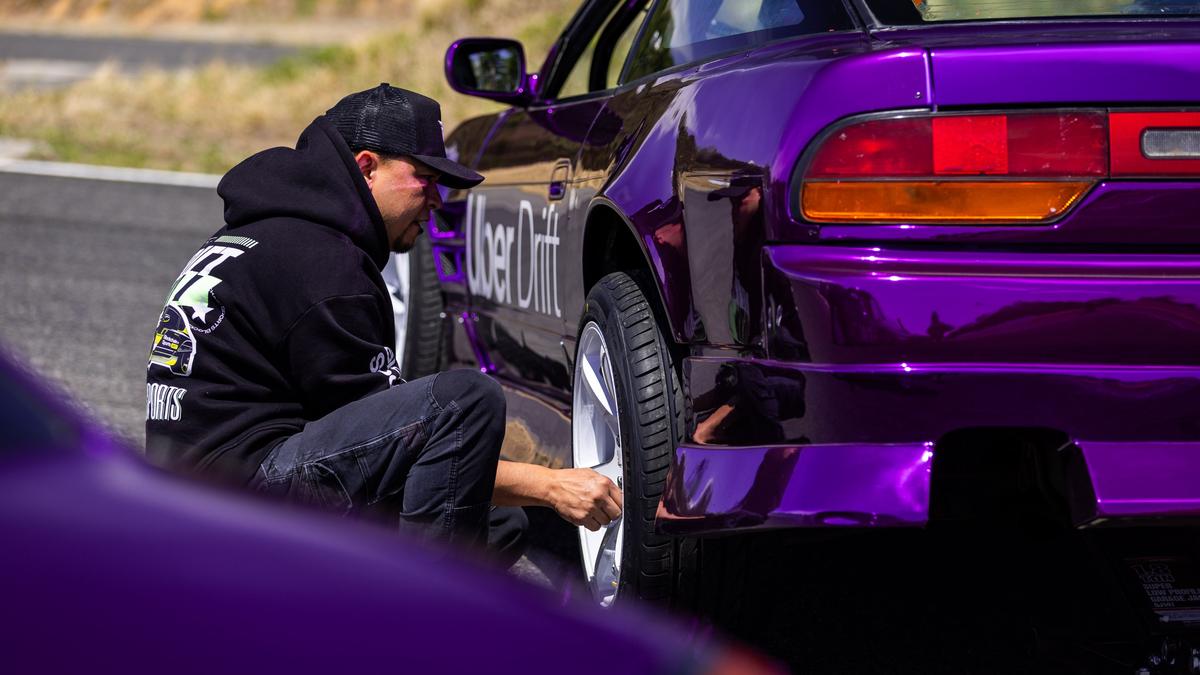
By utilizing the Mobara Twin Circuit, Uber is supporting grassroots motorsport infrastructure. Mobara is not a sterile, corporate facility; it is a "living" track where local teams spend their weekends wrenching on cars and perfecting their craft. The inclusion of the Nissan Silvia S15 and the 180SX in the program is also a calculated nod to authenticity—these chassis are the backbone of the drifting world, prized for their near-perfect weight distribution and rear-wheel-drive layout.
Implications: The Future of the "Sideways" Art Form
The commercialization of drifting through programs like "Uber Drift" carries significant implications for the future of the sport and Japanese car culture.
Preservation vs. Commercialization
There is an ongoing debate within the community regarding the "sanitizing" of drift culture. Some purists argue that moving drifting from the mountains and industrial docks into curated tourist packages strips it of its rebellious soul. However, many professional drivers see this as a necessary evolution. The revenue from such programs helps maintain aging circuits like Mobara and provides a legitimate career path for talented drivers who might otherwise remain in the illegal street scene.
The "JDM" Economic Boom
The global demand for Japanese drift icons (the S15, the Skyline GT-R, the Supra) has seen prices for these vehicles skyrocket. A Nissan Silvia S15 that might have cost $5,000 a decade ago can now fetch upwards of $40,000 to $60,000 on the international market. This economic pressure has made drifting an expensive pursuit, shifting the demographic of the sport from blue-collar enthusiasts to high-net-worth collectors and professional teams.
Environmental Considerations
As the automotive industry pivots toward electrification, drifting faces an existential question. The sport is fundamentally built on internal combustion—the sound of a turbocharger spooling and the smell of burning rubber are central to the experience. While electric drift cars (such as the Mustang Mach-E 1400) have begun to appear, the Japanese scene remains deeply wedded to the mechanical "soul" of 90s-era engines.
Conclusion: A Masterclass in Human Skill
Ultimately, the experience of being thrown sideways at 100 kilometers per hour at Mobara Twin Circuit serves as a reminder of the limits of human skill. In an age of autonomous driving and driver-assist technologies, drifting is a defiant celebration of the manual.
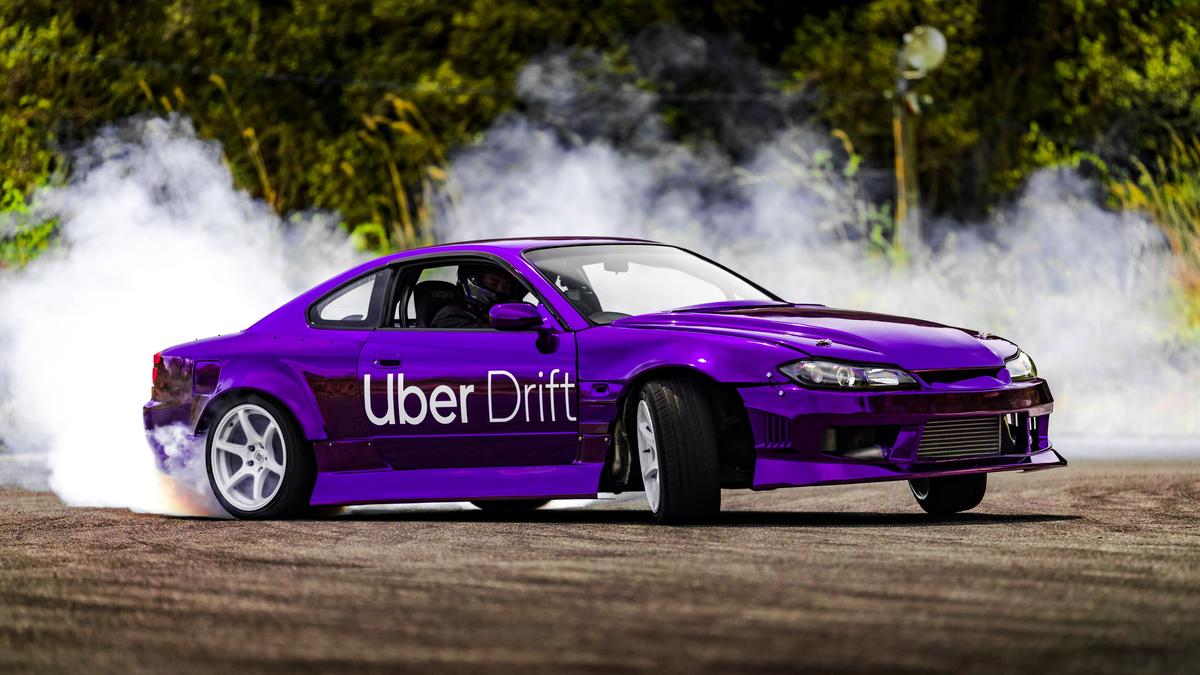
The driver’s calmness is perhaps the most startling takeaway. While the car is in a state of terminal oversteer, the pilot’s hands move with the grace of a pianist. There is no panic—only a deep, mechanical understanding of how to balance a ton of metal on a knife’s edge.
Drifting in Japan is more than just a motorsport; it is a philosophy of control. It teaches that even when the world is sliding out of grip, there is a way to find a line through the smoke. For those who witness it from the passenger seat, the "organized violence" of the drift becomes a clear, adrenaline-fueled testament to why Japan remains the undisputed heart of the automotive world.
