

Main Facts: The Protein Pivot in West Bengal’s School Kitchens
In a move that has ignited a fierce debate between public health advocates and proponents of religious dietary restrictions, reports have emerged from West Bengal regarding a significant shift in the state’s Midday Meal Scheme. For years, the inclusion of eggs has been a cornerstone of the nutritional strategy for children from underserved communities. However, recent directives in certain districts have seen a transition toward a "pure shakahari" (strictly vegetarian) menu, which not only eliminates eggs but also excludes staples like onions and garlic.
This policy shift targets the most vulnerable demographic: children from economically marginalized backgrounds for whom the school-provided meal is often the only substantial source of nutrition in a 24-hour cycle. The withdrawal of the "lone egg"—frequently the only source of high-quality animal protein these children receive all week—raises critical questions about the biological and economic feasibility of vegetarian substitutes.
Nutritionists and pediatricians argue that while the debate is often framed through the lens of cultural sensitivity, the physiological reality of child development is less flexible. An egg is not merely a food item; it is a "gold standard" of protein. As the controversy unfolds, the central question remains: Can plant-based alternatives like paneer, soya, or rajma truly bridge the nutritional chasm left by the removal of eggs, particularly within the tight budgetary constraints of government-funded programs?
Chronology: The Evolution of the Egg in India’s Midday Meal Scheme
The trajectory of the Midday Meal Scheme (now known as PM POSHAN) has always been a tug-of-war between nutritional science and regional politics.
- Early 2000s: Following a landmark Supreme Court mandate in 2001, providing cooked meals in government schools became a legal requirement. Early menus were grain-heavy, focusing on calories rather than micronutrients or protein quality.
- 2010–2015: Recognizing the persistent rates of stunting and wasting in India, several states (notably Tamil Nadu and Andhra Pradesh) pioneered the inclusion of eggs. These states saw a measurable improvement in the Body Mass Index (BMI) and attendance of primary school students.
- 2023 – Early 2024: The West Bengal government made headlines by allocating additional funds to include eggs and seasonal fruits in midday meals to combat the nutritional lag caused by the COVID-19 pandemic. This was hailed as a progressive step by international health organizations.
- Late 2024 – Present: A sudden reversal has been noted in specific administrative blocks. Citing "satvik" (pure) dietary preferences or administrative shifts, eggs are being replaced with soya chunks or paneer. This shift mirrors similar controversies seen in states like Karnataka and Madhya Pradesh in previous years, where the "egg vs. veg" debate became a polarized political flashpoint.
Supporting Data: The Biological Superiority of the Egg
To understand why health experts are alarmed, one must look at the data comparing eggs to their vegetarian counterparts. The primary argument against the removal of eggs is the concept of "Bioavailability."
The Complete Protein Profile
According to Gurgaon-based certified nutritionist Shweta Arora, an egg is a "complete protein" food. This means it contains all nine essential amino acids that the human body cannot synthesize on its own. While pulses and cereals have protein, they are often "limiting," meaning they lack one or more essential amino acids, requiring a complex combination of foods to achieve a complete profile.
The Micronutrient Powerhouse
Beyond protein, eggs are rich in:
- Choline: Essential for brain development and cognitive function in growing children.
- Vitamin D & B12: Often deficient in strictly vegetarian diets, these are crucial for bone health and neurological function.
- Folate and Lutein: Critical for cellular growth and eye health.
The Substitution Math: Eggs vs. Paneer vs. Soya
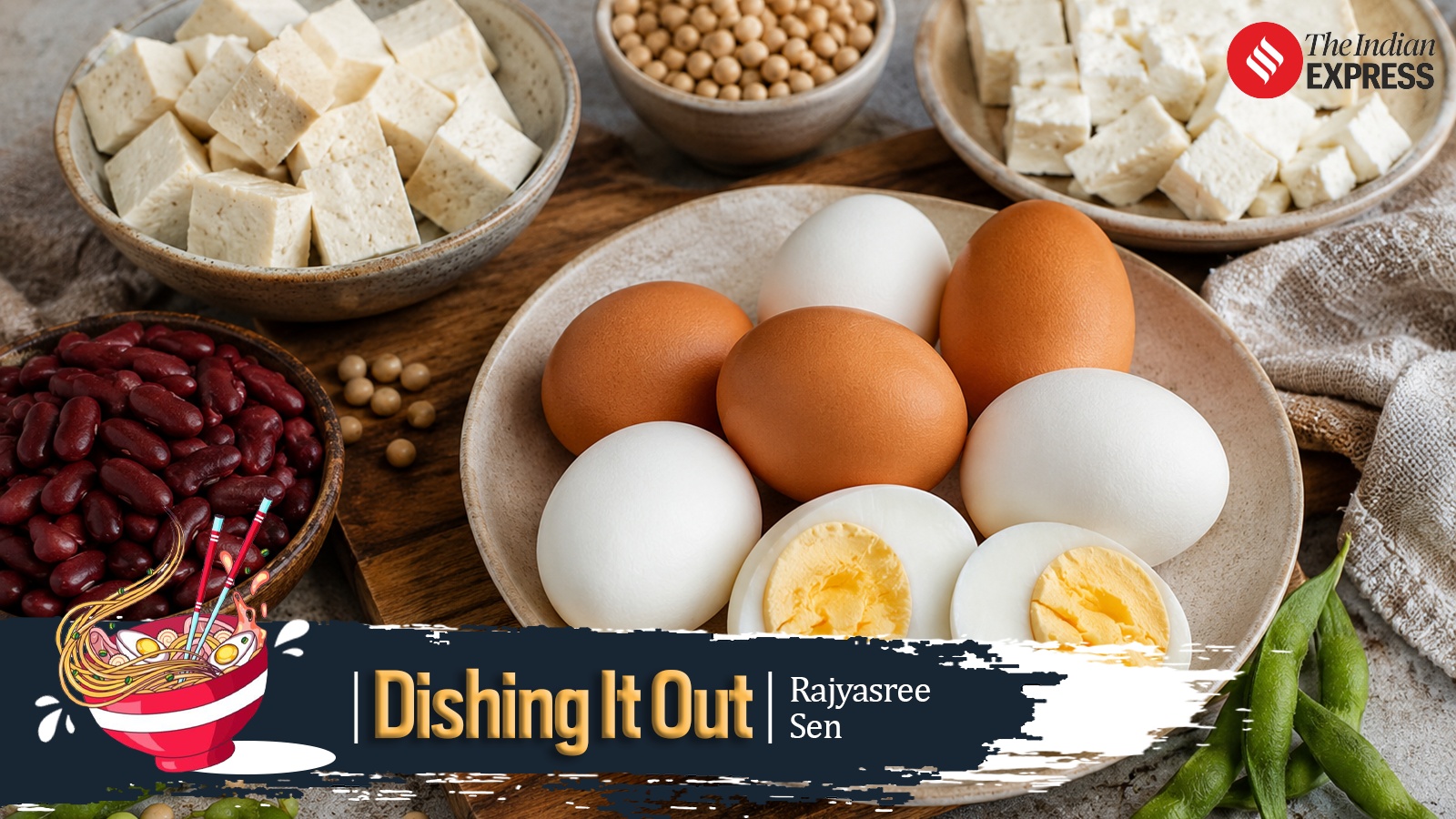
The claim that paneer or soya can easily replace eggs is mathematically flawed when applied to large-scale institutional feeding. Shweta Arora notes, "We need to have around 30-40 grams of paneer or tofu to substitute the protein profile of a single whole egg."
From a logistical and economic standpoint, the comparison breaks down:
- Cost: One egg costs approximately ₹6–₹7. To get the equivalent 6-7 grams of high-quality protein from paneer, the cost nearly doubles, factoring in procurement and storage.
- Volume: A child can easily consume one boiled egg. However, consuming the equivalent volume of soya or beans to match the amino acid profile often leads to satiety before nutritional requirements are met, particularly in younger children with smaller stomach capacities.
- Safety and Integrity: A boiled egg is "tamper-proof." It comes in its own natural packaging, making it difficult to adulterate. In contrast, paneer and soya chunks are susceptible to quality degradation and adulteration in the supply chain.
Official Responses and Global Standards
The debate in India stands in stark contrast to global school feeding trends. A 2026 study by the Cambridge University Press, titled "What’s on the Menu? A Review of School Meal Quality Across 29 Countries," highlights that eggs are a staple in the world’s most successful school meal programs.
- Japan: Eggs are a mandatory component of kyūshoku (school lunches), served in various forms to ensure children receive balanced amino acids.
- Finland and Sweden: These nations, which offer some of the highest-rated free school meals globally, treat eggs as a primary protein source alongside fish and legumes.
- Brazil: The National School Feeding Programme (PNAE) prioritizes local procurement of eggs to ensure rural children receive animal-source proteins that are otherwise unaffordable for their families.
In India, the response from the medical community has been one of caution. Dieticians at Ganga Ram Hospital have pointed out that for many children in West Bengal’s "economically backward" pockets, the school egg is the only animal protein they consume. Aakanksha Arya, a prominent dietician, stated in a recent report, "Eggs cannot truly be replaced by any other single food. They play a vital role in a child’s growth… many families may not be able to afford eggs at home if they are removed from school meals."
Implications: The Long-term Impact on Public Health
The removal of eggs from school menus carries implications that extend far beyond the lunch hour. The socio-economic and physiological fallout could affect the state for decades.
1. Worsening Malnutrition Indices
India continues to struggle with high rates of stunting (low height for age) and wasting (low weight for height). According to the National Family Health Survey (NFHS-5), protein deficiency remains a silent crisis. Removing the most bioavailable and affordable protein source from the state’s primary intervention tool—the midday meal—risks stagnating or reversing the progress made in child health metrics.
2. The "Hidden Hunger" Crisis
While a vegetarian meal of rice and dal may satisfy a child’s hunger (caloric intake), it often fails to address "hidden hunger"—the deficiency of essential micronutrients like Vitamin A, B12, and Iron. Eggs are a natural supplement for these deficiencies. Replacing them with starch-heavy vegetarian options may leave children "full" but malnourished.
3. Economic Burden on Families
When the state withdraws eggs, the burden of providing protein shifts to the parents. For a laborer earning daily wages, buying a dozen eggs a week is a significant financial strain. The school meal was designed to alleviate this exact pressure, ensuring that a child’s cognitive and physical potential is not dictated by their parents’ bank balance.
4. Educational Outcomes
There is a proven correlation between nutrition and learning. Children suffering from protein-energy malnutrition (PEM) exhibit lower concentration levels and higher rates of absenteeism. By compromising the nutritional quality of the meal, the educational efficacy of the school system is indirectly undermined.
Conclusion: Science over Sentiment
The author of the original discourse, despite a personal distaste for the texture of boiled eggs, acknowledges a fundamental truth: "You don’t need to be a nutritionist to know this… eggs are good for me. For my heart, for my skin, and my hair."
While personal, religious, or aesthetic choices (like the author’s preference for Eggs Cocotte or Eggs Benedict) are valid for adults with the means to choose, they should not dictate the policy for children who have no other options. The "shakahari" mandate in West Bengal schools represents a triumph of ideology over biology.
As the old Indian health adage goes, "Sunday ho ya Monday, roz khao andey" (Be it Sunday or Monday, eat an egg every day). For the children of West Bengal, this isn’t just a catchy slogan—it is a biological necessity for a healthy future. Replacing the egg with paneer or soya is not an equal exchange; it is a nutritional compromise that the next generation may pay for dearly.
DISCLAIMER: This article is based on information from the public domain and expert consultations. Always consult your health practitioner before starting any specific nutritional routine.
