

For decades, the Indian outbound travel market has operated on a rigid, almost ritualistic calendar. As the heat of the plains reaches its zenith in May and June, families have traditionally sought refuge in the temperate climes of Europe. This window, coinciding with school summer vacations, has historically seen the highest concentration of Indian tourists in hubs like London, Paris, and Lucerne. However, a significant paradigm shift is underway. Driven by the pressures of overtourism, escalating costs, and a growing desire for authentic experiences, Indian travelers are increasingly looking toward the "shoulder" and "off-season" months to explore the European continent.
This transition is not merely a matter of preference but a response to a global tourism landscape that is reaching a breaking point. With summer arrivals in Europe exceeding 300 million in 2025, the very charm that once drew visitors is being eroded by the sheer weight of numbers.
Main Facts: The Changing Face of Continental Exploration
The traditional European holiday—once defined by sunny Mediterranean beaches and bustling plazas—is being redefined. Travelers are discovering that the "peak season" (July and August) often yields the lowest return on investment in terms of quality of experience.

The core issues driving this shift include:
- Hyper-Saturation: Major destinations are grappling with visitor-to-local ratios that are unsustainable. In places like Mallorca, tourists outnumber residents by 14 to one during peak weeks.
- Economic Volatility: The cost of travel to North America and Europe has been impacted by geopolitical unrest, particularly in the Persian Gulf. This has necessitated longer flight paths and increased fuel surcharges, making the already expensive peak season even more prohibitive.
- Infrastructure Strain: Iconic cities like Venice and Barcelona are witnessing a breakdown in local services, leading to a rise in "anti-tourism" sentiment among residents.
- The Search for Authenticity: Modern travelers, particularly the younger demographic, are prioritizing "slow travel"—the ability to sit in a café without a time limit and interact with locals who are not overwhelmed by crowds.
Chronology: From Pre-Pandemic Norms to the 2025 Surge
To understand the current state of European travel, one must look at the trajectory of visitor numbers and the external factors that have shaped them over the last six years.
2019: The Pre-Pandemic Peak
Before the global lockdowns, Europe recorded approximately 270 million international tourist arrivals during the core July–August period. At this time, the Indian market was steadily growing, but travel patterns remained traditional, focused almost exclusively on the May-September window.

2020–2022: The Hiatus and the Pivot
The pandemic brought international travel to a standstill. During this period, airlines and tourism boards began rethinking their strategies. When borders reopened, "revenge travel" led to a massive, disorganized surge in visitor numbers. It was during this phase that the limitations of European infrastructure first became glaringly apparent.
2023–2024: The Persian Gulf Influence
Regional instability in the Persian Gulf began to impact global flight corridors. For Indian travelers, this meant that traditional stopovers in the Middle East became more complex. Airlines like Lufthansa responded by increasing direct capacity to European hubs, but the cost of "prime-time" travel continued to climb.
2025: The New Reality
By the summer of 2025, international arrivals during the peak two months surpassed the 300-million mark. This milestone served as a catalyst for both travelers and local governments. The "human traffic jams" in Barcelona and the entry fees in Venice became international headlines, prompting a significant portion of the Indian market to consider the benefits of traveling between October and April.

Supporting Data: The Case Study of Mallorca and Beyond
The Balearic Island of Mallorca serves as a microcosm for the broader European tourism crisis and the rewards of off-season exploration.
The Mallorca Dichotomy
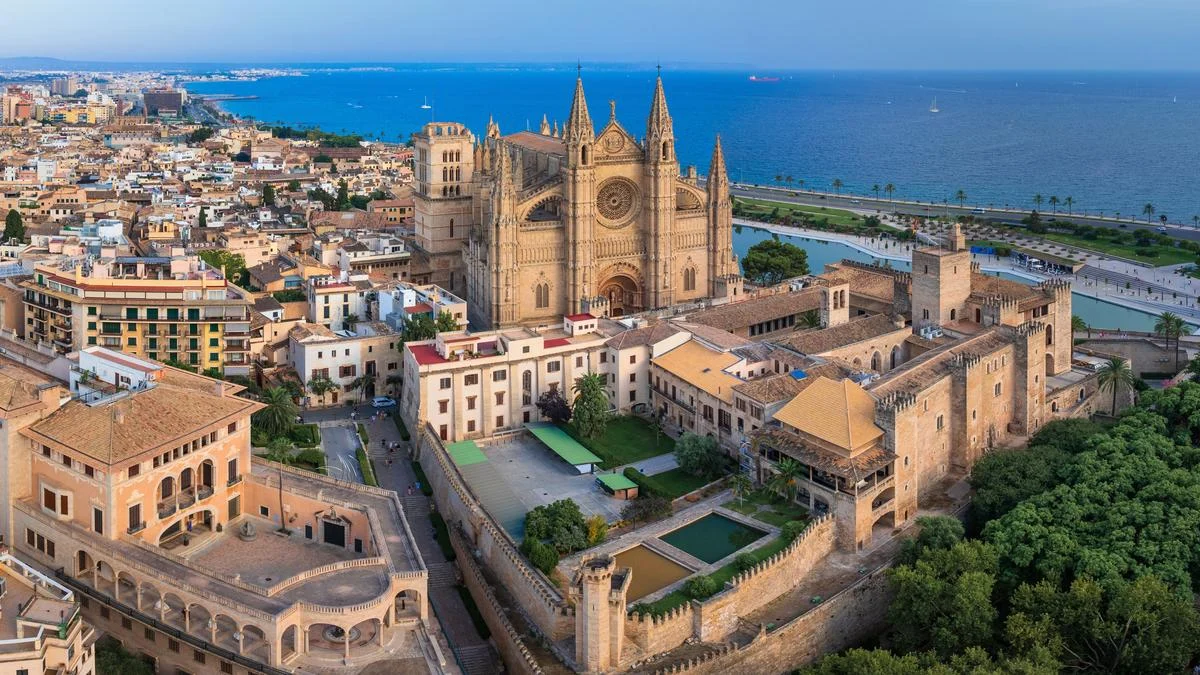
Mallorca is one of Spain’s most sought-after Mediterranean jewels. However, the statistics regarding its summer occupancy are staggering:
- Visitor Volume: In July alone, the island welcomes over 2.5 million tourists.
- Resident Ratio: With a permanent population of only 920,000, the island’s resources are stretched to the limit.
- Annual Impact: Each year, approximately 14 million visitors descend upon the island.
- The "Seven-Minute" Rule: Locals note that during peak weeks, the pressure on the hospitality sector is so great that the average tourist spends only seven minutes at a café table before being moved along to accommodate the next person in line.
The Off-Season Alternative
In contrast, visiting Mallorca in December or March offers a starkly different narrative. In Palma de Mallorca, the capital, the historic bakery Can Joan de s’Aigo—dating back to 1700—becomes a sanctuary rather than a tourist trap. Here, visitors can indulge in ensaimada (a spiral-shaped pastry) and Coca de Patata (a sweet potato bun) in an unhurried environment.

Further north, in the town of Pollença, the 365 steps of the Calvari staircase, which are swarmed by thousands in the summer, offer a peaceful ascent with sweeping views of the hills. The 45-minute drive from Palma to Sóller, famous for its 1912 wooden tram, becomes a scenic journey through citrus groves rather than a grueling wait in a queue that, in August, can stretch for several blocks.
Broader European Saturation
The data extends far beyond Spain:
- Venice: The city sees 25 million visitors annually. On peak days, 80,000 tourists crowd into a city with fewer than 50,000 residents.
- Santorini: The Greek island often handles 10,000 cruise passengers in a single day, leading to gridlock in its narrow, blue-domed streets.
- Dubrovnik: Famous as a filming location for Game of Thrones, the walled city’s old town is frequently at 100% capacity during the summer months.
Official Responses: Strategies for Mitigation
Local governments and the aviation industry are not passive observers of these trends. They are actively implementing measures to redistribute tourist flow.

Airline Realignment
Carriers such as Lufthansa and Air France-KLM have adjusted their schedules to accommodate the growing interest in year-round travel. By adding more flights to secondary European cities and maintaining robust schedules during the "shoulder" months (April-June and September-October), airlines are helping to facilitate this shift. Furthermore, the shift in focus is a pragmatic response to the increased costs of North American routes, making Europe a more competitive destination year-round.
Legislative and Regulatory Measures
European municipalities have begun taking drastic steps to curb overtourism:
- Entry Fees: Venice has famously introduced an access fee for day-trippers on peak days to discourage overcrowding.
- Capacity Limits: Santorini has implemented a cap on the number of cruise ship passengers allowed to disembark daily.
- Short-Term Rental Restrictions: Cities like Barcelona and Amsterdam have introduced strict regulations on platforms like Airbnb to ensure housing remains available for locals and to limit the "hotelization" of residential neighborhoods.
- Promoting "Secondary" Destinations: National tourism boards are pivoting their marketing budgets away from "A-list" cities toward lesser-known regions, encouraging "dispersal tourism."
Implications: The Future of Sustainable Travel
The move toward off-season travel carries significant implications for the future of the tourism industry and the quality of the traveler’s experience.

The Economic Trade-off
Traveling outside the peak window offers undeniable financial benefits. Hotel rates are frequently 30% to 50% lower, and the lack of "surge pricing" on local services makes the overall holiday more affordable. However, there are compromises. Some seasonal businesses, particularly beach clubs and specialized nightlife venues, close during the winter. The weather is cooler—Mediterranean temperatures hover between 15°C and 20°C—and shorter daylight hours require more efficient planning.
The Societal Impact
For the destinations themselves, the shift toward year-round tourism is a matter of survival. When tourism is concentrated in eight weeks, it creates a "boom and bust" economy that is hard on local workers. A more balanced distribution of visitors allows for stable, year-round employment and reduces the environmental and infrastructural strain on historic sites.
The Psychological Shift
Perhaps the most profound implication is for the traveler. When the crowds recede, the "theatre" of tourism disappears. Cities stop feeling like stage sets and begin to feel like living, breathing communities. For the Indian traveler, who is increasingly well-traveled and discerning, this authenticity is becoming the ultimate luxury.

In conclusion, the era of the "Indian Summer" in Europe is evolving. While the May-June window will always hold appeal due to the school calendar, the savvy traveler is looking toward the crisp air of October or the quiet charm of December. The goal is no longer just to "see" Europe, but to experience it—and that experience is best found when the crowds have gone home, the queues have vanished, and the continent finally has room to breathe.
