

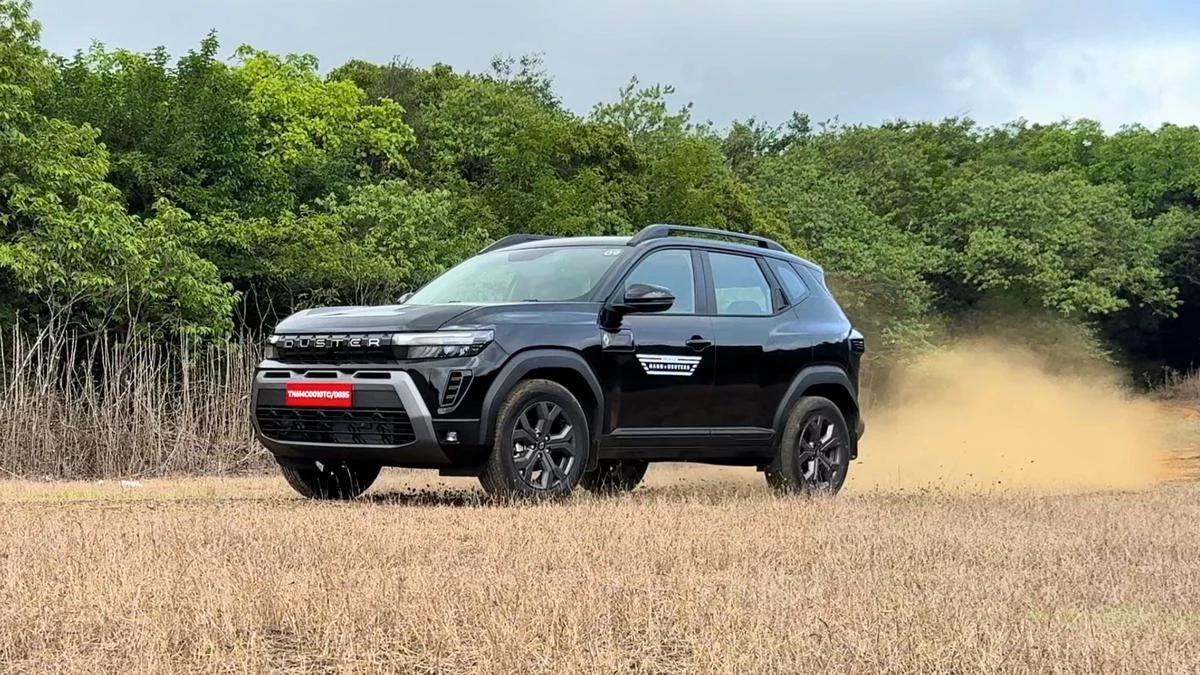
In the contemporary automotive landscape, a persistent skepticism remains regarding small-capacity engines. For decades, the prevailing wisdom among car buyers and enthusiasts alike has been that "there is no replacement for displacement." The assumption is as logical as it is straightforward: a larger engine inherently offers a more effortless driving experience, greater longevity, and the necessary muscle to propel a vehicle as substantial as a Sport Utility Vehicle (SUV).
However, as global emissions standards tighten and engineering prowess evolves, the industry is witnessing a paradigm shift. Enter the Renault Duster TCe 100. On paper, its specifications—a 999cc, three-cylinder turbocharged petrol engine—might seem underwhelming to those accustomed to the beefier powerplants of yesteryear. Yet, a comprehensive evaluation reveals that this vehicle is not merely a downsizing exercise; it is a masterclass in "right-sizing."
Main Facts: The Technical Blueprint of the TCe 100
The Renault Duster TCe 100 enters a hyper-competitive C-SUV market with a powertrain that prioritizes efficiency and accessible torque over raw horsepower. The heart of the vehicle is a 1.0-litre turbocharged unit producing 100PS and 166Nm of peak torque. While these figures may not set pulses racing in an era of 150hp+ performance SUVs, the delivery of this power tells a different story.
Key specifications include:
- Engine: 999cc, 3-cylinder Turbo-Petrol
- Power: 100PS
- Torque: 166Nm @ 2,000 rpm
- Transmission: 6-speed Manual
- Price Range: ₹10.49 lakh – ₹13.49 lakh (Ex-showroom)
- Key Features: All-wheel disc brakes, 17-inch alloy wheels, and a 6-speed manual gearbox calibrated specifically for this chassis.
The Duster TCe 100 is positioned as a value-driven yet premium-feeling alternative to the likes of the Volkswagen Taigun and the Skoda Kushaq. By focusing on a European driving feel and rugged mechanicals, Renault aims to recapture the magic that made the original Duster a cult classic.

Chronology: A Multi-Terrain Performance Evaluation
To truly understand if a 1.0-litre engine can sustain the Duster’s reputation, the vehicle was subjected to a rigorous test cycle encompassing urban commutes, high-speed highway cruising, and demanding mountain ascents.
Phase 1: The Urban Jungle
In the stop-and-go environment of city traffic, the TCe 100 immediately challenges the "small engine" stereotype. Traditional 1.0-litre units often suffer from "turbo-lag"—a momentary hesitation before the power kicks in. Renault’s engineers have mitigated this effectively. The throttle response is crisp, and the engine feels eager from a standstill.
The tractability of the engine is a standout feature. Drivers can navigate slow-moving traffic without the constant need to downshift, a testament to the well-spread torque. The light clutch and slick 6-speed manual gearbox further reduce the fatigue associated with city driving.
Phase 2: Highway Composure
Moving onto the open expressway, the Duster reveals a mature character. Cruising at 100km/h, the engine remains within its comfort zone. Unlike some small engines that feel "buzzed" or strained at triple-digit speeds, the TCe 100 settles into a refined rhythm. A gentle squeeze of the accelerator at highway speeds results in a reassuring surge of momentum, allowing for clean overtakes without the need for frantic gear changes.
Phase 3: The Mountain Ascent
The ultimate test for any downsized powertrain is a steep incline. On winding mountain roads, the Duster TCe 100 proved remarkably composed. While hill driving naturally requires more engagement with the gearbox, the 166Nm of torque provided enough "grunt" to tackle gradients confidently. Even with a full load, the vehicle never felt short of breath, maintaining momentum where many naturally aspirated 1.5-litre engines might struggle.

Supporting Data: Engineering the "Big Engine" Feel
The secret to the Duster’s performance lies in its torque curve. While peak torque is 166Nm, the fact that it is available from as low as 2,000rpm is crucial. This creates a strong mid-range that mimics the behavior of a much larger engine.
Furthermore, Renault has not simply transplanted the engine from the smaller Kiger. While the block is shared, the TCe 100 in the Duster has undergone substantial re-engineering. This includes:
- Revised Gear Ratios: The 6-speed manual is tuned to keep the engine in its "sweet spot" longer.
- NVH Optimization: Three-cylinder engines are prone to vibrations. Renault has utilized advanced damping and insulation to ensure that the cabin remains quiet. Apart from a slight thrum at idle, the engine is remarkably silent during operation.
- Chassis Calibration: The Duster retains its legendary suspension setup—firm enough to handle high-speed corners with minimal body roll, yet supple enough to absorb potholes and broken tarmac with ease.
Official Positioning: Renault’s Strategic Vision
Renault’s strategy with the TCe 100 is to provide a "sweet spot" in the lineup. While an enthusiast-focused 1.3-litre turbo engine remains available for those seeking outright speed, the 1.0-litre variant is designed for the pragmatic buyer.
Industry analysts note that Renault is targeting the gap between sub-4-meter SUVs and the premium C-SUV segment. By pricing the Techno variant at ₹13.49 lakh, Renault is offering a vehicle with "European" driving dynamics at a price point that undercuts several key rivals.
The inclusion of safety and premium hardware—such as all-wheel disc brakes and 17-inch alloys—suggests that Renault is not positioning the TCe 100 as a "budget" choice, but rather as a sophisticated, efficient alternative for the modern family.

Implications: The Future of the C-SUV Segment
The success of the Duster TCe 100 carries significant implications for the Indian automotive market. It serves as a proof of concept that "right-sizing" is a viable path forward for SUVs.
1. Challenging the Status Quo
If consumers embrace the 1.0-litre Duster, it will force other manufacturers to reconsider their entry-level powertrains. The era of the sluggish, naturally aspirated 1.5-litre engine may be coming to an end, replaced by smaller, more efficient turbocharged units that offer better driveability and lower emissions.
2. The Return of the Driver’s SUV
In a market saturated with "feature-heavy" SUVs that often feel disconnected from the road, the Duster’s focus on steering feel and chassis balance is a breath of fresh air. The communicative steering and composed ride remind buyers that an SUV can be both practical and engaging to drive. This could lead to a resurgence of interest in vehicle dynamics over pure digital gimmickry.
3. Interior Sophistication vs. Novelty
Renault’s approach to the cabin—using fabric trims, dual-tone finishes, and brown accents—highlights a shift toward "perceived quality." Instead of loading the dashboard with screens and touch-capacitive buttons that can be distracting, the Duster prioritizes ergonomics and a tactile, upmarket feel. This "sensible luxury" approach may resonate with buyers who find current tech trends overwhelming.
Critical Areas for Improvement
While the Duster TCe 100 is a formidable package, it is not without its omissions. In the context of the Indian climate, the absence of ventilated front seats is a missed opportunity. Similarly, electrically adjustable seats would have added a layer of convenience expected at this price point. While the powered tailgate is a "wow" feature, daily-use comfort features often carry more weight in long-term ownership satisfaction.

Conclusion: Numbers vs. Experience
The Renault Duster TCe 100 is a reminder that a car’s character is defined by the sum of its parts, not just a single figure on a spec sheet. It successfully bridges the gap between the rugged utility of the original Duster and the refinement required by modern consumers.
For the majority of buyers, the 1.0-litre turbocharged engine will not feel like a compromise. It offers the efficiency of a small engine with the soul and capability of a much larger one. As the market continues to evolve, the Duster TCe 100 stands as a compelling argument that the most impressive vehicles aren’t always the ones with the biggest numbers—they are the ones that make those numbers feel irrelevant.
Renault Duster TCe100 Summary Table
| Feature | Specification / Detail |
|---|---|
| Engine Displacement | 999cc (1.0L) Turbocharged Petrol |
| Max Power | 100 PS |
| Max Torque | 166 Nm @ 2000 rpm |
| Transmission | 6-speed Manual |
| Braking System | All-wheel Disc Brakes |
| Wheel Size | 17-inch Alloys |
| Price (Ex-Showroom) | ₹10.49 lakh – ₹13.49 lakh |
| Key Rivals | VW Taigun, Skoda Kushaq, Hyundai Creta |
This report was prepared in association with Motorscribes and The Hindu. For more updates on the latest automotive trends, follow @motorscribes on Instagram.
