

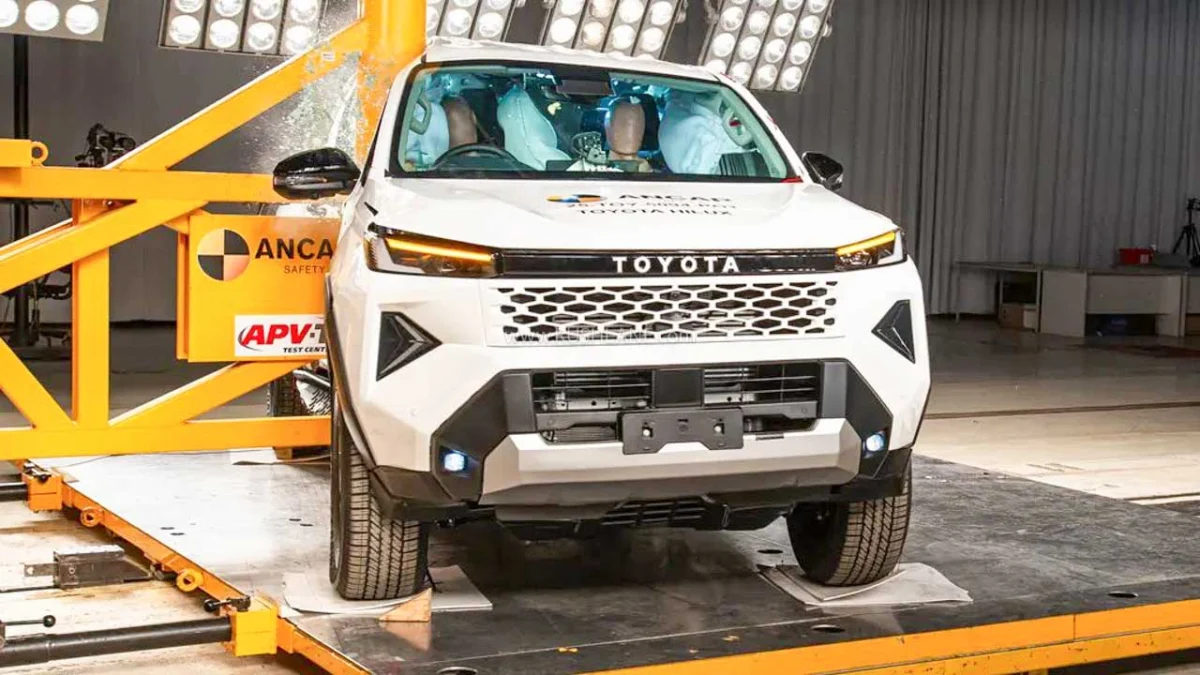
The global automotive landscape is witnessing a significant shift as utility vehicles transition from pure workhorses to lifestyle statements. Leading this charge is the Toyota Hilux, a vehicle synonymous with indestructibility and off-road prowess. Following its international premiere in November last year, Toyota is now prepared to bring the 9th-generation Hilux to Indian shores. Scheduled for an official launch on July 28, the new iteration of this iconic pickup promises a sophisticated blend of contemporary design, advanced technology, and the uncompromising ruggedness that has defined the nameplate for over five decades.
Main Facts: A New Chapter for the Global Icon
The 9th-generation Toyota Hilux represents a strategic evolution rather than a complete departure from its roots. While the vehicle undergoes a comprehensive aesthetic and technological overhaul, it remains grounded in the proven IMV (Innovative International Multi-purpose Vehicle) ladder-frame platform. This decision ensures that the Hilux maintains its legendary durability and off-road capabilities while keeping manufacturing and maintenance costs within a competitive range for the Indian market.
Key Highlights of the 9th-Gen Model:
- Launch Date: July 28.
- Platform: Retains the rugged IMV ladder-frame chassis with structural reinforcements for improved ride quality.
- Exterior Styling: A shift toward a "sportier" and more "contemporary" profile, featuring a body-colored hexagonal grille and gloss black accents.
- Interior Upgrades: A complete cabin redesign featuring dual 12.3-inch screens and a sharper, more linear dashboard layout.
- Powertrain: Continuity of the 2.8-liter turbo-diesel engine, with potential 48V mild-hybrid integration.
- Safety: The inclusion of a radar-based ADAS suite and a 360-degree camera system.
The arrival of the new Hilux is expected to rejuvenate the lifestyle pickup segment in India, a niche but growing market currently dominated by the Hilux itself and its primary rival, the Isuzu V-Cross.
Chronology: The Journey to the 9th Generation
The Hilux’s journey to its ninth iteration is a testament to Toyota’s philosophy of continuous improvement (Kaizen).
- Global Premiere (November): Toyota unveiled the 9th-gen Hilux to international markets, showcasing a radical new design language and an emphasis on digitalization.
- Chassis Refinement: Throughout the development phase, engineers focused on the IMV platform, introducing updates to the suspension geometry and chassis rigidity to address criticisms regarding the 8th-gen model’s bouncy unladen ride.
- Indian Context: The 8th-generation Hilux had a relatively late entry into the Indian market in 2022. However, Toyota’s decision to bring the 9th-gen model so soon after its global debut indicates the growing importance of the Indian market in Toyota’s global strategy.
- The BEV Milestone: Parallel to the internal combustion engine (ICE) development, Toyota also introduced the Hilux BEV (Battery Electric Vehicle) in select global markets, marking the brand’s first body-on-frame electric vehicle—a development that may eventually influence the Indian roadmap.
Supporting Data: Engineering and Performance Specifications
The 9th-generation Hilux is designed to bridge the gap between a rugged commercial vehicle and a premium SUV. To achieve this, Toyota has focused on several key technical areas.

Design and Aesthetics
The most striking changes are found at the front fascia. The previous generation’s oversized chrome-heavy grille has been replaced by a more integrated, contemporary body-colored unit. A new gloss black trim piece now connects the headlamps, featuring prominent "TOYOTA" lettering—a nod to the brand’s heritage off-roaders like the Land Cruiser 70-series. The bumper has been reshaped with more angular vents and a redesigned skid plate to improve the approach angle and visual aggression.
Inside, the cabin moves away from the curvy, utilitarian dashboard of the 8th-gen model. The new interior follows a "horizontal axis" design philosophy, utilizing straight lines to create a sense of width and modernity.
Technology and Comfort
The 9th-gen Hilux receives a significant tech infusion:
- Infotainment: A 12.3-inch touchscreen infotainment system with wireless Apple CarPlay and Android Auto.
- Instrumentation: A matching 12.3-inch fully digital instrument cluster, replacing the traditional analog dials.
- Amenities: Dual-zone automatic climate control, wireless smartphone charging, and powered, ventilated front seats—features typically reserved for luxury SUVs.
Mechanical Heart
Under the hood, the Hilux continues to rely on the "Global Diesel" (GD) engine family. The 2.8-liter, four-cylinder turbo-diesel engine remains the mainstay, producing:
- Power: 204 PS.
- Torque: 420 Nm (Manual) / 500 Nm (Automatic).
- Transmission: A 6-speed manual or a 6-speed torque converter automatic.
There is significant speculation regarding the "Neo Drive" system—a 48V mild-hybrid setup—which has already been introduced in the Fortuner. This system uses a belt-driven starter generator to assist the engine during acceleration and improve stop-start smoothness, potentially offering a 5-10% improvement in fuel efficiency.

Official Responses and Strategic Positioning
While Toyota Kirloskar Motor (TKM) has remained tight-lipped about the specific pricing of the new model, the company’s recent actions suggest a premium positioning. Toyota’s strategy in India has shifted toward offering "aspirational" vehicles that command a price premium due to their reliability and high resale value.
Industry analysts suggest that Toyota is positioning the Hilux not just as a pickup truck, but as a "lifestyle utility vehicle" (LUV). By incorporating ADAS (Advanced Driver Assistance Systems) and premium interior materials, Toyota is targeting the enthusiast who wants the capability of a 4×4 with the safety and comfort of a family car.
Regarding the potential for a Hilux BEV in India, official statements from Toyota’s global headquarters emphasize a "Multi-pathway" approach to carbon neutrality. This suggests that while the diesel engine remains the priority for India’s heavy-duty and long-distance requirements, hybrid and electric versions are being evaluated for future feasibility based on infrastructure development.
Implications for the Indian Automotive Landscape
The launch of the 9th-generation Hilux carries several implications for the Indian market and the broader automotive industry.
1. The Growth of the Lifestyle Segment
For decades, the Indian pickup market was restricted to the commercial sector. The Hilux, along with the Isuzu V-Cross, has begun to change that perception. The 9th-gen model, with its sophisticated interior and ADAS features, is likely to attract buyers who were previously considering premium D-segment SUVs. It offers a unique proposition: the ability to carry lifestyle gear (bikes, camping equipment) while providing a luxury cabin experience.

2. Safety Standards in Utility Vehicles
The inclusion of a radar-based ADAS suite in a ladder-frame pickup sets a new benchmark for the segment. Features such as Autonomous Emergency Braking (AEB), Lane Departure Warning, and Adaptive Cruise Control are no longer exclusive to sedans and monocoque crossovers. This move will likely force competitors to upgrade their safety offerings.
3. Sustainability and the Diesel Future
As emission norms become increasingly stringent (BS6 Stage II and beyond), Toyota’s potential inclusion of mild-hybrid technology in the Hilux signals a commitment to keeping diesel relevant. By improving efficiency and reducing CO2 output through electrification, Toyota is extending the lifecycle of its high-torque diesel engines, which are essential for towing and off-roading.
4. Competitive Dynamics
The Isuzu V-Cross has long been the only real alternative in this space. With the 9th-gen Hilux moving further upmarket, a price gap may open up, allowing Isuzu to capture the entry-level enthusiast market while Toyota dominates the premium end. However, if the Hilux pricing starts significantly higher than the current Rs 28.52 lakh (ex-showroom), it may remain a low-volume "halo" product for the brand.
Conclusion
The 9th-generation Toyota Hilux is more than just a facelift; it is a recalibration of what a pickup truck can be in the modern era. By retaining the indestructible IMV platform while layering on 21st-century technology and a sharper aesthetic, Toyota is ensuring that the Hilux remains the gold standard in its class. When it arrives on July 28, it will not only challenge its direct rivals but also invite SUV buyers to reconsider the versatility of the pickup format. In a market like India, where "road presence" and "reliability" are the ultimate currencies, the new Hilux is poised to be a formidable player.
