

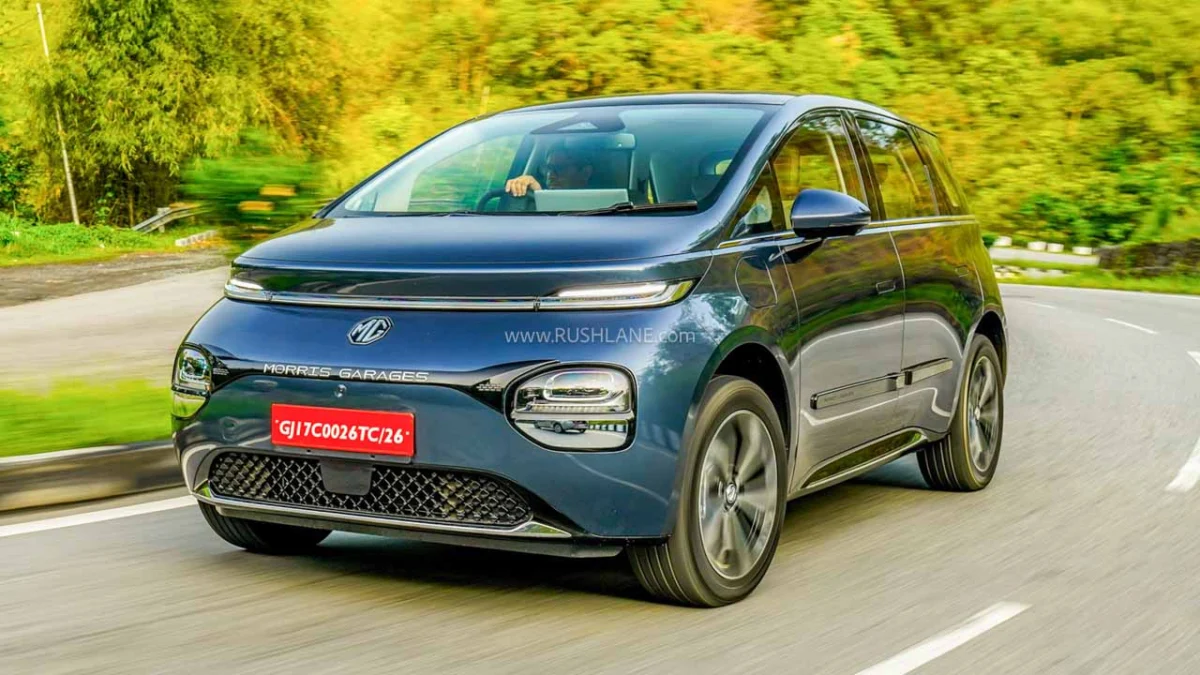
NEW DELHI — In a move that signals a seismic shift in India’s automotive landscape, JSW MG Motor India has officially announced that its flagship electric crossover, the MG Windsor EV, has surpassed the 75,000-unit sales milestone. This achievement, recorded in July 2026, comes less than two years after the vehicle’s initial market debut, cementing its position as India’s best-selling electric vehicle (EV) and a primary catalyst for the nation’s transition toward sustainable mobility.
The success of the Windsor EV is not merely a triumph of sales figures but a testament to a disruptive business strategy. By addressing the dual hurdles of high upfront costs and range anxiety through innovative ownership models and diverse product configurations, JSW MG Motor India has effectively cracked the code of the Indian EV market.
The Core Achievement: A New Benchmark for Indian EVs
The MG Windsor EV has emerged as the "hot seller" in a market that was previously dominated by established domestic players. As of July 2026, the company confirmed that the Windsor range—which now includes the standard Windsor, the long-range Windsor Pro, and the fleet-specific Windsor Commute—has resonated deeply with both urban commuters and long-distance travelers.
The data reveals a staggering growth trajectory. In the first half of the 2026 Calendar Year (H1 CY2026), the Windsor and Windsor Pro combined to sell more than 19,000 units. This performance represents a 13% Year-on-Year (YoY) growth compared to the same period in 2025, a feat achieved despite increasing competition from both legacy manufacturers and new EV startups.
The Windsor’s rise to the top of the sales charts is attributed to its "segment-blurring" appeal. Marketed as a vehicle that offers the comfort of a luxury sedan with the versatility of an SUV, it has managed to attract buyers from across various price brackets.
Chronology of a Disruptor: From Launch to Market Leader
To understand the magnitude of this 75,000-unit milestone, one must look back at the strategic timeline of the Windsor’s lifecycle:
September 2024: The Genesis
The MG Windsor EV was launched in September 2024 amidst significant industry skepticism. While other manufacturers were focusing on traditional sales models, MG introduced the Windsor with a radical "Battery-as-a-Service" (BaaS) pricing structure. This allowed the company to peg the entry price at a headline-grabbing ₹9.99 lakh, effectively making a premium electric crossover more affordable than many mid-range internal combustion engine (ICE) SUVs.
Mid-2025: Expansion and the Windsor Pro
Recognizing the demand for higher range among highway travelers, MG introduced the Windsor Pro. This variant featured a significantly larger battery pack and enhanced fast-charging capabilities. The Pro version helped the brand pivot from being a purely "city car" solution to a viable primary vehicle for Indian families.
Late 2025: Entering the Fleet Market
The launch of the "Windsor Commute" marked MG’s entry into the professional transport sector. By offering a stripped-back, high-durability version of the Windsor EV for ₹13.49 lakh (Ex-showroom), the company tapped into the growing demand for green ride-sharing and corporate fleet solutions.
July 2026: The 75,000 Milestone
By mid-2026, the cumulative effect of these strategic expansions culminated in the 75,000-unit milestone. The order book continues to grow, with MG reporting steady demand from both Tier-1 metros and emerging Tier-2 markets, where charging infrastructure has begun to catch up with vehicle technology.
Supporting Data: Technical Specifications and Pricing Models
The Windsor’s success is built on a foundation of technical versatility. MG offers the vehicle in two distinct battery configurations to cater to different consumer needs:
1. The Standard Windsor (38 kWh)
- Range: 332 km (claimed).
- Target Audience: Urban professionals and daily commuters.
- USP: Optimized for city driving with quick-charge capabilities that fit a standard workday schedule.
2. The Windsor Pro (52.9 kWh)
- Range: 449 km (claimed).
- Target Audience: Inter-city travelers and luxury seekers.
- Features: Includes advanced telematics, ventilated seats, and a more robust infotainment suite.
The BaaS Innovation
The "Battery-as-a-Service" model remains the Windsor’s most significant competitive advantage. Under this plan:
- Acquisition Cost: Starts at ₹9.99 lakh.
- Operational Cost: Battery rental is priced at a competitive ₹3.9 per kilometer.
- Total Cost of Ownership (TCO): For high-mileage users, the TCO of a Windsor EV is now lower than that of a comparable petrol or diesel automatic SUV.
For traditional buyers, MG continues to offer the vehicle with the battery included, with prices ranging from ₹14.7 lakh to ₹19 lakh (Ex-showroom). This dual-pricing strategy has allowed MG to capture both the budget-conscious first-time buyer and the premium EV enthusiast.

Design and Utility: The "Aeroglide" Philosophy
Beyond the mechanics, the Windsor EV’s physical design—termed "Aeroglide"—has played a crucial role in its market acceptance. Unlike traditional "three-box" sedans or "two-box" SUVs, the Windsor utilizes a single-box silhouette. This design maximizes interior volume, providing what MG describes as "oodles of space."
The interior is characterized by a "lounge-like" experience, featuring rear seats that can recline to an industry-leading degree, mimicking business-class aircraft seating. The use of premium cabin materials and oversized digital displays has helped the Windsor punch above its weight class, often being compared to vehicles in the ₹25–30 lakh price range.
Official Responses: A Vision for the Future
The leadership at JSW MG Motor India views this milestone as a validation of their long-term commitment to the Indian market.
Anurag Mehrotra, Managing Director of JSW MG Motor India, expressed his pride in the vehicle’s trajectory. “The Windsor is a winning proposition delivering strong value and resonating with the preferences of Indian car buyers,” Mehrotra stated. “With its customers spanning across metros and emerging markets, the MG Windsor has meaningfully contributed to accelerating India’s EV adoption, transforming the way India moves."
He further added, "While the journey ahead remains interesting, it is important to reflect on an incredible journey backed by the grit and determination of our teams to deliver something truly exceptional. This milestone is not just about numbers; it is about the thousands of Indian families who have transitioned to a cleaner, more sustainable lifestyle because of the Windsor.”
Industry analysts suggest that the "JSW" partnership has been pivotal. Since the joint venture between the JSW Group and MG Motor (SAIC) solidified, the company has seen improved supply chain efficiencies and a more aggressive push into localized manufacturing, which has helped insulate the Windsor from global price fluctuations in lithium-ion cells.
Market Implications: Setting the Stage for 2027 and Beyond
The success of the MG Windsor EV has several far-reaching implications for the Indian automotive industry:
1. The Normalization of BaaS
The Windsor has proven that Indian consumers are open to decoupled ownership models. Following MG’s success, several other major OEMs (Original Equipment Manufacturers) are reportedly exploring similar battery-rental schemes to lower the entry barrier for their upcoming electric models.
2. Pressure on Legacy Manufacturers
The 75,000-unit milestone puts immense pressure on market leaders like Tata Motors and Mahindra & Mahindra. While Tata’s Nexon EV and Punch EV have been pioneers, the Windsor’s superior interior space and disruptive pricing have forced competitors to accelerate their product refresh cycles and reconsider their pricing strategies.
3. Acceleration of Charging Infrastructure
A high volume of Windsor EVs on the road has created a "virtuous cycle" for charging infrastructure. Private charging providers are prioritizing locations where Windsor owners are most active, further easing the transition for potential EV buyers who were previously on the fence.
4. Shift in Body Style Preferences
The success of the single-box "Aeroglide" design suggests that Indian buyers are becoming more functional in their choices. The traditional obsession with the "SUV look" is being challenged by a desire for interior comfort and "lounge" utility, a trend that could redefine car design in India over the next decade.
Conclusion
As JSW MG Motor India celebrates 75,000 units of the Windsor EV, the company is already looking toward the 100,000-unit mark, which it expects to hit before the end of the 2026 calendar year. With the EV sector in India projected to grow exponentially, the Windsor stands as a case study in how to successfully navigate a complex, price-sensitive market through a combination of bold financial innovation and a product that refuses to be categorized.
For the Indian consumer, the Windsor’s success means more choices, better technology, and a clearer path toward a zero-emission future. For the competition, it is a loud and clear signal: the electric era has not just arrived; it is being led by those willing to rewrite the rules of the game.
