

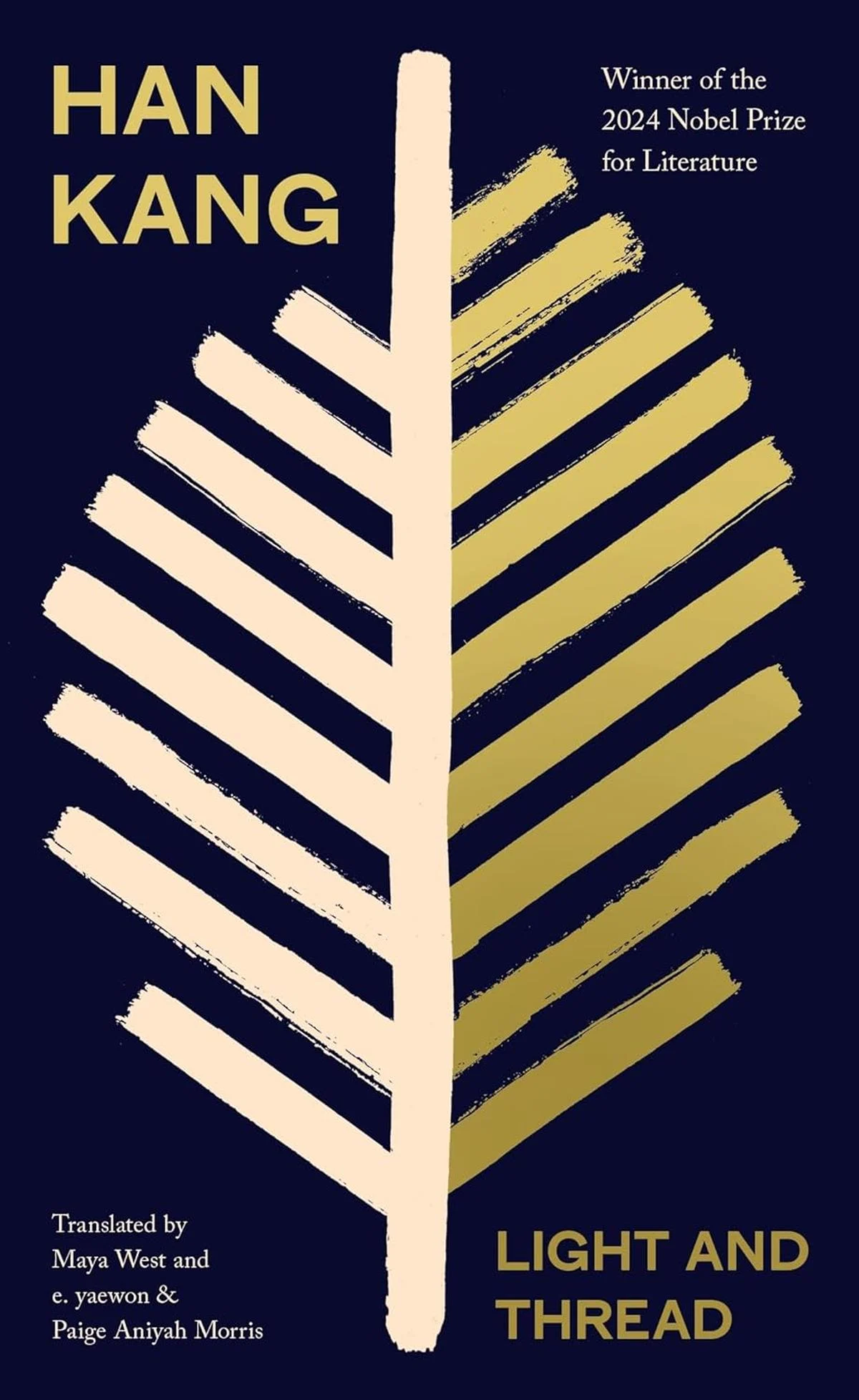
The announcement of the 2024 Nobel Prize in Literature did more than just honor a single author; it signaled a seismic shift in the global literary landscape. When the Swedish Academy bestowed the honor upon Han Kang, they recognized a voice that is simultaneously fragile and indestructible—a writer who has spent decades exploring the "gold thread" that connects human hearts across the chasms of violence and historical trauma.
Following her historic win, the publication of Light and Thread—a multifaceted collection comprising diaries, essays, photographs, and poems—offers an intimate cartography of the mind that produced The Vegetarian and Human Acts. Far from a mere "convenient collection" of disparate pieces, the volume serves as a profound companion to her Nobel Lecture, weaving together the philosophical inquiries and sensory experiences that define her career.
Main Facts: A New Era for the Nobel Prize
Han Kang’s Nobel win is a landmark event for several reasons. At 54, she represents a younger generation of laureates, breaking a long-standing tradition of the Academy favoring elder statesmen of letters. Furthermore, she is the first South Korean writer to receive the Literature prize, a feat that underscores the global ascent of Korean culture—from cinema and music to the highest echelons of literary art.
The Swedish Academy’s citation praised her for "intense poetic prose that confronts historical traumas and exposes the fragility of human life." This fragility is the central nervous system of Light and Thread. The book functions as a bridge between her public accolades and her private struggles, revealing that her writing process is not merely an intellectual exercise but a physical act of "lending life" to those the world has forgotten.
The anthology, translated by the formidable trio of Maya West, e. yaewon, and Paige Aniyah Morris, highlights Han’s belief that literature is a form of inquiry rather than a source of answers. In her Nobel Lecture, which serves as the anchor for the collection, she posits that writing is a way of "living inside questions"—a sentiment that echoes through every diary entry and poem in the volume.
Chronology: From Gwangju to Stockholm
To understand the weight of Han Kang’s achievement, one must trace the arc of her life, which has been inextricably linked to the turbulent history of South Korea.
The Formative Years (1970–1980)
Born in 1970 in Gwangju, Han Kang was the daughter of the novelist Han Seung-won. Her childhood was steeped in books, but it was also shadowed by political unrest. In 1980, just months before the infamous Gwangju Uprising—a pro-democracy movement that ended in a brutal military massacre—her family moved to Seoul. This "survivor’s guilt," the realization that she had escaped a massacre that claimed the lives of people she knew, would become the foundational trauma of her literary life.
The Early Inquiries (1988–2000)
In Light and Thread, Han reflects on a hand-stapled pamphlet she made at age eight, titled A Book of Poems. Even then, she was asking, "Where is love?" and "What is love?" By her 20s, these questions had darkened. Her diaries from this era are haunted by a recurring mantra: "Can the present help the past? Can the living save the dead?"

The Global Breakthrough (2007–2016)
While Han was already a respected figure in Korea, it was the 2007 publication of The Vegetarian (Chae-sik-ju-ui-ja) that set her on a path to global stardom. When the English translation by Deborah Smith won the International Booker Prize in 2016, it sparked a worldwide interest in her work. The novel, which tells the story of a woman who decides to stop eating meat and eventually attempts to become a plant, was a visceral exploration of the human desire to reject violence.
The Nobel Recognition (2024–Present)
The Nobel Prize in 2024 served as a final validation of her "political-personal thread." The release of Light and Thread in the wake of the prize provides the necessary context for her body of work, showing how her garden diaries and her poems about sunlight are just as essential to her identity as her novels about state-sanctioned murder.
Supporting Data: The Anatomy of "Lending Life"
Han Kang’s work is characterized by a unique "physicality." In Light and Thread, she describes the grueling process of writing Human Acts (2014), a novel centered on the Gwangju Uprising. To write it, she had to immerse herself in the sensory details of the dead and the bereaved.
"I could not undo what had been done," she writes. "All I could do was to lend them the sensations, emotions, and life pulsing through my own body."
This concept of "lending life" is supported by the thematic consistency across her bibliography:
- The Rejection of the Human: In The Vegetarian, the protagonist Yeong-hye views the human body as a vessel for violence. Her transition toward "plant-hood" is a desperate attempt to achieve a state of innocence.
- The Transference of Existence: In The White Book (2016), Han writes about her elder sister, who died two hours after birth. She asks if a living person can "lend" their life to the dead, effectively walking through the world on behalf of someone who never got the chance.
- The Resilience of Light: In Light and Thread, this theme takes a literal turn. Han describes her north-facing courtyard garden where she uses mirrors to "catch" the sunlight. This physical act of reflecting light into dark corners becomes a metaphor for her entire literary project: redirecting the "gold thread" of human connection into the dark spaces of history.
Official Responses: A Global Phenomenon
The reaction to Han Kang’s Nobel win was immediate and overwhelming, particularly in her home country. Within hours of the announcement, major bookstores in Seoul reported their websites crashing due to unprecedented traffic.
The Swedish Academy: Permanent Secretary Mats Malm stated that Han Kang has a "unique awareness of the connections between body and soul, the living and the dead," and noted that her style has "innovated contemporary prose."
President Yoon Suk Yeol: The South Korean President hailed her win as a "great achievement in the history of Korean literature" and a "source of national pride," noting that she has "turned the painful wounds of our modern history into great literature."

International Critics: Literary critics have noted that Han’s win is a victory for translation. The success of her work in the West is often cited as a testament to the "K-Lit" movement, which has seen a surge in high-quality translations of Korean authors like Cho Nam-joo and Bora Chung.
Implications: The Future of World Literature
Han Kang’s elevation to the Nobel pantheon has several long-term implications for the literary world and the geopolitical status of South Korean culture.
1. The Decentralization of the Canon
For decades, the Nobel Prize was criticized for being "Eurocentric" and "male-dominated." Han Kang’s win, following that of Abdulrazak Gurnah (2021) and Annie Ernaux (2022), suggests a concerted effort by the Swedish Academy to broaden the definition of the "universal" human experience. Her work proves that a story rooted in a specific Korean tragedy (the Gwangju Uprising) can resonate with readers in London, New York, or Delhi.
2. The Power of "Soft Power"
South Korea has spent decades cultivating its "Hallyu" (Korean Wave) through pop music and film. Han Kang’s Nobel Prize provides the intellectual and "high art" cornerstone that completes this cultural expansion. It signals that Korea is not just a producer of mass entertainment, but a profound contributor to the global philosophical discourse.
3. A Shift in Literary Style
Han Kang’s success may encourage a shift away from traditional, plot-driven narratives toward more "visceral" and "poetic" prose. Her ability to blend the political with the deeply personal—without falling into the trap of didacticism—provides a blueprint for future writers dealing with national traumas.
4. The Ethics of Memory
Light and Thread raises important questions about the ethics of "writing the dead." As Han Kang moves between her garden diaries and her historical novels, she challenges readers to consider our responsibility to the past. By "lending life" to the victims of history, she suggests that literature is not just a record of what happened, but a living, breathing act of restitution.
Conclusion: The Gold Thread
In the closing pages of Light and Thread, Han Kang returns to the image of the sunlight in her garden. She writes: "I managed to live enough. / (Through writing.) / Sunlight. I looked at the sunlight a long time."
This simple observation encapsulates the essence of her Nobel-worthy career. Whether she is exploring the horrors of a military crackdown or the quiet growth of a plant, she is always searching for the "gold thread." Through Light and Thread, readers are given a rare glimpse into the laboratory of a master weaver—one who has managed to take the darkest threads of human experience and spin them into a tapestry of light. Han Kang’s legacy is now firmly established: she is the writer who taught us that even in the face of absolute violence, the "thump-thumping" of the human heart remains our most potent form of resistance.
