

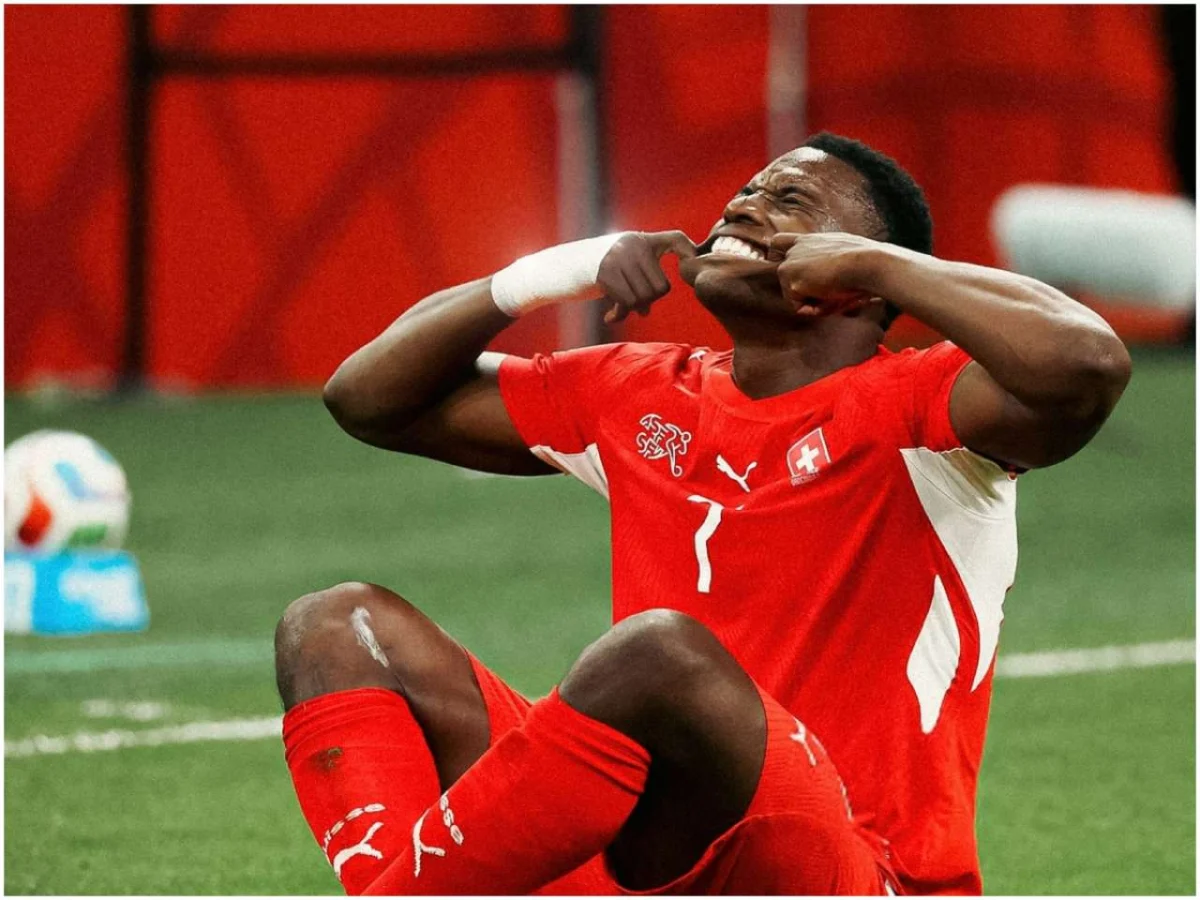
ATLANTA, USA – The FIFA World Cup 2026 quarter-final clash between Argentina and Switzerland, a high-stakes encounter already brimming with tension, erupted into a firestorm of controversy following a "mistaken identity" red card that saw Swiss talisman Breel Embolo dramatically sent off in the 72nd minute. The incident, which occurred with the score precariously poised at 1-1, became the pivotal moment of the match, ultimately paving the way for Argentina’s 3-1 victory and their progression to the semi-finals. The decision, rooted in a rigid interpretation of football’s Laws of the Game, has reignited intense debate surrounding VAR, refereeing infallibility, and the very spirit of fair play in the modern era of the sport.
The global football community, from seasoned pundits to passionate fans across social media, has been left reeling by the sequence of events that led to Embolo’s dismissal. While the Video Assistant Referee (VAR) system was instrumental in identifying the initial foul, a subsequent human error by referee Joao Pedro Silva Pinheiro in identifying the culprit led to an outcome that many are calling profoundly unjust. The incident has thrust FIFA’s "mistaken identity" rule into the harsh glare of public scrutiny, questioning whether the letter of the law can sometimes overshadow the fundamental principles of fairness, especially on the grandest stage of international football.
The Unfolding Drama: A Minute-by-Minute Account of Controversy
The quarter-final match itself was a pulsating affair, a testament to the high stakes of the FIFA World Cup 2026. Switzerland, often considered underdogs against the formidable Argentine squad, had battled valiantly, holding their own and keeping the South American giants at bay for much of the game. The score stood at 1-1, with both teams pushing for a decisive breakthrough as the match entered its final quarter.
71st Minute: The chain of events began with a robust challenge. Argentina’s Leandro Paredes, already walking a disciplinary tightrope, committed a foul on Breel Embolo near the halfway line. The challenge, while perhaps not malicious, was deemed reckless by many. Referee Joao Pedro Silva Pinheiro initially blew his whistle and, after a brief moment of deliberation, brandished a yellow card towards Paredes. Play was briefly halted as Paredes protested the decision.
)
71st Minute (Part II): Almost immediately, the VAR system, overseen by the refereeing team in the remote operations room, flagged the incident for review. The VAR protocol dictates that serious fouls, potential red card offences, or cases of mistaken identity should be brought to the on-field referee’s attention. In this instance, the VAR was reviewing the nature of Paredes’ foul, specifically whether it warranted a more severe punishment or if the identity of the fouled player was relevant. After a short communication with the VAR, referee Pinheiro gestured for the players to resume play, indicating that the initial decision stood for the moment, or that he intended to review it at the next stoppage.
72nd Minute: Crucially, the game did briefly resume. The ball was put back into play, though only for a matter of seconds. Then, the VAR system intervened again, prompting referee Pinheiro to halt the game once more. This time, the communication from VAR was more insistent, urging the referee to approach the pitch-side monitor for a personal review of the incident. This second VAR call suggested a significant error had been identified, likely regarding the severity of the foul or, as it turned out, the identity of the player involved.

72nd Minute (Part III): Referee Pinheiro proceeded to the pitch-side monitor, a moment that always heightens tension in a stadium. After several minutes of intently reviewing replays from various angles, the referee emerged from the monitor. His initial decision to caution Paredes for the foul was overturned. It became clear that the VAR had not only identified a different perpetrator for the foul that injured Embolo but also a different Argentine player who had committed an earlier, unpunished foul, or perhaps that the foul was more severe than initially perceived and involved a player other than Paredes. However, in a shocking turn of events, as the referee moved to administer the card, he mistakenly showed a second yellow card not to the correct Argentine player who had committed the foul, nor to Paredes, but to Switzerland’s Breel Embolo.
72nd Minute (Part IV): Embolo, who had already received a yellow card earlier in the game for a tactical foul, watched in disbelief as the second yellow card was brandished in his direction. Under the Laws of the Game, a second yellow card automatically results in a red card and immediate dismissal from the field of play. The Swiss forward’s protests, along with those of his teammates, were immediate and vociferous. The stadium erupted in a cacophony of boos and shouts, a mixture of confusion and outrage. Embolo, shaking his head in utter bewilderment, was forced to leave the pitch, his World Cup dream hanging by a thread. The gravity of the error was palpable, not just for Embolo but for the entire Swiss squad, who now faced the formidable Argentinians with a man down in the most critical phase of the match.
)
The score remained 1-1 at the time of the incident. The emotional impact on the Swiss team was immediate and visible, while Argentina, despite the controversy, now held a significant numerical advantage with less than twenty minutes of regulation time remaining.
The Letter of the Law: FIFA’s "Mistaken Identity" Rule Explained
The heart of the controversy lies squarely within the rigid framework of football’s Laws of the Game, specifically Law 5, which governs the powers and duties of the referee. While the concept of "mistaken identity" often conjures images of a referee showing a card to the wrong player for a specific offence, this incident highlighted a far more nuanced and, arguably, problematic application of the rule.
)
Law 5, Section 3, titled ‘Decisions of the Referee’, states unambiguously: "The referee may not change a decision on a restart of play or a disciplinary sanction after play has restarted or the referee has signalled the end of the first or second half (including extra time) and left the field of play or terminated the match. However, the referee may alter a disciplinary sanction at any time before play restarts if an error was made and, with the exception of the referee, no other match official had seen the incident."
In simpler terms, this law creates a critical window of opportunity for correction: before play restarts. Once the ball is back in motion, even for a fleeting moment, the referee’s ability to correct a disciplinary sanction – such as a caution or dismissal – is severely curtailed, almost to the point of being irreversible, particularly concerning the identity of the player.
)
In Embolo’s case, the sequence was critical:
- Original Foul & Decision: Foul by an Argentine player (initially Paredes was identified, later VAR clarified it was another player or a different incident altogether, but still an Argentine). Yellow card shown to Paredes.
- Play Resumes (Briefly): The ball was put back into play. This brief restart, even if for a few seconds, technically triggered the constraint of Law 5.
- Second VAR Intervention & Review: VAR called the referee back to the monitor after play had restarted.
- Overturned Decision & Mistaken Identity: The referee, after reviewing, correctly identified that the initial decision regarding Paredes was incorrect, either because the foul was committed by a different player or because a more serious foul by another player had been missed. However, in the chaotic aftermath of overturning the initial decision and attempting to correctly identify the player who committed the actual foul (or a different, more serious foul), the referee mistakenly showed the second yellow card to Embolo.
- The Inflexibility: Because play had restarted (even briefly) before the referee went to the monitor for the second time and subsequently made the "mistaken identity" error with Embolo’s card, Law 5 dictated that the identity of the player who received the card could not be changed. The decision to issue a card could be changed before restart, but the identity of the player cautioned or sent off becomes immutable once play has resumed.
The rationale behind this seemingly harsh rule is often cited as maintaining the flow and integrity of the game. Allowing referees to retroactively change decisions regarding player identity after play has resumed could lead to endless stoppages, appeals, and a general undermining of the referee’s authority and the finality of decisions. It aims to prevent a scenario where a match result could be constantly challenged days later based on retrospective analysis of who should have received a card. However, critics argue that in the age of VAR, where technology exists to pinpoint errors, such rigid adherence to a "restart" clause can lead to glaring injustices, especially when the error is so fundamental to fair play.
)
This incident is distinct from a scenario where VAR might correct a clear and obvious error regarding a red card offence itself (e.g., if a player was mistakenly identified for a red card offence before play restarted). Here, VAR correctly identified an error in the initial decision but the execution of the revised decision by the referee led to a new, equally significant error of mistaken identity, which the law then prevented from being rectified.
Official Responses and the Echoes of Injustice
The aftermath of Embolo’s red card saw immediate and impassioned reactions from all corners of the football world.
)
Swiss Camp: The Swiss national team’s coach, Murat Yakin, was visibly distraught during his post-match press conference. "It is an absolute travesty," Yakin stated, his voice heavy with disappointment. "To be knocked out of the World Cup in such a manner, due to a clear refereeing error, is unfathomable. Breel is devastated. He committed no foul, yet he paid the ultimate price. This rule, this ‘restart’ clause, must be re-evaluated. It cannot stand in the modern game where we have VAR to ensure justice." Swiss FA officials were reported to be exploring all available avenues for appeal, though the precedent set by Law 5 makes any reversal highly improbable. Embolo himself, though refraining from direct public comment, shared a cryptic message on social media expressing "heartbreak and disbelief," resonating with thousands of sympathetic fans.
Argentine Camp: The Argentine coach, Lionel Scaloni, acknowledged the controversy but remained focused on his team’s performance. "It was a difficult match, Switzerland played very well," Scaloni commented. "The referee makes decisions, and we have to respect them. We played our game, and we took advantage of the situation that presented itself. We are focused on the semi-final." While players like Lionel Messi did not directly comment on the red card, their post-match celebrations were somewhat subdued, perhaps reflecting an awareness of the controversial circumstances surrounding their victory.
)
FIFA and IFAB: FIFA, the governing body of world football, and IFAB (International Football Association Board), the custodians of the Laws of the Game, have yet to issue a direct, specific statement on the Embolo incident. However, their general stance remains consistent: "The Laws of the Game are applied as written to ensure consistency and fairness across all competitions. While human error can occur, the VAR system is in place to support the referee in correcting clear and obvious errors and serious missed incidents." It is expected that IFAB will likely reiterate the enforceability of Law 5, highlighting the difficulty in retroactively changing disciplinary sanctions once play has restarted, regardless of the perceived injustice. Former top-tier referees, speaking anonymously to various media outlets, generally supported the application of Law 5 as it stands, while acknowledging the unfortunate outcome. "It’s a harsh rule, but it’s there to prevent chaos," one former Premier League official noted. "The error was in the referee showing the card to the wrong player after the review, but once play resumed the first time, the window for certain corrections closed."
Punditry and Social Media: The incident became an instant trending topic across social media platforms, with #EmboloRedCard and #MistakenIdentity dominating discussions. Football pundits universally condemned the error, with many calling for a review of Law 5. Gary Lineker tweeted, "VAR is supposed to correct injustice, not create a new one. This is an absolute farce. Embolo’s red card is a stain on the tournament." Jamie Carragher added, "How can a rule designed for fairness lead to such a clearly unfair outcome? The ‘restart’ clause needs to be looked at, especially with VAR now involved." The sentiment was overwhelmingly one of sympathy for Embolo and frustration with the rigid legal framework that prevented a common-sense correction.
)
Far-Reaching Implications: The Ripple Effect of a Single Decision
The "mistaken identity" red card for Breel Embolo during the Argentina vs Switzerland quarter-final has triggered a cascade of implications, affecting not just the immediate outcome of the match but also the broader narrative of the FIFA World Cup 2026 and the future of football governance.
Immediate Match Impact and Argentina’s Advancement: Undeniably, Embolo’s dismissal was the turning point in the quarter-final. With the score tied at 1-1, Switzerland had demonstrated remarkable resilience. Losing their key attacking threat and a man down fundamentally altered the tactical landscape. The psychological blow to the Swiss was immense, while Argentina, despite the controversial circumstances, capitalized ruthlessly on their numerical advantage. They scored two goals in stoppage time – a cruel twist for Switzerland – to secure a 3-1 victory. Argentina, the defending champions, now march on to face England in a highly anticipated semi-final clash on Thursday, July 16, at the Atlanta Stadium. Without the red card, the final minutes of the Argentina-Switzerland match might have unfolded very differently, potentially leading to extra time or even penalties. The outcome, therefore, will forever be intertwined with this controversial decision.
)
Switzerland’s Heartbreak and Embolo’s Personal Toll: For Switzerland, the elimination is particularly bitter. To exit the World Cup at the quarter-final stage, perceived by many as a direct consequence of a refereeing error, is a devastating blow. The team had performed admirably throughout the tournament, and their dreams of reaching a semi-final were shattered in the cruelest fashion. For Breel Embolo, the personal impact is profound. To be wrongly dismissed from the biggest game of his career, potentially denying his nation a historic World Cup semi-final berth, is an experience that will undoubtedly haunt him. The memory of walking off the pitch in disbelief, powerless to correct the error, will be a lasting scar.
Reigniting the VAR Debate: Efficacy vs. Human Error: The incident has dramatically reignited the perennial debate surrounding VAR. While VAR was effective in identifying an initial error (or a different, more serious foul missed by the referee), it ultimately failed to prevent a catastrophic outcome due to a subsequent human error by the referee in identifying the wrong player for the card, and then the rigid application of Law 5. Critics argue that VAR, designed to eliminate clear and obvious errors, should have a mechanism to correct such fundamental injustices, even if play has briefly restarted. Proponents of the current system might argue that VAR did its job in bringing the incident to the referee’s attention; the ultimate responsibility for the mistaken identity rested with the on-field official. This incident highlights that while technology can assist, human judgment and the interpretation of rules remain paramount and fallible. It underscores the complexity of integrating technology into a sport governed by long-standing, often rigid, laws.
)
Future of Football Laws: A Call for Reform? The Embolo red card is likely to put immense pressure on IFAB to review Law 5, particularly the "restart" clause regarding disciplinary sanctions and player identity. In an era where VAR provides unprecedented levels of scrutiny, the argument for allowing corrections of undeniable, game-altering mistaken identities, even after a brief restart, is gaining traction. The incident prompts fundamental questions: Is the strict adherence to the "restart" rule still appropriate when VAR can definitively prove a player was wrongly identified? Does the letter of the law sometimes overshadow the spirit of the game, especially concerning fair play and justice? While changing established laws is a slow and deliberate process, the magnitude of this incident on the World Cup stage could serve as a catalyst for future discussions and potential amendments aimed at greater flexibility in rectifying clear errors of identity.
Precedent and Fair Play: This incident sets a troubling precedent. If such a glaring error of mistaken identity, leading to a player’s dismissal in a World Cup quarter-final, cannot be rectified, it raises concerns about the integrity of future matches. It sends a message that even with advanced technology, a critical human error, combined with a rigid rule, can dictate the outcome of the highest-stakes games, potentially undermining the principle of fair competition. The ethical implications for sportsmanship and the belief that the best team wins fairly are significant.
)
The Narrative of the World Cup: The Embolo red card will undoubtedly become one of the defining, and most controversial, moments of the FIFA World Cup 2026. It adds another layer of drama and debate to a tournament already filled with memorable moments. For Argentina, while they celebrate their progression, their path to the semi-finals will be forever marked by the asterisk of this controversial decision. For England, their semi-final opponents, the focus will now intensify on refereeing standards and the potential for similar incidents.
The football world is left grappling with the paradox of technology meant to enhance fairness yet seemingly constrained by rules that, in specific instances, can perpetuate injustice. The debate ignited by Breel Embolo’s red card is far from over, and its echoes will likely resonate through the corridors of FIFA and IFAB for years to come, forcing a critical re-evaluation of how justice is served on the football pitch.
)
How to Watch and Stream FIFA World Cup 2026 in India?
For Indian football enthusiasts eager to follow the remaining matches and the unfolding drama of the FIFA World Cup 2026, multiple group-stage matches and subsequent knockout rounds are being aired across the ZEE5 app and website. Fans can ensure they don’t miss any of the action, including the highly anticipated semi-final clash between Argentina and England, by accessing the official streaming platform.
Link: https://www.zee5.com/
)
Find your daily dose of All Latest News including Sports News, Entertainment News, Lifestyle News, explainers & more. Stay updated, Stay informed- Follow DNA on WhatsApp.
