

“I think that was Remal, no?”
“No, no. That was Bulbul.”

“But Fani was something else entirely.”
“And you’ve forgotten Mocha.”

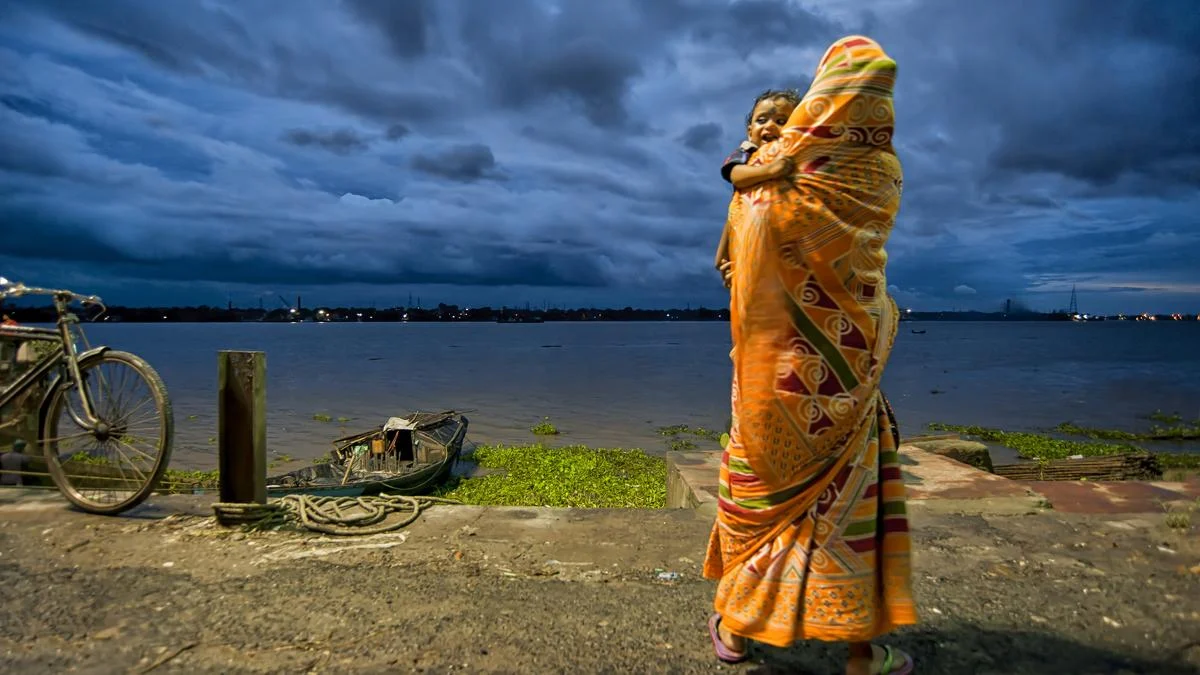
In a quiet room in Kolkata, names are exchanged with the kind of nostalgic reverence usually reserved for childhood friends or long-lost relatives. However, these names—Remal, Amphan, Bulbul, Fani, Mocha—do not belong to people. They belong to the atmospheric giants that have battered the coastlines of West Bengal and Odisha over the last decade. They are cyclones: engines of destruction that have snapped ancient banyan trees like matchsticks, decimated rural infrastructure, and sent millions scurrying for the safety of concrete shelters.
For most residents of West Bengal, these names represent trauma and disaster. But for the eight members of the Kolkata Cloud Chasers (KCC), they represent "encounters." For twelve years, this elite group of extreme weather photographers has spent their weekends and vacations pursuing the very phenomena the rest of humanity instinctively flees. Their lives are not measured in fiscal quarters or calendar years, but in squall lines, lightning strikes, and the arrival of the Kalbaisakhi—the legendary Northwester summer tempests of the Bengal delta.

The Anatomy of an Obsession: Main Facts
The Kolkata Cloud Chasers is an independent collective of photography enthusiasts and amateur meteorologists who have turned storm chasing into a disciplined, scientific, and artistic pursuit. While the concept of storm chasing is often associated with the "Tornado Alley" of the American Midwest, the KCC has pioneered this practice in the unique and volatile terrain of Eastern India.
The group consists of eight core members, each bringing a specific professional skill set to the team:

- Debarshi Duttagupta: A pharmaceutical professional who serves as the primary navigator and a Nikon Grand Prix-winning photographer.
- Suman Kumar Ghosh: An engineer who functions as the team’s wind-data specialist.
- Chirasree Chakraborty: A publication business owner and a primary storm tracker.
- Joyjeet Mukherjee: A debt recovery expert specializing in high-speed lightning photography.
- Krishnendu Chakraborty: A marketing professional who utilizes GoPro and mirrorless technology to document storm evolution.
- Diganta Gogoi: A professional photographer and expert storm spotter.
- Abhishek Saigal: A businessman renowned for his ability to capture the precise moment of a lightning discharge.
- The SCIF: Their Storm and Cloud-chasing Four-Wheeler (SCIF), a modified vehicle equipped with winches, tow straps, and sand ladders for navigating the treacherous, mud-slicked roads of rural Bengal.
What they seek is a fleeting intersection of science and art. They track atmospheric pressure, humidity gradients, and wind shear to position themselves in the path of a storm, hoping to capture the exact moment the sky transforms into a canvas of jagged electricity and towering cumulonimbus clouds.
From Orkut to the Eye of the Storm: A Chronology
The origins of the KCC trace back to 2009, an era when social media was in its infancy in India. The founding members first connected through the Kolkata Photographer’s Club, a community of approximately 2,500 enthusiasts on the now-defunct platform Orkut. Amidst the thousands of members, a small subset found themselves bored with traditional street photography and landscapes; they were drawn instead to the "grey days" and the violent beauty of the monsoon.

The evolution of the group followed the trajectory of mobile technology:
- 2009–2012 (The Early Years): The arrival of the first Android smartphones proved transformative. For the first time, satellite imagery from platforms like AccuWeather and The Weather Channel was available in the palms of their hands. The hobby began to shift from "waiting for rain" to "finding the storm."
- March 24, 2014 (The Birth of KCC): A dedicated WhatsApp group was formed, marking the official birth of the Kolkata Cloud Chasers. This allowed for real-time coordination and the sharing of live radar data.
- 2015–2019 (The Technical Leap): The group moved beyond basic photography, incorporating meteorology and field observation. They began studying weather models like the Global Forecast System (GFS) and the European Centre for Medium-Range Weather Forecasts (ECMWF).
- 2020–Present (The Professional Era): Despite the challenges of the pandemic, the group refined their "interception" techniques. They began utilizing advanced applications like Windy and WeatherBug, and equipped their vehicle with recovery gear to handle the extreme flooding and debris common in post-cyclone landscapes.
The Mechanics of the Chase: Supporting Data and Methodology
Storm chasing in the Bengal delta is fundamentally different from chasing in the plains of the United States. The high population density, narrow roads, and unpredictable moisture from the Bay of Bengal create a complex theater of operations.

The Strategic "Bardhaman Pivot"
Through years of trial and error, the KCC identified the city of Bardhaman as their most crucial strategic point. Located roughly 100 kilometers from Kolkata, Bardhaman serves as a gateway. From this central hub, the team can monitor the Kalbaisakhis—summer storms that typically originate over the Chhotanagpur Plateau near Ranchi. Depending on the storm’s trajectory, they can pivot toward Bankura, Purulia, Durgapur, or deep into the heart of Jharkhand.
The 10-Minute Lag
One of the most significant challenges the group faces is the "data delay." The radar imagery and satellite updates received on their tablets are often at least ten minutes old. In the world of extreme weather, ten minutes is an eternity. A storm cell can intensify, split into two, or dissipate entirely in that window.

“We work on probabilities,” explains Chirasree Chakraborty. “The navigator’s role is to estimate where the storm will be, not where it was.” This requires a deep understanding of local topography and how it influences wind patterns.
The Success Rate
Despite their sophisticated equipment—ranging from Nikon full-frame DSLRs and Sony mirrorless cameras to specialized lightning triggers—the success rate for a chase remains low, hovering around 20 to 22 percent. Most chases end in "blue-sky busts" or getting caught in "the core" (the center of the rain) where visibility drops to zero, making photography impossible.

Calculated Risks and Official Context: Safety Before Spectacle
While the images captured by the KCC are breathtaking, the reality of the chase is fraught with peril. The group has faced situations that underscore the raw, lethal power of the atmosphere.
The Danger of Lightning
Lightning is the most immediate threat to the team. Unlike a cyclone, which can be tracked days in advance, a lightning strike is instantaneous and unpredictable. Chirasree has experienced "upward streamers"—a phenomenon where an electrical charge builds up through the body just before a strike occurs nearby, often resulting in minor electric shocks.

More harrowing was the experience of Abhishek Saigal, who was struck by lightning during a chase. The strike was near enough to cause a temporary loss of sensation below his waist, a chilling reminder that the team is playing with forces far beyond human control.
Operational Safety
To mitigate these risks, the KCC operates with a strict safety protocol:

- The Escape Plan: Every chase begins with identifying at least two evacuation routes.
- Vehicle Orientation: The SCIF is always parked facing the direction of departure, with keys in the ignition.
- The Dedicated Spotter: When the photographers are focused on their lenses, at least one member is designated as the "safety spotter," monitoring the sky and lightning-detection apps for immediate threats.
While there is no "official" government body for storm chasing in India, the group maintains a deep respect for the India Meteorological Department (IMD). They use IMD reports as their baseline and often compare their field observations with official data to better understand the deviations in local weather patterns.
Implications: The Altruistic Eye and Climate Awareness
In an era where "influencer culture" often prioritizes profit and fame, the Kolkata Cloud Chasers remain a rare anomaly. They have a strict, non-negotiable policy: The chase will never be monetized.

Education Over Profit
The equipment, the fuel, and the specialized vehicle are all funded personally by the eight members. They have consistently declined offers to sell their data or photographs for commercial gain. Instead, they use their findings for public service. During the off-season, the team visits schools, colleges, and Rotary clubs to deliver presentations on:
- Lightning Safety: Teaching rural and urban populations how to avoid being struck.
- Cloud Formation: Simplifying the science of the monsoon.
- Climate Change: Using their decade-long archive of photographs to document the increasing frequency and intensity of extreme weather events in the region.
“We believe the moment money enters the equation, it dilutes the passion,” says Debarshi Duttagupta. Their goal is to foster a "weather-literate" society that respects the power of nature rather than simply fearing it.

The Philosophical Core
Ultimately, the KCC’s mission is about more than just photography; it is about perspective. In the face of a wall of clouds stretching miles into the stratosphere, the petty concerns of daily life seem to evaporate.
“You feel very small in front of nature,” Chirasree reflects. “Your existence feels almost insignificant. The clouds are rumbling, the thunder is cracking, and you realize how tiny you are in comparison. It’s risky, but that feeling is priceless.”

As the climate continues to shift and the storms over the Bay of Bengal grow more formidable, the Kolkata Cloud Chasers will continue to be there—not as victims of the storm, but as its witnesses. They stand as a testament to the human spirit’s desire to understand the chaotic beauty of the world, one lightning bolt at a time.
