

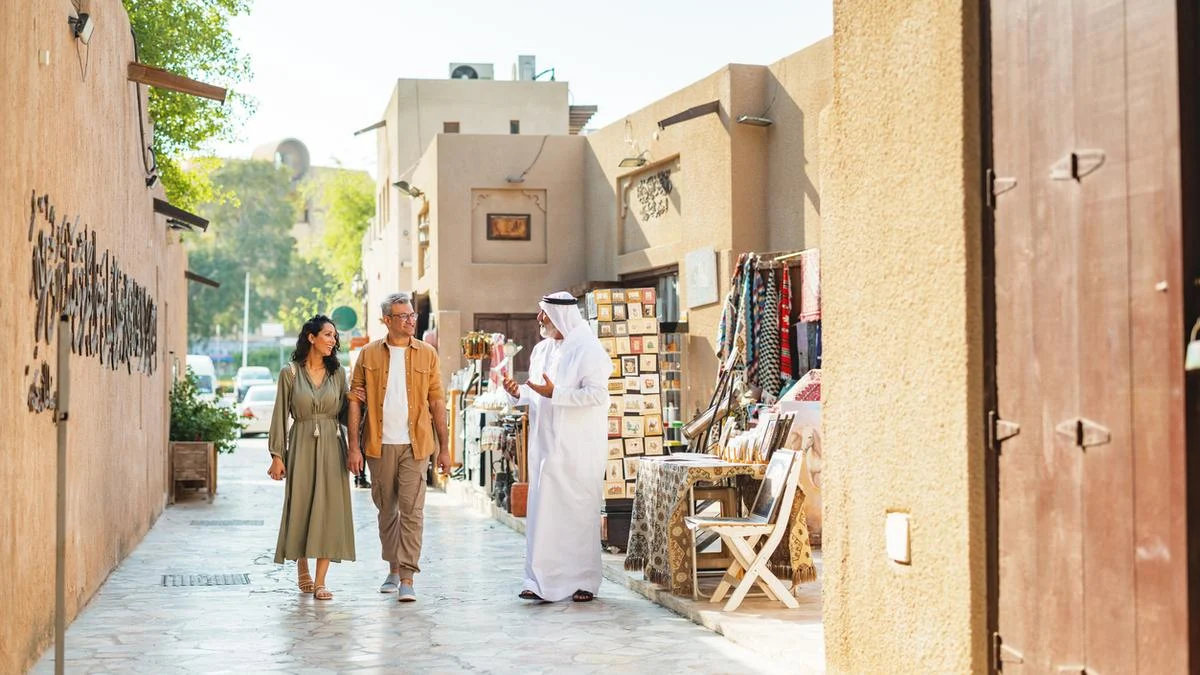
DUBAI – In the high-stakes world of global aviation and tourism, few cities have mastered the art of the "bounce back" as effectively as Dubai. Despite recent geopolitical tremors in West Asia that briefly throttled air corridors and forced the temporary closure of Dubai International (DXB)—the world’s busiest international gateway—the emirate is not merely recovering; it is recalibrating.
The disruption sent shockwaves across the Indian Ocean, impacting India, a nation inextricably linked to the UAE through a multi-billion dollar tapestry of trade, tourism, and a 3.5-million-strong diaspora. However, as the runways clear and the city’s skyline continues its vertical ascent, the message from Dubai’s leadership is one of calculated optimism.
In an exclusive dialogue, Issam Kazim, CEO of the Dubai Corporation for Tourism and Commerce Marketing (DCTCM), detailed the emirate’s strategic pivot. Beyond the immediate logistical fixes, Dubai is implementing a data-driven evolution to address shifting traveler behaviors, particularly within its most critical source market: India.
Main Facts: A Story of Record-Breaking Resilience
The narrative of Dubai’s tourism sector in 2025 and early 2026 is a study in contrasts. While regional headlines suggested a cooling of travel intent due to conflict, the hard data tells a story of unprecedented growth and institutional support.

- Record Visitation: In 2025, Dubai welcomed a staggering 19.59 million international overnight visitors. This represented the third consecutive year of record-breaking growth, signaling that the city’s appeal remains decoupled from regional volatility.
- Economic Vitality: The fourth quarter of 2025 saw a GDP growth of 6.4%, with the annual GDP reaching a historic AED 937 billion.
- The India Factor: India remains a cornerstone of this success. The relationship is no longer just "touristic" but structural, driven by extensive air links across dozens of Indian cities and a "VFR" (Visiting Friends and Relatives) segment that provides a permanent floor for travel demand.
- Aggressive Stimulus: To counter the headwinds of the West Asia conflict, the Dubai government injected AED 2.5 billion into the economy through two targeted incentive packages, focusing on liquidity for hospitality and event operators.
- Strategic Vision: These efforts are anchored in the "D33 Agenda," Dubai’s ambitious economic plan to double the size of its economy over the next decade and position itself as one of the top three global cities for business and leisure.
Chronology: Navigating the Storm (2025–2026)
The timeline of Dubai’s recent response reveals a proactive rather than reactive governance model.
Late 2025: The Peak and the Pivot
As 2025 drew to a close, Dubai was celebrating its most successful tourism year in history. However, as conflict in the broader West Asia region intensified, aviation hubs faced immediate pressure. The temporary closure of DXB caused a ripple effect, particularly for Indian travelers who use Dubai as a primary transit point for North America and Europe.
Q1 2026: The Liquidity Shield
By March 2026, the government recognized that while travel intent remained high, the "lead time" (the duration between booking and traveling) was shrinking. Travelers were waiting until the last minute to book, creating cash-flow challenges for hotels.
- March 2026: The first economic package of AED 1 billion was launched. It focused on the "Tourism Dirham" and hotel sales fees, allowing operators to defer payments and maintain staff levels.
Q2 2026: Expansion of Relief
In May 2026, a second, larger package of AED 1.5 billion was approved. This package expanded relief to the MICE (Meetings, Incentives, Conferences, and Exhibitions) sector, which is vital for mid-week hotel occupancy.

- June 2026: Emirates Airline confirmed it had restored flights to over 135 destinations, effectively rebuilding the global network that had been strained months prior.
The Road Ahead (H2 2026)
The second half of 2026 is slated for "milestone" events, including the 10th edition of the Dubai Fitness Challenge and the return of the Dubai Summer Surprises, aimed at maintaining momentum during the traditionally hotter months.
Supporting Data: The Pillars of the Recovery
The recovery is not built on marketing alone; it is supported by a robust framework of infrastructure and financial performance.
The MICE Powerhouse
The Dubai World Trade Centre (DWTC) has become a barometer for the city’s business health. In 2025, the venue hosted 401 events, attracting 2.97 million attendees. This sector is crucial because business travelers spend, on average, 25% more per day than leisure travelers.
Fiscal Stimulus Breakdown
The AED 2.5 billion stimulus was distributed across 33 specific initiatives. Key measures included:

- Fee Exemptions: Full exemptions from permit and licensing fees for exhibitions and conferences through the end of 2026.
- Operator Support: Reduction in fees for tour guides and desert safari operators, ensuring the "ground-level" tourism experience remains affordable and high-quality.
- Real Estate and FDI: Despite regional concerns, foreign direct investment (FDI) and real estate transactions remained at record highs, indicating long-term investor confidence that transcends short-term travel disruptions.
Infrastructure Expansion
Dubai is doubling down on its capacity to handle future growth:
- Al Maktoum International Airport: A USD 35 billion expansion is underway to transform it into the world’s largest hub, capable of handling 260 million passengers annually.
- Metro Connectivity: The newly approved Gold Line extension will add 42 kilometers of underground connectivity, linking 15 districts and further integrating the city’s tourist hotspots.
Official Responses: Insights from Issam Kazim
Speaking on the shifting psychology of the modern traveler, Issam Kazim emphasized that "perception is often influenced by headlines," but the reality on the ground in Dubai is one of stability.
"In moments of uncertainty, travelers globally tend to shorten booking lead times," Kazim noted. "What we are not seeing is a structural decline in travel intent. Instead, there is a broadening pattern of cautious booking behavior. Our response is not reactive but deliberate."
Kazim highlighted that Dubai’s strategy involves a "deeply integrated public-private ecosystem." Unlike many global cities where aviation, hospitality, and government operate in silos, Dubai’s entities function in a synchronized loop. This allowed for the rapid rollout of the "Dubai Info Hub" on WhatsApp, a tool designed to provide transparent, fact-based communication to combat misinformation during the height of the conflict disruptions.

Regarding the Indian market, Kazim was emphatic: "India has long been one of Dubai’s most significant and enduring source markets. The fundamentals—proximity, cultural resonance, and a city that genuinely feels like a second home—remain unshakable."
Implications: What This Means for the Future of Travel
The evolution of Dubai’s tourism strategy has several long-term implications for the global travel industry and the Indo-UAE corridor.
1. The "De-Risking" of Tourism
By diversifying its source markets to over 80 countries, Dubai has created a "structural stability." If travel from one region slows due to economic or political reasons, the city can pivot its marketing spend to another. This "market-by-market" calibration is likely to become a blueprint for other tourism-dependent economies.
2. The Rise of the "Stopover" Economy
Kazim identified stopover travelers as the "first to return" following disruptions. Dubai’s ability to turn a 24-hour layover into a high-value mini-vacation is a key part of its recovery. For Indian travelers heading to the West, the "Dubai Stopover" is being rebranded not just as a convenience, but as a safe, predictable anchor in a volatile region.

3. Digital and Sustainable Evolution
Under the D33 Agenda, Dubai is moving toward a "digitally enabled and sustainability-driven" sector. This involves using AI to predict travel surges and investing in "green" hospitality. The implication is that Dubai is no longer just competing on the basis of "the biggest and the best," but on the basis of being the "smartest and most resilient."
4. Strengthening the India-UAE Bond
The continued investment in connectivity between Indian Tier-2 and Tier-3 cities and Dubai suggests that the "diaspora link" is being viewed as a recession-proof asset. As Dubai expands its metro lines and retail offerings, it is specifically tailoring experiences for the Indian middle class, ensuring that the "second home" sentiment remains a reality for the next generation of travelers.
In conclusion, while the conflict in West Asia presented a significant challenge to regional aviation, Dubai’s multi-layered response—combining financial stimulus, transparent communication, and massive infrastructure investment—has allowed it to maintain its trajectory. The emirate is proving that in the modern era, the most valuable currency in tourism is not just luxury, but the confidence of the traveler.
