

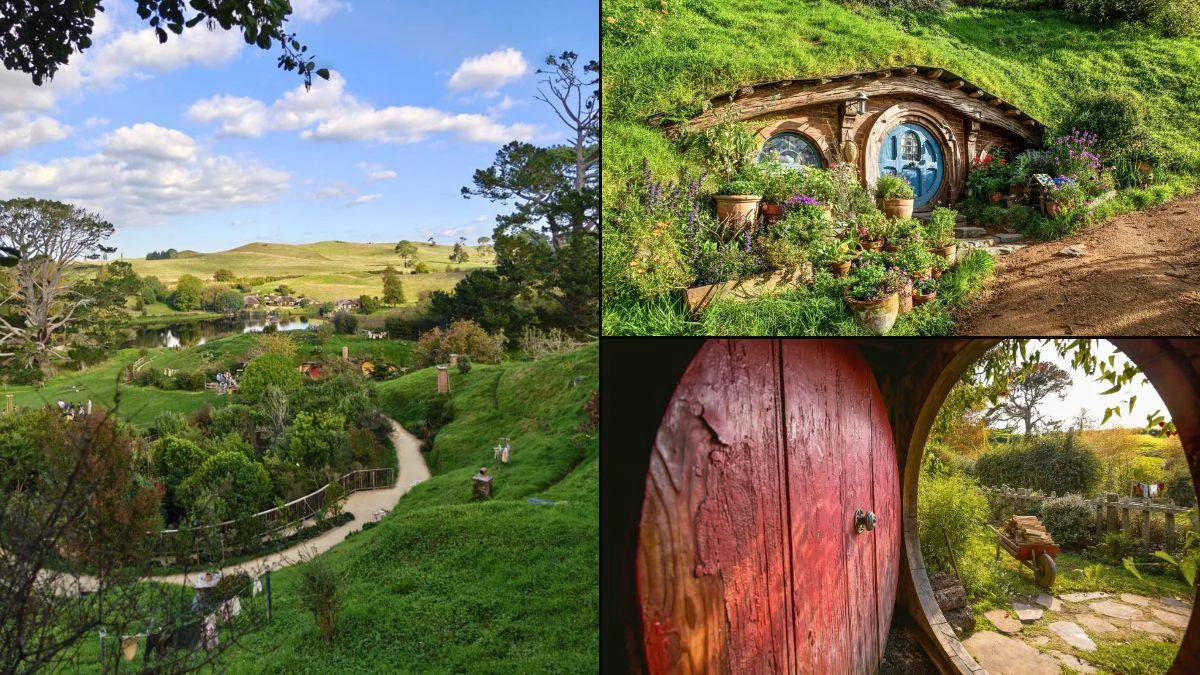
For over two decades, the rolling hills of the Waikato region in New Zealand have served as the physical manifestation of one of the most significant literary and cinematic landscapes in history. What began as a 1,250-acre sheep farm has evolved into a global pilgrimage site, bridging the gap between J.R.R. Tolkien’s high fantasy and the tangible reality of modern tourism. The Hobbiton Movie Set, located near the town of Matamata, represents more than a collection of film props; it is a testament to the "industrial miracle" of cinema and the enduring power of cultural inheritance.
The Discovery of the Shire: A Chronology of Transformation
The metamorphosis of the Alexander family farm into the Shire began in 1998. Director Peter Jackson, then in the early stages of pre-production for The Lord of the Rings trilogy, sought a location that felt "untouched by time." The criteria were specific: rolling green hills, a lack of modern power lines or paved roads, and a central tree that could serve as the "Party Tree" described in Tolkien’s The Fellowship of the Ring.

A helicopter survey led by location scout David Comer identified the Alexander farm as the ideal candidate. According to local lore, the scout arrived unannounced, reportedly interrupting an important rugby match to pitch the fantasy project to the landowner, Ian Alexander. That initial conversation sparked a construction project of unprecedented scale for the New Zealand film industry.
Work commenced in 1999, involving a unique collaboration between the film production team and the New Zealand government. The New Zealand Army was drafted to cut 1.5 kilometers of road into the site and move massive quantities of earth using heavy machinery. This military-grade infrastructure was necessary to support the 44 Hobbit-hole facades that were carved into the hillsides. Gardens were planted a year in advance of filming to ensure they looked lived-in and weathered by the seasons.

While the original set was intended to be temporary—constructed from polystyrene and plywood—a series of events ensured its survival. When filming wrapped on the original trilogy, a period of heavy rain stalled the planned demolition. In the interim, fans of the books and films began trekking to the farm to see the skeletal remains of the Shire. By 2002, the site had transitioned into a guided tour operation, albeit in a fragmented state.
The true turning point occurred in 2009, when Jackson returned to New Zealand to film The Hobbit trilogy. This time, the production team made a strategic decision to rebuild the set using permanent materials: brick, mortar, and timber. This shift from "film set" to "permanent architecture" allowed the site to become one of New Zealand’s most sought-after travel experiences, now attracting hundreds of thousands of visitors annually.

Engineering Fantasy: The Construction and Permanent Rebirth
The Hobbiton of today is a marvel of "forced perspective" and obsessive attention to detail. During the construction of the permanent set for The Hobbit, the craftsmanship reached a level of fidelity rarely seen in tourism. Every Hobbit hole was built to a specific scale—some at 100% scale for human-sized actors and others at 60% or 90% scale to make the actors playing Hobbits appear smaller.
The landscape itself was curated with an almost surgical precision. To mimic the rural English Midlands of Tolkien’s youth (specifically Worcestershire and Warwickshire), the production team introduced specific flora and meticulously aged the structures. The "oak tree" perched above Bag End, for example, is a masterwork of artifice; it is constructed of steel and silicon, featuring 200,000 artificial leaves imported from Taiwan, each hand-wired to the branches to ensure the silhouette matched the descriptions in the novel.

The Anatomy of Hobbiton: Navigating the 12-Acre Masterpiece
The visitor experience begins at "The Shire’s Rest," the staging area where the transition from the modern world to Middle-earth occurs. From here, green buses transport visitors into the heart of the Alexander farm. The drive itself serves as a buffer, allowing the modern infrastructure of Matamata to fade into the background, replaced by clean, rolling hills populated by clusters of sheep.
The Entrance and Bag End
The journey into the Shire follows the exact path Gandalf takes in the opening scenes of The Fellowship of the Ring. This narrow, winding track leads visitors past wooden signposts pointing toward East Farthing and Tuckborough. As the path ascends, the density of Hobbit holes increases, culminating at Bag End—the home of Bilbo and Frodo Baggins.

Bag End sits at the highest point of the village, offering a bird’s-eye view of the entire Shire. Its iconic green door is framed by a sign that has become a mantra for fans: "No admittance except on party business." The detail here is granular; from the moss growing on the fences (actually a mixture of paint and sawdust) to the small benches where characters shared "Old Toby" pipe weed, the set creates a sense of lived history.
The Party Tree and the Lake
Below Bag End lies the clearing used for Bilbo’s "eleventy-first" birthday. The centerpiece is the Party Tree, a massive Monterey pine that was the primary reason the Alexander farm was chosen. Opposite the tree stands a maypole wrapped in ribbons, still used during special events. The proximity of the tree to the lake creates a natural amphitheater that has become the visual shorthand for the "peace of the Shire."

The Evolution of Interiors: Stepping Inside the Hillside
For most of its history, Hobbiton was an "exterior-only" experience. The interior scenes of the films were shot on soundstages in Auckland and Wellington. however, in late 2023, the site underwent its most significant expansion to date with the opening of fully realized interiors on Bagshot Row.
These interiors represent a breakthrough in "immersive tourism." Unlike a museum display, these spaces are designed to be touched and interacted with. The Proudfoot home, for instance, features:

- The Entryway: A tube-shaped hall with wood-paneled walls and tiled floors, following Tolkien’s literal descriptions.
- The Kitchen and Pantry: Stocked with jars of preserves, copper pots, and "Hobbit-scale" furniture, the space feels as though the occupants have simply stepped out for a moment.
- The Study: A cluttered desk filled with ledgers, ink bottles, and hand-drawn maps, reflecting the scholarly nature of the Baggins family and their peers.
Economic and Cultural Implications: The Rise of ‘Set-Jetting’
The success of Hobbiton has profound implications for the global travel industry, particularly the phenomenon known as "set-jetting"—tourism driven by film and television locations. According to data from Tourism New Zealand, a significant percentage of international visitors cite The Lord of the Rings as a primary or secondary reason for choosing the country as a destination.
Official Responses and Economic Impact
Tourism New Zealand has leaned heavily into this "Middle-earth" branding. In official statements, the organization has noted that Hobbiton acts as a "gateway" for the Waikato region, drawing visitors who then spend money in Matamata, Hamilton, and surrounding areas. The site employs hundreds of local staff, from tour guides and gardeners to brewers and chefs, making it a cornerstone of the regional economy.

The collaboration between the film industry and the agricultural sector is also notable. The Alexander farm remains a working sheep farm, demonstrating a rare synergy between traditional primary industries and modern entertainment tourism. This "dual-use" model has become a case study for other regions looking to capitalize on cinematic fame without displacing local heritage.
The Green Dragon Inn and the Bittersweet Reality of Departure
The final stop on the tour is the Green Dragon Inn, a fully functional tavern that serves house brews made exclusively for Hobbiton. The interior, supported by massive timber beams and warmed by a roaring fireplace, serves as the ultimate "debrief" for visitors. It is here that the emotional weight of the experience often settles.

For many, the Shire represents a "lost idyll"—a pre-industrial sanctuary that reflects Tolkien’s own anxieties about the encroachment of modern machinery on the natural world. Leaving the site often brings a sense of "bittersweet melancholia," a term often associated with the ending of Tolkien’s epic.
As visitors board the green buses to return to the Shire’s Rest, the experience shifts from a physical reality back into a memory. However, the permanence of the Hobbiton Movie Set ensures that this particular "half-reality" remains accessible. In an era of digital effects and green screens, the 12 acres in Matamata stand as a reminder that some stories are best told through wood, stone, and soil.

Journalistic Note: The writer visited the Hobbiton Movie Set as a guest of Tourism New Zealand. The site continues to operate daily tours, with recent expansions focusing on increased accessibility and enhanced interior storytelling.
