

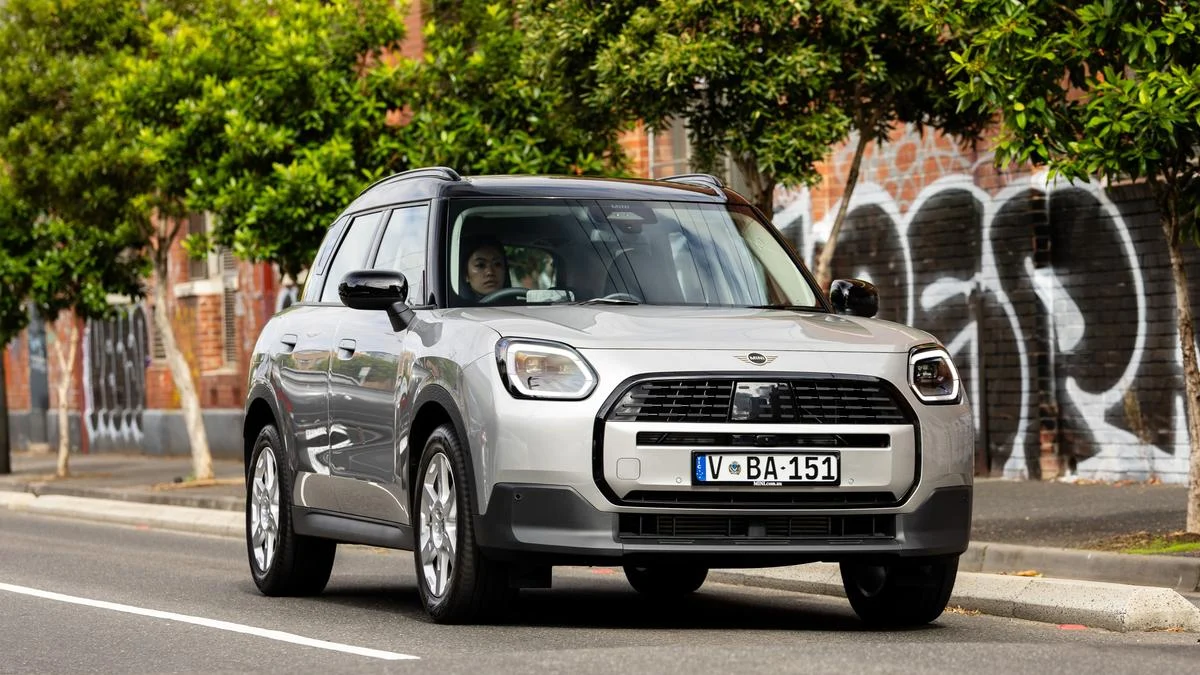
The Indian luxury automotive landscape has long been defined by a binary choice: the rational, spacious SUV or the emotional, spirited enthusiast’s car. For years, MINI occupied the latter category—a brand synonymous with "go-kart" handling, iconic British heritage, and a design language that favored charm over cargo space. However, the arrival of the new MINI Countryman C signals a paradigm shift. Priced at ₹47.50 lakh (ex-showroom), the latest iteration of the Countryman is no longer just a "big MINI"; it is a sophisticated, premium SUV designed to challenge the stalwarts of the compact luxury segment.
By moving beyond its niche lifestyle roots, the Countryman C aims to capture a broader demographic of Indian buyers who demand the prestige of a premium badge without sacrificing the utility required for family life and long-distance travel.
1. Main Facts: The "SUV-ification" of an Icon
The most striking aspect of the new MINI Countryman C is its physical transformation. While previous generations felt like slightly bloated hatchbacks, the new model fully embraces its SUV identity. It is taller, wider, and significantly longer than its predecessor, providing a "commanding" presence that Indian luxury buyers increasingly covet.
A New Platform and Shared DNA
Underneath the revised sheet metal lies the BMW Group’s sophisticated UKL2 platform, which it shares with the current BMW X1. This architectural commonality is a strategic masterstroke for the Indian market. It ensures that the Countryman C benefits from a chassis tuned for diverse road conditions, ranging from smooth urban expressways to the more challenging surfaces found in Tier-II cities.
Key Specifications at a Glance:
- Model: MINI Countryman C (U25 Generation)
- Price: ₹47.50 Lakh (Ex-showroom, India)
- Engine: 1.5-litre, 3-cylinder Turbocharged Petrol
- Platform: BMW UKL2 Architecture
- Interior Highlight: 240mm Circular OLED Display
- Seating Capacity: 5 Adults
- Design Language: "Charismatic Simplicity"
The "C" designation marks the entry-point into the petrol-powered Countryman range, focusing on efficiency and everyday drivability rather than the raw, high-performance output of the JCW (John Cooper Works) variants. However, do not let the entry-level badge fool you; the vehicle is packed with premium materials and cutting-edge technology that elevate it above the previous generation’s utilitarian aspects.

2. Chronology: The Journey from Niche to Mainstream
To understand the significance of the Countryman C, one must look at the evolution of the MINI brand in India and globally.
The Early Years (2012–2017)
MINI officially entered the Indian market in 2012, debuting at the Delhi Auto Show. At the time, the brand was viewed as a high-end novelty. The 3-Door Hatch was the hero product, appealing to celebrities and driving purists. The first-generation Countryman (R60) was introduced shortly after, but it struggled to find its footing. It was seen as too small to be a "real" SUV and too expensive compared to the entry-level offerings from Audi and Mercedes-Benz.
The Second Generation (2018–2023)
The second-generation Countryman (F60) saw MINI begin to take the Indian market more seriously. Local production commenced at the BMW Group plant in Chennai, which helped stabilize pricing and improve availability. This model introduced more space and a more mature interior, but it still felt like a compromise for families used to the plushness of a BMW X1 or an Audi Q3.
2024: The "C" Era
The launch of the Countryman C represents the third major chapter for the model in India. It arrives at a time when the Indian luxury market is experiencing record growth, with SUVs accounting for over 50% of total sales in the premium segment. By aligning the Countryman’s dimensions and features with those of a proper SUV, MINI is finally positioning itself to compete for volume rather than just "vibe."
3. Supporting Data: Engineering, Design, and Interior Innovation
The Countryman C’s appeal is backed by a series of significant engineering and design overhauls that move the needle in terms of "sensible luxury."

The "Charismatic Simplicity" Design Philosophy
MINI has moved away from the "retro-round" obsession of the past decade. The new design language, dubbed "Charismatic Simplicity," features cleaner lines, octagonal front grilles, and customizable LED light signatures. The vehicle looks more muscular and planted, with a higher ground clearance that is essential for navigating Indian monsoon-ravaged roads.
Interior: A Sustainable Revolution
Inside, the Countryman C breaks away from the "piano black" plastic and leather-heavy interiors of its rivals. Instead, it utilizes high-quality recycled textiles across the dashboard and door panels. This fabric-like finish gives the cabin a warm, living-room-like atmosphere.
- The OLED Display: The centerpiece is a 240mm circular OLED display. This is the first of its kind in the automotive industry, powered by the MINI Operating System 9. It handles everything from navigation and media to the "MINI Experience Modes," which change the ambient lighting and engine sound profiles.
- Space and Versatility: The wheelbase has been extended, resulting in genuine legroom for three adults in the rear. The boot space has also grown, making it a viable vehicle for week-long family road trips—a feat previous MINIs could rarely claim.
The Powertrain Debate: 1.5L Efficiency
The choice of a 1.5-litre, 3-cylinder engine has sparked debate among enthusiasts. However, data suggests this is a calculated move for the Indian market:
- Urban Efficiency: The 3-cylinder unit is optimized for the stop-and-go traffic of Mumbai, Delhi, and Bangalore.
- Performance: While it may sound small, the turbocharger ensures a flat torque curve, providing brisk acceleration (0-100 km/h in approximately 9 seconds) that feels faster in real-world driving than the numbers suggest.
- Weight Balance: The lighter engine over the front axle maintains the agile steering that is core to the MINI DNA.
4. Official Responses and Strategic Context
The BMW Group, MINI’s parent company, has been vocal about the strategic importance of the Countryman C in their Indian portfolio.
Local Production and Accessibility
By continuing local assembly in Chennai, MINI India can offer the Countryman C at a competitive price point of ₹47.50 lakh. Official statements from BMW Group India leadership emphasize that the brand is moving toward a "digital-first, sustainable-led" future. The Countryman C is the vanguard of this movement.

Broadening the "Big Love" Philosophy
MINI’s marketing campaign, "Big Love," focuses on inclusivity and community. The Countryman C is the physical manifestation of this. According to brand representatives, the goal was to create a car that "asks for fewer sacrifices." Historically, a MINI owner had to choose between style and space. The official stance now is that the Countryman C offers both, effectively removing the "barrier to entry" for young families who previously found the 3-Door Hatch too restrictive.
Market Positioning
Analysts suggest that the Countryman C is positioned to bridge the gap between the premium mass-market SUVs (like the Volkswagen Tiguan) and the traditional luxury entry-points (like the BMW X1). It offers a level of individuality that a BMW or Mercedes cannot match, appealing to "new-age" luxury buyers—entrepreneurs, creative professionals, and tech leaders—who want to stand out from the corporate crowd.
5. Implications: The Future of MINI in India
The arrival of the Countryman C has several long-term implications for the Indian automotive market.
Challenging the German Trio
For years, the Audi Q3, BMW X1, and Mercedes-Benz GLA have had a stranglehold on the compact luxury SUV segment. The Countryman C introduces a "fourth way." Its unique interior aesthetic and playful character offer a refreshing alternative to the somewhat clinical interiors of its German rivals. If the Countryman C succeeds, it could force other brands to innovate more aggressively with sustainable materials and unconventional designs.
The "One Car" Solution
Previously, a MINI was often the second or third car in a wealthy Indian household—a "weekend toy." The Countryman C has the potential to be the primary vehicle. Its improved rear-seat comfort and safety tech (including ADAS features) make it a rational choice for the daily school run or the office commute. This shift from "niche" to "primary" is essential for MINI to grow its market share in India.

A Prelude to Electrification
The design and tech architecture of the Countryman C are shared with the upcoming all-electric MINI Countryman SE. By familiarizing the Indian public with this new, larger, and more tech-heavy format, MINI is laying the groundwork for its transition to a fully electric brand by the early 2030s.
Conclusion
The MINI Countryman C is a bold gamble that seems poised to pay off. It retains just enough of the brand’s signature quirkiness to satisfy loyalists, while adding the space, technology, and "SUV-ness" required to win over the pragmatists. At ₹47.50 lakh, it offers a compelling mix of BMW-backed engineering and unmistakable British flair. In the rapidly evolving Indian luxury market, the Countryman C isn’t just a new car; it is a declaration that MINI has finally grown up—without losing its soul.
