

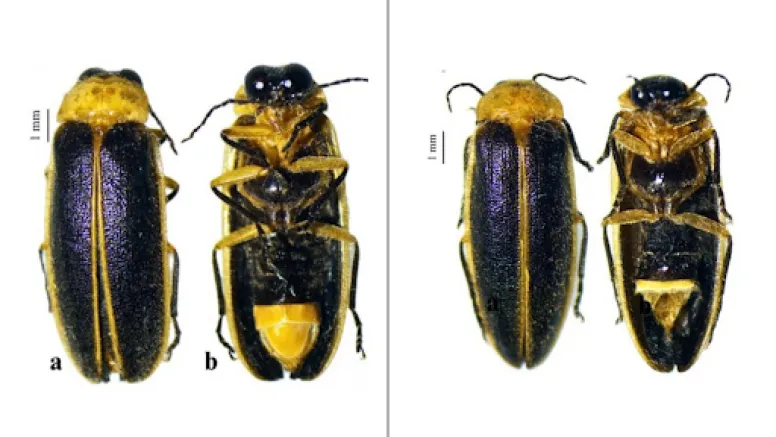
MAWSYNRAM, MEGHALAYA — In the mist-shrouded hills of Meghalaya, a region globally renowned as the "Abode of Clouds," a team of Indian scientists has illuminated a new chapter in entomology. Researchers from Assam Don Bosco University and Debraj Roy College have officially announced the discovery of a new species of firefly, Pygoluciola mawsynram, named after its type locality, Mawsynram—the wettest place on Earth.
This discovery, documented during the precarious window just before the arrival of the heavy Indian monsoons, marks a significant milestone for biodiversity in Northeast India. It represents only the fifth species of the Pygoluciola genus to be recorded in India and the 29th globally, highlighting a critical gap in the scientific understanding of bioluminescent insects within the Indo-Burma biodiversity hotspot.
Main Facts: A Beacon in the Biodiversity Hotspot
The identification of Pygoluciola mawsynram is the result of an intensive taxonomic study led by a collaborative team of researchers dedicated to documenting the overlooked fauna of the Northeast. The species belongs to the family Lampyridae, a group of beetles known for their ability to produce cold light through chemical reactions in their lower abdomen.
The new species was identified through a rigorous "integrative taxonomic approach," which combines traditional morphological analysis—the study of physical structures—with modern DNA barcoding. This dual-layered verification ensures that the species is distinct from its closest relatives, such as Pygoluciola ambita, a firefly found thousands of miles away in Indonesia.

The discovery is particularly poignant given the location. Mawsynram, situated in the East Khasi Hills, receives an average annual rainfall of nearly 11,872 millimeters. The unique microclimate of this region, characterized by high humidity, dense semi-evergreen forests, and a network of perennial streams, provides an ideal, albeit challenging, habitat for fireflies whose life cycles are intrinsically linked to water.
Chronology: From Field Surveys to Genetic Sequencing
The journey to the discovery began in the late spring of 2024.
- May 2024: The Field Expedition: As the heat of the Indian plains intensified, the research team trekked into the moist grasslands and secondary forests of Mawsynram. The goal was to document insect activity before the torrential monsoon rains made the terrain impassable. Between the hours of 6:00 pm and 9:00 pm, the researchers observed distinct yellowish flashes of light near slow-flowing water bodies and waterfalls.
- Sample Collection: Using specialized nets and careful observation, the team collected specimens of both male and female fireflies. They noted the specific ecological niches the insects occupied, finding them primarily in areas with high moisture and undisturbed vegetation.
- June – July 2024: Morphological Analysis: In the laboratory, the specimens underwent microscopic examination. Researchers focused on the "pronotum" (the shield-like plate covering the thorax) and the intricate structures of the reproductive organs, which are often the deciding factors in insect taxonomy.
- August 2024 – Present: DNA Barcoding and Peer Review: To confirm the findings, the team extracted DNA to map the species’ genetic signature. This data was compared against global databases, confirming that the genetic distance between the Mawsynram specimens and known Pygoluciola species was sufficient to classify it as a new discovery. The findings were subsequently prepared for publication in international zoological journals.
Supporting Data: The Anatomy of a New Species
Pygoluciola mawsynram is distinguished by several unique physical characteristics that set it apart from its congeners.
Morphological Characteristics:
- Coloration: The firefly features a vibrant orange-yellow pronotum, which contrasts sharply with its black wing covers (elytra). These wing covers are further edged with thin, pale yellow borders, giving the insect a distinct "framed" appearance.
- Abdominal Structure: A key identifying feature is found on the sixth abdominal segment, which possesses a unique reflexed or folded margin.
- The Aedeagus (Reproductive Organ): Under microscopic scrutiny, the male reproductive organ revealed a broad base that tapers into a thin, wavy membrane. This specific geometry is absent in other members of the Pygoluciola genus, serving as a biological "fingerprint" for the species.
Genetic Analysis:
DNA barcoding focused on the Cytochrome c Oxidase subunit I (COI) gene, the standard "barcode" for animal life. The genetic sequences of P. mawsynram showed a significant divergence from P. ambita (Indonesia) and other Indian species, suggesting a long period of evolutionary isolation in the Khasi Hills.

Habitat Data:
The fireflies were exclusively found in proximity to aquatic environments. This suggests that the larvae of P. mawsynram are likely aquatic or semi-aquatic, preying on small snails or other invertebrates in the damp soil and shallow water—a lifestyle that makes them highly sensitive to water pollution and habitat changes.
Official Responses and Cultural Significance
The naming of the species—Pygoluciola mawsynram—was a deliberate choice by the researchers to honor the local community. The Khasi people of Meghalaya have a long-standing tradition of environmental stewardship, exemplified by their "Law Kyntang" or Sacred Groves. These are patches of forest where all forms of life are protected by traditional religious beliefs.
"The discovery of this firefly is not just a scientific win; it is a tribute to the Khasi community," said one of the lead researchers. "By preserving their sacred groves and maintaining a deep respect for the natural world, they have inadvertently created a sanctuary for species that science is only now beginning to discover."
Experts in the field of Indian entomology have welcomed the find, noting that the country’s firefly population has been largely neglected by the scientific community for over a century. Most existing records of Indian fireflies date back to the British colonial era, with very little contemporary research conducted until the last decade. This discovery is seen as a catalyst for a renewed interest in "bioluminescent mapping" across the subcontinent.
Implications: Bio-indicators and Conservation
The discovery of Pygoluciola mawsynram carries profound implications for environmental conservation and climate science.

1. Fireflies as Bio-indicators:
Fireflies are famously "picky" about their environment. They require clean water, low light pollution, and undisturbed soil for their larvae to thrive. The presence of a thriving population of P. mawsynram in Mawsynram serves as a biological indicator of the health of the local ecosystem. If these fireflies were to disappear, it would signal a decline in water quality or a rise in invasive light pollution.
2. Addressing the Taxonomic Gap:
India is home to a vast array of wildlife, yet its "micro-fauna"—insects, spiders, and small invertebrates—remain poorly documented. The researchers emphasized that for every new species found, dozens more may be going extinct due to habitat loss before they are even named. This discovery highlights the need for increased funding and interest in traditional taxonomy.
3. Climate Change Vulnerability:
As a species dependent on the extreme rainfall of the Meghalayan plateau, P. mawsynram is uniquely vulnerable to climate change. Shifts in monsoon patterns or prolonged dry spells could disrupt their breeding cycles. The researchers suggest that monitoring firefly populations could provide early warning signs of how climate change is affecting the delicate balance of the Northeast’s cloud forests.
Related Scientific Breakthroughs: A Broader Context
The discovery in Meghalaya comes at a time when Indian researchers are making significant strides in predictive modeling and environmental science. While one team tracks the lights of the forest, others are looking deep into the earth.
In a parallel development, researchers have recently developed a region-specific mathematical model for the Jharia coalfields in Jharkhand. This model predicts gas flow based on the width of microscopic fractures in coal seams. Much like the firefly research, which uses microscopic morphology to predict species behavior, the Jharia model bypasses difficult physical measurements to improve the efficiency of fuel extraction and carbon dioxide storage.

Both studies—one in the wettest forests of Meghalaya and the other in the industrial coalfields of Jharkhand—underscore a growing trend in Indian science: the use of highly specific, localized data to solve complex global problems, from biodiversity loss to energy security.
Conclusion
As the sun sets over the East Khasi Hills and the first yellowish flashes of Pygoluciola mawsynram begin to dance near the waterfalls, the discovery serves as a reminder of the mysteries still hidden in the natural world. For the scientists at Assam Don Bosco University and Debraj Roy College, the work has only just begun. The next phase of research will involve mapping the full range of this species and investigating the chemical properties of its unique bioluminescence.
In the "Abode of Clouds," science has found a new light—one that promises to guide future conservation efforts in one of the world’s most vital ecological treasures.
