

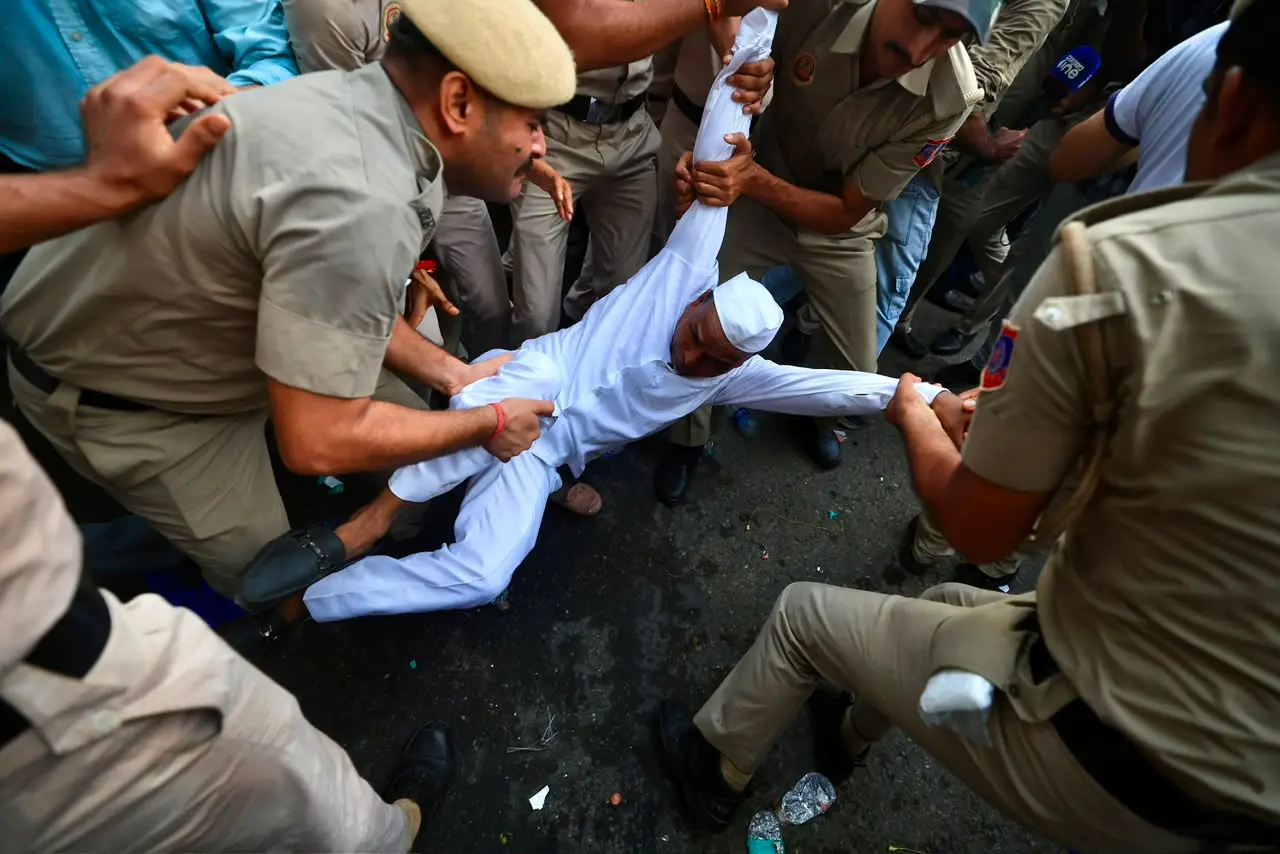
New Delhi, July 21, 2026 – In a dramatic escalation of the nationwide uproar over alleged paper leaks and examination irregularities, Leader of Opposition in Lok Sabha, Rahul Gandhi, was detained on Tuesday afternoon during a sit-in protest near Prime Minister Narendra Modi’s official residence. The protest, which saw several top Opposition figures including Congress President Mallikarjun Kharge, Priyanka Gandhi Vadra, and Samajwadi Party chief Akhilesh Yadav, was swiftly broken up by police within three hours. This concerted show of defiance came just a day after police used lathis and tear gas to disperse thousands of agitated students marching towards Parliament, demanding the resignation of Union Education Minister Dharmendra Pradhan.
The Opposition’s move signals a strategic pivot, aiming to seize the narrative surrounding a crisis that has deeply impacted millions of aspiring students across the country. The Congress, in particular, sought to assert its leadership in a movement that had, until recently, seen other groups like the Cockroach Janta Party (CJP) and activist Sonam Wangchuk take prominent roles. The unfolding events have not only intensified the political slugfest between the government and the Opposition but also brought to the forefront the deep-seated frustration among India’s youth regarding the integrity of the examination system.
The Spark: A Weekend of Youth Outcry and Police Action
The immediate precursor to Tuesday’s high-profile political demonstration was a massive student-led protest on Monday. Thousands of youngsters, mobilised by various student organisations and activist groups, including the vocal Cockroach Janta Party (CJP), converged in the heart of Delhi. Their primary demand was unequivocal: the immediate resignation of Union Education Minister Dharmendra Pradhan, whom they held accountable for the widespread examination irregularities, particularly a major paper leak incident that has jeopardised the futures of countless candidates.
Monday’s Marches and Confrontations
The scene on Monday was one of simmering tension that quickly boiled over into confrontation. Young students, many travelling from distant cities, marched with placards and slogans, attempting to breach police barricades and make their way to Parliament House. The sheer volume and determination of the crowd presented a significant challenge to law enforcement. Police deployed a heavy contingent, resorting to traditional crowd control methods. Lathis (batons) were used to disperse the surging crowds, and tear gas shells filled the air, turning parts of central Delhi into a hazy battlefield. Numerous protesters sustained injuries in the ensuing clashes, and many were detained. The images and videos of students being physically pushed back and suffering the effects of tear gas quickly went viral, igniting further public outrage and criticism of the government’s handling of the peaceful demonstration. The incident underscored the deep chasm of trust between the youth and the administration, transforming a grievance into a full-blown political flashpoint.
The Genesis of Discontent
The frustration evident on Monday was not an isolated incident but the culmination of years of recurrent paper leaks and alleged malpractices across various competitive examinations in India. From medical entrance tests (like NEET, though not explicitly named for this specific leak) to government job recruitment exams, the integrity of these high-stakes assessments has been repeatedly compromised. Each leak shatters the hopes and dreams of lakhs of students who invest years of hard work, significant financial resources, and immense emotional energy into preparing for these career-defining tests. The perceived lack of accountability from government bodies and education ministries has fueled a growing sense of despair and injustice among the youth, leading to a widespread demand for systemic reforms and transparent mechanisms.
Congress Enters the Fray: Reclaiming the Narrative
The widespread anger reflected in Monday’s youth protests did not go unnoticed by the political establishment. For the Congress, the principal opposition party, there was a palpable sense that it could not afford to be sidelined, especially with other groups like the CJP and activist Sonam Wangchuk already galvanising support. Rahul Gandhi, in particular, had been vocal on these very issues for months, holding high-profile public engagements in Kota in June and Dehradun just the previous week, addressing student concerns directly.
Strategic Calculus
The Congress leadership recognised the political imperative to "reclaim the space" and position itself as the foremost champion of student rights. Allowing the perception to solidify that the CJP or other non-Congress entities were spearheading the movement against paper leaks would have been a strategic misstep. The youth demographic is a critical electoral segment, and their disillusionment presented a potent opportunity for the Opposition to rally support. The party’s internal assessment was that the public mood was ripe for a strong, visible intervention from the main Opposition, especially when many non-Congress opposition parties had already expressed solidarity with Wangchuk’s hunger strike and the CJP’s efforts.
Morning Preparations and Solidarity
Even before the dramatic sit-in, the Congress demonstrated its intent. On Tuesday morning, volunteers from the Congress Seva Dal were dispatched to Jantar Mantar, the traditional protest site, to distribute food and water to the students still protesting there. This act of solidarity was followed by a formal directive from the party. Congress communications chief Jairam Ramesh announced that the party’s legal team had been instructed to provide "all possible assistance to those young persons arrested, detained, and attacked during the ongoing protests," sharing contact details for those in need of legal aid. Concurrently, Rahul Gandhi and Priyanka Gandhi Vadra visited injured protesters recuperating at RML Hospital, offering solace and demonstrating direct engagement with the victims of Monday’s police action. These actions laid the groundwork for the day’s major political offensive.
The High-Stakes Sit-in: Confrontation at the PM’s Doorstep
The climax of the day’s political manoeuvres unfolded in the afternoon, marked by a meticulously planned, yet seemingly spontaneous, demonstration by the Congress leadership.
A Covert Assembly
The Congress employed a clever tactic to gather its forces without alerting law enforcement. In the afternoon, Congress MPs received a message from AICC general secretary (organisation) K C Venugopal, requesting their presence at Congress President Mallikarjun Kharge’s residence at 10, Rajaji Marg, by 3 pm "to formally greet Congress President on his Birthday." Many MPs arrived, genuinely believing it was a birthday celebration. However, upon their arrival, they were informed of the actual plan: a march to the Prime Minister’s official residence at 7, Lok Kalyan Marg. This element of surprise was crucial, as one MP later confided to The Indian Express, stating that the leadership intentionally kept the sit-in plan under wraps to prevent police pre-emption. Kerala CM V D Satheesan, though initially at Kerala House, joined his colleagues upon learning of the impromptu protest, underscoring the urgency and unity within the party for this action.
Leaders in Defiance
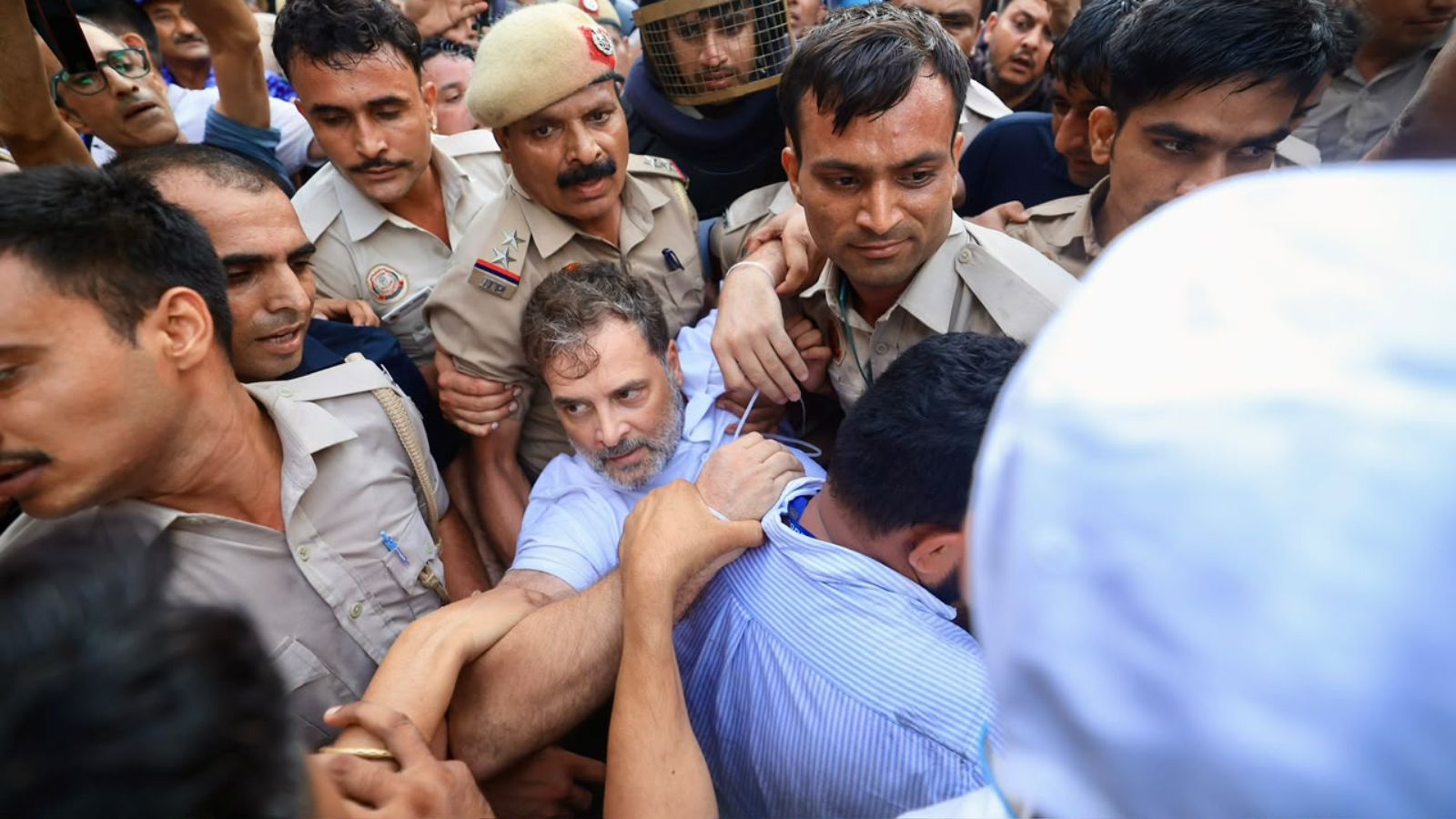
The scene outside the Prime Minister’s residence quickly transformed into a high-stakes political theatre. Rahul Gandhi, Mallikarjun Kharge, Priyanka Gandhi Vadra, Karnataka Chief Minister D K Shivakumar, and Samajwadi Party president Akhilesh Yadav were among the prominent leaders who led the sit-in. In a symbolic gesture of defiance and solidarity, Gandhi was seen distributing zip ties among his party colleagues, urging them to link their wrists together to make it harder for the police to physically remove them. He also took to social media platform X, posting an impassioned plea: "An attack on students is an attack on every Indian family. Prime Minister Modi thinks he can escape without giving answers, without facing any consequences – he won’t be able to, not at all this time." He urged "every patriotic Indian who believes our students deserve justice" to join the dharna, a call that saw the likes of Supriya Sule and Akhilesh Yadav join the protest, further amplifying its political weight.
Swift Police Intervention
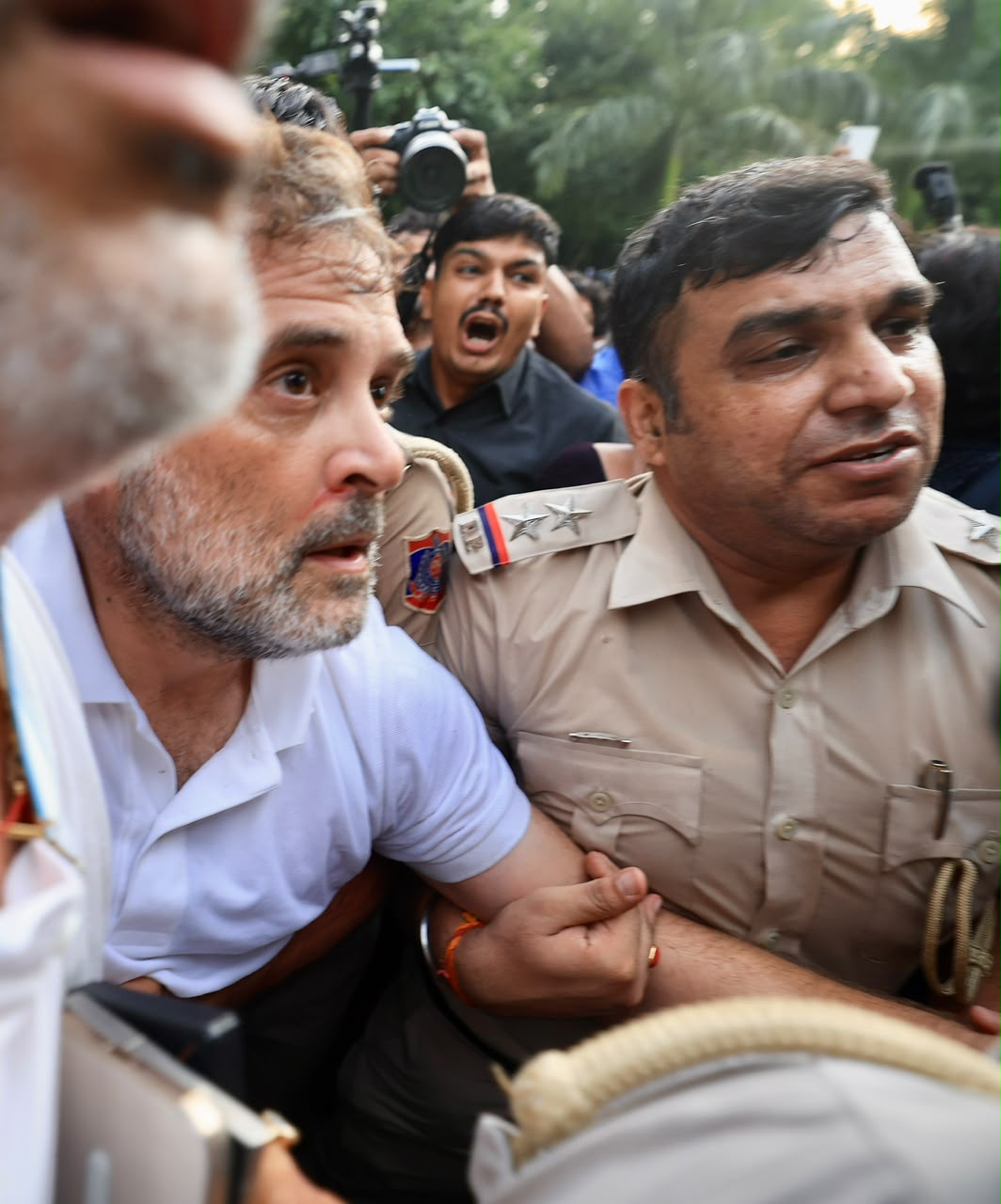
Despite the leaders’ attempts to make their removal difficult, the police acted swiftly and decisively. Within three hours of the protest commencing, law enforcement personnel moved in to clear the area. Top Opposition leaders, including Rahul Gandhi, were physically removed and detained. Images of Gandhi being "dragged away" from the protest site quickly circulated, becoming a powerful visual symbol of the confrontation. The detentions sent a clear message from the government regarding its stance on unauthorised protests in high-security zones, but it simultaneously provided the Opposition with potent imagery to fuel their narrative of a suppressive government unwilling to listen to dissent.
Divergent Narratives and Political Accusations
The events of Tuesday quickly became subject to conflicting interpretations from the government and the Opposition, further muddying the waters of an already contentious issue.
Government’s Stance: Dialogue Offered, Demands Shifted
The government’s immediate response came from MoS PMO Jitendra Singh, who, along with Home Secretary Govind Mohan, was dispatched to engage with Rahul Gandhi at the protest site. Singh claimed that Gandhi initially demanded a discussion on the NEET issue and the Jantar Mantar protests in Parliament. "Within a few moments, after taking permission from the government’s top leadership, Shri Rahul Gandhi was assured that his demand has been accepted, and the government is ready to discuss in Parliament all issues related to NEET and the associated movement," Singh wrote on X.
However, Singh alleged that Gandhi then "went back on his word" and insisted on an assurance regarding Education Minister Pradhan’s resignation. "When an attempt was made to humbly explain to him that for a senior leader like him to backtrack from his word so quickly does not befit him, he said that it is his prerogative. When the Home Secretary tried to explain that this site is not suitable for a sit-in, his response was that it is also his prerogative to sit wherever he wants," Singh further claimed, portraying Gandhi as unreasonable and uncooperative, more interested in political grandstanding than constructive dialogue.
Opposition’s United Front (and Internal Rifts)
The Congress, conversely, maintained that the government’s offer of discussion was insufficient without accountability. They reiterated their demand for Pradhan’s resignation, arguing that a mere discussion would not address the systemic failures that have plagued the examination system. Rahul Gandhi’s social media posts and the party’s official statements consistently underscored the need for justice for students and accountability from the top echelons of the Education Ministry.
However, cracks within the broader Opposition unity also became apparent. The Aam Aadmi Party (AAP), a significant opposition force, targeted the Congress, alleging that its dharna was an attempt to divert attention from the CJP’s ongoing protest at Jantar Mantar. AAP MP Sanjay Singh controversially alleged, "To weaken the CJP’s dharna, Modi ji has allowed Rahul Gandhi to protest outside his residence," suggesting a cynical, orchestrated move. This accusation highlighted the complex and often competitive dynamics within the opposition bloc, even on issues where their fundamental goals might align.
The Broader Opposition Movement
Despite the internal political skirmishes, the broader movement against paper leaks continued to draw support. Activist Sonam Wangchuk, known for his environmental and educational activism, remained on a hunger strike, becoming a rallying point for many student and civil society groups. The Cockroach Janta Party (CJP) continued its advocacy, ensuring that the issue remained on the national agenda. Prominent opposition leaders like NCP (SP) chief Sharad Pawar and AAP’s Arvind Kejriwal, while perhaps critical of Congress’s specific tactics, had earlier visited the Jantar Mantar protest venue, lending their support to the larger cause and demonstrating a shared concern over the integrity of national examinations.
Deeper Roots: The Scourge of Examination Irregularities
The current crisis is not an anomaly but a symptom of a deeper, systemic malaise within India’s vast and competitive education and recruitment landscape. The prevalence of paper leaks has become a recurring nightmare for millions.
A National Crisis
The examination system in India is a gateway to upward mobility and economic security for countless families. Each year, millions of students compete for a limited number of seats in prestigious educational institutions or coveted government jobs. The stakes are incredibly high, leading to immense pressure and often significant financial investment in coaching and study materials. When a paper leaks, it shatters not just individual dreams but also erodes public trust in the institutions meant to uphold meritocracy. The emotional toll on students, who often spend years preparing, is immense, leading to widespread disillusionment, mental health crises, and a sense of profound injustice. For families, the financial burden of repeated attempts and the uncertainty surrounding the integrity of exams can be devastating.
Historical Precedent and Failed Reforms
The issue of paper leaks is not new. India has a long history of such incidents, prompting various committees and task forces to recommend reforms. Despite these efforts, leaks persist, suggesting deep-seated issues that go beyond isolated incidents. These often include weak security protocols in examination boards, alleged corruption among officials, the involvement of organised syndicates, and a lack of robust legal frameworks to deter and punish perpetrators effectively. The current crisis highlights the urgent need for comprehensive, transparent, and technology-driven reforms to restore faith in the sanctity of competitive examinations.
Implications and the Road Ahead
The events of July 21, 2026, have profound implications for the political landscape, the future of student activism, and the credibility of the government.
Political Ramifications
The immediate political fallout is likely to be significant. Education Minister Dharmendra Pradhan’s position is under intense scrutiny, and the Opposition’s relentless demand for his resignation will likely dominate parliamentary proceedings. The government’s handling of the protests, particularly the use of force against students and the detention of top opposition leaders, could further damage its public image, especially among the youth. For the Congress, the protest has provided a crucial platform to re-establish its relevance and leadership on a pressing national issue, potentially reinvigorating its cadre and appeal. The internal squabbles within the Opposition, however, could dilute the overall impact of their collective pressure on the government.
Strengthening the Opposition
Rahul Gandhi’s proactive role, from visiting injured students to leading the sit-in and being detained, serves to reinforce his image as a vocal and combative leader. This aggressive stance could consolidate his position within the Opposition and resonate with segments of the electorate frustrated with the status quo. The participation of leaders from other parties like SP and NCP (SP) suggests a willingness, despite internal differences, to unite on issues of national importance, potentially paving the way for broader opposition collaborations in the future.
The Youth’s Voice
The student protests represent a powerful assertion of youth agency. The scale and intensity of their demands indicate a generation increasingly unwilling to accept systemic failures quietly. This movement could inspire further student activism, potentially leading to a more organised and sustained push for accountability and reform in the education sector. The government will be under immense pressure to address their grievances tangibly, beyond mere discussions, to prevent the current discontent from festering into widespread alienation.
Electoral Shadow
Looking ahead, the issue of examination integrity and youth unemployment could cast a long shadow over future elections. The disillusionment of young voters, who constitute a significant demographic, could prove costly for any political party perceived as unresponsive to their concerns. The current crisis has effectively transformed a sectoral problem into a national political issue, ensuring it will remain a key talking point in the run-up to subsequent electoral contests.
In conclusion, Tuesday’s events in Delhi marked a significant turning point in the ongoing battle against examination irregularities. The Opposition, led by the Congress, has forcefully elevated the issue to the highest echelons of power, demanding accountability and justice. While the government attempts to manage the crisis through dialogue and containment, the images of leaders being detained and students facing police action underscore the gravity of the situation. The coming weeks will likely see continued political sparring, intense parliamentary debates, and sustained public pressure as the nation grapples with ensuring a fair and transparent future for its aspiring youth.
