

Bengaluru, India – In a cinematic landscape often dominated by straightforward narratives, Bengaluru-based economist and documentary filmmaker Sashi Sivramkrishna is charting a unique course with his latest docufiction, The Incidents at Pawgur, 1830. This ambitious film, recently screened at the Bangalore International Centre, masterfully weaves together a tapestry of profound personal interests: the rich historical tapestry of Mysuru, the exploratory journeys of 19th-century Scottish physician and surveyor Francis Buchanan through South India, an enduring fascination with prehistoric sites, and the perennial enigma of UFOs.
Sivramkrishna’s work is a testament to his innovative approach to storytelling, employing a hybrid genre that he believes imbues his narratives with a compelling sense of authenticity. The Incidents at Pawgur, 1830 is not merely a film; it is an invitation to delve into the liminal spaces between documented history and speculative fiction, between the known and the potentially unknown.
The Genesis of a Docufiction: A Confluence of Interests
The genesis of The Incidents at Pawgur, 1830 lies in a confluence of Sashi Sivramkrishna’s deeply held passions. "Mysuru history, the journey of the Scottish physician, botanist, and surveyor Francis Buchanan through South India, a fascination with prehistoric sites and UFOs," he articulates, outlining the foundational elements that breathe life into his film. This eclectic blend of subjects is not accidental; rather, it reflects a deliberate exploration of the intersections between historical exploration, ancient human presence, and the enduring human curiosity about phenomena that transcend conventional understanding.
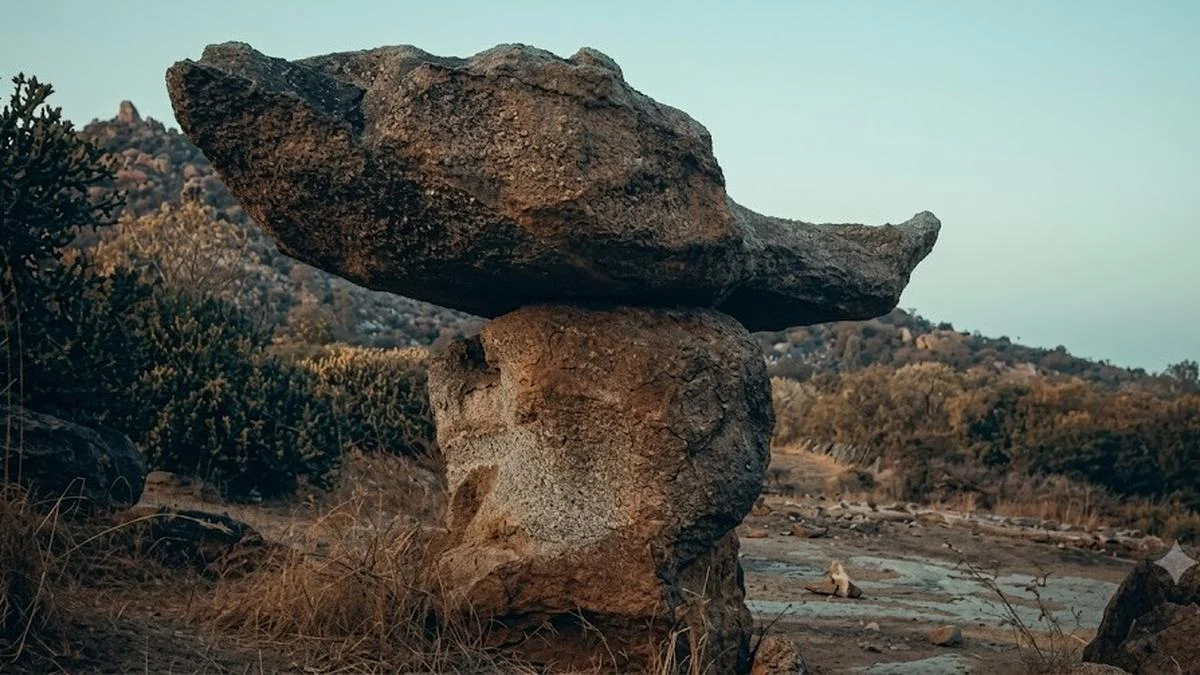
The film’s narrative structure itself is a key component of its intrigue. It deftly merges documentary-style narration with fictionalized elements, creating a compelling illusion of reality. At its core, the story revolves around a contemporary UFO encounter. This modern-day anomaly serves as a potent catalyst, propelling the narrative back in time to the drought-prone, starkly beautiful landscape of Pavagada. Located approximately 160 kilometers north of Bengaluru in the Tumkur district, Pavagada’s rugged terrain and isolated nature provide a fitting backdrop for a story steeped in mystery.
The film follows the journey of two contemporary researchers and a local explorer as they meticulously retrace the path of a 19th-century British surveyor, John Warren. The parallel is drawn with uncanny resonance: Warren himself may have experienced a similar, inexplicable encounter during his own survey of the region. This historical echo adds layers of depth and speculation to the present-day investigation, blurring the lines between historical record and imagined possibility.
Sivramkrishna explains his choice of format: "I wanted to tell a story, and there were several ways I could do it, including an audio podcast or feature film. Another way was to make a fiction film in a documentary style, which is what I did here." He elaborates on the persuasive power of this approach, stating, "When we watch feature films, at the back of our minds, we know that it is fiction. But when you tell a story, like this, in a documentary style, you are more likely to convince people." This belief in the power of documentary aesthetics to enhance narrative believability is central to the film’s conceptual framework.
Historical Underpinnings and Fictional Flourishes
While the film’s characters and the overarching narrative are largely the product of Sivramkrishna’s imagination, the historical context that underpins the storyline is meticulously researched and grounded in reality. The region of Pavagada, with its ancient menhirs and prehistoric sites, provides a tangible anchor for the speculative elements.
"It is a work of fiction, but has got some history in it," Sivramkrishna confirms. "The menhirs and the prehistoric sites are there, though I don’t name the villages on purpose, because many of these are private lands." This careful consideration for the real-world context, while maintaining narrative control, demonstrates a nuanced understanding of how to blend fact and fiction effectively.

Crucially, Sivramkrishna collaborated with Shiva, a local explorer intimately familiar with the Pavagada terrain. Shiva’s deep knowledge of the forts and prehistoric sites, many of which remain obscure even to local populations, proved invaluable. "He had visited the forts and prehistoric sites showcased in the film, many of which were not even known to the local people of the region," Sivramkrishna highlights, underscoring the authentic exploration that informs the film’s visual and thematic core. This collaboration ensured that the film not only depicted historical elements accurately but also captured the spirit of discovery within the landscape.
The Echo of Buchanan and the Allure of the Unexplained
The inspiration for the 19th-century British surveyor character, John Warren, is directly linked to Sivramkrishna’s long-standing fascination with Francis Buchanan’s extensive surveys of South India. Buchanan, a physician, botanist, and geographer, meticulously documented the region’s flora, fauna, and social customs in the early 19th century. Sivramkrishna has delved deeply into Buchanan’s work, even authoring a graphic novel titled A Journey into the Furnace of History: The Dying Embers of Ancient Iron-Smelting in India, which explores similar historical expeditions.
"I like the idea of retracing a journey, so I kept that in mind," Sivramkrishna explains, drawing a direct parallel between his own interest in historical exploration and the narrative arc of his film. His personal connection to the Pavagada region, having visited it multiple times, further fuels his creative vision. He describes the landscape as "fascinating. It is not like the Western Ghats or the Himalayas, but it has got its own beauty."
It is this unique beauty, characterized by its rugged, remote, and profoundly quiet atmosphere, that Sivramkrishna believes makes the region particularly conducive to speculative narratives. "The rocky landscape of the region, very quiet, very distant was particularly suited for UFOs," he muses, articulating the atmospheric qualities that lend themselves to themes of the unexplained and the extraterrestrial.
The Filmmaking Process: From Concept to Screen
The conceptualization of The Incidents at Pawgur, 1830 began in the latter half of 2025. Armed with insights from his collaborator Shiva, Sivramkrishna embarked on the scripting process. "I got all these inputs from Shiva and started writing the script for the film. It is entirely scripted, with professional actors playing the roles of the various experts in the documentary," he reveals. This meticulous scripting, even for a docufiction, ensures a coherent and engaging narrative flow.
Following the planning, reconnaissance, and the crucial step of obtaining necessary permissions, principal photography commenced in February 2026. The shooting schedule was remarkably efficient, encompassing approximately eight days in total. "We did five days outdoors at all the sites, and three days of staged interviews in Bengaluru… so about eight days of shooting in all," Sivramkrishna notes, highlighting the streamlined production process. This concise approach underscores the director’s focused vision and efficient execution.
A New Wave of Hybrid Storytelling
Officially released on July 4th, The Incidents at Pawgur, 1830 has already begun its journey through the festival circuit. Sivramkrishna, whose earlier works include The Curse of Talakad (2005), A Looming Past (2010), and The Indigo Factory (2024), is a seasoned explorer of unconventional cinematic forms.
He observes a growing niche for hybrid films and what he terms "mockumentaries," though he expresses a slight aversion to the latter label. "There are a lot of film festivals for hybrid films and something called mockumentaries, though I don’t really like the word," he admits. This nuanced perspective suggests a desire to transcend categorization and forge a distinct artistic identity.

Sivramkrishna further distinguishes his approach from more common found-footage styles, exemplified by films like The Blair Witch Project. "According to him, most mockumentary films fall into the found-footage genre, like The Blair Witch Project, rather than the fictional documentary genre." He believes his film offers a distinct experience: "This kind of format, which almost looks like a serious Netflix documentary, is not so popular, but I believe the use of interviews really convinces people." The integration of professional actors in interview segments, framed within a documentary aesthetic, is a deliberate strategy to enhance credibility and engagement.
International Acclaim and Future Prospects
The film has garnered early international recognition, being selected for screening at the OFFNI Cine Fest 2026 in Buenos Aires, Argentina. This early success is a testament to the film’s universal appeal and its ability to resonate with diverse audiences.
Sivramkrishna expresses profound gratitude to his collaborators, particularly Shiva for his invaluable contribution to the film’s authenticity and Mithun TM, whose expertise in cinematography, editing, color grading, and VFX was instrumental in bringing Sivramkrishna’s vision to life.
Upon concluding its festival run, Sivramkrishna plans to release The Incidents at Pawgur, 1830 on an online digital film distribution platform such as Filmhub. "Once the festival circuit is over, he plans to drop the film on an online digital film distribution platform like Filmhub and see where it goes from there," he states, embracing a forward-looking distribution strategy. His immediate goal is to gauge the film’s reception and explore its potential reach. "I just want to try and see if it works. Meanwhile, I plan to have private screenings in Bengaluru and outside," he concludes, indicating a continued commitment to engaging with audiences through both digital and in-person experiences.
The Incidents at Pawgur, 1830 stands as a compelling example of how deeply personal interests, meticulous research, and innovative filmmaking techniques can converge to create a work that is both intellectually stimulating and emotionally resonant, inviting viewers to ponder the mysteries that lie just beyond the veil of our everyday reality.
For further insights into the film, visit: theincidentsatpawgur1830.in
