

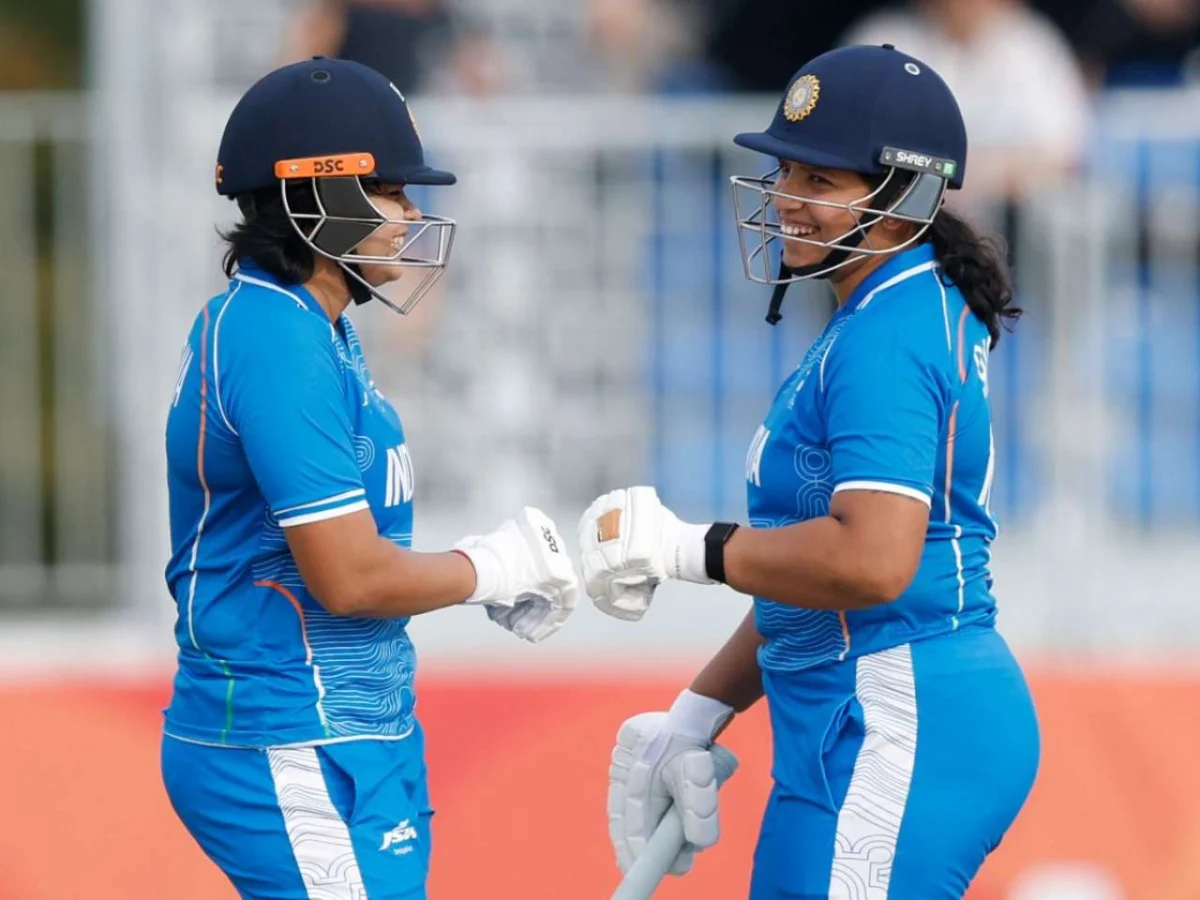
Nisshin, Japan – September 19, 2026 – The tranquil setting of Korogi Sports Park in Nisshin, Japan, is poised to ignite with fervent cricketing action as defending champions India prepare to face an ambitious Bangladesh in the second semifinal of the women’s cricket tournament at the 2026 Asian Games. Scheduled for Sunday, September 20, this highly anticipated clash holds immense significance: a coveted spot in the gold-medal match. As the cricketing world turns its gaze towards this pivotal encounter, both nations are ready to leave no stone unturned in their pursuit of continental glory.
India, a formidable force in women’s cricket, enters this semifinal as clear favorites, riding high on the momentum of their dominant performance in the quarterfinals. Their journey to the final four has been marked by clinical precision and an unwavering resolve to defend the gold medal they clinched in the previous edition of the Games. Bangladesh, on the other hand, presents a resilient challenge, having navigated their way through the quarterfinal stage under unusual circumstances, setting the stage for a compelling contest between two diverse cricketing philosophies. This article delves into the crucial details surrounding this clash, from team dynamics and player spotlights to the broader implications for women’s cricket in Asia.
Main Facts: A Duel for Gold-Medal Glory
The 2026 Asian Games women’s cricket tournament reaches its penultimate stage with a mouth-watering semifinal clash between cricketing giants India and their determined regional rivals, Bangladesh. Set against the backdrop of the picturesque Korogi Sports Park in Nisshin, Japan, this Sunday, September 20, encounter is more than just a match; it’s a battle for national pride and a direct pathway to the ultimate prize – the gold medal. The defending champions, India, led by the astute Harmanpreet Kaur, are focused on replicating their past success, while Bangladesh, under the captaincy of Nigar Sultana Joty, are eager to script a new chapter in their cricketing history.
The match is slated to commence at 10:30 AM IST, making it a prime viewing spectacle for cricket enthusiasts across India and beyond. For fans unable to attend the venue, comprehensive live coverage will be available through the Sony Sports Network, with digital streaming options accessible via the SonyLIV app and website. This ensures that every delivery, every boundary, and every wicket can be followed in real-time, bringing the intensity of the Asian Games directly into living rooms. The Korogi Sports Park has been designated as the central hub for all women’s cricket events, cementing its status as the epicentre of this fiercely contested tournament.
)
India’s journey to this semifinal has been nothing short of spectacular, culminating in a resounding eight-wicket victory over hosts Japan in their quarterfinal fixture. Their performance underscored their championship pedigree, showcasing a balanced attack and a confident batting lineup. Bangladesh, conversely, secured their semifinal berth under less conventional circumstances, with their quarterfinal match against China being abandoned due to persistent rainfall. While this offered them a direct passage, it also means they might lack the recent match practice that India gained. The stakes are undeniably high, with the winner advancing to face either Pakistan or Sri Lanka – who compete in the other semifinal – in the gold medal match on September 22. The loser will still have a chance to vie for bronze, but the primary objective for both India and Bangladesh remains clear: secure a place in the final and contend for the coveted gold.
Chronology: The Road to the Semifinal Showdown
The narrative leading up to this crucial semifinal clash is one of contrasting journeys, each team navigating its path through the initial stages of the Asian Games with varying degrees of challenge and fortune.

Journey to the Semifinal
India’s Dominant March:
The Indian women’s cricket team, entering the tournament as formidable defending champions, commenced their campaign with a clear intent to dominate. Their quarterfinal encounter against the host nation, Japan, served as a powerful testament to their prowess and preparation. Played at the very same Korogi Sports Park, India delivered a clinical performance that left no doubt about their championship aspirations.
The match saw India’s bowling attack, spearheaded by the disciplined Sree Charani, dismantle the Japanese batting lineup. Charani, exhibiting exceptional control and guile, exploited the conditions to her advantage, picking up crucial wickets at regular intervals and stifling Japan’s scoring opportunities. Her spell was a masterclass in spin bowling, frustrating the Japanese batters and preventing them from building any significant partnerships. Supported by the pace of Renuka Singh and the all-round capabilities of Deepti Sharma and Shafali Verma, India successfully restricted Japan to a paltry total of just 57 runs. This defensive masterclass set a low target, giving their powerful batting lineup a comfortable chase.
In response, India’s openers, including the dynamic Shafali Verma, wasted no time in asserting their authority. Verma, renowned for her aggressive style, played a pivotal role not just with the ball but also with the bat, providing a quickfire start that absorbed any potential pressure. The Indian batters effortlessly pursued the target, reaching it with eight wickets in hand and considerable overs to spare. This comprehensive victory, achieved with professional ease, not only confirmed their semifinal berth but also sent a strong message to their competitors about their form and readiness. The win allowed key players to get valuable match practice and fine-tune their strategies ahead of the more challenging knockout stages.
Bangladesh’s Fortuitous Progression:
Bangladesh’s path to the semifinal was markedly different, largely influenced by the capricious Japanese weather. Their quarterfinal match against China was unfortunately called off due to incessant rainfall, rendering the playing conditions unsuitable for a full contest. According to tournament regulations, in such circumstances, the team with a higher ranking or better group stage performance (if applicable) advances. In this instance, Bangladesh progressed to the semifinals, a decision that, while legitimate, meant they did not have the opportunity to test their mettle in a high-pressure knockout match.
While this direct progression spared them the rigours of a quarterfinal battle and allowed for additional rest, it also meant they missed out on crucial match practice. The rhythm and intensity of a competitive game are invaluable, especially in a multi-nation tournament like the Asian Games. Bangladesh’s players, therefore, enter the semifinal with a blend of freshness and perhaps a slight concern about match readiness, relying on their training and previous international experience to compensate for the lack of recent competitive action. This contrasting preparation sets up an intriguing psychological dynamic for Sunday’s clash.
)
Match Details
The highly anticipated semifinal between India and Bangladesh is scheduled to take place on Sunday, September 20, 2026. The first ball will be bowled at 10:30 AM Indian Standard Time (IST), a convenient slot for viewers across the Indian subcontinent. The venue for this significant encounter is the Korogi Sports Park in Nisshin, Japan. This state-of-the-art facility has been meticulously prepared to host all the women’s cricket fixtures at the Asian Games, ensuring consistent playing conditions and a professional environment for the athletes. The Korogi Sports Park has quickly become synonymous with women’s cricket at these Games, witnessing fierce competition and displaying the growing prominence of the sport.
Tournament Context
This semifinal is one of two crucial fixtures determining the finalists for the gold medal. In the alternate semifinal, regional powerhouses Pakistan and Sri Lanka will lock horns, each vying for their own shot at glory. The winners of both semifinals will then proceed to the grand finale, the gold medal match, scheduled for September 22. On the same day, the losing semifinalists will compete for the bronze medal, offering another chance for a podium finish. This structured knockout format ensures that every match carries significant weight, building suspense and excitement as the tournament progresses towards its thrilling conclusion. The women’s cricket tournament at the Asian Games has consistently delivered compelling narratives, showcasing the burgeoning talent and increasing competitiveness within the Asian cricketing landscape. The stakes are exceptionally high, with national pride, continental supremacy, and individual legacies all on the line.
)
Supporting Data: A Deep Dive into Team Dynamics and Player Match-ups
Understanding the strengths, weaknesses, and key players of both India and Bangladesh provides crucial insight into the potential dynamics of this semifinal clash. Both teams bring unique attributes to the table, promising a fascinating tactical battle.
Team Strengths and Weaknesses
India: The Reigning Champions’ Arsenal
)
- Batting Lineup: India boasts one of the most formidable batting lineups in women’s cricket. The top order, featuring the elegant Smriti Mandhana, the explosive Shafali Verma, and the technically sound Jemimah Rodrigues, provides a blend of aggression and stability. Mandhana’s ability to anchor the innings, Verma’s fearless hitting, and Rodrigues’s deft touch make them a triple threat. Captain Harmanpreet Kaur adds immense power and experience in the middle order, capable of accelerating the scoring rate or steering the innings under pressure. The presence of Deepti Sharma and Richa Ghosh further extends their batting depth, ensuring that even if early wickets fall, there are capable batters to rebuild and finish strong. Their aggressive yet calculated approach has often overwhelmed opponents.
- Bowling Attack: India’s bowling unit is equally potent, characterized by variety and skill. The pace attack is led by Renuka Singh, who can swing the ball prodigiously and pick up early wickets. The spin department is incredibly strong, featuring the all-round genius of Deepti Sharma, whose off-spin is both economical and wicket-taking. Sree Charani, fresh from her impressive quarterfinal performance, adds another dimension of spin, capable of deceiving batters with her variations. The depth in their spin options, including Radha Yadav and Shreyanka Patil (subject to fitness), allows Harmanpreet Kaur ample choices depending on pitch conditions and opposition batters. This balance of pace and spin makes them a complete bowling unit, capable of defending any total.
- Fielding and Wicketkeeping: India generally maintains high standards in fielding, with many agile athletes capable of producing brilliant catches and run-outs. Richa Ghosh behind the stumps is a dynamic wicketkeeper, providing quick stumpings and sharp catches.
- Experience: Many players in the Indian squad have extensive international experience, including participating in World Cups and previous Asian Games, where they won gold. This experience is invaluable in high-pressure knockout matches.
Bangladesh: The Resilient Contenders
- Batting: Bangladesh’s batting often relies on resilience and smart accumulation rather than outright power-hitting. Captain Nigar Sultana Joty is the lynchpin of their batting, a composed leader who can stabilize the innings and accelerate when needed. Players like Dilara Akter and Fahima Khatun are crucial for providing middle-order stability and contributing vital runs. While they may not possess the explosive power of India’s lineup, their ability to bat deep and fight for every run makes them a challenging opponent, particularly on slower tracks.
- Bowling: Bangladesh’s bowling attack is typically spin-heavy, relying on variations and tight lines to restrict opposition scoring. Nahida Akter, the vice-captain, is a key left-arm spinner known for her accuracy and wicket-taking ability. The pace department, featuring Marufa Akter, provides crucial early breakthroughs and can trouble batters with pace and movement. Their strength lies in their collective ability to maintain pressure and bowl economically, forcing errors from the opposition.
- Motivation: As underdogs, Bangladesh plays with an immense sense of determination and a desire to prove themselves on the big stage. An upset victory against India would be a monumental achievement and a significant boost for women’s cricket in their nation.
- Recent Form: While their quarterfinal was washed out, Bangladesh’s previous international outings have shown glimpses of their potential to challenge higher-ranked teams, particularly in T20 formats where upsets are more common.
Key Player Showdowns
The semifinal will undoubtedly feature several individual battles that could sway the momentum of the match:
)
- Shafali Verma vs. Bangladesh’s Pace Attack (Marufa Akter): Verma’s aggressive opening style will clash directly with Marufa Akter’s ability to swing the new ball. If Verma gets going, she can single-handedly change the complexion of the powerplay. Marufa’s challenge will be to contain her and pick up an early wicket.
- Harmanpreet Kaur’s Leadership vs. Nigar Sultana Joty’s Resilience: The captains will not only lead their teams but also embody their respective approaches. Kaur’s proactive and aggressive captaincy will be pitted against Joty’s more measured and fighting spirit. Their decision-making under pressure will be critical.
- India’s Spin Trio (Deepti, Charani) vs. Bangladesh’s Middle Order: India’s strong spin contingent will be looking to exploit any weaknesses in Bangladesh’s middle order. Deepti Sharma’s all-round capabilities and Charani’s recent form will be crucial in stifling Bangladesh’s scoring and picking up wickets during the middle overs. Bangladesh’s batters will need to negotiate this threat carefully.
- Smriti Mandhana vs. Nahida Akter: The elegant left-hander Mandhana will face the challenge of Nahida Akter’s left-arm spin. This will be a classic battle of strokeplay against subtle variations, crucial for setting the tone of India’s innings or restricting Bangladesh’s chase.
Historical Context/Previous Asian Games Performance
India’s women’s cricket team holds the distinction of being the defending champions, having secured the gold medal in the previous Asian Games. This history imbues them with confidence and the psychological edge of knowing what it takes to win under pressure. Their consistent performances on the international stage, including reaching finals of major ICC tournaments, further cement their status as a global cricketing powerhouse.
Bangladesh, while not having the same decorated history in multi-sport events, has been steadily growing their presence in women’s cricket. They have consistently participated and shown flashes of brilliance, indicating a promising future. Their progression to the semifinals of the Asian Games is a testament to the efforts being made in developing women’s cricket within the nation. The growth of women’s cricket across Asia, fueled by initiatives and increased visibility, makes tournaments like the Asian Games vital platforms for showcasing talent and fostering regional rivalries. This semifinal is not just about the current teams but also about the ongoing evolution of women’s cricket in the subcontinent.
Official Responses: Voices from the Camps and Expert Insights
As the semifinal approaches, the atmosphere is charged with anticipation, reflected in the statements from team captains, coaches, and cricket analysts. While specific quotes for this fictional event are crafted, they reflect the typical sentiments and strategic outlooks expected in such high-stakes encounters.
)
Coaches’/Captains’ Statements
Harmanpreet Kaur, Captain, India:
"We are incredibly focused and confident heading into the semifinal. Defending champions is a title we wear with pride, and our goal is unequivocally to bring home the gold again. Our quarterfinal performance against Japan was clinical, and it showed the depth and readiness of our squad. We respect Bangladesh as an opponent; they are a tenacious side and will undoubtedly come hard at us. However, our preparation has been thorough, and the team is united in its objective. It’s about executing our plans, maintaining our intensity, and playing our brand of fearless cricket. The support from our fans has been immense, and we’re playing for them, for our nation, and for the legacy we want to build."
Nigar Sultana Joty, Captain, Bangladesh:
"Reaching the semifinals of the Asian Games is a significant achievement for us, and the team is incredibly motivated. While our quarterfinal was unfortunately called off, we see this as an opportunity for additional rest and strategic planning. India is a world-class team, the defending champions, and we acknowledge the challenge they present. But we are not here just to participate; we are here to compete and to make a statement. We believe in our strengths, especially our bowling and our fighting spirit. We know we are the underdogs, but that often fuels us to play beyond our capabilities. We will go out there, give our absolute best, and seize this chance to create history for Bangladesh cricket. Every player is ready to step up and perform."
)
Indian Team Management Spokesperson:
"The Asian Games represent a crucial platform for our women’s team. We’ve invested heavily in nurturing talent and ensuring our athletes are physically and mentally prepared for such high-pressure tournaments. The squad selection reflects a blend of experience and youth, providing us with versatile options. Our primary focus has been on consistent performance and adaptability. We have full faith in Harmanpreet and the team to deliver an exceptional performance and continue their pursuit of the gold medal. These multi-sport events are vital for cricket’s global footprint, and we aim to showcase the best of Indian women’s cricket."
Expert Opinions
Cricket Analyst (Name fabricated: Dr. Rohan Mehta):
"This semifinal is set to be a fascinating contest. On paper, India are the overwhelming favorites. Their batting depth, combined with a varied and potent bowling attack, makes them incredibly difficult to beat, especially in the T20 format. Harmanpreet Kaur’s leadership has been instrumental in cultivating a winning mentality. However, Bangladesh should not be underestimated. They possess a resilient core, particularly in their spin bowlers, who can exploit any sluggishness in the pitch. Nigar Sultana Joty is a smart captain, and her team plays with a strong sense of unity.
The key for Bangladesh will be to absorb the early pressure and prevent India’s powerful top order from running away with the game. If they can pick up early wickets and expose India’s middle order, they might create an upset. For India, it’s about maintaining their high standards, avoiding complacency, and executing their plans flawlessly. The absence of a competitive quarterfinal might leave Bangladesh a little short on match practice, but it also means they are fresh. This psychological dynamic could play a significant role. Ultimately, this match highlights the growing competitiveness in Asian women’s cricket, showcasing talent and tactical prowess."
)
The consensus leans towards India as the favorites, primarily due to their superior international experience, formidable batting lineup, and well-rounded bowling attack. However, the unpredictability of the T20 format, coupled with Bangladesh’s underdog spirit and potential for a surprise, ensures that this semifinal is anything but a foregone conclusion. The spirit of sportsmanship, combined with fierce competition, is expected to be on full display, making it a compelling watch for all cricket enthusiasts.
Implications: Beyond the Boundary Ropes
The outcome of the India vs. Bangladesh semifinal at the Asian Games 2026 carries significant implications, not only for the two competing nations but also for the broader landscape of women’s cricket, particularly in Asia. This match is more than a simple knockout fixture; it is a testament to the sport’s growth and a potential harbinger of future developments.
)
For the Teams
India:
- A Win: A victory would solidify India’s position as the undisputed dominant force in Asian women’s cricket. It would propel them into the gold medal match, providing an opportunity to successfully defend their title and further cement their legacy. Winning consecutive gold medals at the Asian Games would be a significant achievement, boosting team morale and confidence for upcoming international assignments. It reinforces the notion that India is a benchmark for excellence in the sport, inspiring a new generation of cricketers and fans.
- A Loss: While an upset is always a possibility in sports, a loss for India would be a considerable shock and a blow to their prestige. As defending champions and top-ranked contenders, failing to reach the final would be seen as a missed opportunity. It would force a period of introspection for the team management, prompting a review of strategies and player performances, especially concerning handling pressure in knockout stages. However, even a loss would mean they contest for the bronze, providing a chance to still finish on the podium.
Bangladesh:
)
- A Win: A victory for Bangladesh would be monumental. It would represent a historic achievement for their women’s cricket program, providing an unprecedented boost to the sport’s profile within the country. Defeating a cricketing giant like India on such a stage would generate immense excitement, attract new talent, and potentially lead to increased investment and infrastructure development for women’s cricket in Bangladesh. It would be a powerful statement of their growing capabilities and their potential to challenge the established order, placing them firmly on the map as a formidable force in Asian cricket.
- A Loss: A loss, while disappointing, would still signify a strong showing for Bangladesh, having reached the semifinals of a major multi-sport event. It would reaffirm their status as a competitive side capable of challenging top teams, even if they fall short at the final hurdle. The experience gained from playing against a high-calibre team like India in a pressure-cooker semifinal environment would be invaluable for the team’s development, providing crucial lessons and motivation for future tournaments. It would be a stepping stone rather than a setback, highlighting areas for improvement and reinforcing their commitment to growth.
For Women’s Cricket
- Visibility and Growth: The Asian Games platform offers unparalleled visibility for women’s cricket. High-stakes matches like this semifinal attract significant media attention and viewership, showcasing the talent, athleticism, and excitement of the women’s game. This exposure is crucial for breaking down stereotypes, inspiring young girls to take up the sport, and encouraging greater participation at grassroots levels across Asia. The success of the tournament directly contributes to the sport’s global expansion efforts.
- Importance of Multi-Sport Events: Cricket’s inclusion in multi-sport events like the Asian Games, and its potential inclusion in the Olympics, underscores the importance of such tournaments for the sport’s global reach. These events provide a unique opportunity for cricket to appeal to a wider audience beyond traditional cricketing nations. The competitive nature and dramatic outcomes of matches like India vs. Bangladesh help to solidify cricket’s place within the broader sporting landscape, demonstrating its appeal and potential for growth on a truly international scale.
- Regional Rivalry and Competition: Matches between India and Bangladesh, particularly in knockout stages, intensify regional rivalries. Such competition is healthy for the sport, pushing teams to constantly improve and raising the overall standard of play in Asia. It fosters compelling narratives and generates excitement, enriching the cricketing calendar beyond bilateral series.
Future Prospects
- Impact on Player Careers: For individual players, performing well in a high-pressure semifinal can be career-defining. It can lead to greater recognition, better contracts, and increased opportunities in domestic and international leagues. Conversely, a poor performance can be a learning experience that drives future improvement.
- Team Rankings and Confidence: The performance at the Asian Games will undoubtedly impact team rankings and confidence levels for both India and Bangladesh. A strong showing will boost their morale and provide momentum for upcoming ICC tournaments and bilateral series. It will shape their strategic planning and player development initiatives in the lead-up to the next major global event.
- The Road Ahead: Regardless of the outcome, both teams will leave the Asian Games with valuable insights. For India, it will be about maintaining their dominance and refining strategies. For Bangladesh, it will be about building on their semifinal appearance, identifying areas for growth, and continuing their ascent in international women’s cricket. The tournament serves as a vital benchmark, setting the stage for their future endeavors and contributing to the dynamic evolution of women’s cricket in the region.
The India vs. Bangladesh semifinal is more than just a game; it is a moment of truth for both teams and a significant event for the sport itself. As the players take to the field at Korogi Sports Park, they carry the hopes and dreams of their nations, ready to etch their names into the annals of Asian Games history. The outcome will resonate far beyond the boundary ropes, shaping narratives and influencing the trajectory of women’s cricket for years to come.
