

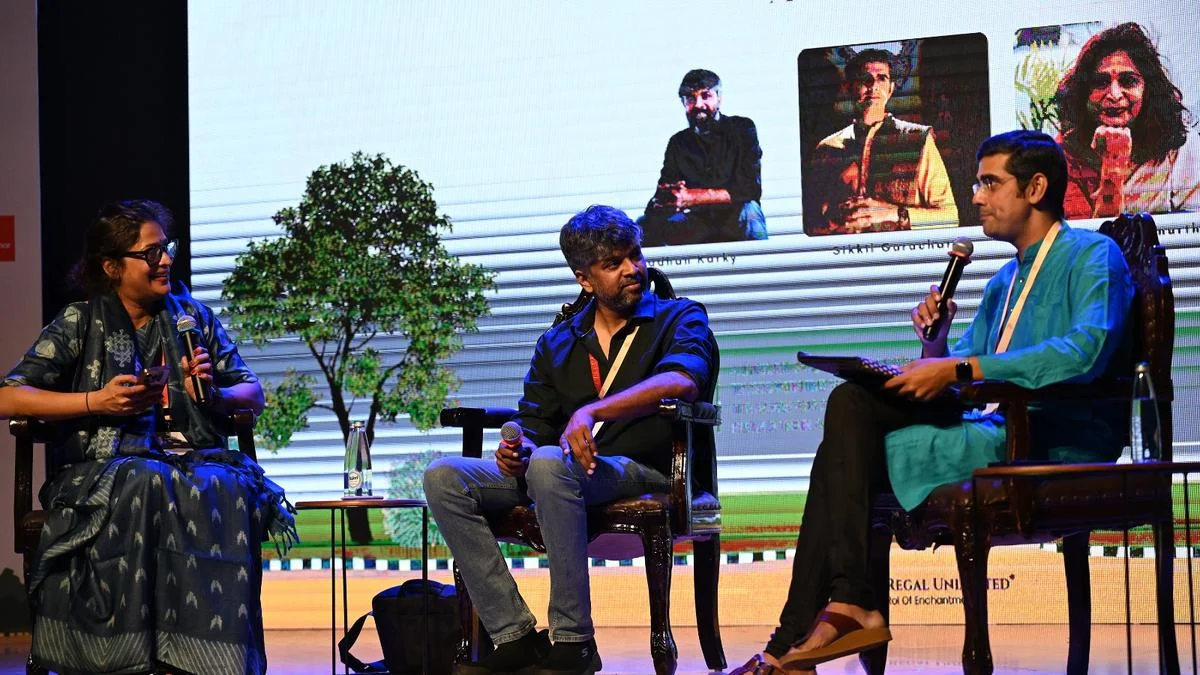
The literary landscape of India has long been dominated by the sprawling narratives of the novel and the fast-paced consumption of digital media. Yet, in the heart of India’s Silicon Valley, a quieter but more profound revolution has been brewing for a decade. The Bengaluru Poetry Festival (BPF), an initiative born from the shelves of the iconic Atta Galatta bookstore, is set to celebrate its milestone 10th edition this August. As the city prepares to host a confluence of bards, scholars, and performers, the festival stands as a testament to the enduring power of the spoken and written word in an increasingly fragmented world.
Main Facts: A Milestone Edition at Indiranagar Sangeetha Sabha
The 10th edition of the Bengaluru Poetry Festival is scheduled to take place on August 1 and 2, 2026. Moving to the culturally rich precinct of the Indiranagar Sangeetha Sabha, the festival continues its tradition of being an inclusive, free-to-attend event that bridges the gap between high art and the public.
Founded by Subodh Sankar and Lakshmi Subodh, the co-founders of the bookstore and cultural hub Atta Galatta, the BPF was established to address a glaring void in the literary circuit: the lack of dedicated spaces for poetry. While general literature festivals often relegate poetry to a single panel or a late-night session, the BPF places it at the absolute center of the stage.
This year’s programming is particularly ambitious, featuring over 15 Indian languages and a diverse roster of speakers including mythologist Devdutt Pattanaik, acclaimed poet and dancer Tishani Doshi, and South Indian cinema icons Prakash Raj and Ramya. The festival’s reach extends beyond the stage through a series of specialized workshops and a dedicated children’s wing, ensuring that the appreciation for verse is cultivated across generations.
Chronology: Ten Years of Defying Market Logic
The journey of the Bengaluru Poetry Festival is one of resilience and a refusal to accept the "market reality" of the publishing world. To understand the significance of the 10th edition, one must look back at the climate in which the festival was conceived.
The Genesis (2016–2018)
In the mid-2010s, the Indian publishing industry was witnessing a surge in commercial fiction, while poetry collections were often viewed as "niche" or "unsellable" by major retailers. Subodh Sankar, observing the footfalls at Atta Galatta, noticed a curious dichotomy. While poetry books occupied minimal shelf space, the community gatherings centered around poetry were consistently over-capacity. This realization led to the inaugural BPF, which aimed to prove that poetry was not a dying art but a thriving, if underserved, community.

Expansion and Adaptation (2019–2022)
As the festival grew, it began to incorporate more diverse forms of expression. The organizers recognized that in the Indian context, poetry is rarely a solitary, silent act of reading; it is intrinsically linked to music, theatre, and dance. The festival survived the challenges of the pandemic by pivoting to hybrid formats, eventually returning to physical spaces with a renewed focus on the therapeutic and communal aspects of the art form.
The Decade Milestone (2023–2026)
Leading up to the current 10th edition, the festival has solidified its reputation as the premier platform for both established legends and emerging voices. It has moved from being a local Bengaluru event to a national destination for poets from the Northeast, the deep South, and the Hindi heartland.
Supporting Data: The Linguistic Breadth of Modern India
The 2026 edition of the BPF is distinguished by its radical commitment to linguistic diversity. In an era where English often acts as the lingua franca of literary festivals, the BPF is intentionally pivoting toward the "beauty of Indian languages."
The festival will showcase poets representing at least 15 different languages, highlighting the depth of regional traditions. Key participants include:
- Doyir Ete Taipodia: Bringing the unique cadences of the Northeast.
- Gopika Jadeja: A voice for the contemporary Gujarati poetic tradition.
- Inakali Assumi: Representing the vibrant literary output of Nagaland.
- Nirmala Putul: The renowned Santhali poet whose work explores tribal identity and resistance.
This linguistic focus is supported by data from recent years showing a surge in interest in regional language "Spoken Word" poetry on digital platforms. By bringing these voices to a physical stage, the BPF validates the cultural capital of indigenous and regional tongues that are often sidelined in mainstream discourse.
Official Responses: Insights from the Organizers
Subodh Sankar, the driving force behind the festival, reflects on the journey with a mix of pragmatism and passion. He notes that the survival of the festival is a direct rebuttal to the commercial skepticism surrounding poetry.

"Poetry just doesn’t get enough space, among other forms of literature," Sankar explains. "But, interestingly, when someone actually puts together an event dedicated to it, there is always a large audience. It makes you question why, of course. The bottom line is, despite what the market says, there is a massive audience for the festival."
Sankar emphasizes that the 10th anniversary is not just a celebration of the past but a commitment to the future. "Ten years is a solid inning for BPF. So long as we are able to convince enough people to support the festival, it becomes almost a no-brainer to do every August."
The organizers also highlight the importance of the "performance" aspect of the festival. By featuring a dramatized reading of Kalidasa’s Meghadūta and dance-theatre-music performances by artists like Deepti Sudhindra, the festival honors the Indic tradition where the poem is a living, breathing entity. "We have always had performance as part of poetry because, especially in the Indian tradition, it comes as an extension of the underlying poetry and lyric," Sankar adds.
Programming Highlights: From Myth to Modernity
The 10th edition boasts a curated schedule that balances academic rigor with popular appeal.
Keynote and Intellectual Explorations
Devdutt Pattanaik is set to deliver a keynote address on the "Indic Traditions of Poetry." His talk will explore the millenia-old lineage of Sanskrit and Prakrit verse, examining how ancient metaphors continue to shape modern Indian thought.
The Intersection of Cinema and Verse
In a move to broaden the festival’s appeal, Kannada superstars Prakash Raj and Ramya will participate in sessions that bridge the gap between the screen and the page. Prakash Raj, known for his political activism and artistic versatility, will perform spoken-word poetry in Kannada, while Ramya will discuss the specific poems that have served as anchors during her life’s journey.

The Children’s Festival
A cornerstone of the BPF is its dedicated children’s programming. This includes storytelling sessions, book readings, and interactive workshops designed to instill a love for rhythm and rhyme in younger audiences. "Every opportunity we get to invest in children, you have to, right?" says Sankar, highlighting the festival’s role in nurturing the next generation of readers and writers.
Implications: Poetry as a Cultural Anchor
The longevity of the Bengaluru Poetry Festival carries significant implications for the Indian cultural landscape.
1. The Decentralization of Literature
By focusing on 15+ languages, the BPF challenges the hegemony of English-centric literary festivals. It provides a platform for poets like Nirmala Putul to reach urban audiences, fostering a cross-pollination of ideas between the grassroots and the metropolitan.
2. Bengaluru as a Cultural Capital
While Bengaluru is globally recognized for its technological prowess, events like the BPF help re-establish its identity as a city of the arts. The Indiranagar Sangeetha Sabha, typically a venue for classical music, becomes a site of modern linguistic experimentation, reflecting the city’s multifaceted personality.
3. The Economic Viability of Niche Art
The BPF’s success proves that "niche" art forms can be sustainable if they are curated with community needs in mind. The festival’s free-entry model, supported by donors and partners, suggests a philanthropic blueprint for other cultural organizations in India to follow.
4. Preservation of Oral Traditions
By incorporating "Hasya Kavita" (Mahesh Garg) and dramatized readings of classical texts, the festival preserves the oral nature of Indian poetry. This is crucial at a time when traditional forms of storytelling are at risk of being lost to the digital void.

As the 10th Bengaluru Poetry Festival approaches, it serves as a reminder that in the midst of noise, the clarity of a single verse can still command a room. For two days in August, Indiranagar will not be defined by its traffic or its tech parks, but by the cadence of 15 languages coming together to celebrate the human experience.
Event Details:
- Dates: August 1 & 2, 2026
- Venue: Indiranagar Sangeetha Sabha, Bengaluru
- Admission: Free (Registration required)
- Official Website: bengalurupoetryfestival.org
