

The announcement of Christopher Nolan’s next cinematic undertaking has sent ripples through both the film industry and the world of classical studies. Reportedly titled The Odyssey, the project is a three-hour epic filmed entirely on IMAX cameras, signaling a monumental return to the roots of Western storytelling. As Nolan prepares to bring his signature brand of temporal distortion and psychological depth to the ancient Greek world, the project has sparked a global conversation about the enduring relevance of Homer’s 2,800-year-old poem.
Main Facts: Nolan’s Vision and the Star-Studded Return to Ithaca
Christopher Nolan, fresh off the Academy Award-winning success of Oppenheimer, is known for his commitment to practical effects and the immersive power of large-format film. His adaptation of The Odyssey is expected to follow this tradition, utilizing 70mm IMAX photography to capture the vastness of the Mediterranean and the supernatural scale of the Olympian gods.
The production has assembled what critics are calling a "generational cast," blending seasoned veterans with contemporary icons. Matt Damon is slated to lead as Odysseus, the "man of many turns" whose decade-long journey home from the Trojan War forms the core of the narrative. Joining him is Zendaya as Athena, the goddess of wisdom and Odysseus’s divine protector, and Anne Hathaway as Penelope, the queen of Ithaca whose steadfastness and cunning match her husband’s.
The cast is further bolstered by Tom Holland as Telemachus, the son searching for his father; Charlize Theron as the nymph Calypso; and Lupita Nyong’O in a demanding dual role as the Spartan queen Helen and her ill-fated sister Clytemnestra. Reports suggest that Nolan will employ his trademark nonlinear narrative structure—a technique used effectively in Memento and Dunkirk—to weave together the "Telemachy" (the story of the son), the "Apologoi" (Odysseus’s flashback accounts of his monsters), and the final "Nostos" (the homecoming).
Chronology: Three Millennia of the ‘Complicated Man’
To understand the weight of Nolan’s project, one must trace the lineage of the text itself. The Odyssey is not merely a book; it is a foundational pillar of human civilization.
The Oral Tradition (8th–7th Century B.C.)
The poem originated in an oral tradition, composed by "Homer" (a figure shrouded in mystery) and performed by bards known as rhapsodes. It was designed to be heard, not read, characterized by rhythmic hexameters and repetitive epithets that aided memory. It served as a cultural encyclopedia for ancient Greeks, teaching values of xenia (hospitality), metis (cunning), and kleos (glory).

The Renaissance and the English Enlightenment (16th–18th Century)
For centuries, the epic was preserved in Greek and Latin. The first major English bridge was built by the Elizabethan playwright George Chapman in the late 16th century. His translation was rugged and vigorous, capturing the "soul" of the poem rather than its literal syntax. By the 18th century, Alexander Pope’s translation turned the epic into a polished, rhyming masterpiece of the Enlightenment, though scholars argued it lost its "Homeric" grit.
The Romantic Epiphany (19th Century)
In 1816, the young poet John Keats encountered Chapman’s translation. The experience was so profound that he composed the famous sonnet On First Looking into Chapman’s Homer. Keats compared reading the epic to the discovery of a new planet or the first sighting of the Pacific Ocean by explorers. This period cemented The Odyssey as a work of "discovery"—not just of lands, but of the human psyche.
The Modern Pivot: Emily Wilson (2017)
For nearly 400 years, English translations of The Odyssey were produced exclusively by men. This changed in 2017 when classicist Emily Wilson published her landmark translation. Wilson’s work stripped away the flowery, patriarchal language of the past, famously translating the opening line not as "Tell me of the hero," but as "Tell me about a complicated man." It is this version that Christopher Nolan has reportedly utilized as his primary source material.
Supporting Data: The Impact of the Female Perspective
The "gendered lineage" of classical studies has long dictated how we view the characters of The Odyssey. Male translators often framed Odysseus’s violence as righteous and the women in his life—Circe, Calypso, and even Penelope—through the lens of male desire or domestic duty.
The Wilson Revolution
Emily Wilson’s translation is described by The New York Times as "radically contemporary." By choosing the word "complicated" for the Greek polytropos, Wilson highlights the moral ambiguity of a protagonist who is a war hero, a survivor, a liar, and a murderer. Her translation also brought a new level of scrutiny to the "unnamed" characters, such as the enslaved maids of Ithaca, whose executions are often treated as a footnote in older versions.
Literary Retellings
Nolan’s film arrives on the heels of a massive "Homeric" boom in contemporary literature, led largely by women writers who have reclaimed the narrative:

- Madeline Miller’s Circe (2018): This novel reimagines the "witch" of Aeaea as a complex woman who finds her own power in exile. Miller’s work humanizes the divine, showing Circe’s empathy for figures like Prometheus and her struggle against the whims of the Olympian "old boys’ club."
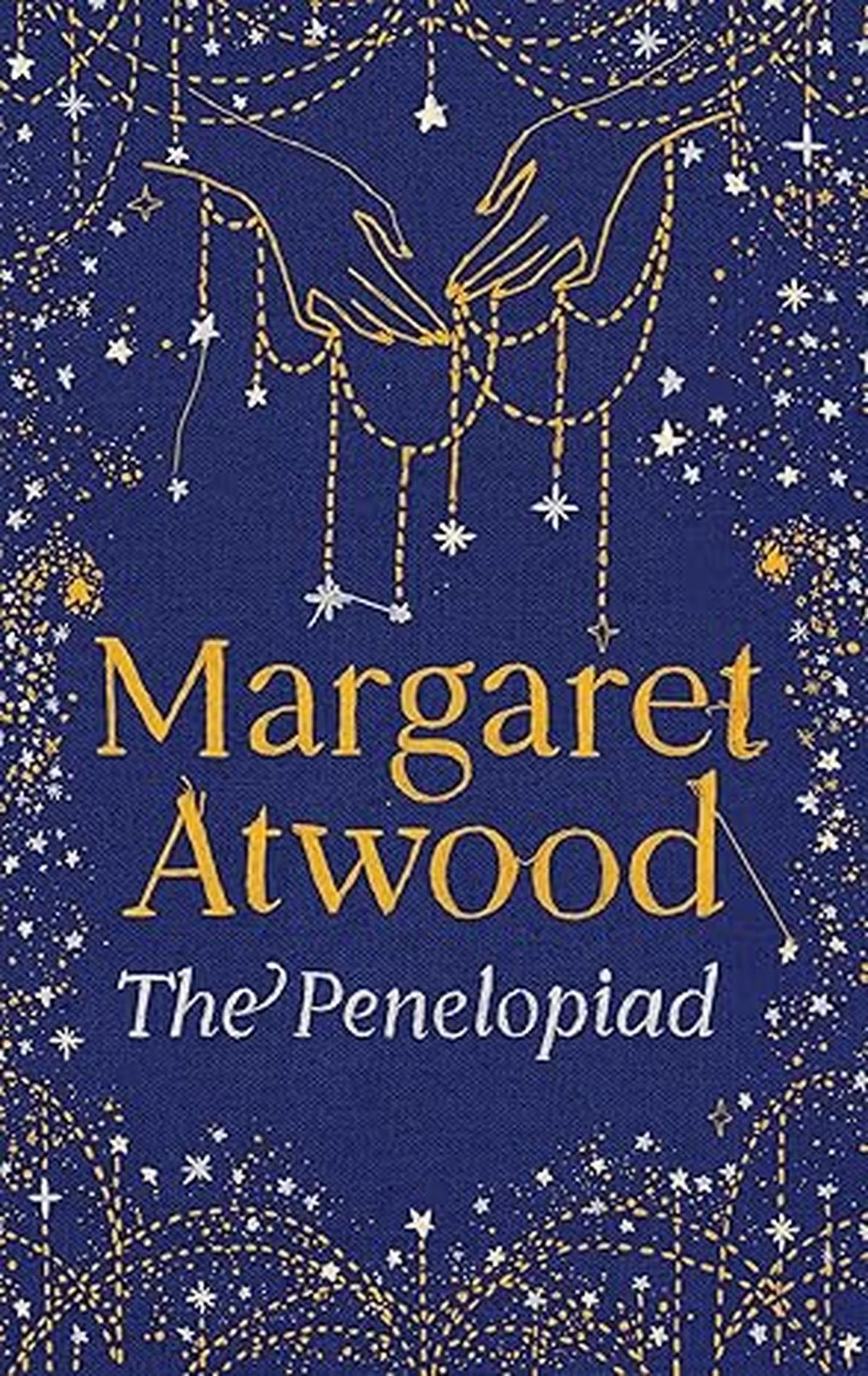
- Margaret Atwood’s The Penelopiad (2005): Atwood provides a "counter-narrative" from the perspective of Penelope in the underworld. She focuses on the twelve maids executed by Odysseus upon his return. In the original epic, their deaths are described briefly: "their feet twitched, but not for long." Atwood gives these women a haunting poetic voice, forcing the reader to confront the casual brutality of the "heroic" age.
Official Responses and Critical Perspectives
While the film is still in production, the "Nolan effect" has already impacted educational and cultural sectors.
Academic Interest
University classics departments have reported a surge in enrollment for Greek mythology courses following the film’s announcement. Dr. Aris Sideras, a scholar of ancient Greek literature, notes: "Nolan is the perfect director for this because The Odyssey is essentially a story about memory and the subjective nature of time. Odysseus’s stories to the Phaeacians are the ultimate ‘unreliable narrator’ trope."
Film Industry Analysis
Industry analysts suggest that The Odyssey represents a pivot for Hollywood. Following the "superhero fatigue" of the early 2020s, studios are looking toward "prestige blockbusters"—films that offer the scale of a Marvel movie but the intellectual weight of a historical drama. With a budget estimated to exceed $200 million, the film is a high-stakes gamble on the idea that audiences crave "difficult" stories.
The Coen Brothers Comparison
Cinematic historians are already comparing Nolan’s upcoming work to the Coen Brothers’ O Brother, Where Art Thou? (2000). While the Coens used a satirical, folk-infused lens to adapt the epic to the Depression-era American South, Nolan is expected to take a more somber, "verite" approach. Where the Coens focused on the absurdity of the journey, Nolan seems poised to focus on the trauma of the "complicated man."
Implications: Why the ‘Odyssey’ Matters Today
As the writer of the original article (an IAS officer) suggests, the IMAX spectacle may be the draw, but the underlying questions are what will remain with the audience long after the credits roll. The resurgence of The Odyssey in the 21st century carries several profound implications:
1. The Global Refugee Crisis and Displacement
The Odyssey is fundamentally a story of a man trying to cross a sea to get home. In an era marked by forced migration and the displacement of millions due to war and climate change, the "pain he suffered in the storms at sea" is no longer a myth—it is a daily news headline. The film has the potential to humanize the figure of the "stranger" or the "wanderer."

2. The Deconstruction of the "Hero"
By following Emily Wilson’s "complicated man" approach, Nolan is participating in a broader cultural shift: the deconstruction of the traditional male hero. Odysseus is a man who saves his own life but loses all his men. He is a man who yearns for his wife while living with goddesses. The film asks: can we still admire a hero who is deeply flawed?
3. Justice and Reparations
Margaret Atwood’s focus on the maids raises the question of justice. Odysseus’s return is often celebrated as a restoration of order, but it is achieved through a bloodbath. In a modern context, the film may force audiences to ask whether "order" built on the execution of the marginalized can ever truly be called justice.
4. The Definition of Home
Finally, The Odyssey explores the bittersweet nature of the "Nostos" (homecoming). Odysseus returns to an Ithaca that has moved on without him. His son is a man; his wife is weary; his father is in rags. The film will likely explore the psychological truth that you can never truly "go home again," because both you and the home have been changed by time.
As Emily Wilson’s translation urges the Muse: "Tell the old story for our modern times. Find the beginning." With Nolan’s July release approaching, it seems the world is ready to find that beginning once more, viewing the ancient past through the high-definition lens of the present. Whether through the IMAX screen or the printed page, the "complicated man" continues his journey, reminding us that the struggle to survive and the longing for home are the most universal stories we have.
