

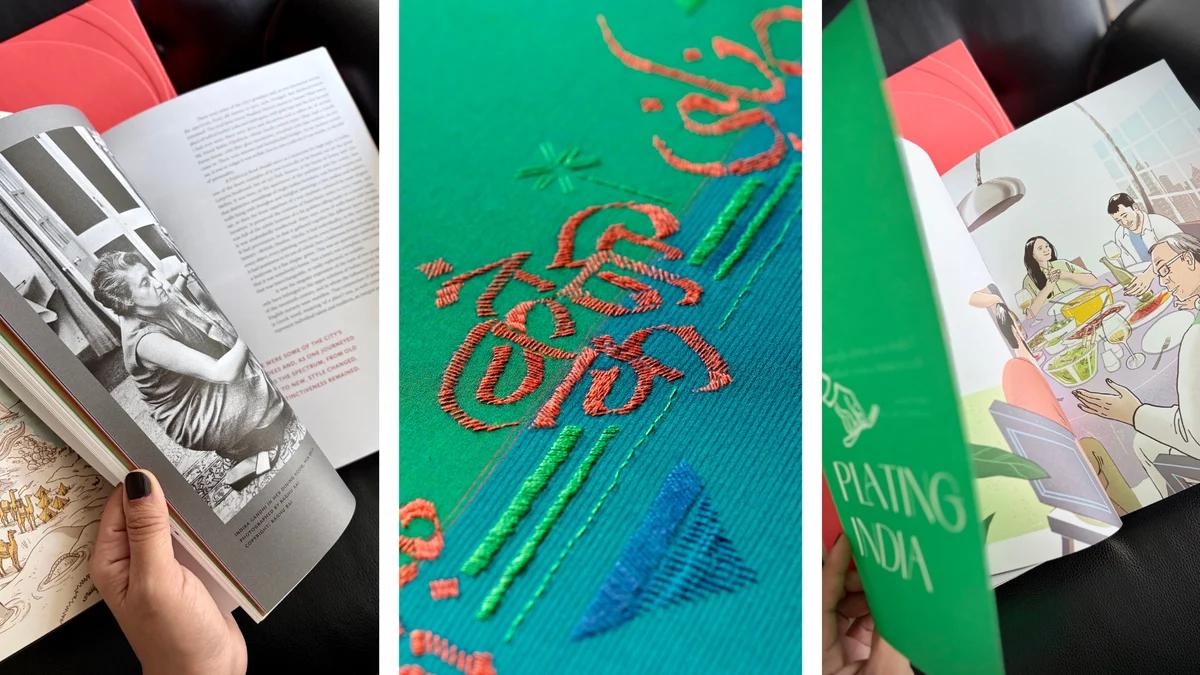
In an era defined by the ephemeral nature of digital consumption—where algorithms dictate our preferences and artificial intelligence outsources our creative impulses—the act of reading is undergoing a radical transformation. As the world drifts further into a "doomscrolling" culture, a new publication by Juggernaut Books is attempting to pull readers back toward the physical realm.
Taste, an experimental, limited-edition publication, is being marketed as "part art object, part literary magazine." With a price tag of ₹15,000 and a finite run of only 500 copies, it represents a bold stake in the ground for the future of luxury print. Edited by veteran journalist Lakshmi Chaudhry and designed by graphic artist Kriti Monga, the book is more than a mere collection of essays; it is a sensory manifesto that challenges the "Pinterest-ification" of modern life.

Main Facts: A Luxury Imprint for a Digital Age
Taste is the inaugural edition of what Juggernaut Books intends to be an annual imprint. It occupies a unique space in the publishing landscape, sitting somewhere between a high-end coffee-table book, a literary journal, and a gallery-grade art installation.
The publication’s primary objective is to explore the concept of "taste" not merely as a matter of aesthetic preference, but as a complex intersection of history, identity, politics, and sensory experience. To achieve this, the creators have assembled a formidable roster of contributors, including Nobel Prize laureate Abhijit Banerjee, author Aatish Taseer, journalist Srinath Perur, and writers such as Meenakshi Reddy Madhavan and Sandip Roy.

The physical specifications of the book are as deliberate as its prose. It utilizes varied printing innovations—intricate filigree flaps, anaglyphs (3D images), postcards, and pull-out sections—to ensure that the act of reading becomes a tactile performance. In a market where digital e-books sell for a fraction of the cost, Taste bets on the idea that there is a discerning audience willing to pay a premium for a physical experience that cannot be replicated on a screen.
Chronology: From War Reporting to the Pursuit of Beauty
The genesis of Taste lies in a reaction to the modern information environment. The editor, Lakshmi Chaudhry, spent two decades in the trenches of hard journalism, covering grim subjects such as war, genocide, and terrorism. Her transition into the world of high-concept art books was born out of a desire to counter the ugliness of the global news cycle.

As Chaudhry notes in her introduction, she "ached to create something of beauty and meaning in a world greatly short on both." This sentiment mirrors a broader cultural shift among creators who are seeking "slow media" alternatives to the rapid-fire, often toxic, nature of digital platforms.
The development process involved a close collaboration between the editorial and design wings. Unlike traditional publishing, where design often follows the text, Taste was built as an integrated whole. Graphic designer Kriti Monga worked to ensure that the layout of each essay reflected its subject matter. For example, a travel essay on Switzerland was designed with a horizontal layout to mimic the movement of a bus, while an essay on architecture utilized "block-like" text chunks to simulate skyscrapers.

The publication’s launch marks a significant moment for Juggernaut Books, a publisher known for its digital-first approach in its early years. By pivoting to a hyper-exclusive, expensive print product, the house is signaling a belief in the "object-hood" of books as the ultimate luxury good.
Supporting Data: A Deep Dive into the Sensory Experience
Taste functions as a "constellation of experiences," as Monga describes it. The book’s content spans a dizzying array of subjects, each designed to provoke a specific sensory or intellectual response.

1. The Intersection of High and Low Culture
The publication intentionally blurs the lines between "prestige" topics and popular culture. One essay examines the unlikely and enduring popularity of the 1970s disco group Boney M in India, analyzing how their music became a staple of the Indian middle-class imagination. Another piece traces the journey of the pineapple—once a rare fruit that served as a symbol of extreme luxury in European colonies—into a modern design motif.
2. Identity and Migration
Visual essays play a crucial role in the book’s narrative. The publication explores the evolution of the kamarband (waistband), tracing its journey from ancient temple yakshi goddesses to the wardrobes of James Bond films. Similarly, the history of bandhani is traced from its origins in Sindh to its unexpected reinvention as gang-coded bandanas in Los Angeles. These sections use tactile elements, like pull-outs and postcards, to make the history of migration feel tangible.

3. The Design as Narrative
The physical layout is arguably the book’s most innovative feature. Key design elements include:
- The Madras Checks Anaglyph: A story on the history of the textile that requires the reader to engage with visual depth.
- The Horizontal Bus Journey: Meenakshi Reddy Madhavan’s essay on a Dilwale Dulhania Le Jayenge-themed bus tour of Switzerland is accompanied by a hand-painted travel guide, forcing the reader to physically navigate the "map" of the story.
- Architectural Text: An essay on the homogenization of elite Indian living rooms is printed in a way that mimics the very structures it critiques.
4. Intellectual Weight
The presence of Abhijit Banerjee and Parul Sehgal ensures the book is not merely a "pretty object." A conversation between critic Parul Sehgal and Kannada writer Vivek Shanbag explores how language itself shapes our "taste." Shanbag posits that taste requires two essential elements: "surprise and tolerance," both of which are necessary to grapple with the unknown.

Official Responses: The Philosophy of the Creators
In interviews and introductory text, the creators of Taste have been vocal about their disdain for the current "readymade aesthetic" promoted by social media.
Lakshmi Chaudhry argues that the concept of taste is a "rabbit hole" that people often oversimplify. "Taste isn’t just personal. It’s not as simple as, ‘Oh, I like this better than that,’" she explains. "If you start asking why people like certain things, you quickly realize it’s a deceptively simple question with incredibly complex answers." She specifically critiques platforms like Pinterest for acting as an "emery board," smoothing out the jagged, interesting edges of personality into a flattened, digestible look.

Kriti Monga views the project as a way to redefine the reader’s relationship with information. "I define [taste] as a constellation of well-digested experiences and ideas that’s always evolving," Monga says. Her design philosophy for the book was to create something that doesn’t "spoon-feed" opinions but rather allows the reader to make their own connections through the physical act of exploration.
The choice to limit the edition to 500 copies was also a deliberate editorial decision. By creating scarcity, the publishers are positioning Taste as a collectible art piece, further distancing it from the mass-produced nature of contemporary digital and print media.

Implications: The Future of the Physical Book
The release of Taste raises significant questions about the future of the publishing industry and the role of the physical book in a post-AI world.
The "Object-ification" of Books
As digital screens become the primary medium for "utility reading"—self-help, news, and technical upskilling—the physical book is increasingly being redefined as a luxury object. Taste suggests that the future of print may not lie in mass-market paperbacks, but in high-concept, high-cost artifacts that offer an experience digital media cannot replicate. This "boutique" approach to publishing mirrors trends in the vinyl record industry, where physical media is prized for its tactile and ritualistic qualities.

Challenging the Algorithm
The most profound implication of Taste is its political stance against the algorithm. By forcing the reader to slow down, flip flaps, examine postcards, and read non-linear layouts, the book disrupts the "frictionless" experience of modern consumption. It argues that true taste is a result of "grappling with the unknown" rather than following a pre-calculated recommendation engine.
A Critique of Homogenization
The book’s focus on the "Bengali Bhadralok" or the "generic hotel style" of modern Indian living rooms serves as a critique of cultural homogenization. It suggests that as we lose our unique "jagged edges" to globalized aesthetics, we lose a part of our identity. Taste serves as an invitation to reclaim that individuality through a more rigorous, sensory engagement with the world.

Conclusion: A High-Stakes Experiment
While the writer notes that some essays—such as the discussion on Indian cuisine or the Bengali Bhadralok—could have benefitted from more depth, the overall project is hailed as a triumph of form and intent. At ₹15,000, Taste is not an accessible book, but it isn’t meant to be. It is a high-stakes experiment in whether beauty, craftsmanship, and intellectual rigor can still command attention in an age of digital distraction.
As the writer concludes, the book’s greatest achievement is that it acts as an "invitation." It invites the reader to critique, to think, and to lose an afternoon in the "sensorial luxury" of a physical object. In doing so, it provides a vital counter-narrative to the idea that our tastes should be managed by anything other than our own curious, wandering minds.
