

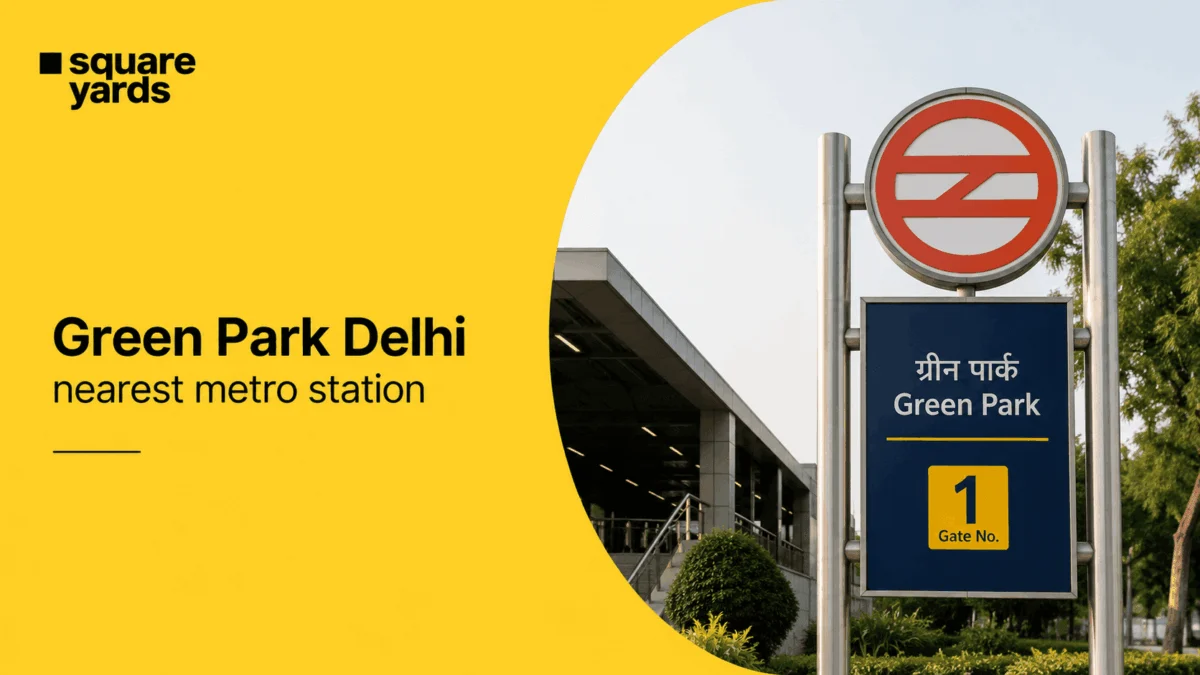
The landscape of South Delhi has long been defined by its leafy avenues, upscale residential colonies, and historical significance. However, in the modern era, the true value of a neighborhood is increasingly measured by its "transit-efficiency." Green Park, one of Delhi’s most coveted residential and commercial addresses, stands as a prime example of this evolution. Unlike many of its neighbors that require a secondary commute to access the city’s rapid transit network, Green Park boasts a namesake station integrated directly into its fabric.
This comprehensive report explores the nearest metro station to Green Park, the broader transit network serving the area, and the profound implications this connectivity has on property values and urban lifestyle.
1. Main Facts: The Centrality of Green Park Metro Station
For residents and visitors alike, the primary transit point is the Green Park Metro Station, an underground facility situated on the Yellow Line of the Delhi Metro Rail Corporation (DMRC) network.
Primary Connectivity Details
The station is strategically located beneath Aurobindo Marg, a major arterial road that connects Central Delhi to the southern suburbs and Gurugram.
- Line: Yellow Line (Samaypur Badli to Millennium City Centre Gurugram).
- Structure: Underground.
- Entrances: The station features multiple entry and exit points that serve different segments of the locality. Gate No. 1 and 2 provide immediate access to the bustling Yusuf Sarai Market and the Aurobindo Place commercial complex, while other exits lead directly toward the residential blocks of Green Park Main.
Proximity and Walkability
What sets Green Park apart from other high-end South Delhi colonies like Greater Kailash or Vasant Vihar is its inherent walkability. For a resident of Green Park Main, the walk to the metro entrance typically takes between 3 to 7 minutes. Those residing in Green Park Extension or near the fringes of Uday Park may face a slightly longer walk of 10 to 12 minutes, though this remains well within the threshold of "transit-oriented development."
2. Chronology: From 1960s Suburb to Transit Hub
To understand the significance of the metro in Green Park, one must look at the historical trajectory of the neighborhood.
- The 1960s – The Formative Years: Green Park was developed as a private residential colony. Its proximity to the newly established Indian Institute of Technology (IIT) Delhi and the All India Institute of Medical Sciences (AIIMS) made it an immediate favorite for academics and medical professionals.
- The 1980s and 90s – Commercial Explosion: As Delhi expanded, Aurobindo Marg became a critical commercial corridor. Yusuf Sarai grew from a local market into a major retail hub, increasing the pressure on local road infrastructure.
- 2010 – The Metro Revolution: The Green Park Metro Station was inaugurated as part of the Yellow Line’s southern expansion during the Phase II rollout of the DMRC. This was a watershed moment, as it connected Green Park directly to Rajiv Chowk (the city’s heart) and Gurugram (the emerging corporate hub) without a single transfer.
- 2018 – The Interchange Advantage: The opening of the Magenta Line (Janakpuri West to Botanical Garden) and its interchange at the nearby Hauz Khas Station significantly enhanced Green Park’s connectivity. Residents were now just one stop away from a direct line to the Indira Gandhi International Airport (Terminal 1) and the business districts of Noida.
3. Supporting Data: Comparative Transit Metrics
While the Green Park station is the primary choice, the locality is served by a "transit triangle" consisting of Green Park, Hauz Khas, and AIIMS stations.
Table 1: Metro Station Comparison for Green Park Residents
| Metro Station | Line(s) | Distance from Center | Travel Time (Road/Walk) | Primary Utility |
|---|---|---|---|---|
| Green Park | Yellow | 0 km | 2–10 min walk | Daily commuting, local markets |
| Hauz Khas | Yellow / Magenta | 1.9 km | 5 min drive / 1 stop | Interchange for Noida, Airport (T1), Saket |
| AIIMS | Yellow | 2.1 km | 6 min drive / 1 stop | Access to Safdarjung/AIIMS hospitals, INA |
Operating Hours and Frequency
The Yellow Line is one of the busiest in the DMRC network, ensuring high frequency:
- Peak Hours: Trains every 2–4 minutes.
- Off-Peak: Trains every 5–8 minutes.
- First Train: Approximately 05:15 AM.
- Last Train: Approximately 11:45 PM.
Last-Mile Connectivity Analysis
Despite the high walkability, Green Park utilizes a robust secondary transport system for its "deep" residential lanes:
- E-Rickshaws: Predominantly available at the Yusuf Sarai exit, charging a flat rate of ₹10–₹20 for local drops.
- Auto-Rickshaws: Available at all gates; fares typically range from ₹30 to ₹60 for internal colony travel.
- DTC Bus Network: Several high-frequency routes (502, 505, 511) run along Aurobindo Marg, providing a budget-friendly alternative to the metro for shorter distances.
4. Market Analysis: Real Estate and Economic Impact
The integration of a metro station within a premium locality like Green Park has created a unique micro-market. Professional real estate analysts often cite "The Metro Premium"—a phenomenon where properties within a 1km radius of a station command 15-20% higher prices and rentals.
Property Valuation Trends
In Green Park, the property market is characterized by independent builder floors and large bungalows.
| Locality | Avg. Price per Sq. Ft. (INR) | Rental Range (3BHK) |
|---|---|---|
| Green Park Main | ₹32,000 – ₹42,000 | ₹85,000 – ₹1,50,000 |
| Green Park Extension | ₹28,000 – ₹38,000 | ₹75,000 – ₹1,30,000 |
| Safdarjung Dev. Area | ₹30,000 – ₹40,000 | ₹80,000 – ₹1,40,000 |
The Rental Corridor
The proximity to AIIMS and IIT Delhi, combined with direct metro access to the Cyber City hub in Gurugram, makes Green Park a top choice for:
- Medical Professionals: Doctors working at AIIMS and Safdarjung Hospital prefer the "walk-to-work" or "one-stop-metro" lifestyle.
- Corporate Executives: The Yellow Line offers a stress-free commute to Huda City Centre and DLF Cyber City, saving executives nearly 90 minutes of daily traffic time.
- Expats and Diplomats: The area’s proximity to the Diplomatic Enclave (Chanakyapuri) via the metro or a short drive adds to its prestige.
5. Official Insights and Urban Implications
Urban planners suggest that Green Park serves as a blueprint for Transit-Oriented Development (TOD) in established residential zones. By placing the station underground, the DMRC preserved the aesthetic and residential quietude of the colony while providing high-capacity transit.
Environmental and Social Impact
- Decongestion: Officials note that the presence of the Green Park station has slightly mitigated the growth of vehicular traffic on Aurobindo Marg, although the road remains a bottleneck during peak hours.
- Social Integration: The metro station has made the Yusuf Sarai market a "city-wide" destination rather than just a local one, boosting the local retail economy.
- Safety: The increased footfall around metro entrances has led to better street lighting and increased police patrolling, enhancing the perceived safety of the neighborhood.
Challenges: The Flip Side of Connectivity
While the benefits are numerous, residents often point to certain "urban externalities":
- Parking Overflow: Commuters from nearby colonies often attempt to park their private vehicles in Green Park’s residential lanes before boarding the metro, leading to friction with local Residents’ Welfare Associations (RWAs).
- Commercial Encroachment: The ease of access has led to some residential properties being converted into "unauthorized" commercial clinics or coaching centers, a move frequently contested by long-term residents.
6. Conclusion: The Verdict on Green Park’s Connectivity
Green Park remains one of the few localities in Delhi where the "Nearest Metro Station" is not just a point on a map, but a central pillar of the community’s daily life. The Green Park Metro Station on the Yellow Line provides a direct umbilical cord to the city’s most vital economic and cultural zones.
For investors, the area offers a "recession-proof" asset class, buoyed by the permanent demand from the medical and academic sectors. For residents, it offers the luxury of time—a rare commodity in the National Capital Region. Whether you are navigating the city for work or looking for a home that balances South Delhi charm with modern efficiency, Green Park’s metro-centric geography makes it a standout choice.
Frequently Asked Questions (FAQ)
1. Which metro station is closest to Green Park Extension?
The Green Park Metro Station is the closest. While it is located in Green Park Main, it is only a 10-minute walk or a 3-minute auto ride from most parts of Green Park Extension.
2. How do I reach Green Park from the Delhi Airport?
There is no direct metro. The most efficient way is to take the Airport Express Line to New Delhi Station, then switch to the Yellow Line toward HUDA City Centre and get off at Green Park. Alternatively, a taxi takes 30–45 minutes.
3. Is the Green Park Metro Station wheelchair accessible?
Yes, like most DMRC stations, Green Park is equipped with elevators and ramps to assist commuters with mobility challenges.
4. Which exit should I take for the Aurobindo Place Market?
Gate No. 2 is the most convenient exit for reaching the Aurobindo Place Market and the various restaurants located there.
5. Does the metro run directly to Gurugram from Green Park?
Yes, Green Park is on the Yellow Line, which goes directly to Millennium City Centre (formerly HUDA City Centre) in Gurugram without any interchanges.
