

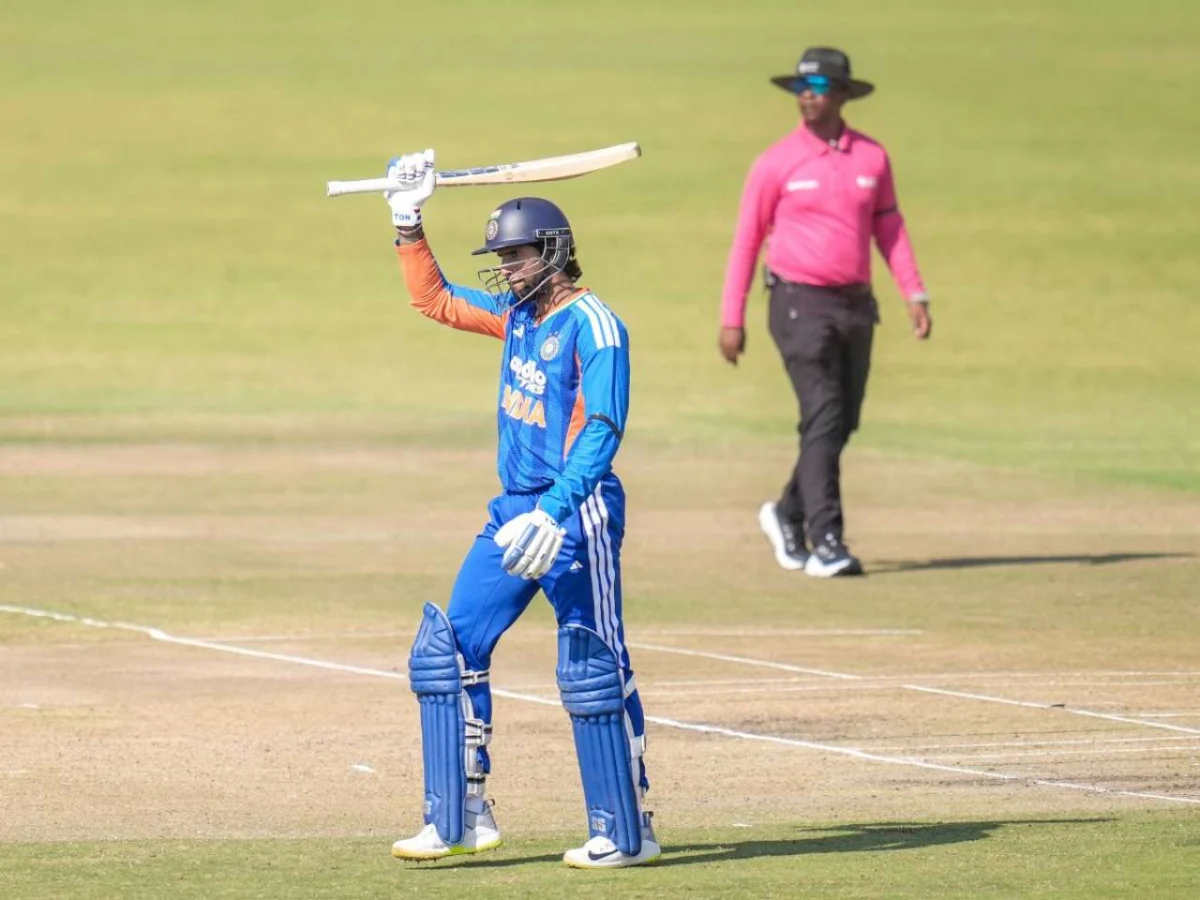
In a dazzling display of modern T20 batting, young Indian sensation Tilak Varma not only anchored India to a commanding victory over Zimbabwe but also etched his name into the annals of Indian cricket history. His composed yet explosive unbeaten knock of 60 runs off just 29 deliveries propelled India to a formidable total and, in doing so, saw him surpass none other than the iconic Mahendra Singh Dhoni in an elite T20I batting list. This milestone, achieved with remarkable speed and consistency, underscores Varma’s impressive trajectory in international cricket and heralds a new era for India’s white-ball future.
The stylish left-hander, serving as vice-captain for the series, demonstrated a maturity beyond his years, steering India through crucial phases of their innings before unleashing a blistering assault in the death overs. His performance was not merely about individual records; it was a statement of intent, a testament to his burgeoning talent, and a critical factor in India securing a dominant 90-run victory in the second T20I against Zimbabwe, clinching the three-match series 2-0. As Varma continues his meteoric rise, his ability to deliver under pressure and his penchant for setting new benchmarks suggest he is destined for greatness.
The Zimbabwean Encounter: A Display of Dominance
The second Twenty20 International between India and Zimbabwe, played on a balmy evening, promised an exciting contest, but it ultimately unfolded as a testament to India’s burgeoning talent pool and strategic prowess. Having already secured a comfortable win in the opening fixture, the Indian side, featuring a mix of established youngsters and exciting new faces, aimed to seal the series with another convincing performance. The stage was set for a high-scoring encounter, and India’s batsmen rose to the occasion with an exhibition of aggressive, yet calculated, stroke play.
From the moment the Indian openers stepped onto the field, there was an air of intent. Despite losing a couple of early wickets, the middle order consolidated, setting a strong foundation for the final flourish. It was here that Tilak Varma, walking in at a crucial juncture, began to weave his magic. Displaying an exceptional understanding of the game situation, Varma initially played cautiously, rotating the strike and building partnerships. He absorbed the pressure, allowing his partners to express themselves, before unleashing his own brand of destructive batting.
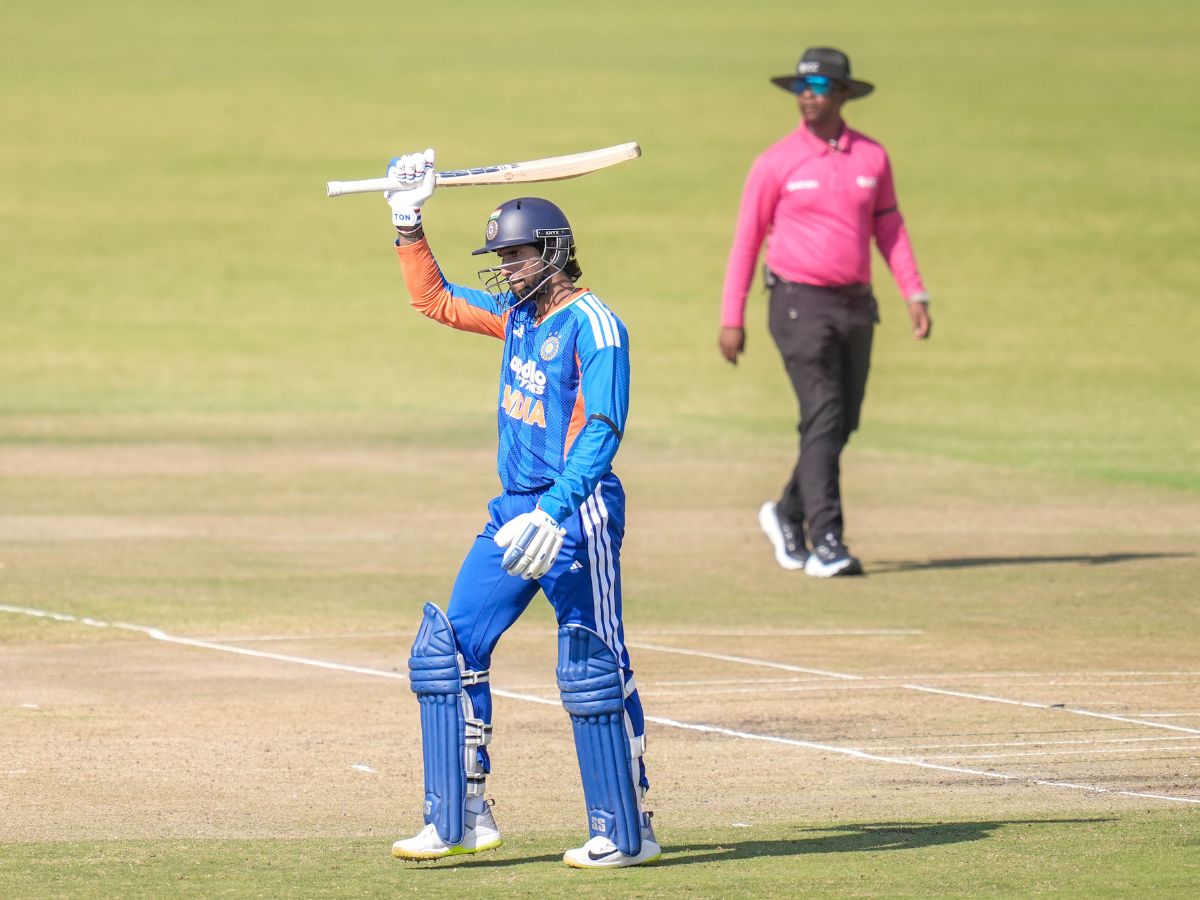)
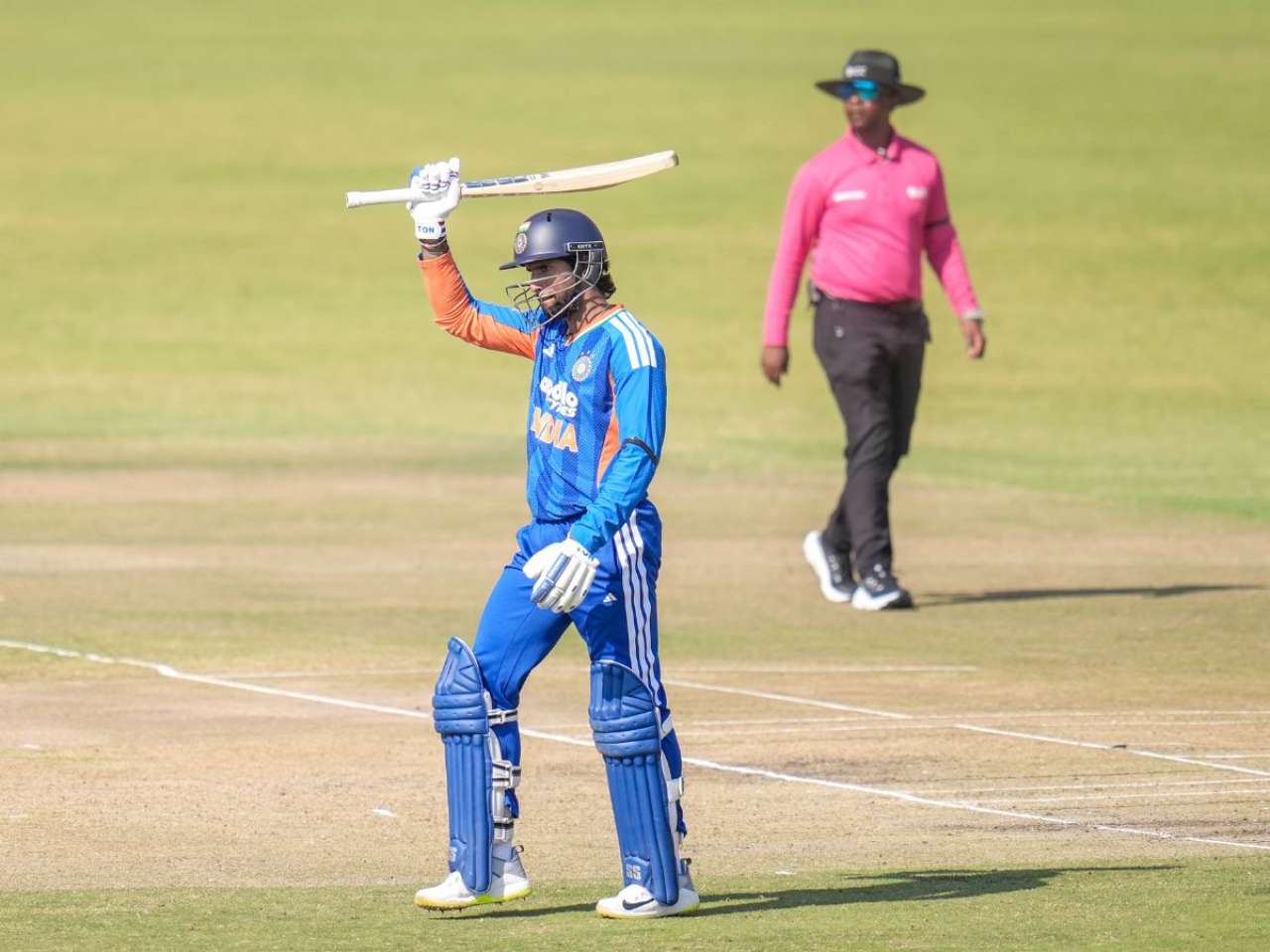
As the innings progressed into its final phase, Varma shifted gears seamlessly. With approximately five overs remaining, the vice-captain took charge, transforming a good total into an imposing one. His unbeaten 60 runs came off a mere 29 balls, a strike rate of an astonishing 206.90. This incredible acceleration was punctuated by a flurry of boundaries – three towering sixes that sailed into the stands and numerous fours that found the gaps with precision. Varma’s ability to manipulate the field, coupled with his powerful hitting, ensured that India finished their innings with a colossal 219 for 5, a target that would prove insurmountable for the Zimbabwean side.
The sheer audacity and control with which Varma wrapped up the innings were a highlight, leaving the Zimbabwean bowlers exasperated. His composure under pressure, especially in the death overs, was remarkable, demonstrating a temperament akin to seasoned campaigners. This match-winning effort was instrumental in India’s thumping 90-run victory, a result that not only clinched the series but also underlined India’s formidable strength, even with a rotated squad. The series victory, with one match still to play on Sunday, July 25, sets a positive tone for India’s upcoming international assignments.

It is also worth recalling the first T20I, where India chased down a modest target of 126 with ease. That fixture saw another young talent, Vaibhav Sooryavanshi, announce his arrival with a blistering fifty, reaching the milestone in just 19 balls. These performances collectively highlight the depth and aggressive intent of India’s next generation of T20 cricketers, with Tilak Varma leading the charge in the second encounter.
Statistical Symphony: Tilak Varma’s Rapid Ascent Compared to MS Dhoni
The most striking aspect of Tilak Varma’s recent innings against Zimbabwe is not just its match-winning impact, but the significant statistical milestone it represents. By reaching 1,634 runs in his T20I career, Varma has now officially surpassed MS Dhoni’s tally of 1,617 runs, placing him seventh on India’s all-time T20I scoring list. This achievement is particularly noteworthy when examining the careers of both players.
)
A Head-to-Head Statistical Breakdown:
| Statistic | Tilak Varma (Current) | MS Dhoni (Career) |
|---|---|---|
| Total Runs | 1,634 | 1,617 |
| Matches Played | 58 | 98 |
| Innings Batted | 55 | 85 |
| Balls Faced | 1,124 | 1,282 |
| Centuries | 2 | 0 |
| Half-Centuries | 9 | 2 |
| Sixes | 83 | (Data not provided in original, but significantly lower) |
| Fours | 126 | (Data not provided in original, but significantly lower) |
| Batting Position | Primarily Top 4 | Primarily Lower Order (Finisher) |
The comparison reveals a stark difference in career trajectories and roles. MS Dhoni, throughout his illustrious 98-match T20I career spanning 85 innings, predominantly batted lower down the order. His role was often that of a finisher, requiring him to score quick runs in limited deliveries, often with fewer balls remaining in the innings. This strategic deployment meant that while his impact was immense, his opportunities to accumulate large individual scores or centuries were naturally constrained. Dhoni finished his T20I career with 1,617 runs, facing a total of 1,282 balls, managing two half-centuries but never scoring a hundred in the format. His finishing prowess, characterized by calm under pressure and explosive hitting, defined his T20I batting.
)
In contrast, Tilak Varma, primarily batting in the top four, has accumulated 1,634 runs in just 55 innings across 58 matches, facing 1,124 balls. The sheer rapidity of his scoring is evident: he has achieved more runs in significantly fewer innings and matches, and with fewer balls faced, than Dhoni did. Furthermore, Varma already boasts two centuries and nine half-centuries in T20Is, alongside a remarkable 83 sixes and 126 fours. These figures not only highlight his aggressive intent but also his ability to convert starts into substantial scores, a crucial attribute for top-order batsmen in modern T20 cricket.
The difference in their statistical profiles is a reflection of the evolving nature of T20 cricket and their respective roles within their teams. Dhoni’s era emphasized consolidation and calculated finishing, while Varma’s generation thrives on aggressive, high-strike-rate batting from the outset. The fact that Varma has already eclipsed Dhoni’s century and half-century count underscores his natural aptitude for big scores in this format.
)
Looking Ahead: The 2,000-Run Milestone
At his current rate, Tilak Varma is on track to shatter the 2,000-run milestone in T20Is by the year’s end. This projection speaks volumes about his consistency and the opportunities he is likely to receive given his impactful performances. Reaching 2,000 runs within such a short span would further solidify his status as one of India’s premier T20 batsmen and place him firmly among the game’s elite.
)
Broader Context: India’s All-Time T20I Scorers
To truly appreciate Varma’s achievement, it’s essential to place it within the broader context of India’s T20I batting legends. Rohit Sharma currently sits atop the list as India’s all-time leading T20I run-scorer, with a colossal 4,231 runs from 159 matches, including five centuries and 32 half-centuries. Rohit, despite having 12 ducks in his T20I career, set an incredibly high benchmark for consistency and explosive hitting.
)
Right behind him is Virat Kohli, with 4,188 runs, a testament to his unparalleled consistency and masterful chase-finishing abilities. Both Kohli and Rohit, having played instrumental roles in India lifting the T20 World Cup trophy in 2024, retired from the format, leaving a massive void at the top.
Suryakumar Yadav, often hailed as "Mr. 360" for his innovative stroke play, rounds out the top three with 3,272 runs. Despite leading India to a T20 World Cup title in 2026, a surprising turn of events saw him replaced as captain and even temporarily dropped from the team, highlighting the fiercely competitive nature of Indian cricket.
)
Varma’s ascent to the seventh spot, displacing a legend like Dhoni, signifies a generational shift and the emergence of new powerhouses who are ready to carry the torch forward, continuing India’s rich legacy in white-ball cricket.
Voices from the Dressing Room and Beyond
While no direct quotes from team officials or players were immediately available following Tilak Varma’s record-breaking knock, the sentiment around his performance and the team’s overall display is overwhelmingly positive. Cricket pundits, former players, and fans alike have been quick to laud the young vice-captain’s maturity and impact.
)
"Tilak Varma’s rise has been phenomenal," remarked a prominent cricket analyst on a post-match show. "To overtake MS Dhoni in T20I runs at such an early stage of his career, and that too with a strike rate well over 200 in a match-winning effort, speaks volumes about his talent and temperament. He’s not just hitting boundaries; he’s understanding game situations, building innings, and finishing them with authority. This is the kind of player India needs for the next decade."
Inside the dressing room, it is understood that Varma’s disciplined approach and aggressive mindset are highly valued. His appointment as vice-captain for this series, despite his relative inexperience at the international level, is a clear indication of the team management’s faith in his leadership qualities and his ability to influence matches. The coaches would undoubtedly be commending his ability to absorb pressure and deliver under challenging circumstances, especially in an innings where India needed a strong finish to post a daunting total.
)
Social media platforms have been abuzz with praise for Varma. Fans are drawing comparisons, not just with Dhoni, but with other Indian legends known for their consistency and big-hitting. Hashtags celebrating his milestone and predicting a bright future for him trended, reflecting the widespread excitement among the Indian cricketing fraternity. The narrative is clear: a new star is firmly in the ascendancy, and the cricketing world is taking notice.
The general consensus is that Varma embodies the modern Indian cricketer – fearless, technically sound, and strategically astute. His performance against Zimbabwe, while against a less formidable opponent, showcased the attributes that make him a potential long-term asset for the national team. The absence of immediate official statements does not diminish the palpable sense of excitement and expectation surrounding his burgeoning career. It’s a quiet acknowledgement of a talent that is undeniably making its mark.
)
Implications for Indian Cricket’s T20 Future
Tilak Varma’s rapid rise and his recent milestone carry profound implications for his own career trajectory and the broader landscape of Indian T20 cricket. His consistent performances, culminating in surpassing a legend like MS Dhoni, signal a significant shift and reinforce several key aspects of India’s cricketing future.
For Tilak Varma:
)
Firstly, this achievement solidifies his position as a core member of India’s T20 squad. While still relatively new to international cricket, his ability to perform consistently and deliver match-winning knocks under pressure makes him an invaluable asset. The vice-captaincy role in this series further indicates that the team management sees him not just as a player, but as a potential future leader. This trust will undoubtedly boost his confidence, allowing him to play with even greater freedom and expression. The expectations will naturally rise, but Varma has shown he possesses the temperament to thrive under scrutiny. His projected path to 2,000 T20I runs by year-end is a testament to his potential to become one of India’s most prolific run-scorers in the format.
For the Indian Team:
)
Varma’s emergence significantly strengthens India’s batting depth. In an era where Rohit Sharma and Virat Kohli have retired from T20Is, and Suryakumar Yadav’s place has seen fluctuations, the need for reliable, explosive middle-order batsmen is paramount. Varma fills this void perfectly, providing a dynamic left-handed option that adds balance and variety to the batting lineup. His ability to bat at different positions, coupled with his excellent strike rate, offers immense flexibility to the team management. This bodes well for India’s aspirations in upcoming T20 World Cups and bilateral series, ensuring that the team remains a formidable force on the global stage. It also highlights the success of India’s talent identification and development pipeline, showcasing that there is a continuous stream of world-class players ready to step up.
For Indian Cricket as a Whole:
)
This milestone is indicative of the changing landscape of T20 cricket. The emphasis is increasingly on aggressive, high-strike-rate batting, and Varma embodies this evolution. His ability to score centuries and multiple half-centuries, in contrast to Dhoni’s lower-order finishing role, reflects the modern game’s demand for batsmen who can dominate from the outset. The excitement generated by young talents like Varma and Vaibhav Sooryavanshi in this series reinforces the health and vibrancy of Indian cricket. It demonstrates that the transition phase, following the retirements of stalwarts, is being managed effectively, with new heroes emerging to carry the legacy forward. The future of Indian T20 cricket looks robust, with a blend of youthful exuberance and proven talent promising sustained success and enthralling performances for fans worldwide. As the third and final T20I approaches, all eyes will be on Tilak Varma and his peers, as they continue to write new chapters in India’s rich cricketing narrative.
