

Bengaluru, India – In a groundbreaking fusion of architectural vision and literary depth, German director Axel Tangerding is set to bring T.S. Eliot’s seminal and fragmented poem, "The Waste Land," to life on the Bengaluru stage. Presented by Jagriti Theatre in collaboration with META Theatre Munich, this production, running from July 30 to August 2, promises an immersive theatrical experience that transcends traditional stagecraft. Tangerding, renowned for his unique approach that treats the stage as an evolving environment, dismantles the poem’s complex layers, revealing its enduring relevance to contemporary audiences grappling with fractured realities and information overload.
Tangerding’s directorial philosophy, deeply rooted in his background as an architect, views the stage not as a static backdrop but as a dynamic, prepared space. For "The Waste Land," this translates into a stark white square, meticulously covered with plaster and "prepared anew for each performance." This carefully constructed surface is then progressively broken down during the performance, mirroring the poem’s exploration of decay, disillusionment, and the search for underlying truth. "It’s like looking beneath the surface," Tangerding explains in a virtual conversation from Germany. "In a time of fake news and fragmented realities, theatre must ask what is reliable, what comes down."
A Century of Resonance: The Enduring Power of "The Waste Land"
First published in 1922, T.S. Eliot’s "The Waste Land" emerged as a monumental work of Modernism, capturing the profound spiritual, cultural, and emotional barrenness experienced in the aftermath of World War I. Its fragmented structure, a radical departure from poetic conventions, mirrored the shattered sensibilities of a generation and the perceived collapse of traditional values. A century later, its verses continue to echo with themes of devastation, uncertainty, and profound disillusionment, making it a surprisingly potent text for contemporary interpretation.

Axel Tangerding’s journey with "The Waste Land" began not with the intention of a theatrical adaptation, but through a gradual engagement with its powerful imagery and fractured narratives. Initially, he used fragments of the poem for a libretto in musical theatre. The centenary of its publication in 2022 marked a pivotal moment, leading him to stage a reading of the full text with META Theatre. The overwhelming public response to this reading spurred further development. "The reading was repeated, then expanded with music, later with song, until a structure slowly emerged. It was a gradual process," Tangerding recalls.
He confesses that transforming it into a play was an organic evolution driven by audience enthusiasm. "I did not think of turning it into a play. But the audience was so enthusiastic we decided to do so." Tangerding emphasizes Eliot’s revolutionary approach to poetry, noting, "With this poem, Eliot broke with all traditions. It has no rhyme or fixed syllables. That’s why it’s called the first poem of modern literature." For Tangerding and his generation, Eliot’s work was a significant milestone, inspiring a similar spirit of revolt against established theatrical traditions and fostering an environment where the stage became a "laboratory."
Architectural Metaphors and Avant-Garde Influences
Tangerding’s architectural background profoundly influences his approach to theatre. He views the stage as an architectural environment, a space to be constructed, deconstructed, and experienced. This methodology aligns seamlessly with the fragmented and layered nature of "The Waste Land." The act of breaking down the plaster-covered stage symbolizes the peeling away of superficial layers to expose deeper truths, a powerful metaphor for confronting the complexities of the modern world.

META Theatre, Tangerding’s Munich-based company, draws inspiration from pioneers of avant-garde theatre such as La MaMa Theatre in New York and Jerzy Grotowski in Poland. These institutions were instrumental in shaping contemporary performance by focusing on the fundamental essence of theatrical expression. "I felt ‘The Waste Land’ works in a similar way," Tangerding explains, drawing a parallel to the stylistic approach of filmmaker Jim Jarmusch’s "Only Lovers Left Alive" (2013). He elaborates, "which zooms into situations and then leaps to the next. The impact is emotional rather than logical – not a linear continuation, but coherence that lies between the lines." This echoes Eliot’s own technique of juxtaposing disparate images and voices to create a profound emotional and intellectual resonance, rather than a straightforward narrative progression.
Weaving Fragments Across Centuries and Cultures
The enduring power of "The Waste Land" lies in its remarkable ability to bridge cultural and temporal divides. Eliot masterfully weaves together references from diverse sources, including Shakespeare, Wagner, and the Upanishads, culminating in the Sanskrit invocation "Shantih Shantih Shantih." This rich tapestry of allusions underscores the poem’s exploration of universal human experiences that transcend specific historical or cultural contexts.
Tangerding observes a particular resonance with younger audiences who, he notes, are "at home with this disrupted narrative." In an era defined by an overwhelming deluge of information and the constant challenge of forming individual perspectives, the poem’s fragmented structure and its exploration of uncertainty mirror the lived experiences of today’s youth. "They live with overwhelming, often confusing information, and must form their own view of the world," Tangerding states. "Across centuries – from two thousand years ago to today – the poem’s fractured presence resonates."

The poem’s central theme of spiritual, cultural, and emotional barrenness in the modern world, coupled with its introspective mood that hovers between despair and the hopeful anticipation of renewal, finds a parallel in the contemporary zeitgeist. "He sees their mood caught between depression and the hope of a better future. That tension is in Eliot’s text as well – between despair after the First World War and the longing for renewal," Tangerding observes. He draws further inspiration from Peter Brook, whose radical theatrical experiments paved the way for new ways of conceptualizing performance. Eliot’s poem, with its fractured voices and cultural leaps, continues this tradition of disruption and innovation.
An Immersive Theatrical Experience
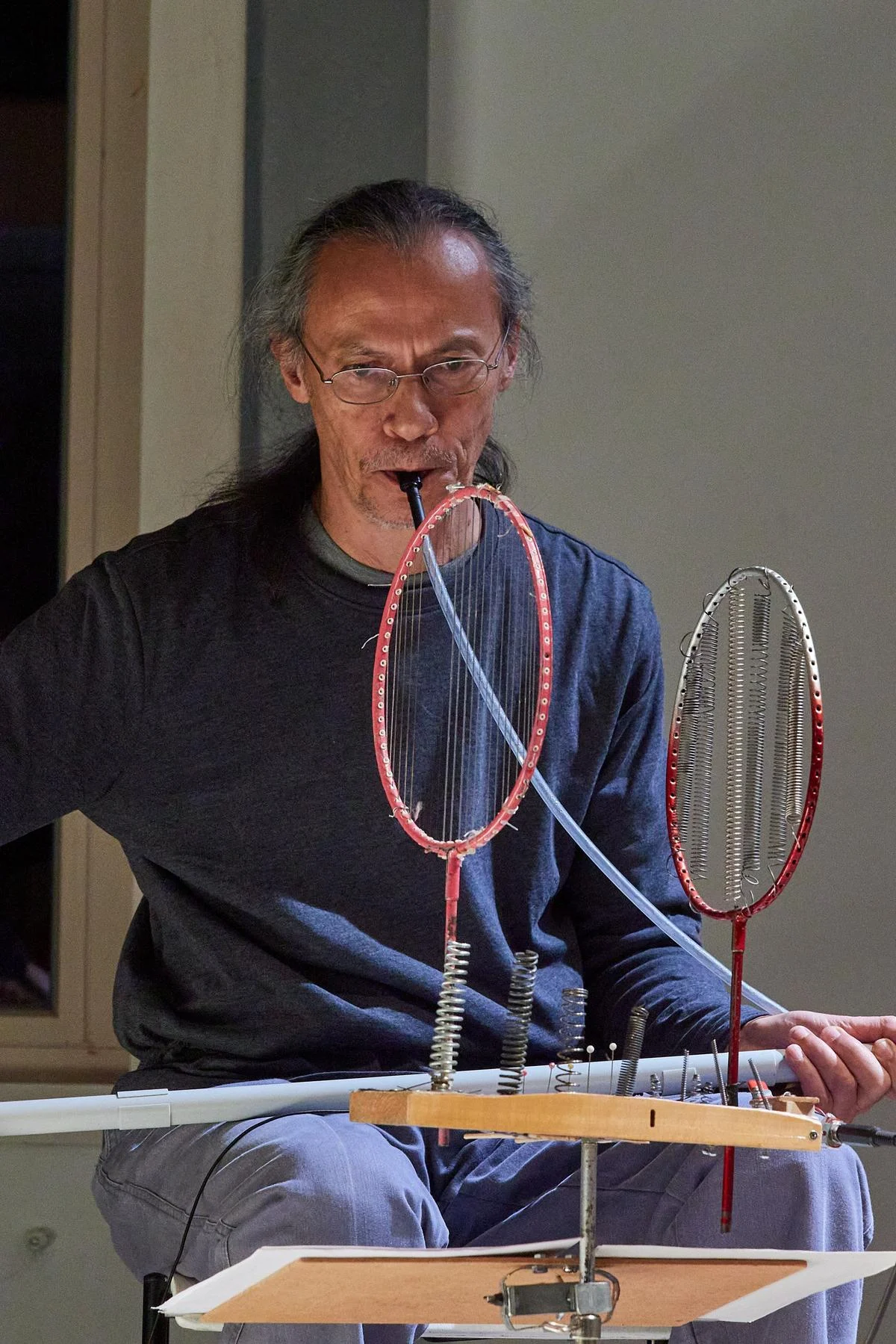
The production features the compelling performance of actor Nicole Kleine, whose portrayal is central to translating Eliot’s complex verses into a tangible theatrical experience. Complementing Kleine’s performance is the live musical score composed and performed by Ardhi Engl, whose work is integral to creating the immersive atmosphere of the production. The collaboration between Kleine and Engl, guided by Tangerding’s visionary direction, aims to create a performance that is both intellectually stimulating and emotionally resonant.
The staging in Bengaluru promises to be a significant cultural event, offering audiences a unique opportunity to engage with a seminal work of 20th-century literature through a contemporary and innovative theatrical lens. The choice of Jagriti Theatre, known for its commitment to presenting diverse and thought-provoking productions, provides an ideal platform for this ambitious undertaking.

Supporting Data and Context
- Publication: "The Waste Land" was first published in the UK in 1922.
- Critical Reception: Upon its release, the poem received a mixed response, with some critics even labeling it a "PTSD poem" due to its raw portrayal of post-war trauma and disillusionment.
- Themes: The primary themes explored include the spiritual, cultural, and emotional barrenness of the modern world, fragmentation, loss of faith, and the search for meaning.
- Influence: "The Waste Land" is widely regarded as one of the most influential works of the 20th century and a foundational text of literary Modernism.
- Structure: The poem is divided into five sections: "The Burial of the Dead," "A Game of Chess," "The Fire Sermon," "Death by Water," and "What the Thunder Said."
Official Responses and Artistic Vision
Axel Tangerding’s artistic vision for "The Waste Land" is clearly articulated through his interviews and the description of his theatrical approach. His insistence on viewing the stage as a prepared environment, susceptible to deconstruction, speaks to a profound engagement with the poem’s themes of decay and revelation. His comparison of the production’s impact to that of Jim Jarmusch’s films highlights a desire for emotional resonance over strict narrative linearity.
The collaboration with Jagriti Theatre signifies an important bridge between international and Indian theatrical practices. Jagriti Theatre’s reputation for fostering artistic innovation and presenting challenging works makes it a fitting partner for META Theatre’s ambitious reinterpretation of Eliot’s masterpiece.
Implications for Contemporary Theatre and Audiences
The staging of "The Waste Land" by Axel Tangerding carries significant implications for contemporary theatre. It demonstrates the enduring relevance of classic literature when approached with innovative directorial strategies. By aligning the poem’s fragmented nature with the contemporary experience of information overload and fragmented realities, Tangerding makes a powerful statement about the role of theatre in understanding and navigating the complexities of the modern world.

Furthermore, the production’s emphasis on emotional impact and the creation of an immersive environment suggests a trend towards experiential theatre that seeks to engage audiences on a deeper, more visceral level. The resonance with younger audiences indicates that, despite its age, "The Waste Land" continues to offer potent insights into the human condition, particularly for those who are navigating a world that often feels as fragmented and uncertain as Eliot’s depicted landscape. The Bengaluru production is poised to be a landmark event, inviting audiences to confront the echoes of the past and their relevance to the present.
The play, performed in English, will be staged at Jagriti Theatre in Whitefield, Bengaluru, from July 31 to August 2, with performances commencing at 7:30 p.m. Tickets are available on BookMyShow.
