

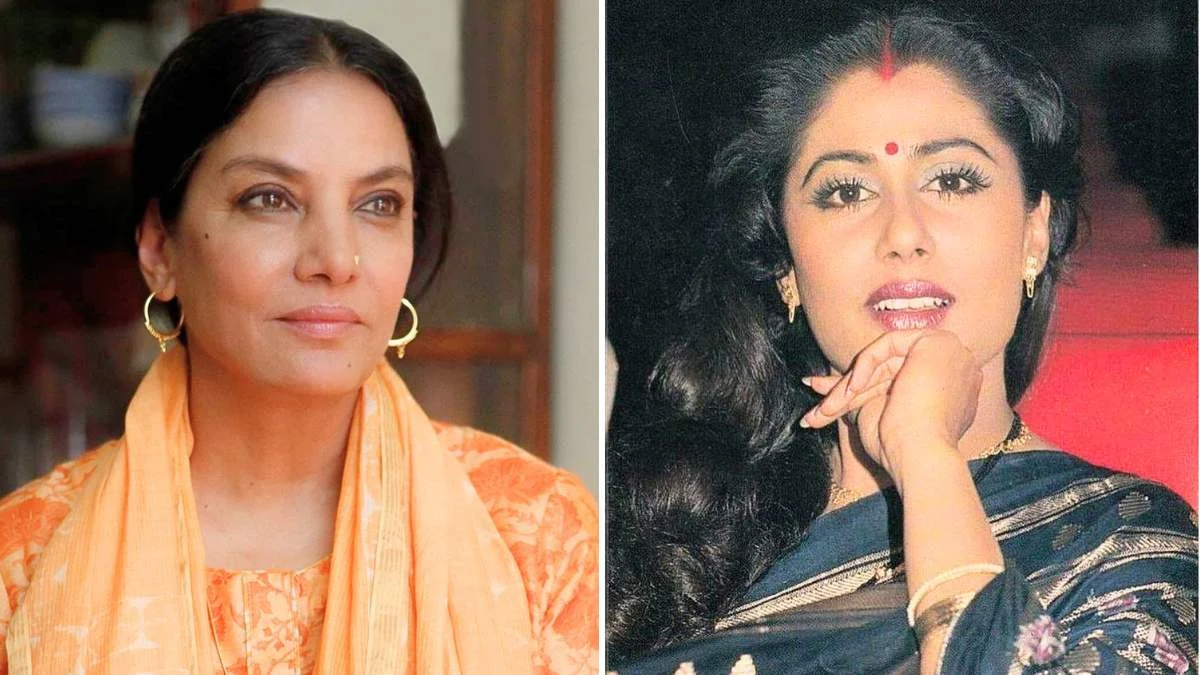
The golden era of Indian parallel cinema, a period that redefined storytelling and brought nuanced portrayals of Indian women to the forefront, was undeniably shaped by the extraordinary talents of two leading actresses: Smita Patil and Shabana Azmi. Both women possessed an unparalleled ability to embody complex characters, becoming the muses for visionary filmmakers like Shyam Benegal and Mahesh Bhatt. Their artistic sensibilities often converged, leading to critically acclaimed performances that challenged societal norms and expanded the cinematic landscape. Yet, behind the shared artistic brilliance, a palpable, unspoken rivalry simmered, a "cold war" that intensified on the sets of Mahesh Bhatt’s iconic film, "Arth." This intense professional friction, tragically, remained unresolved, its echoes lingering until Smita Patil’s untimely demise in 1986.
Decades later, the memories and complexities of this celebrated yet fraught relationship continue to fascinate. Shabana Azmi, in candid reflections, has shed light on the origins and escalation of this rivalry, revealing how a specific casting decision and a pivotal scene in "Arth" became significant turning points, irrevocably altering the dynamic between two of Hindi cinema’s most revered actresses. The narrative of their professional competition, witnessed and mediated by director Mahesh Bhatt, offers a compelling insight into the pressures, ambitions, and human emotions that can define the lives of artists at the zenith of their careers.
The Genesis of a Cinematic Clash: Shared Stages, Divergent Ambitions
The 1970s and 1980s marked a revolutionary phase in Indian cinema, moving beyond the song-and-dance extravaganzas to explore more realistic themes and character-driven narratives. In this fertile ground, Smita Patil and Shabana Azmi emerged as torchbearers of parallel cinema. Both actresses were lauded for their naturalistic acting style, their willingness to delve into unconventional roles, and their ability to convey profound emotions with understated grace. They were frequently cast in similar auteur-driven projects, often by the same directors, leading to inevitable comparisons and a perception of direct competition.
Their artistic journeys, while distinct in their individual approaches, were often intertwined. Both were lauded for their performances in films that tackled social issues, explored female agency, and defied traditional stereotypes. They brought a raw authenticity to their characters, captivating audiences and critics alike. However, this shared space, while artistically enriching, also fostered an environment where their individual ambitions and interpretations of roles could clash. The industry, always eager for a compelling narrative, often amplified these perceived tensions, creating a buzz around their supposed rivalry.
"Arth": A Crossroads of Talent and Tension
The filming of Mahesh Bhatt’s 1982 masterpiece, "Arth," proved to be a crucible where the simmering tensions between Smita Patil and Shabana Azmi reached a critical juncture. The film, a poignant exploration of marital infidelity, female relationships, and personal liberation, featured both actresses in pivotal roles. However, the narrative surrounding their casting and the subsequent creative decisions on set revealed the depth of their underlying friction.
Shabana Azmi, in a candid interview with Filmfare, recounted the initial casting intentions for "Arth." It was revealed that Smita Patil was originally slated to play a special, albeit significant, cameo role – that of the "Bai" (housekeeper), a role eventually essayed with immense brilliance by Rohini Hattangadi. This initial plan, however, was met with a surprising assertion from Patil. "Arth mein Smita Patil was supposed to do a special appearance as the Bai," Azmi shared. "She said that I wanted to play the other woman."
This seemingly simple shift in casting had profound implications, not just for the film’s narrative structure but also for the relationship between the two actresses. Patil’s desire to portray the "other woman" – the character of Kavita, the mistress who disrupts the protagonist’s life – was a bold move, indicating her ambition to tackle roles that were complex and potentially controversial. This ambition, however, meant that the film’s focus, which was initially intended to be more centered on the wife’s (played by Shabana Azmi) experience, would inevitably shift to accommodate the expanded role of the "other woman."
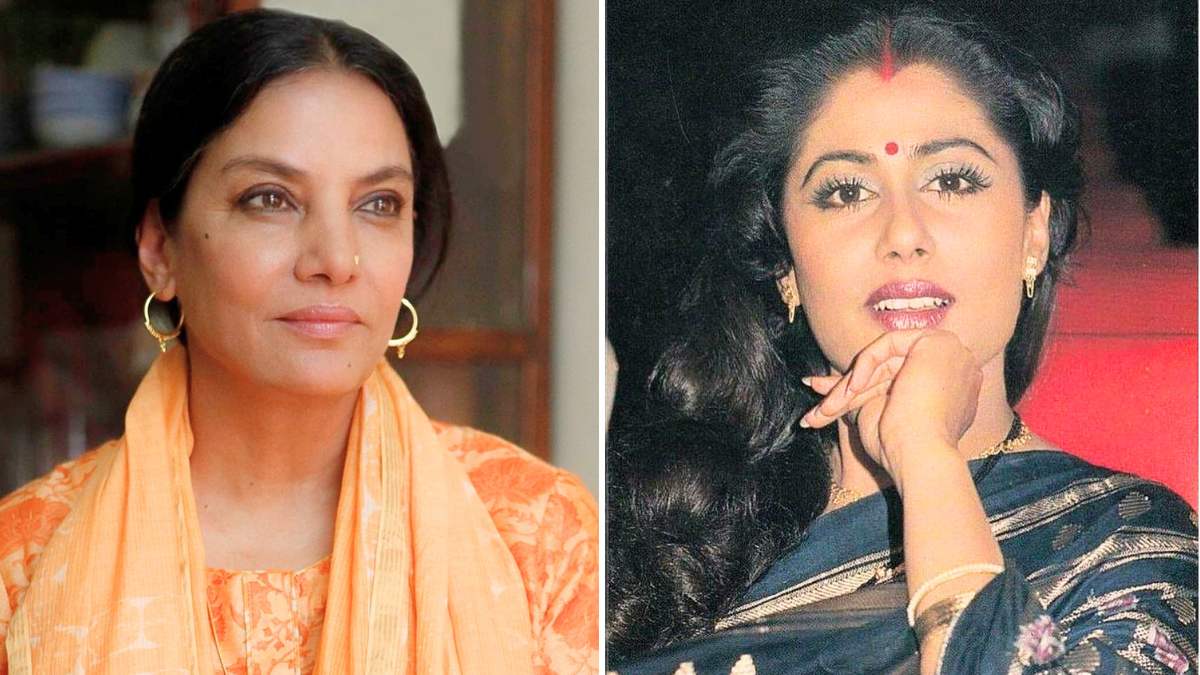
The acclaimed screenwriter Vijay Tendulkar, a significant figure in Indian parallel cinema, reportedly commented on this narrative shift, highlighting the impact of Patil’s casting choice. As Azmi recalled Tendulkar’s observation, "Wo kehte hain, Vijay Tendulkar ki, that’s what’s wrong with Arth. Because actually, it is Pooja’s story; it was the wife’s story. But since Smita had done it, so much more footage had to be given to her." This commentary underscores how Patil’s decision to embody the more outwardly challenging and potentially sympathetic role of the mistress significantly altered the film’s thematic balance, inadvertently drawing more attention to her character and, by extension, intensifying the professional spotlight on her compared to Azmi’s portrayal of the wife.
The Scene That Fractured a Friendship: A Moment of Raw Emotion and Unresolved Conflict
The creative friction between Smita Patil and Shabana Azmi reportedly reached its zenith during the filming of a particularly intense scene in "Arth." This scene, described by Shabana Azmi, became a pivotal moment that, unfortunately, caused a lasting strain on their relationship, a rift that never truly healed.
Azmi recounted the incident, revealing the raw emotion and disagreement that unfolded. "Phir ek baar aisa hua ki I lose my balance in that scene in Arth, where I say all those things and Smita said ki koi bhi aurat aise nahi keh sakti, bistar mein randi ka roop and all. And she said nahi, ye to bilkul theek nahi hai," she narrated. The scene in question involved Shabana Azmi’s character delivering a powerful, emotionally charged dialogue that questioned the moral fabric of a woman involved in an extramarital affair, using stark and provocative language.
Smita Patil, it appears, found the dialogue to be too extreme, too uncharacteristic of how any woman would express such sentiments in a moment of profound distress. Her reservation stemmed from a perceived lack of realism in the dialogue, suggesting that it went beyond the bounds of believable human expression. This artistic disagreement, however, was not a simple matter of creative difference. It occurred within the charged atmosphere of their existing rivalry, amplifying the underlying tensions.
Despite Patil’s objections, Mahesh Bhatt, the director, proceeded with filming the scene as written. This decision, while perhaps necessary for the artistic vision of the film, inadvertently sidelined Patil’s concerns and further escalated the friction. Azmi herself admitted to the immense stress under which the scene was performed. "Wo jo toota na, unfortunately, wo kabhi repair nahi hua," she lamented, signifying the irreparable damage inflicted on their relationship by this incident. The scene, intended to be a cathartic release of emotion within the film’s narrative, instead became a catalyst for a real-life rupture, leaving a scar on their professional rapport that proved impossible to mend.
The Lingering Regret and the Unfinished Circle
In the aftermath of the "Arth" incident, Shabana Azmi expressed profound regret over her actions and the harsh words she might have used towards Smita Patil. The intensity of the rivalry, coupled with the pressure of their respective roles, had evidently led to a breakdown in their ability to maintain a respectful professional distance.
Azmi’s reflections reveal a deep sense of remorse. "So I regret that I said uncharitable things about Smita. I really regret it," she confessed. "Because uski zaroorat nahi thi. I wish I hadn’t done it!" This statement speaks volumes about the emotional toll the rivalry took on her and her realization that the animosity had perhaps been unnecessary and counterproductive. She acknowledged that the sharp words and the competitive edge had crossed a line, leading to a situation that could have been handled with more grace and understanding.

Interestingly, in a poignant twist of fate, Shabana Azmi found herself in a unique position of connection with Smita Patil’s family after her passing. "But her parents were nice to me, and my parents were nice to her," Azmi noted. "In a strange way, after she passed away, I sort of became a surrogate Smita to her parents. Which baffled me, but it completed the circle." This unexpected development suggests a posthumous reconciliation, not between the two actresses, but in a way, between their families and Azmi, bridging the gap left by the unresolved conflict. It was a strange, perhaps even bittersweet, resolution that brought a measure of peace to the lingering shadows of their professional animosity.
Mahesh Bhatt, a direct witness to their complex relationship, also corroborated the existence and intensity of their rivalry. In another interview, he confirmed the mutual respect for each other’s work but also acknowledged the underlying tension. "Both actresses had great respect for each other’s work, but while Smita never admitted that Shabana gave her sleepless nights, the latter did confess that her rival disturbed her!" Bhatt stated. This observation further validates the notion of a deeply felt rivalry, where both women were aware of each other’s formidable talent and the pressure it exerted on their own careers and performances.
The Tragic End of a Cinematic Era and an Unresolved Legacy
The unresolved nature of the cold war between Smita Patil and Shabana Azmi cast a long shadow over their professional lives. The rift, exacerbated by the events on the set of "Arth," remained a poignant reminder of how personal and professional lives can become intricately intertwined, leading to profound emotional consequences.
Tragically, the opportunity for a true reconciliation was lost with Smita Patil’s untimely death on December 13, 1986. She succumbed to complications following a prolonged illness, leaving behind a void in Indian cinema that has never truly been filled. Her passing marked the end of an era, and with it, the chance to mend bridges and find closure for the complex relationship she shared with Shabana Azmi.
The legacy of Smita Patil and Shabana Azmi continues to inspire aspiring actors and filmmakers. Their contributions to parallel cinema are immeasurable, their performances etched in the annals of Indian film history. Yet, their story also serves as a powerful reminder of the human element behind the glamour and the artistry – the rivalries, the regrets, and the profound impact that professional competition can have on personal lives. The cold war that once defined their relationship, though tragically unresolved in their lifetimes, remains a compelling chapter in the narrative of Indian cinema, a testament to the intense passion and the human complexities that often accompany artistic genius.
For those who cherish the golden age of Indian cinema and the extraordinary women who illuminated it, the story of Smita Patil and Shabana Azmi’s rivalry is a poignant, enduring tale, a reminder that even in the pursuit of artistic excellence, the human heart and its intricate connections play an undeniable, and sometimes heartbreaking, role.
