

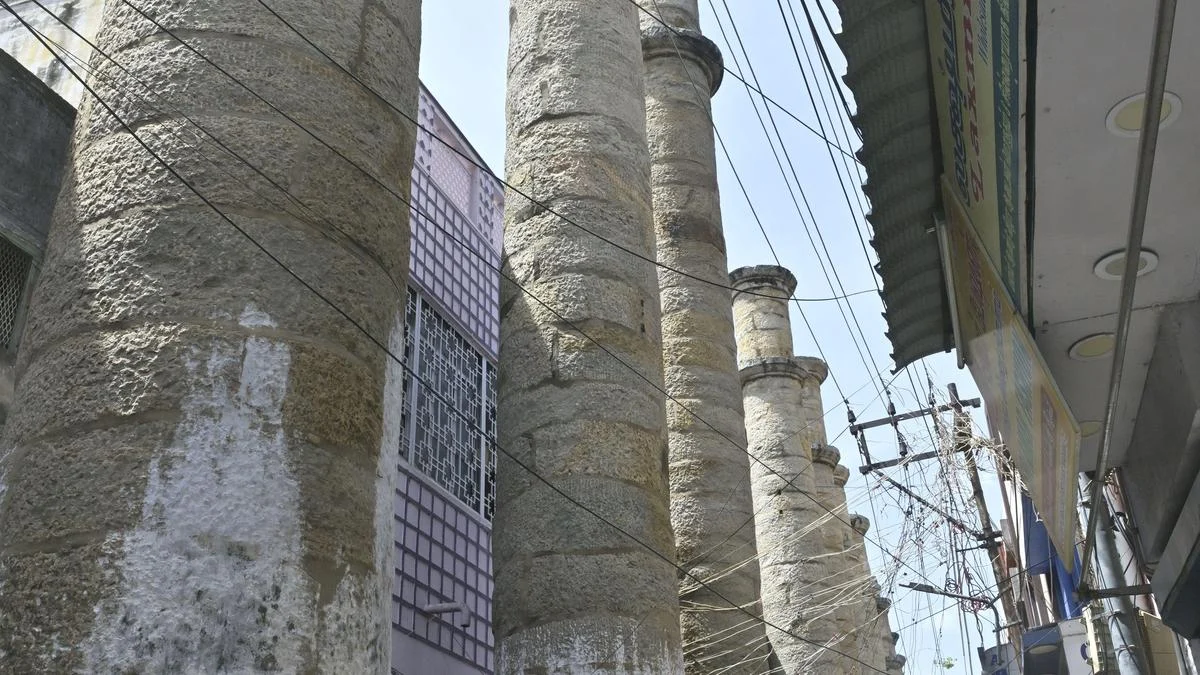
Madurai, a city steeped in history and vibrant cultural traditions, harbors many hidden gems that often go unnoticed amidst its bustling modernity. One such treasure is the aptly named "Pathu Thoon" (Ten Pillars) street, a narrow lane tucked away in the heart of the city. This evocative name hints at a rich past, derived from the colossal pillars that have stood sentinel for over three centuries. While these ancient structures are a testament to Madurai’s architectural heritage, the street itself has evolved into a dynamic hub for the textile trade, a place where the echoes of history intertwine seamlessly with the pulse of contemporary commerce.
Unveiling the Mystery: The Enduring Pillars of Pathu Thoon
For the casual passerby, the imposing pillars of Pathu Thoon might simply serve as a familiar, albeit grand, landmark. However, for archaeologists and historians, these monolithic structures are fragments of an unfolding narrative, pieces of a historical puzzle that continues to be meticulously pieced together. The absence of direct surviving records from the Nayak period, the era of their presumed construction, adds a layer of mystique to their origins. Information about their past is largely gleaned from British-era documentation and the diligent research of dedicated historians.
A Royal Legacy: Tracing the Origins to the Nayak Dynasty
Current historical understanding suggests that these magnificent pillars were once an integral part of an extensive palace complex dating back to the Nayak period. Archaeological officials posit that this grand structure may have served as a separate palace for Muthiyalu Nayak, the brother of the renowned Thirumalai Nayak. The Nayak dynasty, which originally held sway from Tiruchi, famously shifted its capital to Madurai, a move that significantly shaped the city’s development. Later, Thirumalai Nayak’s grandson, Chokkanatha Nayak, would relocate the capital back to Tiruchi.

The prevailing theory regarding the fate of the Madurai palace and its prominent pillars is linked to the construction of a fort in Tiruchi. It is believed that during this ambitious construction project, stones from the Madurai palace were repurposed. However, the massive pillars, perhaps too formidable or strategically left behind, remained rooted in their original location. This act of preservation, whether intentional or incidental, ensured their survival, allowing them to define the very character of the street that would eventually bear their name.
British Intervention and the Naming of Pathu Thoon
The narrative of Pathu Thoon’s enduring legacy extends into the British colonial era. Historical accounts indicate that Lord Napier, during his tenure, oversaw a period of restoration for the Madurai palace. While the palace itself underwent repairs and renovations, the ten colossal pillars were left untouched, continuing their silent vigil. Over time, as the area around these pillars developed and gained prominence, the street gradually became known as "Pathu Thoon," a direct and evocative reference to its most defining architectural feature. This appellation solidified its identity, forever linking the street to its ancient past.
A Living Tapestry: Generations Rooted in History and Commerce
For residents like JK Subramanian, who has called Pathu Thoon home for over seven decades, the street is far more than just a bustling marketplace. "Many people know Pathu Thoon for its shops, but there are houses too. Families have been living here for generations," he shares, highlighting the deep-rooted community that coexists with the commercial vibrancy. For him, each walk down the street is a journey through time, a poignant reminder of the historical significance embodied by the pillars. "These pillars remind me that they were once part of something very important," he reflects, his voice imbued with a sense of reverence.

The sheer scale and enduring presence of the pillars continue to inspire awe. Subramanian marvels at the ingenuity of ancient builders, pondering how such monumental structures were erected without the aid of modern machinery. "Even today, I wonder how people built something like this without the machines we have now. They have been standing here for centuries and have seen the city change around them," he muses, underscoring the silent witness role these pillars play in the city’s evolution.
The Enduring Appeal of the Textile Trade
R Murugan, who has been a proprietor of a textile shop on Pathu Thoon for the past fifteen years, attests to the street’s enduring appeal in the face of evolving retail landscapes. "New showrooms and branded stores have come up across Madurai, but people still come here to shop," he states, a note of pride in his voice. He attributes this sustained patronage to the unparalleled variety and competitive pricing offered by the numerous textile establishments. "If they don’t find what they are looking for in one shop, they simply walk into the next. They can compare prices, designs, and quality before deciding," he explains, outlining the consumer-centric advantage of this traditional market.
Murugan notes that the street reaches its zenith of activity during festive seasons and the peak wedding months. "On some days, the street is so crowded that there is hardly any space to walk," he recounts, painting a vivid picture of its energetic pulse. He further emphasizes the intergenerational connection to the street, observing, "We have seen families who shopped here years ago come back with their children. That’s what keeps this place alive." This continuity of patronage speaks volumes about the deep-seated trust and established reputation that Pathu Thoon commands.

A Customer’s Perspective: History and Choice Intertwined
M Vijayalakshmi, a loyal customer, echoes the sentiment of enduring preference for Pathu Thoon. "I have been shopping here for many years. Even though there are malls now, I still prefer coming here because I can visit several shops at one stretch," she shares. Her shopping strategy exemplifies the unique experience Pathu Thoon offers – a curated journey through a diverse collection of textiles, primarily saris and dress materials. She admits that her initial focus was solely on the shopping aspect, but a newfound appreciation for the street’s history has emerged. "I never paid much attention to the pillars until someone told me about their history. Now, whenever I come here, I make it a point to look at them," she confesses, highlighting the growing awareness and appreciation for the heritage that the street so gracefully embodies.
A Timeless Promise: The Future of Pathu Thoon
As the years unfold, Pathu Thoon is poised to retain its distinctive character, a harmonious blend of the ancient and the contemporary. The daily rhythm of commerce will continue, with shop shutters opening to reveal a kaleidoscope of textiles and customers engaging in the age-old art of bargaining. Above this vibrant tableau, the tall pillars will remain, steadfast and silent, awaiting the next discerning eye to pause, look up, and contemplate the centuries of history they have so stoically carried. Pathu Thoon stands as a powerful testament to Madurai’s resilience, a place where the weight of the past enriches the vibrancy of the present, offering a unique and enduring experience for all who wander its historic lane.
