

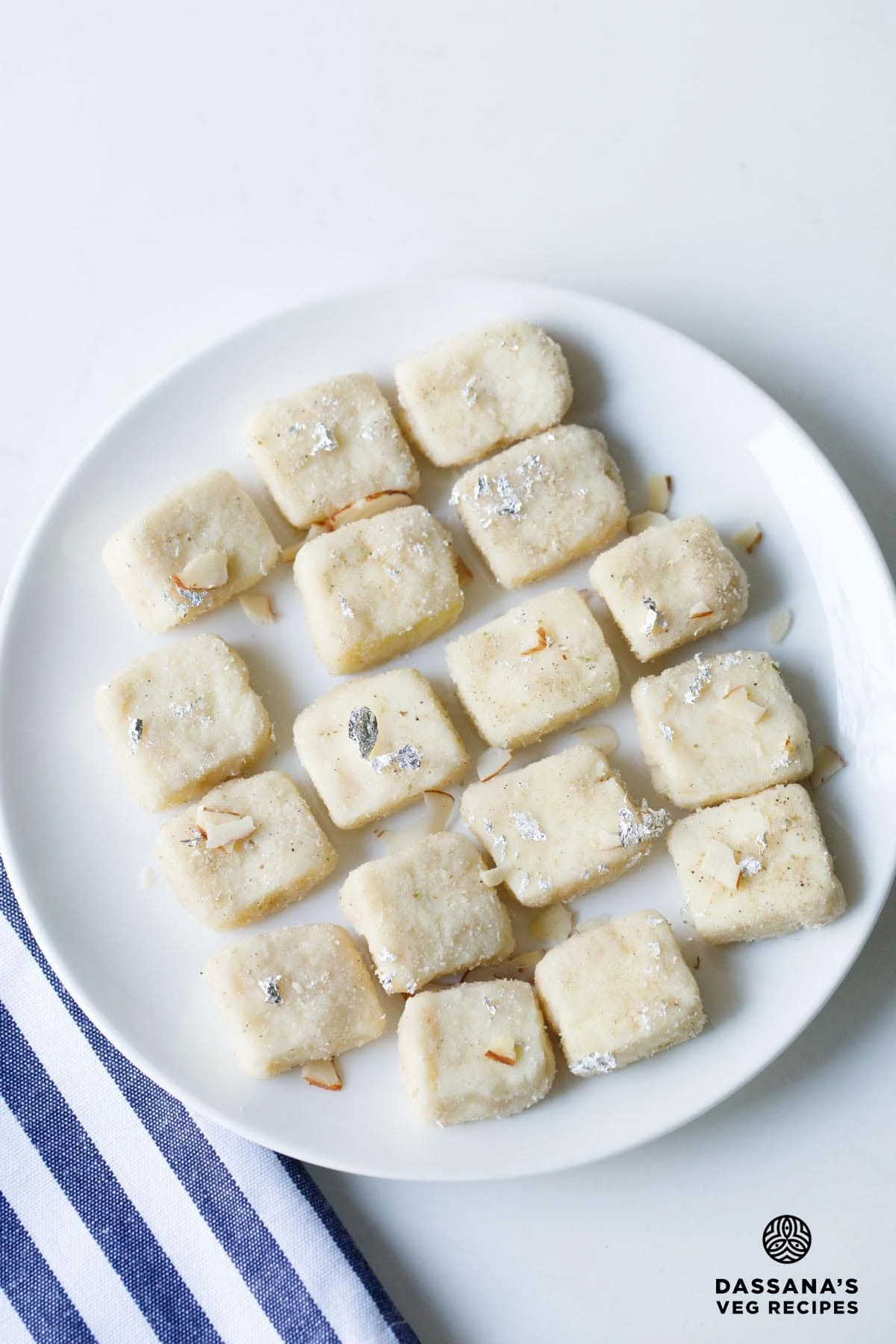
KOLKATA — In the sprawling landscape of Indian confectionery, few regions command as much reverence as West Bengal. While the global palate is well-acquainted with the spongy Rasgulla and the creamy Sandesh, a humbler, more structural marvel is reclaiming its position on the festive platter: Chena Murki. A traditional sweet characterized by its translucent, crystalline sugar exterior and a tender, milky core, Chena Murki represents a sophisticated intersection of dairy science and precision sugar-craft.
As the festive season approaches—marked by the grandeur of Durga Puja and the brilliance of Diwali—culinary historians and professional chefs are noting a renewed interest in these "dry" sweets. Unlike their syrup-soaked counterparts, Chena Murki offers a shelf-stable yet decadent option for the modern consumer, blending the simplicity of three primary ingredients with a technical complexity that challenges even seasoned artisans.

Main Facts: The Anatomy of a Bengali Classic
Chena Murki, often spelled Chhena Murki, is a bite-sized delicacy rooted in the "Mithai" traditions of the Indian subcontinent. The name itself provides a linguistic roadmap to its composition: "Chena" refers to fresh, unripened curd cheese (similar to paneer), while "Murki" traditionally denotes a coating of crystallized sugar or jaggery.
The Textural Duality
The hallmark of a superior Chena Murki is its dual texture. The exterior must be a thin, crisp shell of micro-crystalline sugar that "snaps" upon the first bite. This gives way to a center of soft, succulent chhena that retains its moisture without being soggy. Achieving this balance requires a mastery of temperature and timing that transforms basic pantry staples into a gourmet experience.

Nutritional Profile and Ingredients
From a dietary perspective, Chena Murki is a concentrated source of energy and dairy protein. According to nutritional data, a single serving (approximately 24 pieces per standard batch) contains:
- Calories: 49 kcal
- Carbohydrates: 6g (primarily from sucrose)
- Protein: 1g
- Fat: 2g (saturated fat: 1g)
- Calcium: 41mg
While high in sugar, the sweet is naturally gluten-free, making it an accessible option for those with celiac disease or gluten sensitivities. The ingredient list remains deceptively short: fresh chhena or paneer, refined sugar, water, and aromatic enhancers like cardamom powder or rose water.

Chronology: The Methodical Path to Perfection
The production of Chena Murki is a chronological exercise in patience. Unlike modern desserts that rely on chemical stabilizers, this sweet depends entirely on the physical properties of sugar as it transitions from a liquid syrup to a solid crystal.
Phase I: Preparation and Dehydration
The process begins with the selection of the protein base. Professional "Mairas" (traditional sweet makers) insist on using fresh chhena, though high-quality store-bought paneer is a common modern substitute. The dairy must be sliced into precise cubes, typically 2.5 to 3 cm.

A critical, often overlooked step is the air-drying of the cubes. For 10 to 15 minutes, the paneer is spread in a single layer to remove surface moisture. This ensures that the sugar syrup adheres to the protein structure rather than sliding off, a prerequisite for an even coating.
Phase II: The "Ek-Taar" Evolution
The second stage involves the creation of the sugar syrup (shira). Using a ratio of approximately 150 grams of sugar to 75 ml of water, the mixture is heated in a heavy-bottomed kadai. The goal is to reach the "one-string" consistency, known in Hindi as Ek-Taar.

In this phase, the syrup must reach a specific concentration where a drop pressed between the thumb and forefinger forms a single, resilient thread when pulled apart. If the syrup is too thin, crystallization will fail; if too thick, the coating becomes a jagged, impenetrable shell.
Phase III: The Simmer and the Stir
Once the consistency is achieved, the heat is lowered, and the paneer cubes are introduced. They are simmered for five to six minutes, allowing the syrup to penetrate the outer layers of the cheese.

The final, and most labor-intensive, phase begins after the heat is extinguished. As the mixture cools, it must be stirred continuously for 10 to 20 minutes. This mechanical agitation prevents the formation of large, unappealing sugar clumps and instead encourages the growth of fine, white crystals that "frost" each individual cube.
Supporting Data: The Science of Crystallization
The success of Chena Murki is dictated by the principles of chemistry. Refined white sugar, the most common choice, produces a bright, snowy finish due to its purity. However, the use of organic cane sugar or less refined variants introduces minerals that can alter the final aesthetic.

Sugar Type Comparisons
- Refined White Sugar: Results in larger, brighter crystals and a stark white appearance.
- Organic/Cane Sugar: Produces a finer, powdery coating with a cream or pale brown hue, often preferred by artisanal shops for its "rustic" appeal.
Environmental Variables
Data from commercial kitchens suggest that humidity is the greatest adversary of the Chena Murki maker. In high-humidity environments, the sugar crystals absorb atmospheric moisture, leading to a "sweating" effect. This can reduce the shelf life from the standard 3-4 days in refrigeration to less than 24 hours if left at room temperature.
Official Responses: Expert Insights on Craft and Preservation
Culinary experts and traditionalists emphasize that Chena Murki is a testament to the "low-waste" philosophy of Indian kitchens.

"The beauty of Chena Murki lies in its economy," says Chef Arpan Mukherjee, a specialist in Bengali heritage cuisine. "When the process is finished, you are often left with a residue of flavored, crystallized sugar in the pan. In a traditional household, this is never discarded. It is salvaged and used to sweeten morning tea or milk, ensuring that every gram of the aromatic cardamom-infused sugar is utilized."
Distinguishing Regional Identities
Official culinary registers often have to clarify the distinction between the Bengali Chena Murki and its neighbors.

- Odisha’s Chhena Gaja: These are typically deep-fried and have a caramelized, darker exterior.
- Chena Khurma: Similar to the Gaja, these are fried longer to achieve a tougher, more durable texture.
"The Bengali Murki is about delicacy," Mukherjee adds. "It is not fried. It is poached in syrup and then air-crystallized. That distinction is what preserves the whiteness and the softness of the paneer."
Implications: The Future of Traditional Mithai
The resurgence of Chena Murki has broader implications for the Indian food and beverage industry. As consumers move away from overly processed, preservative-laden snacks, the "clean label" appeal of traditional sweets is driving market growth.

Economic Impact
The Mithai industry in India is estimated to be worth billions of dollars, with a significant portion shifting toward organized retail. Sweets like Chena Murki, which are easier to package and transport than liquid-based desserts like Rasmalai, are becoming favorites for the export market and the Indian diaspora in North America and Europe.
The Challenge of Modernization
However, the manual labor required for the crystallization stage remains a barrier to mass production. The 20-minute hand-stirring process is difficult to replicate with industrial machinery without breaking the delicate paneer cubes. Consequently, Chena Murki remains a "boutique" sweet, often fetching a higher price point in premium sweet shops compared to mass-produced varieties.

Storage and Consumption Trends
Current consumer trends suggest a preference for smaller, "guilt-free" portions. The bite-sized nature of Chena Murki aligns perfectly with this "micro-indulgence" trend. However, storage remains a logistical hurdle. While it can be refrigerated for up to four days, the sugar coating inevitably softens as it absorbs moisture.
To combat this, some high-end confectioners are experimenting with vacuum-sealed packaging and desiccant inserts to maintain the "snap" of the sugar shell for longer durations.

Conclusion
Chena Murki is more than a simple confection; it is a culinary artifact that embodies the precision of Bengali craftsmanship. By requiring only three ingredients—milk, sugar, and water—it challenges the chef to find perfection in the process rather than the pantry. As the global food scene continues to look backward to find "authentic" and "heritage" flavors, the humble white cubes of Chena Murki stand ready to represent the sophisticated simplicity of the East.
Whether served alongside a cup of Darjeeling tea or presented as a gift during the height of the festive season, this sweet remains a crystalline reminder that in the world of gastronomy, sometimes the most profound experiences come in the smallest, most patient packages.
