

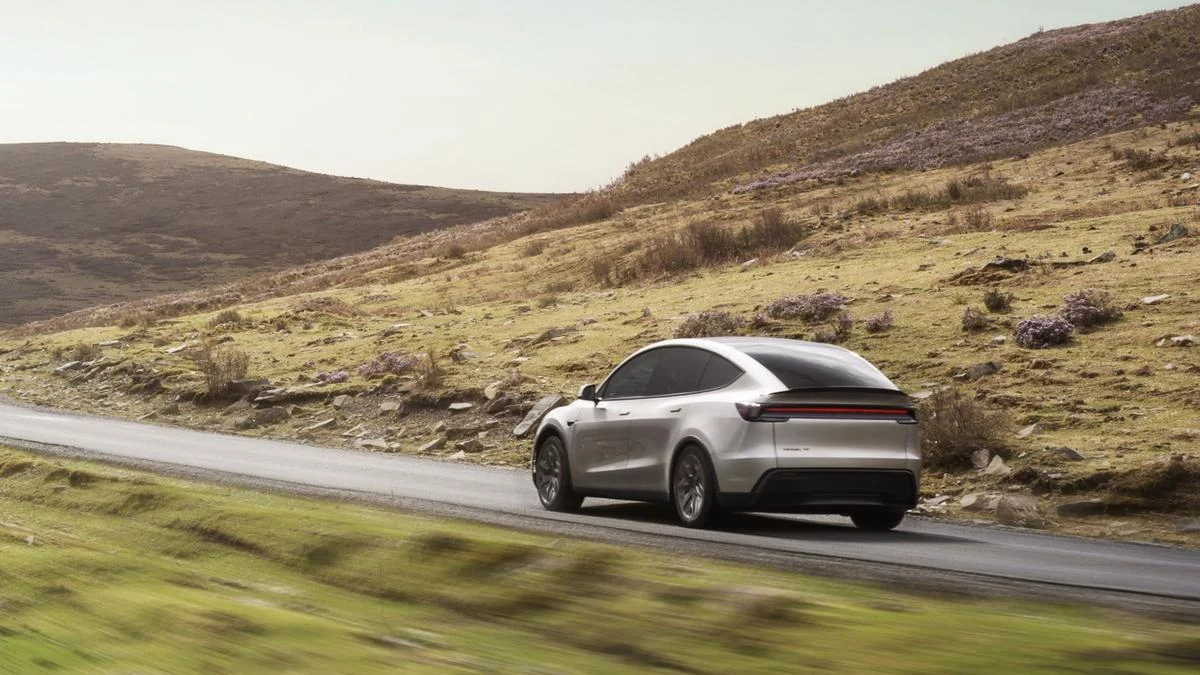
New Delhi, India — For nearly a decade, the narrative surrounding Tesla’s entry into the Indian market was one of friction, anticipation, and high-stakes negotiation. From debates over import duties to the complexities of local manufacturing mandates, the American EV giant’s arrival seemed perpetually on the horizon. However, with the official introduction of the Tesla Model Y L, the company has signaled a departure from its global "one-size-fits-all" strategy.
By launching a vehicle specifically tailored to the nuances of the Indian premium segment—prioritizing interior volume, chauffeur-driven comfort, and a competitive price point of ₹61.99 lakh—Tesla is no longer just entering a market; it is attempting to redefine it.
I. Main Facts: The Model Y L as a Market Disruptor
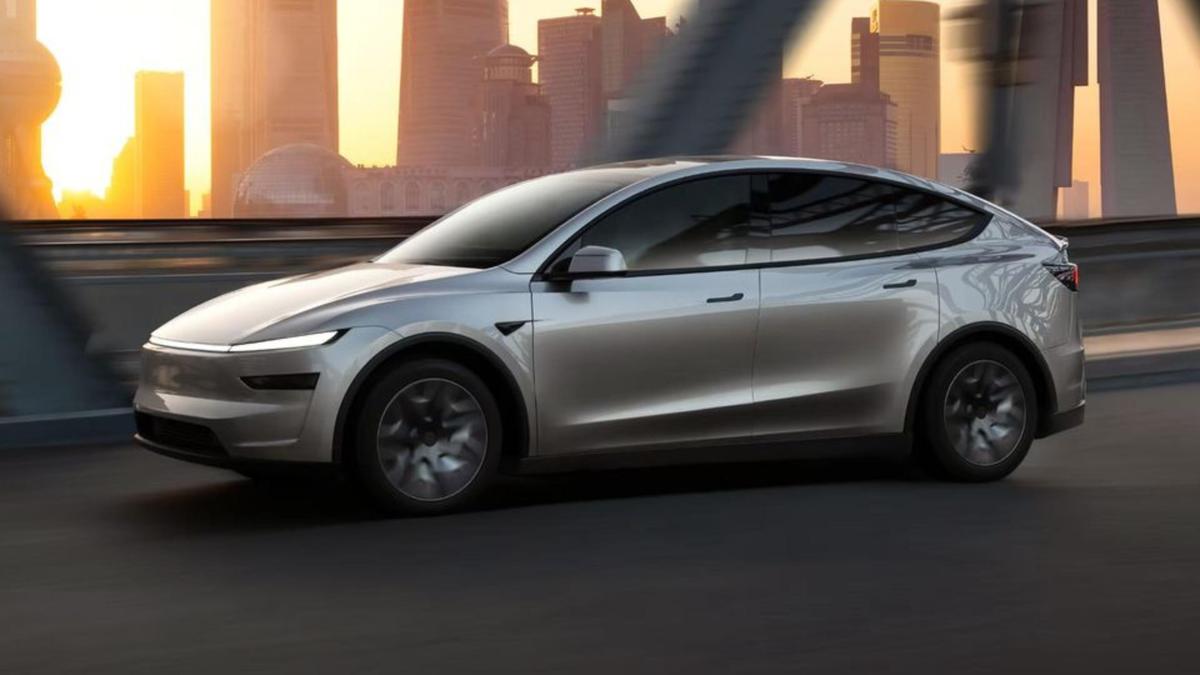
The Tesla Model Y L is not merely a localized version of the world’s best-selling electric SUV; it is a calculated response to the specific demands of the Indian luxury car buyer. Positioned at ₹61.99 lakh (ex-showroom), the vehicle occupies a "sweet spot" in the market, undercutting several European luxury EV rivals while offering features traditionally reserved for higher-segment internal combustion engine (ICE) SUVs.
Key Specifications and Features:
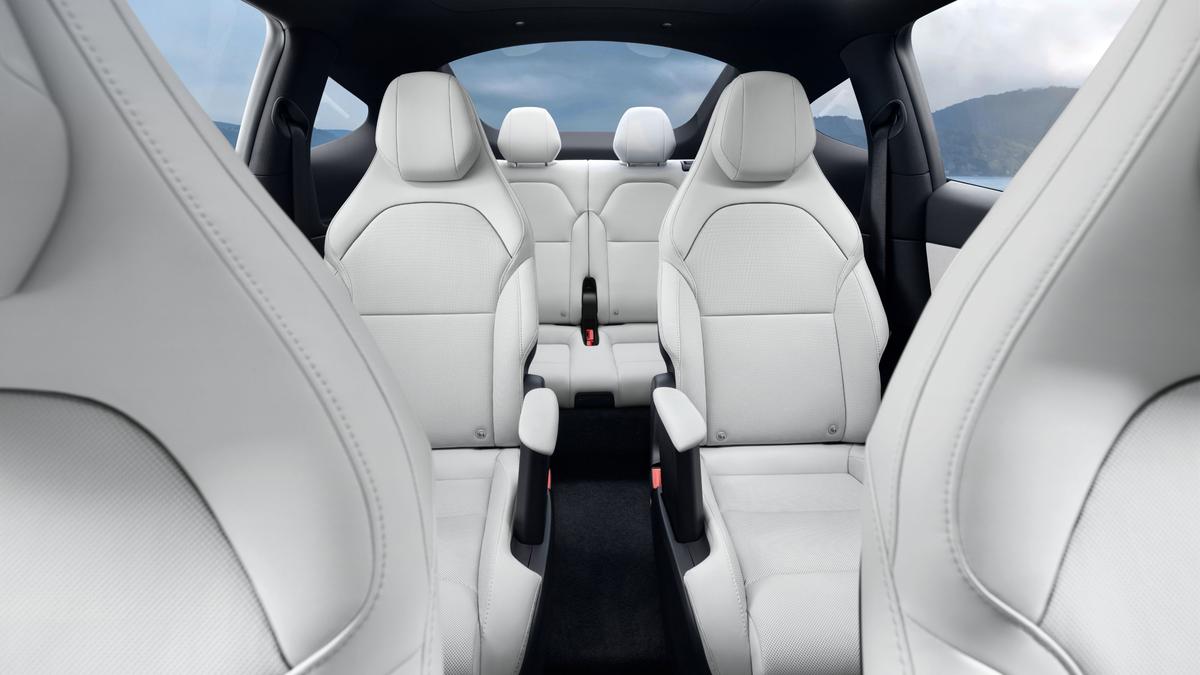
- Seating Configuration: A unique three-row, six-seat layout featuring second-row captain seats.
- Performance: All-Wheel Drive (AWD) capability, accelerating from 0 to 100 km/h in 5.0 seconds.
- Range: An impressive 681 km (WLTP cycle), addressing the "range anxiety" prevalent in a country with developing highway charging infrastructure.
- Utility: A class-leading maximum cargo capacity of 2,539 liters.
- Ride Quality: A refined chassis featuring adaptive suspension and electronic damping, specifically tuned for diverse road conditions.
The "L" designation, while often associated with "Long" wheelbases in other markets, serves here as a symbol of "Luxury" and "Layout" optimization. By moving away from the standard five-seat configuration, Tesla is directly targeting the Indian preference for multi-generational family travel and the "boss-seat" experience.
II. Chronology: The Long Road to India
The arrival of the Model Y L is the culmination of a saga that began in 2016. Understanding this timeline is essential to appreciating why the current "measured" approach is a significant strategic shift.
- 2016–2019: The Early Overtures. Elon Musk first expressed interest in India following the global reveal of the Model 3. However, strict local sourcing norms and high import duties on Completely Built Units (CBUs) created an immediate stalemate.
- 2020–2021: The Regulatory Tussle. Tesla officially registered its Indian subsidiary, Tesla India Motors and Energy Pvt Ltd, in Bengaluru. This period was marked by intense lobbying for duty cuts, which the Indian government countered with a "Make in India" ultimatum.
- 2022: The Hiatus. Negotiations hit a roadblock as Tesla paused its plans, citing the lack of a special tax category for electric vehicles.
- 2023–2024: The Policy Breakthrough. The Indian government announced a new EV policy (the Scheme for Manufacturing of Electric Cars) that allowed for lower import duties (15%) for companies committing to invest at least $500 million and set up local manufacturing within three years.
- 2025–2026: The Localized Launch. Shifting from the Model 3-centric focus, Tesla identified the Model Y—specifically a modified "L" variant—as the ideal flagship for its Indian debut, leading to the current market rollout.
III. Supporting Data: Engineering for the Indian Context
The Model Y L’s appeal lies in the data behind its design. Tesla’s engineering team has focused on three pillars: comfort, capability, and connectivity.
The Six-Seat Advantage
In the Indian premium segment, the second row is often more important than the driver’s seat. The Model Y L features second-row captain seats equipped with:
- Ventilation and Heating: Essential for India’s varied climate.
- Powered Adjustments: Including powered armrests and one-touch folding for third-row access.
- Third-Row Ergonomics: Unlike many compact luxury SUVs where the third row is cramped, the Model Y L provides power recline and dedicated vented climate control for the rearmost passengers.
Acoustic and Sensory Refinement
To compete with established luxury marques like Mercedes-Benz and BMW, Tesla has upgraded the Model Y L’s cabin insulation. The use of acoustic glass throughout the vehicle significantly reduces road and wind noise—a critical factor on India’s often-congested and noisy urban roads. This is paired with a 19-unit premium audio system (18 speakers and one subwoofer) designed to provide a "studio-grade" listening experience.

Performance vs. Efficiency
While Tesla is known for Ludicrous speeds, the Model Y L balances performance with practical endurance.
- The 5.0-second Sprint: This places the Model Y L ahead of most ICE competitors in its price bracket.
- Adaptive Damping: The electronic suspension system samples road inputs hundreds of times per second. In testing, this has shown a marked improvement in "secondary ride quality"—the ability to filter out the high-frequency vibrations caused by uneven pavement and expansion joints.
IV. Official Responses and Industry Sentiment
While Tesla has maintained its characteristic direct-to-consumer communication style, the industry’s response to the Model Y L’s pricing and specs has been one of cautious admiration.
Industry Analysts:
Market analysts suggest that the ₹61.99 lakh price tag is a "statement of intent." By pricing the Model Y L near the top-end variants of the Hyundai IONIQ 5 and the Kia EV6, but significantly below the BMW iX1 and Mercedes-Benz EQB, Tesla is positioning itself as a high-value alternative that doesn’t compromise on brand prestige.
Tesla’s Internal Philosophy:
Sources close to the company’s Indian operations suggest that the "measured" approach mentioned in the article is intentional. "Tesla is not looking for a flash-in-the-pan launch," noted a logistics consultant working with the brand. "The focus is on building a robust service backbone and a Supercharger network that can actually support long-distance travel across the ‘Golden Quadrilateral’ [India’s national highway network]."

Government Perspective:
Ministry of Heavy Industries officials have welcomed the launch, viewing it as a validation of the new EV policy. The government expects Tesla’s presence to catalyze the local component ecosystem, particularly in battery management systems and power electronics.
V. The Infrastructure Challenge: Beyond the Vehicle
A car is only as good as its charging network, and this remains Tesla’s greatest hurdle in India. As of the launch of the Model Y L, Tesla’s footprint is modest:
- Superchargers: 20 units across 5 stations.
- Destination Charging: 14 Wall Connectors.
To make the 681 km range truly usable, Tesla has announced plans to expand its Supercharger network along key corridors: Delhi-Chandigarh, Mumbai-Pune-Goa, and Bengaluru-Chennai. Unlike third-party charging networks in India, which have struggled with reliability and uptime, Tesla’s proprietary network offers a "plug-and-charge" simplicity that remains a major selling point for the brand globally.
Furthermore, the service infrastructure is being built on a "Mobile Service First" philosophy. Recognizing that India’s geography is vast, Tesla aims to handle 80% of repairs via mobile service technicians who travel to the customer’s home or office, reducing the need for physical service centers in every city.
VI. Implications: Reshaping the Luxury Landscape
The introduction of the Model Y L at its current price point has several far-reaching implications for the Indian automotive market:
1. The "Tesla Effect" on Pricing
European luxury brands have historically enjoyed high margins in India. Tesla’s aggressive pricing may force a recalibration. If a consumer can get a six-seat, high-performance EV with 680km of range for ₹62 lakh, the justification for ICE SUVs costing ₹80 lakh becomes harder to sustain.
2. Acceleration of the EV Transition
Tesla remains the world’s most recognizable EV brand. Its formal entry acts as a "seal of approval" for electric mobility in the eyes of the Indian elite. This is likely to spur a faster transition among luxury buyers, which will eventually trickle down to the mass market as infrastructure improves.
3. The Shift to Software-Defined Vehicles
The Model Y L brings Tesla’s full suite of connectivity to India—live traffic, satellite maps, and integrated streaming services like Netflix and YouTube for use while charging. This "digital extension of lifestyle" approach is expected to push domestic manufacturers like Mahindra and Tata to further elevate their software game.

4. Pragmatism Over Disruption
Perhaps the most significant implication is the shift in Tesla’s own DNA. By offering a six-seat configuration—a rarity in Tesla’s global portfolio for the Model Y—the company has admitted that to win in India, it must listen to the local consumer. This pragmatism suggests that Tesla is prepared for a long-term stay, rather than a brief experiment.
Final Outlook
The Tesla Model Y L is a vehicle of contradictions: it is a high-tech disruptor that has embraced the traditional Indian value of "space for the family." It is an imported luxury product that has been priced with the precision of a local competitor.
While the limited charging network and the nascence of the service infrastructure remain valid concerns for early adopters, the product itself is undeniably robust. At ₹61.99 lakh, Tesla has not just launched a car; it has issued a challenge to the entire Indian automotive establishment. In the coming years, the success of the Model Y L will likely be viewed as the moment the Indian electric vehicle market moved from the "early adopter" phase into the mainstream luxury consciousness.
