

Main Facts: The Seasonal Metamorphosis of North Andhra Pradesh
The first showers of the monsoon do not arrive with a whisper in the Eastern Ghats; they arrive as a profound transformation. As the parched, brown landscapes of the summer months yield to the relentless rhythm of the rains, the mountain ranges of North Andhra Pradesh undergo a dramatic aesthetic and ecological shift. This seasonal transition has birthed a burgeoning trekking culture, positioning the Eastern Ghats as a formidable alternative to the more traditional trekking destinations in the Western Ghats and the Himalayas.
Guided by specialized organizations such as Eco Hikes and Hikoi Adventures, the region has seen a surge in interest from a diverse demographic. What was once the domain of seasoned mountaineers is now attracting families, corporate groups, and first-time walkers. The allure lies in the unique "micro-climates" of the higher ridges—specifically those above 1,000 meters—where the heavy, humid downpours of the lowlands are replaced by drifting mist, cool drizzles, and refreshing winds.
At the heart of this movement is Arma Konda (also known as Jindhagada Peak). Standing at an elevation of 1,690 meters, it is the highest mountain peak in both the state of Andhra Pradesh and the entire Eastern Ghats. During the monsoon, this peak and its surrounding ridges—including Galikonda, Sinkaram Gutta, and Endric Peak—become the centerpiece of an outdoor revolution that balances adventure with ecological awareness and cultural immersion.
Chronology: From Summer Dormancy to Monsoon Vitality
The trekking calendar in the Eastern Ghats is dictated by the southwest monsoon, typically spanning from June to September. The chronology of the season reflects the changing character of the mountains:
The Pre-Monsoon Transition (Late May – Early June)
Before the heavy rains arrive, the mountains are characterized by dry deciduous forests and dormant streams. Trekking during this period is often grueling due to the heat and limited water sources. However, the arrival of the first "pre-monsoon" clouds over the ridgelines signals the start of the trekking season.
The Peak Monsoon Experience (July – August)
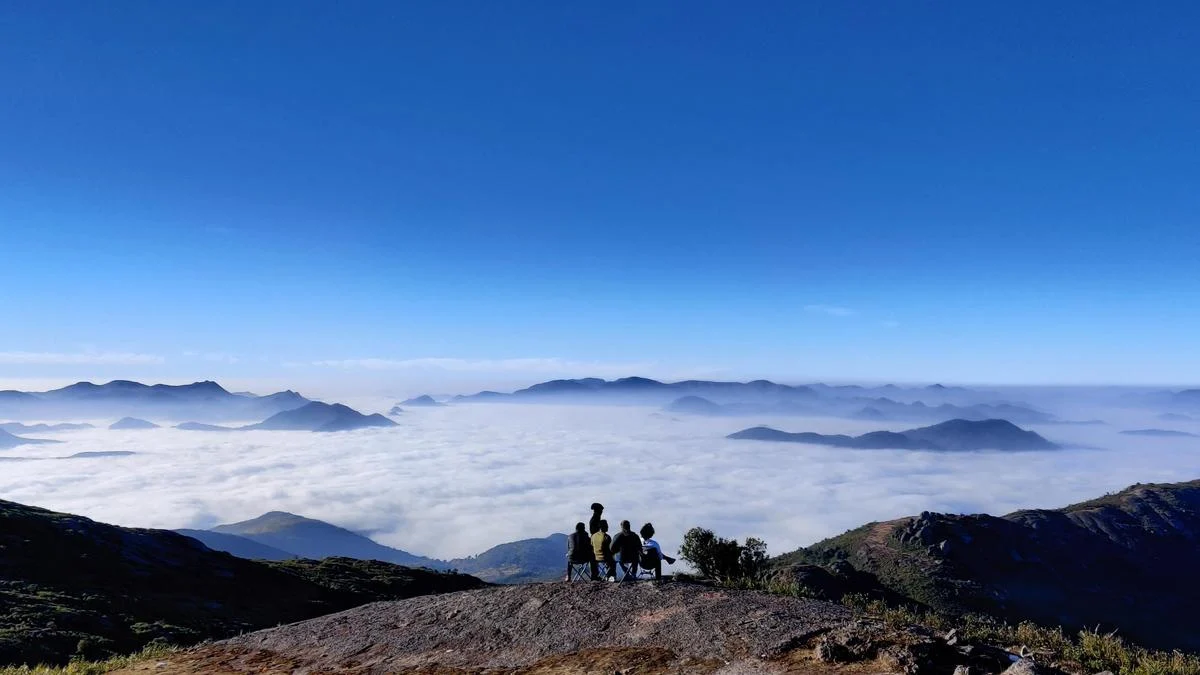
This is the primary window for "Above the Clouds" expeditions. During these months, the higher elevations (above 1,200 meters) transition into vibrant grasslands. This is when groups like Eco Hikes and Hikoi Adventures schedule their most demanding summit treks. The landscape is at its most lush, and natural springs that remain dry for eight months of the year suddenly become active, providing essential water for long-distance trekkers.

The Post-Monsoon and Waterfall Season (September – October)
As the heavy rains begin to taper, the focus often shifts from high-altitude summits to the region’s many waterfalls. The Sharada River Trek and expeditions to the Tarabu and Peddhabayalu Waterfalls reach their peak aesthetic value during this time, as the water volume is high but the trails become slightly more accessible for casual hikers and families.
Supporting Data: Mapping the Trails and Elevations
The Eastern Ghats offer a tiered trekking experience, categorized by difficulty, elevation, and duration. Data collected from local trekking organizers highlights the diversity of the terrain:
| Trail Name | Peak Elevation | Distance | Difficulty | Key Features |
|---|---|---|---|---|
| Arma Konda (Jindhagada) | 1,690 meters | 10–15 km | Moderate | Highest peak, expansive views, cloud beds. |
| Galikonda | ~1,500 meters | 28–35 km | Moderate/Hard | Longest route, fishtail palms, lush grasslands. |
| Endric Peak | 1,370 meters | 12–18 km | Moderate | Dense forests, rolling grasslands, panoramic views. |
| Sinkaram Gutta | ~1,200 meters | 8–10 km | Easy/Moderate | Known as "Heaven Valley," mist-covered cliffs. |
| Jalada/Tamkota Falls | Lower Altitudes | 2–5 km | Easy | Family-friendly, seasonal cascades, stream walks. |
The data suggests a strategic preference for high-altitude trekking during the monsoon. Organizers focus on ridges above 1,300 meters because the landscape there opens into vast grasslands dotted with fishtail palms. This offers a starkly different experience from the dense, often impenetrable canopy of the lower forests, providing better visibility and a more "alpine" feel to the journey.
Official Responses and Expert Insights: Perspectives from the Trail
The growth of trekking in this region is not merely a matter of foot traffic; it is a managed effort led by experienced outdoor educators who understand the nuances of the terrain.
Naveen Rongali, founder of Eco Hikes, emphasizes the climatic advantages of the region’s topography. "One of the reasons we focus on peaks above 1,000 to 1,200 metres during the monsoon is that the weather is remarkably pleasant at these elevations," Rongali explains. "While the lower Eastern Ghats often receive heavy rainfall, the higher ridges typically experience cool drizzle, passing clouds, mist, and refreshing winds."
Rongali also points out the logistical benefits of the rain. "During the monsoon, the entire landscape transforms into lush green grasslands, natural springs become active, and water is readily available along the higher sections of the trail. This allows us to take longer routes, like the 35-kilometer Galikonda trail, which would be much more demanding during winter due to water scarcity."

Vamsi Thenakani of Hikoi Adventures, which has been operating since 2021, highlights the "Heaven Valley" at Sinkaram Gutta as a prime example of the monsoon’s magic. "Heaven Valley is at its absolute best during the rains, with mist-covered cliffs, flowing streams, and lush green meadows," Thenakani says. He notes that for those seeking an overnight experience, Endric Peak offers an unparalleled atmosphere where "valleys are filled with drifting clouds."
However, both experts are quick to issue a note of caution. The lack of a "comprehensive network of officially marked trails" in the Eastern Ghats makes professional guidance a necessity rather than a luxury. "Reaching the summit is never more important than safety," Thenakani asserts, noting that his organization monitors weather forecasts and consults local tribal guides before every departure.
Implications: Ecology, Culture, and Responsible Tourism
The rise of trekking in North Andhra Pradesh carries significant implications for the environment and the local indigenous communities.
Cultural Exchange and Tribal Economy
A trek through these mountains is inherently a cultural journey. The trails often pass through or near the settlements of the Bhagata, Valmiki, Kondadora, and Konda Dhora tribes. The monsoon trekking season coincides with the start of the farming season, offering trekkers a front-row seat to traditional agricultural practices.
"Along the way, trekkers get an opportunity to witness traditional farming practices and interact with local tribal communities," says Rongali. This interaction fosters a deeper understanding of how these communities have lived in harmony with the mountains for generations. Furthermore, trekking groups often hire local tribespeople as guides and porters, providing a vital source of income that incentivizes the preservation of the forest.
Ecological Warnings
Despite the beauty of the monsoon, regular visitors have begun to notice worrying signs of environmental degradation and climate change. Vamsi Thenakani points to the decline of wild date plants, which were once abundant at 4,000 feet. "Rainfall has become less predictable, seasonal streams behave differently, and the flowering and fruiting cycles of several plants appear to have shifted," he observes.

These changes underscore the urgent need for "Leave No Trace" principles. As the popularity of the Eastern Ghats grows, the risk of plastic pollution and habitat disruption increases. Organizations are now making environmental education a core part of their trekking itineraries, teaching participants to carry out their waste and respect the delicate balance of the mountain ecosystem.
Safety and Infrastructure
The surge in interest has also highlighted a gap in infrastructure. Unlike the Himalayas, where trails are often well-trodden and marked, the Eastern Ghats remain rugged and wild. This lack of marking leads to frequent mistakes by amateur trekkers, such as wearing unsuitable footwear or venturing off-trail.
The implications for the future are clear: for the Eastern Ghats to become a sustainable adventure destination, there must be a move toward formalized trail management and safety protocols. Currently, the safety of trekkers relies heavily on the "deep ecological knowledge" of local tribal communities and the professional standards of private trekking groups.
Practical Advice: Navigating the Monsoon Terrain
For those inspired to witness the "Emerald Awakening" of the Eastern Ghats, organizers provide a strict set of guidelines to ensure a safe and rewarding experience:
- Footwear is Paramount: Standard sneakers are insufficient for the slippery, leached soils of the monsoon. Trekkers are advised to invest in reliable shoes with high-traction grips.
- Rain Protection: Lightweight, breathable raincoats are preferred over heavy ponchos, which can become a snagging hazard in denser forest sections.
- Water Safety: Perhaps the most critical warning involves stream crossings. "Stay away from streams during the monsoon," warn the organizers. Water levels can rise unexpectedly due to rainfall miles upstream, creating "flash flood" conditions even when it isn’t raining at the trekker’s location.
- Campsite Selection: While a hilltop view is tempting, exposed ridges are vulnerable to high-velocity winds and lightning. Camping near established villages or in sheltered valleys offers better protection and access to assistance.
The Eastern Ghats in the monsoon offer more than just a physical challenge; they offer a sensory immersion into a landscape that is "at once cooler, quieter, and richly alive." As long as the growth of this industry is tempered by responsibility and respect for the mountain’s changing character, the "Emerald Awakening" will continue to be one of India’s most captivating seasonal spectacles.
