

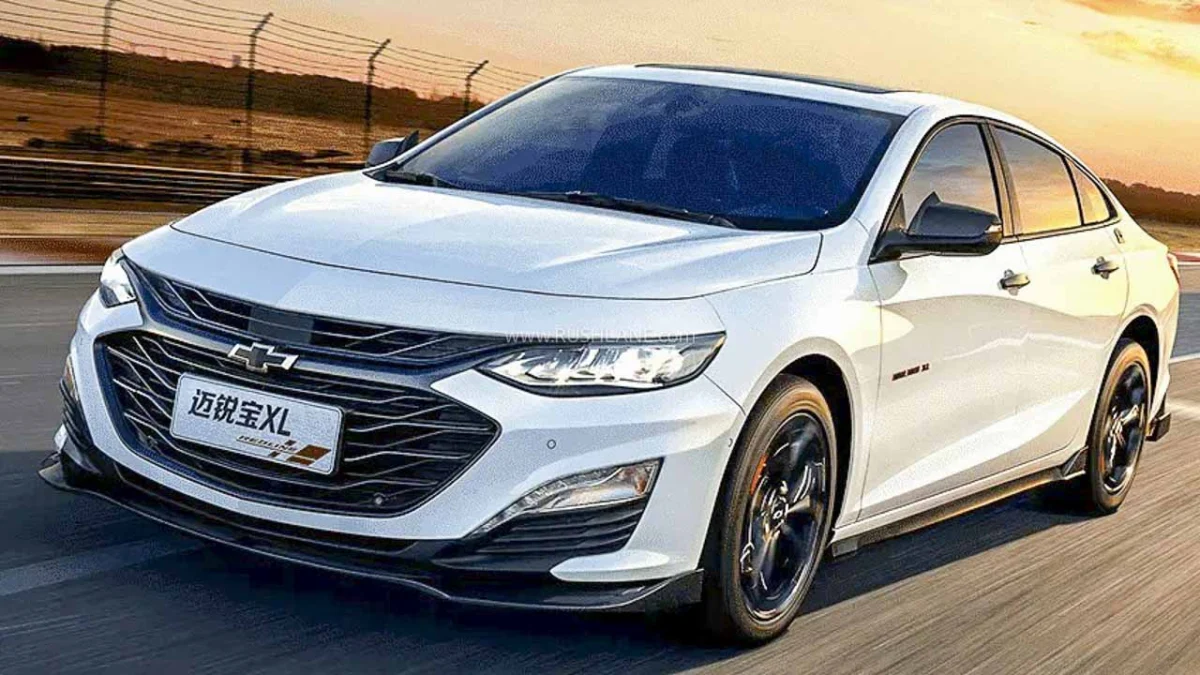
SHANGHAI — In a move that signals a profound shift in the global automotive landscape, General Motors (GM) has officially announced that its Chevrolet brand will cease domestic sales and production for the Chinese market by the end of 2026. This strategic retreat from the world’s largest car market marks the end of a twenty-year journey for the "Bowtie" brand in China, transitioning the marque from a high-volume domestic mainstay into a specialized export hub and service provider.
While Chevrolet will no longer compete for the hearts and minds of Chinese consumers in local showrooms, the company has emphasized its commitment to existing owners. Maintenance services, warranty fulfillments, and spare parts availability will remain uninterrupted through the SAIC-GM joint venture network. This pivot reflects a broader industry trend where legacy Western automakers are being forced to recalibrate their presence in China as domestic "New Energy Vehicle" (NEV) brands achieve total market dominance.
Chronology: The Rise and Fall of the Bowtie in China (2005–2026)
The story of Chevrolet in China is one of rapid ascent followed by a complex, multi-factor decline. To understand the current exit, one must look at the timeline of its two-decade tenure.
The Golden Era (2005–2014)
Chevrolet entered the Chinese market in 2005 through the SAIC-GM joint venture. At the time, the Chinese middle class was expanding at an unprecedented rate, and there was a massive appetite for affordable, reliable American engineering. The brand found immediate success with the Chevrolet Cruze, which became a cultural icon among young professionals in China’s Tier 1 and Tier 2 cities.
By 2014, Chevrolet reached its zenith, recording an all-time high of approximately 767,000 annual sales. During this period, the brand was a cornerstone of GM’s global strategy, positioning itself as the "aspirational yet attainable" choice, sitting just below the premium Buick and Cadillac brands.
The Strategic Missteps (2015–2020)
The decline began with a series of product and perception issues. In an effort to meet tightening fuel emission standards, Chevrolet introduced a range of three-cylinder engines across its core lineup. This move proved disastrous in the Chinese market, where consumers perceived three-cylinder engines as unrefined, noisy, and prone to excessive vibration.
Simultaneously, the "Cruze" legacy began to fade as the brand struggled to refresh its sedan lineup in a way that excited a more tech-savvy generation of buyers. While Chevrolet focused on traditional Internal Combustion Engine (ICE) improvements, the Chinese government began heavily subsidizing the NEV sector, laying the groundwork for a market shift that Chevrolet was slow to follow.
The NEV Displacement (2021–2026)
The final blow came from the rapid acceleration of electrification. Between 2021 and 2025, Chinese consumer sentiment shifted decisively toward Battery Electric Vehicles (BEVs) and Plug-in Hybrid Electric Vehicles (PHEVs). Local champions like BYD, Geely, and Li Auto began offering vehicles with superior software integration, larger screens, and advanced autonomous driving features at price points Chevrolet could not match.
By 2025, the numbers told a grim story: annual sales had plummeted from their 767,000-unit peak to fewer than 9,000 units. The brand had effectively become marginalized in a market it once helped define.
Supporting Data: A Market Transformed by Domestic Powerhouses
The decision to end Chevrolet’s domestic sales is backed by sobering market data from July 2026. The sales charts provide a clear picture of why a traditional ICE-heavy brand like Chevrolet can no longer sustain a retail presence in China.
The Top 10 Dominance
In July 2026, the list of the top ten best-selling passenger cars in China was almost entirely devoid of international legacy brands. Nine out of the top ten vehicles were BEVs. The brands dominating this list include:
- BYD (Multiple models)
- Geely
- Xiaomi (The tech giant’s rapid automotive expansion)
- Leapmotor
- Fang Chengbao
- Changan Qiyuan
- Li Auto
The only non-domestic brands to remain in the top ten were Tesla (with the Model Y ranking 3rd as the most expensive vehicle in the top tier) and Toyota (with the Corolla Cross squeaking in at 10th place).

The ICE vs. NEV Gap
The Toyota Corolla Cross was the only purely ICE-powered vehicle to make the list, with 14,510 units sold. For Chevrolet, whose portfolio remained heavily skewed toward traditional engines, there was no longer a path to the volume required to sustain a massive dealer network. The preference for "homegrown" tech-forward brands has moved from a niche trend to the absolute market standard.
Official Responses: Repositioning for a Global Future
Despite the cessation of domestic sales, General Motors and its partner SAIC Motor are not abandoning the infrastructure they have built. The official stance from the SAIC-GM joint venture emphasizes a transition toward an "Export and Electrify" strategy.
The SAIC-GM Joint Venture
A spokesperson for GM stated that the company remains committed to China as a manufacturing and engineering hub. A 20-year strategic renewal agreement was recently signed between GM and SAIC Motor, ensuring that the joint venture will continue to operate. However, the focus will shift.
"Chevrolet China will evolve into a vital node in our global supply chain," the statement read. "Our facilities in China are among the most efficient in the world, and we will utilize this capacity to serve growing markets in the Middle East, South America, Africa, Asia Pacific, and Mexico."
The "30 NEVs by 2030" Pledge
While Chevrolet exits the retail space, GM is doubling down on its premium brands. SAIC-GM has announced an ambitious plan to introduce at least 30 new NEV models by 2030. This roadmap focuses heavily on the electrification of Cadillac and Buick, brands that still hold significant prestige and "brand equity" among Chinese luxury buyers. By consolidating their resources into these two brands, GM hopes to fight back against the domestic NEV surge.
Implications: What This Means for the Automotive World
The "Chevrolet Exit" is more than just a corporate restructuring; it is a harbinger of the new world order in the automotive industry.
1. China as the "Global Factory" for the Global South
By shifting Chevrolet to an export-only model, GM is leveraging China’s superior EV and ICE supply chains to supply developing markets. Cars manufactured in Shanghai or Wuhan can be shipped to Mexico or Africa more cost-effectively than those made in North America. This marks a shift where China-made cars are no longer just for China, but are the primary source for the "Global South."
2. The Survival of the Fittest for Western Brands
Chevrolet’s departure follows similar moves by other international brands. Mitsubishi recently exited China, and brands like Stellantis (Jeep/Peugeot) have significantly scaled back. The implication is clear: if a foreign brand does not have a "premium" status (like Mercedes-Benz or Porsche) or a "tech-leader" status (like Tesla), it is increasingly difficult to survive the fierce competition from Chinese OEMs.
3. Service and Trust
For the hundreds of thousands of Chevrolet owners in China, the brand’s commitment to continued service is a critical test of corporate integrity. GM’s decision to keep the service network open is an attempt to preserve the company’s overall reputation in China, ensuring that current owners don’t feel abandoned. This is a lesson learned from Chevrolet’s exit from India in 2017, where maintaining service centers was key to managing the brand’s legacy.
4. The "Tech-First" Consumer
The data from July 2026 suggests that the Chinese consumer no longer buys a "car" in the traditional sense; they buy a "mobile device on wheels." The success of Xiaomi and Leapmotor proves that software, connectivity, and ecosystem integration are now more important than horsepower or heritage. Chevrolet, with its heritage-based branding, found itself speaking a language that the modern Chinese consumer no longer understands.
Conclusion
The year 2026 will be remembered as the moment Chevrolet—an American icon—conceded the domestic Chinese market to the forces of the NEV revolution. However, by transforming its Chinese operations into an export powerhouse, General Motors is attempting to turn a domestic defeat into a global strategic advantage. As the Bowtie brand prepares to ship its last domestic units, the focus turns to Cadillac and Buick to see if they can weather the storm that has claimed one of the industry’s most storied names.
For now, the roar of the Chevrolet engine in China is not being silenced; it is simply being redirected toward the ports, destined for new horizons in the global market.
