

Main Facts: A New Chapter in Global Literaure
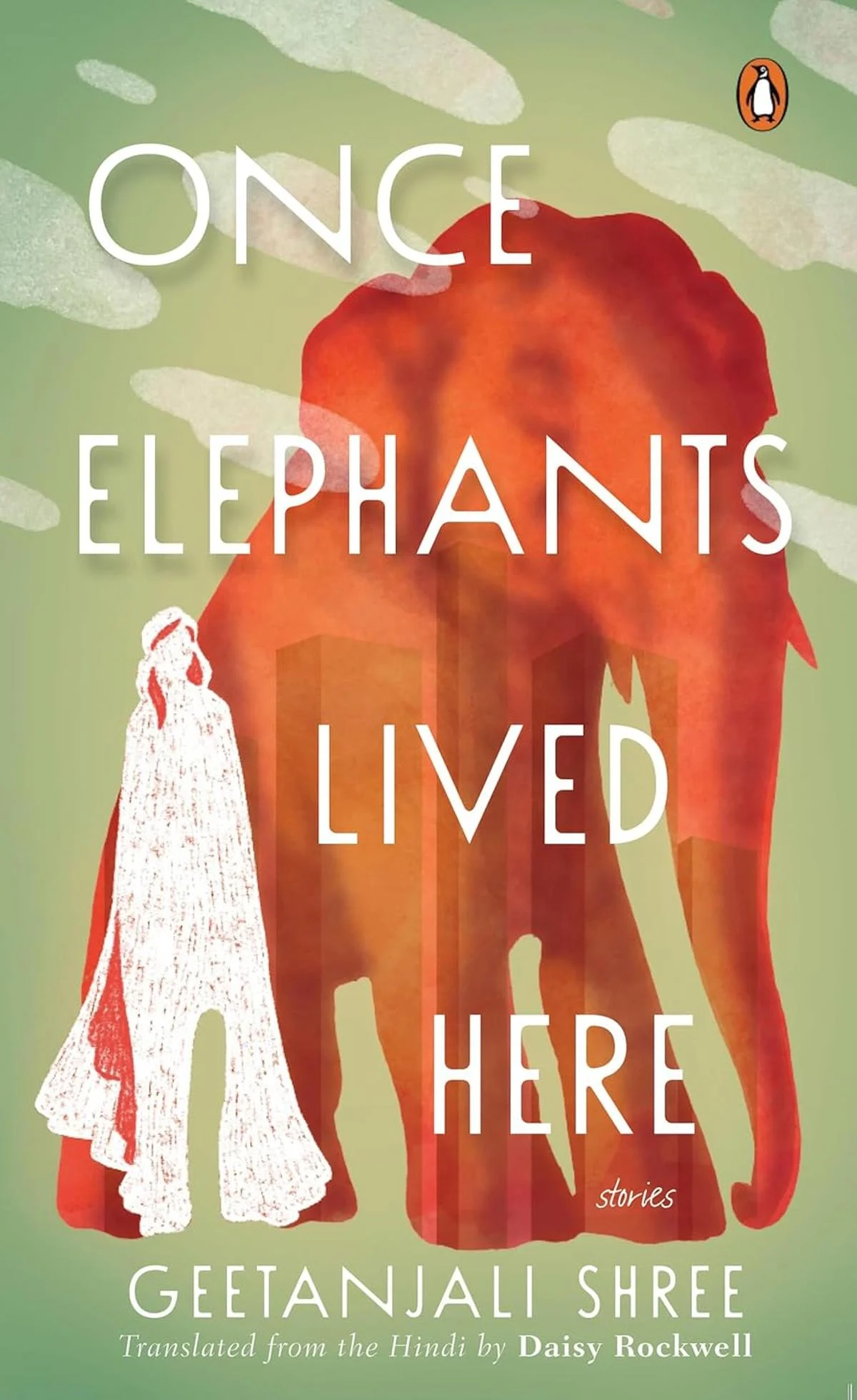
The landscape of international literature has undergone a seismic shift over the last three years, largely catalyzed by the unprecedented success of Geetanjali Shree’s Ret Samadhi, translated by Daisy Rockwell as Tomb of Sand. The novel’s historic win at the 2022 International Booker Prize did more than just honor a single book; it validated Hindi literature on the global stage and highlighted the indispensable role of the translator. Now, the powerhouse duo returns with Once Elephants Lived Here (originally Yahan Hathi Rahte The), a collection of short stories published by Penguin Hamish Hamilton.
This new collection arrives during a pivotal moment for global publishing—Women in Translation Month. Observed every August since 2013, this initiative seeks to address the gender imbalance in the translation industry, where works by women have historically been overlooked. Once Elephants Lived Here serves as a centerpiece for this year’s celebrations, offering a kaleidoscopic view of Shree’s experimental prose and Rockwell’s rhythmic, intuitive translation. The collection is not merely a series of tales but a profound exploration of memory, history, and the persistent presence of the marginalized in a world increasingly numbed by profit and division.
Chronology: From ‘Tomb of Sand’ to the Short Form
The journey to this collection’s English release is rooted in a decade of shifting literary tides. To understand the significance of Once Elephants Lived Here, one must look at the timeline of Shree and Rockwell’s collaboration:

- 2013: The inception of "Women in Translation Month" by Meytal Radzinski, aiming to increase the visibility of women writers in the English-speaking world.
- 2018: The original publication of Ret Samadhi in Hindi, a novel that challenged traditional structures of the "partition novel."
- 2022: Tomb of Sand wins the International Booker Prize, the first work in any Indian language to receive the honor. This moment fundamentally changed the "gatekeeping" dynamics of Western publishing houses toward South Asian regional languages.
- 2023–2024: Following the global success of the novel, attention turned toward Shree’s shorter fiction. The translation of Yahan Hathi Rahte The became a highly anticipated project, aimed at showcasing Shree’s versatility.
- August 2024: The release of Once Elephants Lived Here coincides with the tenth anniversary of heightened global awareness for translated Indian literature, marking a mature phase in the Shree-Rockwell "jugalbandi" (musical duet).
Supporting Data: Themes and Literary Architecture
Once Elephants Lived Here is characterized by its refusal to adhere to the traditional "beginning-middle-end" structure. Instead, Shree experiments with form, using what critics describe as a "lurching, springing, and bracing" gait. The collection is anchored by several standout stories that provide data points for Shree’s recurring philosophical concerns.
The Motif of the ‘Budhiya’ (Old Woman)
In the titular story, an old woman wanders through a city fractured by riots. She is a spectral figure—rumored to be a detective, a murderer, or a madwoman. However, her presence serves a specific function: she is "memory herself." In a city segregated by corporate interests and communal violence, the mere act of looking at her restores the humanity of the onlookers. This "old woman" archetype is a staple of Shree’s work, representing a stubborn refusal to forget histories that the modern world finds inconvenient.
The Shadow and Personhood
In the story "These Days," Shree explores the psychological toll of communal persecution. The narrative centers on a "shadow" that becomes a complete character—a shape-shifting thief that haunts an elderly man. By withholding the personhood of the figure until the end, Shree creates a haunting allegory for the way minority communities are dehumanized and "shadowed" in contemporary urban spaces.

The Technical Feat of ‘Echo’
One of the most discussed aspects of the collection is the story "Echo," which concludes with a sentence of extraordinary length and complexity. Spanning the length of a large paragraph, the sentence "snowballs a tiny emotion into an avalanche." This linguistic choice reflects the theme of the story: the overwhelming weight of centuries of violence against women, a history that "grows and grows, spreading itself everywhere."
Experimental Variations
The collection also includes "So Much Sky," a story featuring "robotic people" and a protagonist who finds freedom only in the vastness of the sky. This departure into quasi-speculative fiction demonstrates Shree’s range, moving from gritty realism and communal tension to surrealist explorations of the soul.
Official Responses: The Critical and Institutional Reception
The reception of Once Elephants Lived Here has been overwhelmingly positive, particularly regarding the synergy between the author and translator. Literary critics have noted that Daisy Rockwell’s rendering of Shree’s voice "fits like a glove."

The Translator’s Perspective:
In her Translator’s Note, Daisy Rockwell highlights the challenges of translating Shree’s "unusual" narratives. She notes that stories like "So Much Sky" required a delicate balance to maintain the narrator’s "love for life and openness" while navigating the robotic, almost clinical environment of the setting. Rockwell’s work is praised for ensuring that meaning "floats" rather than being overtly stated, preserving the mystery of the original Hindi prose.
Academic and Literary Circles:
Scholars and reviewers, including those from prestigious institutions like Ashoka University, have identified the collection as a "jugalbandi." This term, usually reserved for Indian classical music where two soloists perform in tandem, perfectly encapsulates the relationship between Shree’s linguistic experimentation and Rockwell’s rhythmic English recreation. The consensus among the literary establishment is that this collection cements Shree’s status not just as a "partition writer" or a "Hindi writer," but as a master of the short story form on par with international greats.
The "Women in Translation" Movement:
Institutional support for the book has been bolstered by the "Women in Translation" initiative. Organizations like PEN International and various translation syndicates have used the release of this collection to highlight how Indian writers like Geetanjali Shree and Banu Mushtaq are receiving long-overdue international recognition. This institutional backing has ensured that the book is not treated as a niche product but as a major literary event.

Implications: The Future of the Global South’s Voice
The release and success of Once Elephants Lived Here have several far-reaching implications for the publishing industry and the cultural representation of South Asia.
1. The Decentralization of English
Shree’s success demonstrates that English literature is increasingly being enriched by the structures and rhythms of regional languages. By translating the "crooked, lurching" gait of Hindi into English, Rockwell is effectively expanding the boundaries of what the English language can express. This suggests a future where "Global English" is a tapestry of various linguistic traditions rather than a monolithic Western standard.
2. Visibility of Regional Realities
The stories in this collection tackle themes specific to the Indian subcontinent—such as the training of nurses in Kerala in "Butterflies" or the domestic claustrophobia of Indian patriarchy in "The End." The global interest in these stories implies a growing appetite for authentic, localized narratives that do not cater to Western stereotypes but instead demand that the reader meet the characters on their own terms.

3. The Liberation of the "Old Woman" in Literature
Perhaps the most significant thematic implication is the reclamation of the elderly female protagonist. In both Tomb of Sand and Once Elephants Lived Here, Shree centers women who are "seventy, but also young ladies." By portraying Ma dancing beneath the sakura or wandering through rubble, Shree challenges the literary invisibility of older women, presenting them as vessels of memory, rebellion, and ultimate freedom.
4. A New Model for Author-Translator Partnerships
The "Shree-Rockwell" model is becoming a blueprint for how authors and translators can work together to create a brand. Their partnership suggests that the translator is no longer a "transparent" or "invisible" bridge but a creative partner whose name belongs on the cover. This shift is likely to encourage more talented translators to take up regional Indian languages, knowing there is a path to international acclaim.
In conclusion, Once Elephants Lived Here is more than a collection of short stories; it is a testament to the power of memory and the resilience of the human spirit. As readers "dance to the writer’s song," as one reviewer put it, they are participating in a broader cultural movement that values the diverse, the translated, and the stubbornly persistent voices of history. Whether through the "joyful, lazy gait" of missing elephants or the "flapping cotton pallu" of a woman on a bridge, Geetanjali Shree ensures that what is lost is always, eventually, remembered.
