

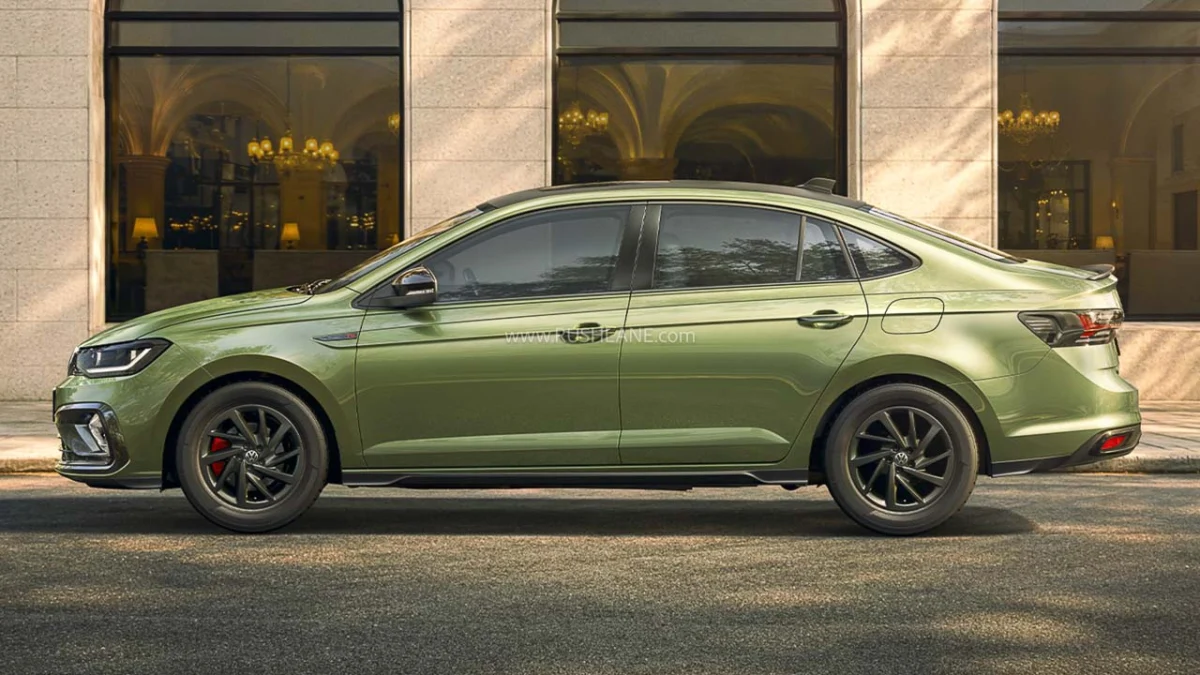
The Indian automotive landscape, long dominated by the relentless rise of Sport Utility Vehicles (SUVs), witnessed a surprising yet nuanced resurgence in the sedan segment during July 2026. According to the latest retail and wholesale data, the sedan category concluded the month on a distinctly positive note, defying the broader narrative of the "death of the three-box car."
Total sedan sales for July 2026 reached 37,728 units, marking a significant 13.96% year-on-year (YoY) increase compared to the 33,106 units sold in July 2025. Even more impressive was the month-on-month (MoM) trajectory, with sales jumping by 20.99% from the 31,183 units recorded in June 2026. However, a closer look at the data reveals a market deeply divided: while entry-level compact sedans are flourishing, the midsize executive sedan segment continues to struggle under the shadow of midsize SUVs.
Main Facts: A Market Controlled by the Compact Trio
The headline story of July 2026 is the overwhelming dominance of the compact sedan segment. Three models—the Maruti Suzuki Dzire, Hyundai Aura, and Honda Amaze—collectively accounted for nearly 88% of all sedans sold in India. This concentration of market share suggests that for the average Indian buyer, the sedan remains a choice driven by pragmatism, fuel efficiency, and value-for-money rather than luxury or performance.
The Unstoppable Maruti Suzuki Dzire
The Maruti Suzuki Dzire remains the undisputed titan of the segment. In July 2026 alone, the Dzire sold 23,791 units, capturing a staggering 63.06% of the total sedan market. This performance represents a 13.86% growth over July 2025 and a massive 32.92% surge over June 2026.
The Dzire’s success is attributed to its dual-purpose appeal. It remains the gold standard for the commercial fleet and taxi industry due to its low cost of ownership and high resale value. Simultaneously, private buyers continue to flock to the model, bolstered by Maruti’s extensive service network and the availability of factory-fitted CNG kits, which mitigate rising fuel costs.
The Resurgence of the Honda Amaze
Perhaps the most surprising performer in the compact category was the Honda Amaze. Despite being an older platform, the Amaze registered the highest YoY growth among segment leaders, soaring by 71.03% to reach 3,436 units. This 16.99% MoM improvement suggests that Honda’s strategy of offering a "big car" feel in a compact footprint continues to resonate with buyers who find SUVs too bulky for urban navigation.
Chronology of Market Shifts: 2025 to 2026
To understand the July 2026 figures, one must look at the preceding twelve months. In mid-2025, the sedan segment appeared to be in a terminal decline as the "SUV-ification" of the Indian market reached its peak. However, several factors converged to stabilize the segment in 2026:

- Inventory Correction (Q1 2026): Manufacturers cleared old stocks of midsize sedans, leading to a temporary dip in sales figures early in the year.
- Festive Push (Q2 2026): Early preparations for the 2026 festive season saw a ramp-up in production, particularly for high-volume models like the Dzire and Aura.
- The SUV Saturation Point: Industry analysts suggest that certain urban demographics are beginning to experience "SUV fatigue," leading to a small but notable return to the driving dynamics and "prestige" associated with a sedan silhouette.
- Facelift Anticipation: The anticipation of the new Tata Tigor facelift, expected to launch in late August or early September 2026, has kept interest in the sub-4-meter segment high, even as current Tigor volumes (758 units) saw a YoY decline of 21.69%.
Supporting Data: The Midsize Struggle and Premium Niche
While the compact segment celebrated, the midsize executive sedan category told a more sobering story. These vehicles, typically priced between ₹11 lakh and ₹20 lakh, are in direct competition with heavyweights like the Hyundai Creta, Kia Seltos, and Maruti Suzuki Grand Vitara.
Midsize Performance Breakdown
- Volkswagen Virtus: The Virtus emerged as the leader of the midsize pack with 1,420 units. While it saw a healthy 18.83% MoM recovery, it remains down 20.98% compared to the 1,797 units sold in July 2025. The "Anniversary Edition" and recent feature updates have helped maintain its lead, but it is clear that the enthusiast-driven "driver’s car" market is shrinking.
- Skoda Slavia: The Virtus’s sibling, the Slavia, struggled more significantly. With only 993 units sold, it suffered a 14.98% YoY decline and an 8.31% MoM drop. This suggests that the European-spec "India 2.0" sedans are finding it difficult to maintain momentum against more feature-rich SUVs.
- Hyundai Verna: The Verna posted a mixed bag of results. Its 737 units represented a 10.77% YoY decline, but it achieved one of the strongest sequential recoveries with a 33.03% MoM growth. This indicates that Hyundai’s aggressive styling and tech-heavy interior still attract a dedicated subset of buyers.
- Honda City: Once the king of Indian roads, the Honda City has slipped into a precarious position. Selling only 571 units, it saw double-digit declines both YoY (-11.61%) and MoM (-23.36%). The lack of a turbo-petrol option and a dated infotainment system compared to rivals are cited as primary reasons for its waning popularity.
The Premium Exception: Toyota Camry
In the niche premium segment, the Toyota Camry stood out as a beacon of growth. Selling 205 units, the hybrid sedan grew 27.33% YoY and 7.33% MoM. As environmental consciousness grows among High-Net-Worth Individuals (HNIs), the Camry’s self-charging hybrid technology remains a unique selling proposition that traditional luxury brands are struggling to match at that price point.
Official Responses and Industry Perspectives
While official statements from the "Big Three" (Maruti, Hyundai, Honda) were tempered with caution, spokespeople highlighted the importance of the sedan for long-term portfolio balance.
A senior executive at Maruti Suzuki noted, "The Dzire’s performance in July is a testament to the enduring trust in the brand. While SUVs are the flavor of the season, the efficiency and ergonomics of a sedan are irreplaceable for a large section of our customer base, particularly in the NCR and Tier-1 cities."
Industry analysts at RushLane and other automotive think-tanks suggest that the midsize sedan’s survival depends on "re-invention." Analysts argue that unless midsize sedans offer features that SUVs cannot—such as superior ADAS integration, significantly better fuel economy through hybridization, or a "limousine-like" rear-seat experience—they will continue to lose ground.
Volkswagen India representatives recently hinted that their focus remains on the "enthusiast community," suggesting that they are comfortable with lower volumes as long as the Virtus maintains its "premium" positioning.
Implications: What Lies Ahead for the Sedan?
The July 2026 data points toward several critical trends that will define the remainder of the decade:

1. The "Fleet-First" Evolution
The compact sedan is increasingly becoming a tool of mobility services. With the rise of electric ride-hailing, the success of the Tata Tigor EV and future electric versions of the Dzire will be pivotal. The current Tigor’s 25.91% MoM growth, despite a YoY dip, suggests that the market is waiting for the facelifted model to refresh the brand’s appeal.
2. The Hybridization Mandate
The success of the Toyota Camry and the relative stability of the Honda City Hybrid (within its small volume) indicate that the future of the sedan may be green. If manufacturers can bring hybrid technology down to the ₹15-18 lakh bracket, midsize sedans could offer a compelling "efficiency" argument against the boxier, less aerodynamic SUVs.
3. Consolidation of the Midsize Segment
With sales for the City and Verna dipping below the 1,000-unit mark, the industry may see a consolidation. Manufacturers might reduce the number of variants or move toward a "made-to-order" model for executive sedans, focusing instead on high-margin SUV production.
4. Ground Clearance vs. Aerodynamics
As India’s highway infrastructure improves under various national projects, the traditional weakness of sedans—low ground clearance—is becoming less of an issue on inter-city routes. This could potentially help the Virtus and Slavia regain some ground among long-distance tourers who value high-speed stability over "tall-boy" aesthetics.
Conclusion
The July 2026 sales figures show that the sedan is far from extinct, but its identity is undergoing a radical transformation. The segment has effectively split into two distinct markets: a high-volume, value-driven compact market led by Maruti Suzuki, and a low-volume, enthusiast-driven midsize market that is fighting for relevance.
As we move into the festive season of 2026, all eyes will be on the launch of the new Tata Tigor and potential updates to the Honda Amaze. For now, the sedan segment remains a vital, albeit lopsided, pillar of the Indian automotive industry, proving that for 37,728 buyers in July, the classic "booted car" still holds a special place in the driveway.
