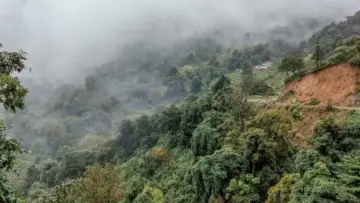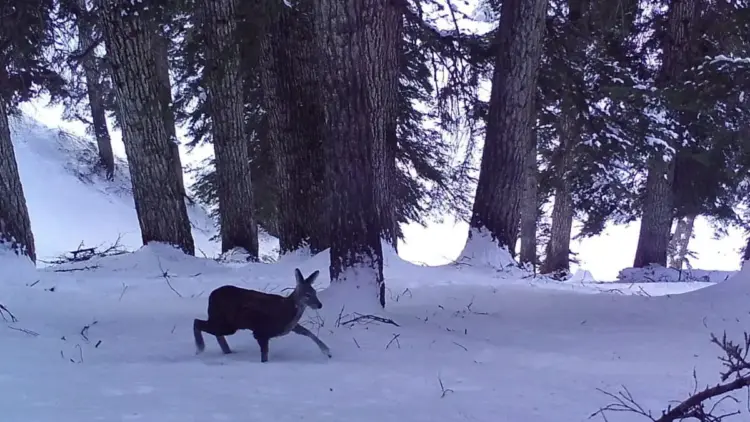
SRINAGAR, KASHMIR — In the rugged, high-altitude forests of the Western Himalayas, an ancient and elusive resident is facing a modern existential crisis. The Kashmir musk deer (Moschus cupreus), often colloquially referred to as the "vampire deer" due to the elongated, saber-like canines found in males, is already one of the world’s most threatened ungulates. Long targeted by poachers for its scent glands, which are worth more than gold on the black market, the species now faces a silent, creeping adversary: climate change.
A comprehensive new study led by researchers at Aligarh Muslim University (AMU) has sounded a dire warning. According to the research, shifting climate patterns are projected to drastically reduce the deer’s suitable habitat and sever the vital corridors that allow populations to intermingle. Without urgent intervention that transcends current protected area boundaries, this sentinel of the Himalayan ecosystem could face irreversible isolation and eventual extinction.
Main Facts: A Species on the Brink
The Kashmir musk deer is a biological anomaly. Unlike most deer species, they do not grow antlers. Instead, males possess curved, protruding upper canines used for territorial disputes and attracting mates. They are small, solitary, and highly adapted to the steep, rocky terrain of the Kashmir Himalaya, ranging across fragmented landscapes in India, Pakistan, and Afghanistan.
Currently classified as "Endangered" on the International Union for Conservation of Nature (IUCN) Red List, the species serves as a critical component of the Himalayan food web. As selective herbivores, they influence the composition of alpine plant communities and facilitate nutrient cycling. Furthermore, they are a primary prey source for top-tier predators like the Himalayan leopard, making their survival synonymous with the health of the broader ecosystem.
The primary threats have historically been anthropogenic:
- Poaching: The musk gland, found only in males, is highly prized in traditional medicine and the perfume industry.
- Habitat Loss: Encroachment for agriculture and livestock grazing.
- Fragmentation: Infrastructure development that splits once-contiguous forests into isolated "islands."
The AMU study, however, highlights that even if poaching were eliminated, the warming planet might finish what the hunters started. By modeling future climate scenarios, researchers found that the deer’s habitat is likely to retreat further into mountainous interiors, leaving current protected areas empty and populations stranded.
Chronology: Mapping the Future of a Ghost Species
The research effort, spearheaded by Mohsin Javid of AMU’s Department of Wildlife Sciences, began with an ambitious field survey to track a species rarely seen by human eyes.

The Field Survey (2021-2023)
Researchers deployed 184 camera-trap stations across five distinct landscapes in the Kashmir Valley. The terrain—characterized by extreme slopes and dense canopy—presented significant logistical hurdles. Over the course of the study, musk deer were detected at 90 of these stations, generating more than 1,500 independent detection events. This data provided a robust baseline for where the deer currently reside and what environmental factors (such as elevation and forest structure) they require to survive.
Baseline Modeling (1981–2010)
Using the camera-trap data, the team established a "baseline" of suitable habitat based on historical climate data from 1981 to 2010. During this period, the model identified approximately 5,003 square kilometers of suitable habitat in the Kashmir Himalaya. Alarmingly, only 22.4% of this area fell within the safety of existing protected areas.
Future Projections (2011–2100)
The study then projected habitat suitability across three distinct future timeframes:
- Near-term: 2011–2040
- Mid-century: 2041–2070
- Late-century: 2071–2100
These projections were tested against three Shared Socioeconomic Pathways (SSPs), which represent different global greenhouse gas emission scenarios. These ranged from the "green" scenario (SSP1-2.6) to the "business-as-usual" high-emissions scenario (SSP5-8.5).
Supporting Data: The Quantifiable Decline
The findings of the study reveal a "seesaw" effect in the short term, followed by a precipitous decline as temperatures rise.
Habitat Contraction
Under the most optimistic scenario (SSP1-2.6), habitat remained relatively stable. However, under the high-emissions scenario (SSP3-7.0), the deer experienced a brief expansion of habitat (up to 6,606 sq. km) in the early part of the century as high-altitude areas warmed. But this gain was short-lived. By 2100, that habitat is projected to shrink to 3,701 sq. km.
The "very high emissions" scenario (SSP5-8.5) painted a catastrophic picture:

- By 2040: Habitat drops to 1,871 sq. km.
- By 2100: Habitat collapses to just 871 sq. km—an 82.6% reduction from the baseline.
- Protected Area Failure: Under this scenario, only 11.7% of the remaining suitable habitat would be located within current national parks or sanctuaries.
The Connectivity Crisis
Habitat loss is only half the battle. Using "circuit theory"—a method that treats the landscape like an electrical grid to predict how animals move—the researchers found that the "wires" connecting deer populations are being cut.
- Corridor Reduction: Potential movement routes covered 3,366 sq. km at the baseline. By the end of the century under SSP5-8.5, this area shrinks by 50.9% to 1,653 sq. km.
- Isolation: The model analyzed 171 pairs of protected areas. In 161 of those pairs, movement was projected to become significantly more difficult. This isolation leads to "genetic bottlenecks," where small, inbred populations become more susceptible to disease and local extinction.
Identification of Refugia
The study identified "climate refugia"—areas that remain suitable across multiple climate models.
- Robust Refugia: 1,809 sq. km (suitable in 7 of 9 projections).
- Universal Refugia: 819 sq. km (suitable in all 9 projections).
- The Catch: 79% of these robust refugia currently lie outside protected area boundaries.
Official Responses and Expert Insights
The lead researchers emphasize that the study is a call to action for regional policy-makers, rather than a definitive prophecy of doom.
"The Kashmir musk deer is not controlled by climate alone," explains Mohsin Javid, the study’s corresponding author. "It is a forest-associated mountain species whose distribution is also shaped by elevation, ruggedness, forest structure, and human disturbance. Our goal was to ask whether future areas of suitable habitat will remain connected enough to support dispersal, gene flow, and recolonization."
Javid notes that the study’s maps are projections of relative suitability, not exact forecasts of population numbers. However, the trend toward high-altitude interiors is unmistakable. "Much of the habitat most consistently projected to persist lies outside current reserve boundaries," he adds.
Professor Orus Ilyas, a co-author of the study and a veteran wildlife scientist at AMU, highlights the biological stakes of isolation. "Habitat persistence inside a reserve does not guarantee long-term connectivity," Ilyas says. "If populations become increasingly isolated in individual refugial patches, recolonization after a local loss becomes less likely, and gene flow will inevitably decline."
Conservationists in the region have responded to the study by calling for a shift from "fortress conservation" (focusing only on parks) to "landscape-level management." The data suggests that specific areas like Overa-Aru and Thajwas-Baltal will be the most critical lifeboats for the species, while Kazinag will serve as a vital "bridge" for movement, even if its own habitat suitability declines.

Implications: A New Blueprint for Himalayan Conservation
The study’s findings have profound implications for how India and its neighbors manage high-altitude biodiversity. The "vampire deer" is essentially the "canary in the coal mine" for the Himalayan ecosystem.
1. Beyond Reserve Boundaries
The fact that nearly 80% of future-proof habitat lies outside current protected areas means that traditional conservation models are insufficient. The researchers suggest the implementation of:
- Conservation Reserves: Smaller, flexible protected areas.
- Community Stewardship: Empowering local Himalayan communities to act as guardians of the deer in exchange for sustainable livelihood support.
- Restoration: Actively planting and protecting forest types that the deer prefer at higher elevations.
2. Protecting the "Highways"
Identifying Kazinag as a movement hub highlights the need to protect corridors. This means preventing the construction of major roads, fences, or large-scale infrastructure in "bottleneck" areas where deer are forced to travel between mountains. If these corridors are blocked, the species will be trapped in "island" habitats, unable to migrate as the climate warms.
3. Strengthening Anti-Poaching
As habitat shrinks, the remaining musk deer will be concentrated in smaller areas, making them easier targets for poachers. The study implies that anti-poaching surveillance must be intensified in the identified "refugia" (Overa-Aru and Thajwas-Baltal) to ensure these last havens do not become death traps.
4. Ecosystem-Wide Benefits
Conserving the musk deer is about more than just one species. "Conserving musk deer means protecting the wider Himalayan ecosystem, its ecological connectivity, and the livelihoods of communities that depend on these landscapes," says Javid. The forests that support the deer also provide water security and carbon sequestration for millions of people downstream.
As the Kashmir Himalaya faces an uncertain climatic future, the AMU study provides a vital roadmap. It suggests that while the "vampire deer" is retreating, there is still a window of opportunity to ensure it has a path to follow—provided we protect the mountains as a whole, rather than just the patches we have already fenced off.