

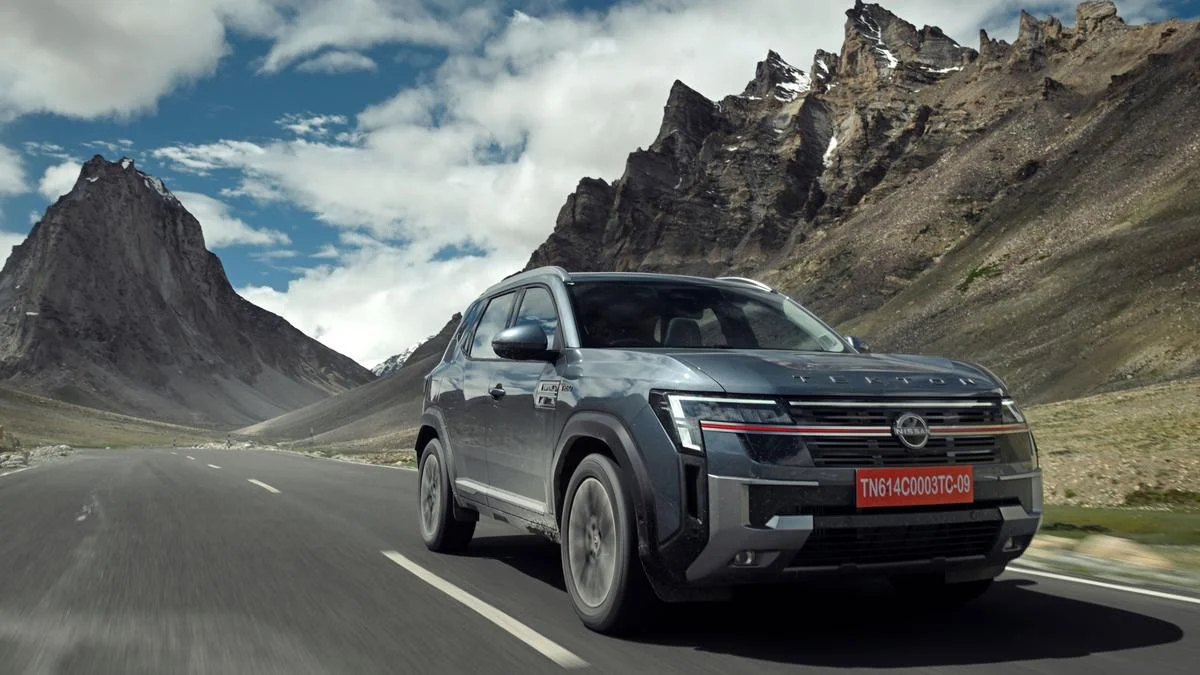
In the high-stakes arena of the Indian mid-size SUV market, the arrival of a new contender often triggers a flurry of skepticism regarding its origins. When Nissan announced the Tekton, the industry’s immediate reaction was to frame it as a mere derivative of its alliance partner’s flagship: the Renault Duster. However, a comprehensive 700-kilometer expedition from the sweltering plains of Chandigarh to the oxygen-thin altitudes of Leh reveals a more nuanced narrative. The Nissan Tekton is not a simple exercise in badge engineering; it is a calculated, premium reinterpretation of a proven mechanical foundation, designed to survive the harshest terrains India has to offer.
Main Facts: Positioning the Tekton in a Crowded Market
The Nissan Tekton enters the fray with a clear objective: to offer the rugged reliability of the Duster platform while addressing the modern Indian consumer’s demand for sophistication, technology, and "big SUV" presence. Priced between ₹10.49 lakh and ₹18.59 lakh (ex-showroom), the Tekton sits at the heart of the most competitive segment in the country, squaring off against stalwarts like the Hyundai Creta, Kia Seltos, Volkswagen Taigun, and its own cousin, the Renault Duster.
Key Specifications at a Glance:
- Engine Options: 1.0-litre T160 (100PS/166Nm) and 1.3-litre T280 (163PS/280Nm).
- Transmission: 6-speed Manual and 6-speed Dual-Clutch Transmission (DCT).
- Safety: 5-star Bharat NCAP rating, 6 airbags as standard.
- Ground Clearance: 212mm.
- Boot Space: 518 litres.
- Technology: 10.1-inch infotainment, 10.25-inch digital cluster, and Level 2 ADAS on top trims.
Nissan’s strategy focuses on three pillars: exterior "presence," cabin "ambience," and mechanical "resilience." By leveraging the CMF-B platform, Nissan has bypassed the teething issues of a new chassis, instead focusing its resources on the "touch-and-feel" aspects that drive showroom conversions.
Chronology: From Chandigarh to Leh—The Ultimate Stress Test
To truly understand if the Tekton is more than a Duster in a tuxedo, the vehicle was subjected to one of the most grueling test routes in the world. The chronology of this 700km drive serves as a testament to the vehicle’s development cycle and real-world capability.

Phase 1: The Highway Cruise (Chandigarh to Manali)
The journey began on the smooth tarmac of the Himalayan Expressway. This phase highlighted the Tekton’s NVH (Noise, Vibration, and Harshness) levels. While the T280 turbo-petrol engine showed its prowess here, the initial observation was one of stability. At triple-digit speeds, the SUV remained planted, a result of the aerodynamic tweaks made to the front fascia and the wider 18-inch alloys that provide a broader footprint than its predecessors.
Phase 2: The Ascent (Manali to Jispa)
As the incline sharpened and the air thinned, the Tekton’s 1.3-litre direct-injection engine was put to the test. This segment of the journey revealed the engine’s character—a strong mid-range that allowed for confident overtaking of slow-moving convoys. However, it also exposed a slight turbo lag at lower revs, requiring the driver to be judicious with gear selection in the manual variant or allowing the DCT a moment to find the right ratio.
Phase 3: The Broken Path (Jispa to Leh)
The final leg involved navigating the Gata Loops and the high passes of Tanglang La. Here, the road often disappears, replaced by ruts, stream crossings, and loose shale. It was in this environment that the Tekton’s 212mm ground clearance and suspension tuning shone. The vehicle was pushed through surfaces that would cause many urban-focused SUVs to bottom out, proving that the mechanical "bones" inherited from the Duster remain the gold standard for rough-road compliance.
Supporting Data: Technical Depth and Aesthetic Differentiation
The Tekton’s appeal is backed by specific technical choices that separate it from its siblings and rivals.

Exterior Design: The "Mini-Patrol" Aesthetic
Nissan has successfully infused the Tekton with the DNA of the legendary Patrol. The front end is dominated by a broad, upright grille and C-shaped daytime running lights (DRLs) that create a "connected" lighting signature. The sculpted bonnet adds a sense of muscularity that the Duster lacks.
- Dimensional Impact: The 18-inch alloys on the higher variants don’t just look premium; they improve the approach and departure angles, crucial for an SUV intended for mountain use.
- Practicality: The pillar-mounted rear door handles—a signature Nissan design cue—help maintain a clean side profile while giving the car a coupe-like silhouette from a distance.
The Interior Gamble: Purple and Premium Tech
Inside, Nissan has taken a bold risk with the color palette. Moving away from the "safe" beige or black, the Tekton features distinctive purple detailing.
- Visual Identity: While polarizing, the purple trim gives the cabin a unique identity in a segment of clones.
- Connectivity: The 10.1-inch touchscreen is snappy and supports wireless Android Auto and Apple CarPlay. The inclusion of Google built-in connectivity in the top-tier variants ensures that navigation remains seamless even in areas with spotty cellular reception.
- Comfort: Ventilated front seats and a powered driver’s seat are essential additions for the Indian climate and long-distance touring.
Performance Metrics: T160 vs. T280
The data suggests a clear divide in target audiences:
- The T160 (1.0L Turbo): Delivering 100PS, this is an urban-centric engine. It is designed for the school run and the office commute, prioritizing fuel efficiency over outright grunt.
- The T280 (1.3L Turbo): This is the heart of the enthusiast’s Tekton. With 163PS and 280Nm, it boasts a 0-100kph time of 9.51 seconds (Manual). More importantly, the torque is available where it’s needed most—during highway overtakes and steep climbs.
Official Responses: Nissan’s Strategic Pivot
While Nissan executives have been careful to respect the alliance’s shared engineering, their "response" to the badge-engineering critique is written into the Tekton’s specification sheet. Nissan’s positioning of the Tekton suggests a pivot toward "Value-Added Premiumization."

The company’s decision to pursue a 5-star Bharat NCAP rating before launch was a direct response to the growing consumer demand for safety in India. By making six airbags standard and introducing a 3D Around View Monitor, Nissan is signaling that it no longer views itself as the "budget" alternative to Renault, but as the "premium" elder brother.
Furthermore, the choice to offer "Light" and "Heavy" steering modes is a response to enthusiast feedback. It allows the Tekton to be two cars at once: an easy-to-park city runabout and a communicative companion on a winding mountain pass.
Implications: The Road Ahead for Nissan in India
The launch of the Tekton has significant implications for both the brand and the segment.
1. The Missing Hybrid Link
The most glaring omission in the Tekton’s lineup is the lack of a hybrid powertrain. With Toyota and Maruti Suzuki gaining significant ground with strong-hybrid SUVs, Nissan’s reliance on pure turbo-petrol engines might alienate fuel-conscious urban buyers. The Tekton’s efficiency of 17.8–18.5kpl is respectable for its class, but it cannot compete with the 25+ kpl figures of hybrid rivals.

2. The "Touring" Benchmark
The Tekton sets a new benchmark for ride quality in the sub-₹20 lakh category. While the Creta and Seltos offer more features (like rear-seat sunshades or ambient lighting), the Tekton offers superior "mechanical comfort." For the demographic that actually uses their SUV for interstate travel and mountain trips, the Tekton’s ability to absorb punishment without losing its composure is a massive USP.
3. Survival through Differentiation
For Nissan India, the Tekton is a survival-critical product. The brand has survived on the shoulders of the Magnite for years; the Tekton provides the much-needed volume in a higher-margin segment. If Nissan can convince buyers that the "purple cabin" and "Patrol-inspired" looks are worth the premium over the Duster, they will have successfully navigated the tricky waters of platform sharing.
Final Verdict
The 700km trek to Leh serves as a metaphor for Nissan’s journey in India. The path is difficult, the competition is fierce, and the environment is unforgiving. However, by taking a rugged, proven foundation and wrapping it in a layer of modern sophistication, the Nissan Tekton has emerged as more than just a clone. It is a vehicle of substance that values the driver’s experience on the road as much as the passenger’s experience in the cabin. For those who prioritize a "go-anywhere" attitude without sacrificing "look-at-me" style, the Tekton is a compelling, if unconventional, choice.
This report was compiled in association with Motorscribes and The Hindu, following extensive real-world testing in the Ladakh region.
