

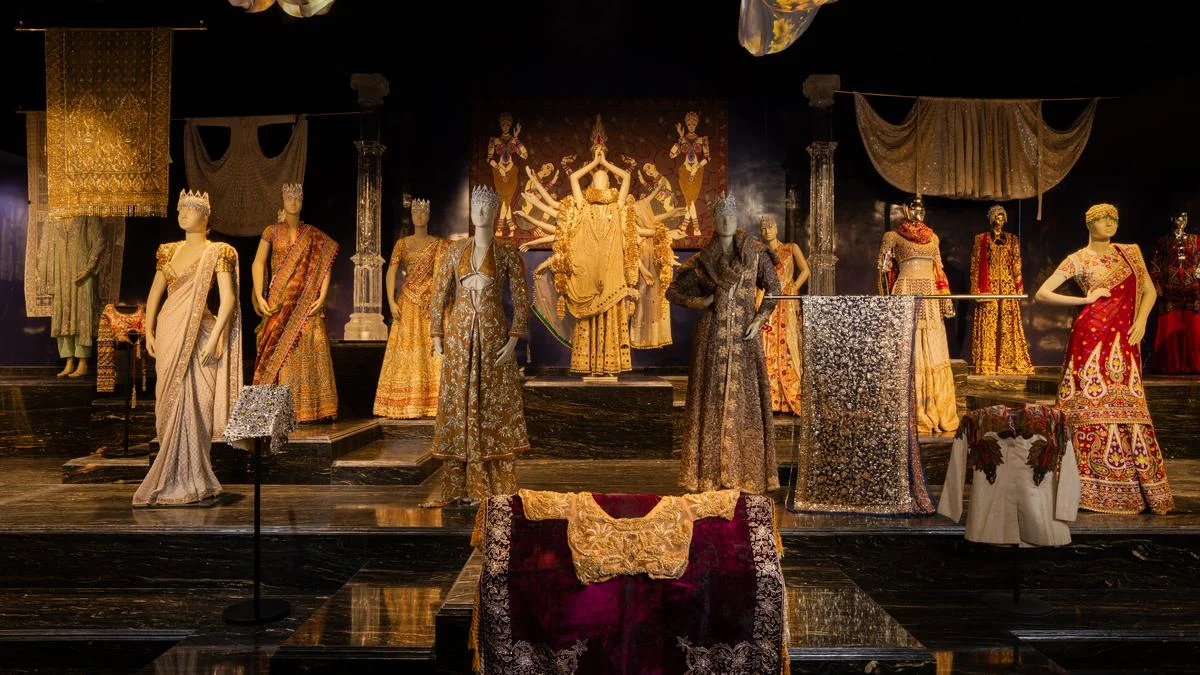
Mumbai, India – In a city that pulses with an indomitable spirit, designers Abu Jani and Sandeep Khosla have unveiled a breathtaking new 20,000-square-foot flagship in Mumbai, christened "Mubarak Baug." More than just a retail space, this opulent destination serves as the physical manifestation of "A Wonder Room," a visionary art and design gallery that marks four decades of the iconic couture house’s unparalleled influence. This ambitious undertaking represents a profound shift, moving beyond the confines of fashion to embrace a holistic universe where art, craft, architecture, objects, and fashion coalesce into a singular, immersive experience.
The Genesis of a Universe: Beyond the Boutique
Mubarak Baug is not merely a showroom; it is a meticulously curated universe, a testament to Abu Jani and Sandeep Khosla’s enduring belief that creative disciplines should not be compartmentalized. The gallery is a vibrant tapestry woven from art, craft, bespoke furniture, exquisite textiles, evocative lighting, and specially commissioned works. This allows the designers to extend their creative reach far beyond the realm of haute couture, fostering collaborations and nurturing artistic expressions across diverse mediums.
"A Wonder Room is a universe because it is not defined by a single discipline or object," explains Sandeep Khosla. "Our goal is to bring together art, craft, and culture within these curated environments, where the space itself becomes the canvas." This philosophy, while now formally realized in a grand physical space, has long been an intrinsic part of the designers’ creative DNA. Their approach to couture has always been expansive, drawing inspiration from the grandeur of architecture, the drama of theatre, the sensory delights of food, the elegance of hospitality, and the profound ways in which individuals experience beauty.
The establishment of "A Wonder Room" as a dedicated gallery imbues this long-held instinct with "a fully realized home, a discipline, and a future," according to Khosla. It signifies a pivotal moment in their creative journey, an evolution that embraces and amplifies their multifaceted artistic vision. It is not a departure from couture but rather "the next natural turn in a creative journey that has always extended far beyond fashion."

Mumbai as the Muse: An Ode to the City’s Soul
Mumbai, the vibrant metropolis that has been the backdrop to their illustrious career, naturally takes center stage within Mubarak Baug. The space is infused with Art Deco influences, a nod to the city’s architectural heritage. The "Bombay Skyline Corridor" is a particularly striking example, where artist Shilo Shiv Suleman has meticulously hand-embossed the city’s iconic urban sprawl onto gleaming brass panels, creating a mesmerizing, tactile representation of Mumbai’s dynamic energy.
Adding another layer of narrative, photographer Viraj Nayak’s evocative collection of black-and-white Mumbai photographs adorns a dedicated wall, capturing the city’s raw essence and timeless charm. Further enriching the visual narrative, Wolf Jaipur transforms fabric offcuts and embroidery remnants into breathtaking, floor-to-ceiling sculptural panels, showcasing the transformative power of artisanal skill. The space also features painted frescoes by artist Shine Shivan, which conjure a fantastical interplay of mythology, architecture, and dreamlike landscapes. The result is a "wonderfully busy conversation between Mumbai, craft, art, and imagination," a testament to the city’s boundless creative spirit.
The Art of Maximalism: "India Maximal" Reimagined
At the heart of Abu Jani Sandeep Khosla’s aesthetic lies the philosophy of "India Maximal." This term, often misconstrued as mere opulence, is, for Khosla, a far more profound concept. "India Maximal is often mistaken for abundance and opulence alone," he states. "There is so much emotional depth to it. It is the freedom to use beauty fully and unapologetically."
This aesthetic draws inspiration from India’s rich and layered visual culture, a vibrant confluence of color, pattern, symbolism, intricate ornament, and masterful craftsmanship. However, it is crucial to understand that "India Maximal" is not a nostalgic replication of the past. "It is not about reproducing the past," Khosla emphasizes. "It is about taking the richness of our traditions and expressing it in an original language."

The exuberance of "India Maximal" is underpinned by a rigorous discipline. "Maximalism without thought can become noise. For us, every detail must earn its place," Sandeep asserts. This nuanced approach argues that Indian design does not need to shed its inherent identity to resonate with contemporary or global sensibilities. Instead, "India Maximal" allows the nation’s creative inheritance to remain firmly rooted while being articulated through an original, forward-looking idiom.
The Room as Canvas: An Immersive Experience
Within "A Wonder Room," the very architecture of the space becomes an integral component of the artwork. Objects are not presented as isolated commodities but are thoughtfully positioned within "authored environments." Their provenance, historical context, and their symbiotic relationship with surrounding pieces are all meticulously curated to enhance the visitor’s experience.
This commitment to immersion is further evident in the gallery’s design. Visitors are encouraged to "experience something rather than simply buy something." Sandeep articulates this vision: "Luxury, to us, is not only about possession. It is also about wonder, memory, and the generosity of an experience." This distinction is fundamental to the ethos of "A Wonder Room," which is conceived not as a conventional interiors practice, a collectible design store, or a typical retail outlet, but as a sanctuary where objects can be encountered within a broader visual and cultural tapestry.
Preserving and Propelling Craft: A Living Legacy
Craftsmanship is the very soul of "A Wonder Room." However, Sandeep Khosla is acutely aware of the danger of treating tradition as a static artifact to be preserved behind glass. "Preservation cannot just mean placing craft within a glass box. A living tradition must be practised, challenged, commissioned, and given new contexts," he passionately argues.

"A Wonder Room" is designed to foster precisely this dynamic exchange. It brings together artists, craftspeople, and designers as creative equals, encouraging a dialogue that breathes new life into traditional techniques. Materials such as shola, brass, intricate embroidery, and handwoven textiles are explored across a spectrum of scales, forms, and settings, ensuring that the profound knowledge embedded within these techniques is not only preserved but also continually reinterpreted.
For Sandeep, ensuring the relevance of Indian craft for future generations hinges on its presentation as something vibrant, pertinent, and capable of evoking wonder. "For a new generation to value craft, it must encounter it as something alive, relevant, and capable of surprise."
A Four-Decade Journey: Legacy as a Springboard for Innovation
As the Abu Jani Sandeep Khosla couture house celebrates its fourth decade, Sandeep views legacy not as an archive of past achievements but as a fertile ground for the creation of new conditions for creativity. "A Wonder Room" embodies this forward-looking perspective, demonstrating that a deep respect for heritage can coexist with a relentless pursuit of innovation.
The gallery is as much about "what comes next" as it is about celebrating what has already been accomplished. It is a testament to a creative journey that has consistently pushed boundaries, challenged conventions, and redefined the very essence of luxury and design. Mubarak Baug, with its dazzling displays and immersive environments, stands as a powerful declaration of intent: to continue shaping the future of Indian design, one exquisite detail at a time.

Location: 1st Marine Street, Framjee Cawasjee Institute, Anandilal Podar Marg, Dhobi Talao, Kalbadevi, Mumbai.
