

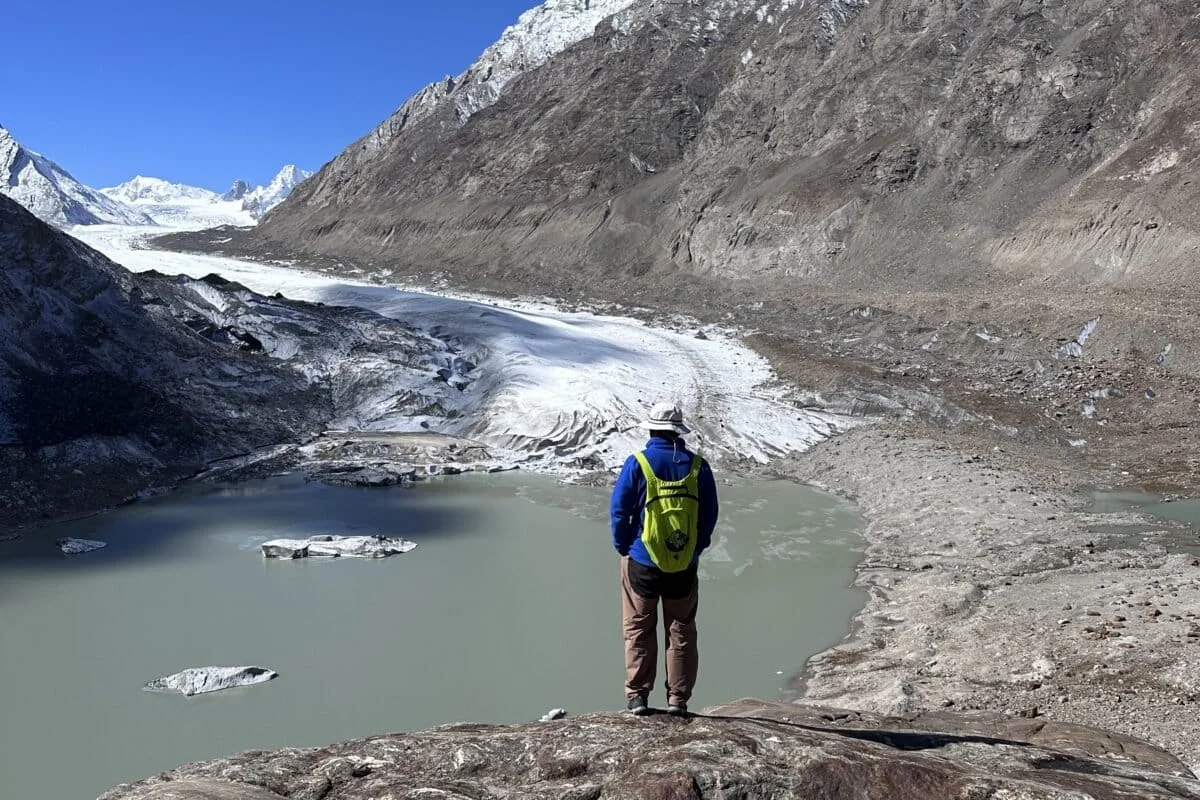
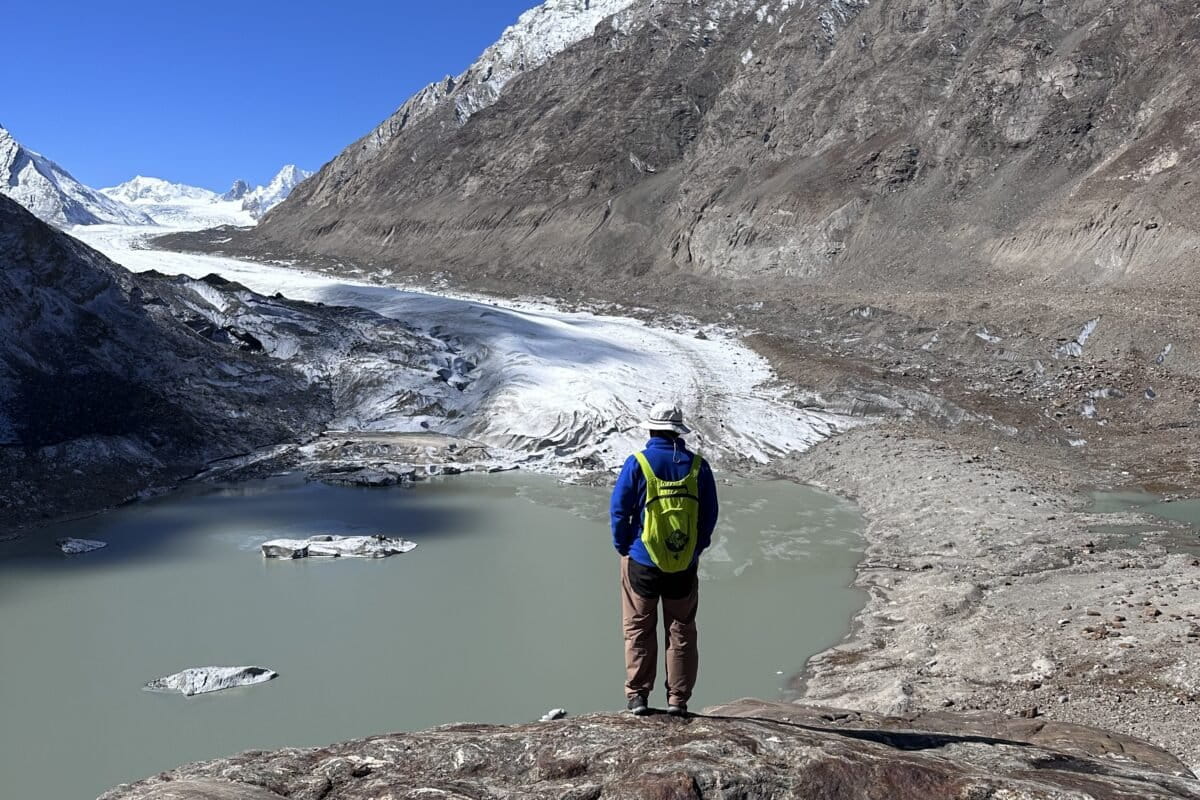
The idiom “moving at a glacial pace” has long served as the gold standard for describing something that progresses with agonizing slowness. In the frozen heights of the Zanskar Himalayas in Ladakh, however, that phrase is taking on a new, more literal, and deeply concerning meaning. New research indicates that these ancient rivers of ice are moving even slower than they used to—not because they are stable, but because they are wasting away.
A comprehensive study published in the journal The Cryosphere reveals that glacier velocity in the Zanskar region has decreased by approximately 16% between 1992 and 2023. While a slowdown might sound like a cessation of retreat, glaciologists warn it is actually a symptom of "starvation." As these glaciers lose mass due to rising temperatures and shifting precipitation patterns, they lose the gravitational weight necessary to push themselves downslope. This deceleration is a harbinger of a looming water crisis for the millions of people who depend on the Indus River basin.
Main Facts: The Mechanics of a Dying Glacier
To understand why a slower glacier is a sick glacier, one must understand the anatomy of these ice bodies. A glacier is not a static block of ice; it is a dynamic system in constant motion. Glaciologists divide a glacier into two primary zones: the "crown" (the accumulation zone at the top) and the "snout" or "toe" (the ablation zone at the bottom).
Under healthy conditions, solid precipitation—snow and hail—collects at the crown. Over years, this snow compacts into dense ice. The sheer weight of this accumulated mass, acted upon by gravity, forces the glacier to flow downward. According to Manish Mehta, a senior scientist at the Wadia Institute of Himalayan Geology, the velocity of this descent is a vital sign for the glacier’s health.
"The accumulation of ice at the crown is what pushes the glacier down, increasing its velocity," Mehta explains. "But in recent times, glaciers are losing their mass in both the upper and lower zones. With less mass, there is less gravitational pull and less internal pressure. Consequently, there is less movement."
The study, led by Tirthankar Ghosh of IIT-Bombay and Monash University, focused on 12 representative glaciers within the 7,000-square-kilometer Zanskar range. While the region hosts over 1,700 glaciers, these 12 provide a cross-sectional view of a landscape in transition. The findings are stark: the slowdown is systemic, and it is accompanied by a rapid thinning of the ice. Between 2015 and 2020, the rate of thinning accelerated to 0.57 meters per year, more than double the rate observed at the turn of the millennium.
Chronology: From Growth to Stagnation (1992–2023)
The timeline of the Zanskar glaciers over the last three decades tells a story of a tipping point being crossed. The researchers utilized thirty years of satellite imagery and observational data to reconstruct the movement patterns of the ice.
1992–2000: The Era of Relative Stability
In the final decade of the 20th century, the Zanskar glaciers exhibited what researchers call a "healthy mass balance." During this period, the velocity of the observed glaciers actually showed a slight increase. This suggested that snow accumulation at higher altitudes was sufficient to replenish the ice lost to melting at lower altitudes, maintaining the "conveyor belt" of ice movement.
2001–2014: The Great Deceleration
As the 21st century began, the trend reversed. Global atmospheric warming began to impact the high-altitude precipitation cycles. The velocity of the glaciers began to drop as the "push" from the top weakened. It was during this period that the first signs of significant thinning were recorded, with glaciers losing an average of 0.22 meters of thickness annually between 2000 and 2005.
2015–2023: Accelerated Thinning
The last decade has seen the most aggressive changes. The rate of thinning nearly tripled compared to the early 2000s. The 16% total reduction in velocity recorded by 2023 indicates that the glaciers are no longer just retreating at their edges; they are collapsing in volume. The "glacial pace" has slowed because the glaciers are becoming too thin and light to move effectively.
Supporting Data: Elevation, Debris, and Thermal Stress
The study highlights that the impact of climate change is not uniform across the mountain range. Several variables determine how a specific glacier responds to a warming world.
The Elevation Factor
The research found that glaciers located at lower elevations—specifically those below 5,000 meters—are slowing down at a much faster rate than those at higher altitudes. This is largely because temperatures at lower elevations stay above the freezing point for longer durations throughout the year, leading to prolonged melting seasons and a total lack of new ice formation.

The Myth of Debris Protection
In some parts of the Himalayas, scientists once believed that "debris-covered glaciers" (those covered in rocks and soil) were better protected from melting because the debris acted as insulation. However, the Zanskar study found that debris does not significantly protect against thinning. In fact, in some cases, dark debris can absorb more solar radiation, actually accelerating the melting process beneath the surface.
Rising Temperatures in Leh
The backdrop for this glacial decline is a clear warming trend in the region. Records from Leh, the capital of Ladakh, show that annual temperatures increased by 0.02°C every single year between 1901 and 2019. While two-hundredths of a degree may seem negligible, in a cryospheric environment, it is the difference between a permanent freeze and a catastrophic thaw.
Official Responses and Expert Analysis
The scientific community views the Zanskar findings as a critical piece of the puzzle for the "Third Pole"—the Hindu Kush-Himalayan (HKH) region, which holds the largest reserve of freshwater outside the polar caps.
Tirthankar Ghosh emphasizes that the Zanskar region is unique because of its water sources. Unlike other parts of Ladakh that are hyper-arid, Zanskar sits at a crossroads. "The Zanskar region receives precipitation from both the southwest monsoon and western disturbances," Ghosh notes. This makes it a "water tower" for the Indus. However, this also makes it doubly vulnerable; if either of these weather systems shifts due to climate change, the glaciers lose their primary source of "food."
The International Centre for Integrated Mountain Development (ICIMOD), which monitors the broader HKH range, released a report in 2024 supporting these localized findings. ICIMOD found a 12% reduction in total glacier area across the entire range between 1990 and 2020. Officials from the Wadia Institute of Himalayan Geology have called for more "in-situ" (on the ground) monitoring stations to supplement satellite data, arguing that the complexity of glacier movement requires real-time sensors to predict future water runoff accurately.
Implications: A Water Crisis in the Rain Shadow
The slowing and thinning of Zanskar’s glaciers is not merely a matter of geological interest; it is a direct threat to human survival in one of the world’s most sensitive environments.

1. Water Security for the Indus Basin
The Zanskar River is a major tributary of the Indus. The Indus River system supports the livelihoods of over 200 million people across India and Pakistan, powering agriculture, industry, and hydroelectric projects. As glaciers slow down and thin, the seasonal "buffer" they provide—releasing water during the hot summer months—will become unpredictable. Initial melting may cause floods, but the long-term result is a "peak water" scenario followed by a permanent decline in river flow.
2. The Vulnerability of Ladakh
Ladakh is a high-altitude desert, a rain shadow area where traditional agriculture (growing barley, wheat, and apricots) is almost entirely dependent on snowmelt and glacier-fed streams. Unlike the plains of India, which receive monsoon rains, Ladakh receives very little rainfall. "If we can understand the dynamics of how these ice bodies are flowing, we can make better predictions of how they will evolve," says Ghosh. Without these glaciers, the very habitability of villages in the Zanskar valley is at risk.
3. Geopolitical Stability
The Indus Water Treaty between India and Pakistan governs the sharing of these waters. As the "source" of these waters—the glaciers—diminishes, the potential for transboundary conflict over water rights increases. The thinning of the Third Pole is no longer just an environmental issue; it is a matter of regional national security.
4. Ecosystem Collapse
Beyond human needs, the unique flora and fauna of the Zanskar range, including the elusive snow leopard and the Himalayan blue sheep, depend on the specific hydrological cycles created by these glaciers. A shift in water availability will lead to a change in vegetation, potentially triggering a cascade of extinction for species already living on the edge of survival.
Conclusion
The 16% slowdown of Zanskar’s glaciers is a silent alarm. It tells us that the mountains are losing their vitality. As the "glacial pace" continues to drop, the urgency for climate mitigation and adaptation strategies in the Himalayas has never been higher. For the people of Ladakh, the ice is not just a feature of the landscape; it is their bank account for the future. And according to the latest research, that account is being overdrawn at an unsustainable rate.
