

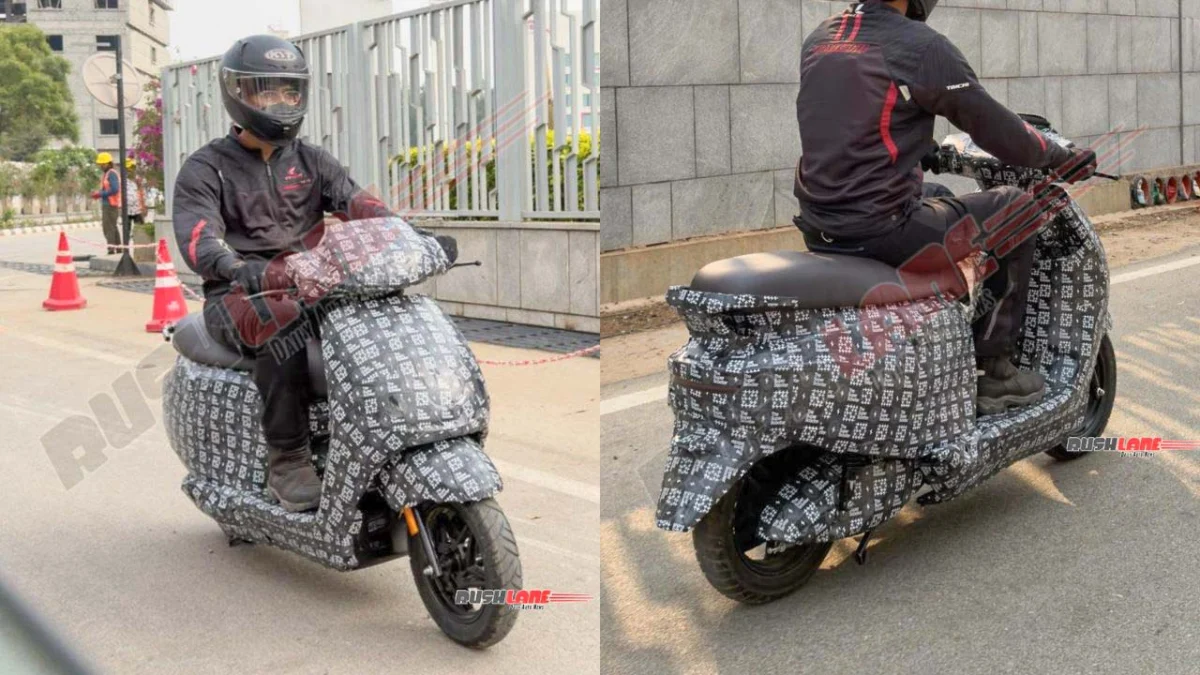
Bengaluru, India – Simple Energy, the electric vehicle (EV) manufacturer that gained national attention with its high-performance ‘Simple One’ flagship, is poised to make a significant strategic pivot. On September 2nd, the company will officially launch its first-ever family-format electric scooter, christened the Simple Wave.
This move marks a critical juncture for the Bengaluru-based startup as it shifts its focus from the niche, performance-oriented enthusiast market to the high-volume, utility-driven family segment. Initially rumored to be named the ‘Arrive’ based on intellectual property filings, the company has finalized the ‘Wave’ nomenclature, signaling a new tide in its product roadmap.
1. Main Facts: Bridging the Gap Between Performance and Utility
The Simple Wave is designed to address the most lucrative segment of the Indian two-wheeler market: the family scooter. While the Simple One was lauded for its record-breaking range and blistering acceleration, its aggressive styling and premium price point limited its mass-market penetration. The Simple Wave aims to rectify this by offering a more pragmatic, comfortable, and affordable alternative.
Key Highlights of the Simple Wave:
- Official Launch Date: September 2nd.
- Target Segment: Family-format electric scooters (competing with the likes of Ather Rizta and TVS iQube).
- Design Philosophy: Focus on ergonomics, pillion comfort, and storage capacity.
- Technical Foundation: Derived from the Simple One platform but optimized for efficiency and cost-effectiveness.
- Expected Range: Approximately 190 km (IDC) on a single charge.
- Pricing Strategy: Positioned below the Simple One to attract budget-conscious buyers.
2. Chronology: From Performance Flagship to Mass-Market Utility
The journey toward the Simple Wave has been one of adaptation and market observation. Simple Energy entered the fray with the Simple One, a scooter that promised a 212 km range and a 0-40 km/h time of 2.77 seconds. However, the Indian EV landscape has shifted dramatically over the last 24 months.
The Evolution of the "Family Scooter" Strategy:
- August 2021: Simple Energy launches the Simple One. While the specs are industry-leading, production delays and a focus on performance create a gap in the company’s portfolio for a "daily commuter."
- Late 2023 – Early 2024: Market leaders like TVS and Bajaj see massive success with the iQube and Chetak, respectively—both of which are family-oriented. Ather Energy, Simple’s direct rival, announces the ‘Rizta,’ a dedicated family scooter.
- March 2024: Spy shots of a new, more "conventional" Simple Energy scooter begin circulating. Intellectual property filings suggest the name "Arrive."
- July 2024: More refined prototypes are spotted testing on the outskirts of Bengaluru. These shots reveal a departure from the sharp, angular design of the Simple One toward a softer, more voluminous aesthetic.
- August 2024: Simple Energy confirms the September 2nd launch date and clarifies the naming convention as "Simple Wave."
3. Supporting Data: Technical Specifications and Features
The Simple Wave is not merely a "stripped-down" Simple One; it is a re-engineered vehicle meant to handle the rigors of Indian family life. Data gathered from recent spy shots and industry leaks provide a comprehensive look at what the Wave will offer.
Powertrain and Performance
While the Simple One features a massive 5 kWh battery pack in its top trim, the Simple Wave is expected to utilize the architecture of the Simple OneS (the entry-level variant).

- Battery Capacity: 3.7 kWh (Lithium-ion).
- Certified Range: 190 km (IDC), which is expected to translate to a real-world range of 140-150 km in Eco mode.
- Motor: A 6.4 kW peak power motor, capable of a top speed of 90 km/h.
- Charging: Support for home charging and the Simple Loop fast-charging network.
Hardware and Ergonomics
The "family" aspect is most evident in the scooter’s physical dimensions and hardware choices:
- Suspension: Telescopic front forks and twin rear shock absorbers. The move to twin shocks at the rear is a specific nod to carrying heavier loads and providing better pillion comfort compared to the mono-shock setup of sporty scooters.
- Braking: A front disc brake paired with a rear drum brake (likely to keep costs competitive).
- Wheels: Star-shaped alloy wheels, likely 12-inch units, fitted with tubeless tires.
- Floorboard: A wide, flat floorboard designed for carrying groceries or small bags, a non-negotiable feature for Indian family buyers.
- Seating: A significantly longer and wider single-piece seat compared to the Simple One.
Technology Suite
Simple Energy has always been a tech-forward brand, and the Wave is expected to maintain this reputation:
- Dashboard: A 7-inch touchscreen instrument cluster.
- Connectivity: Bluetooth and 4G LTE integration for navigation, music control, and OTA (Over-The-Air) updates.
- Safety Features: Hill-hold assist, reverse gear (essential for a heavy family scooter), and park assist.
- Smart Features: Keyless ignition and a dedicated mobile app for remote vehicle tracking and diagnostics.
4. Official Responses and Strategic Vision
While Simple Energy has kept specific pricing details under wraps until the September 2nd event, the company’s leadership has consistently emphasized the need for "democratizing high-range EVs."
In previous statements, CEO Suhas Rajkumar has noted that the Indian consumer is evolving. "Performance was our entry point to prove our engineering prowess," the company has signaled through its product trajectory. "The next phase is about volume, reliability, and catering to the diverse needs of the Indian household."
The company’s manufacturing facility in Shoolagiri, Tamil Nadu—dubbed Simple Vision 1.0—has a production capacity of up to 1 million units annually. The Simple Wave is expected to be the primary driver for utilizing this massive capacity. By entering the family segment, Simple Energy is moving away from being a "niche enthusiast brand" to a "mass-market mobility provider."
5. Implications: The Battle for the Indian Driveway
The launch of the Simple Wave has profound implications for the Indian EV ecosystem. It places Simple Energy in direct competition with some of the most established names in the industry.

The Competitive Landscape
The Simple Wave enters a crowded and fiercely competitive arena:
- Ather Rizta: Currently the gold standard for "family EVs" from a startup, the Rizta emphasizes storage and safety.
- TVS iQube: The market veteran that has won over traditional buyers with its "scooter-like" feel and reliability.
- Bajaj Chetak: Leveraging the legacy of a household name, the Chetak focuses on build quality and metal bodywork.
- Hero Vida V1/VX2: Backed by the world’s largest two-wheeler manufacturer, offering modular battery solutions.
Why the "Family" Segment Matters
In India, a scooter is rarely a personal vehicle; it is a shared utility. It is used by students for college, by parents for grocery runs, and by commuters for the "last mile." By focusing on a "no-frills, high-utility" design, Simple Energy is targeting the "Silent Majority" of buyers who prioritize seat length and floorboard space over 0-60 km/h timings.
Economic and Industrial Impact
For Simple Energy, the Wave is a "make-or-break" product. After facing initial hurdles with the delivery timelines of the Simple One, the company needs a high-volume success to stabilize its cash flow and build consumer trust.
Furthermore, the Simple Wave arrives at a time when the Indian government is transitioning from the FAME-II subsidy to the Electric Mobility Promotion Scheme (EMPS) 2024. With subsidies being reduced, manufacturers must find ways to lower production costs without sacrificing the features that consumers have come to expect. Simple Energy’s heavy localization of motor and battery pack production will be tested here; if they can price the Wave between ₹1.10 lakh and ₹1.30 lakh (ex-showroom), they may well have a market leader on their hands.
Conclusion: A New Chapter
The Simple Wave represents the maturation of Simple Energy. By pivoting to a family-format design, the company is acknowledging that while speed sells posters, comfort and range sell scooters. On September 2nd, the industry will watch closely to see if the "Wave" can indeed wash away the competition or if it will face an uphill battle against the established giants of the Indian automotive landscape.
With a promised 190 km range and a suite of smart features, the Simple Wave is, on paper, one of the most formidable contenders to enter the family EV space this year. The final verdict, however, will rest on its price tag and the company’s ability to scale deliveries to meet the inevitable demand.
