

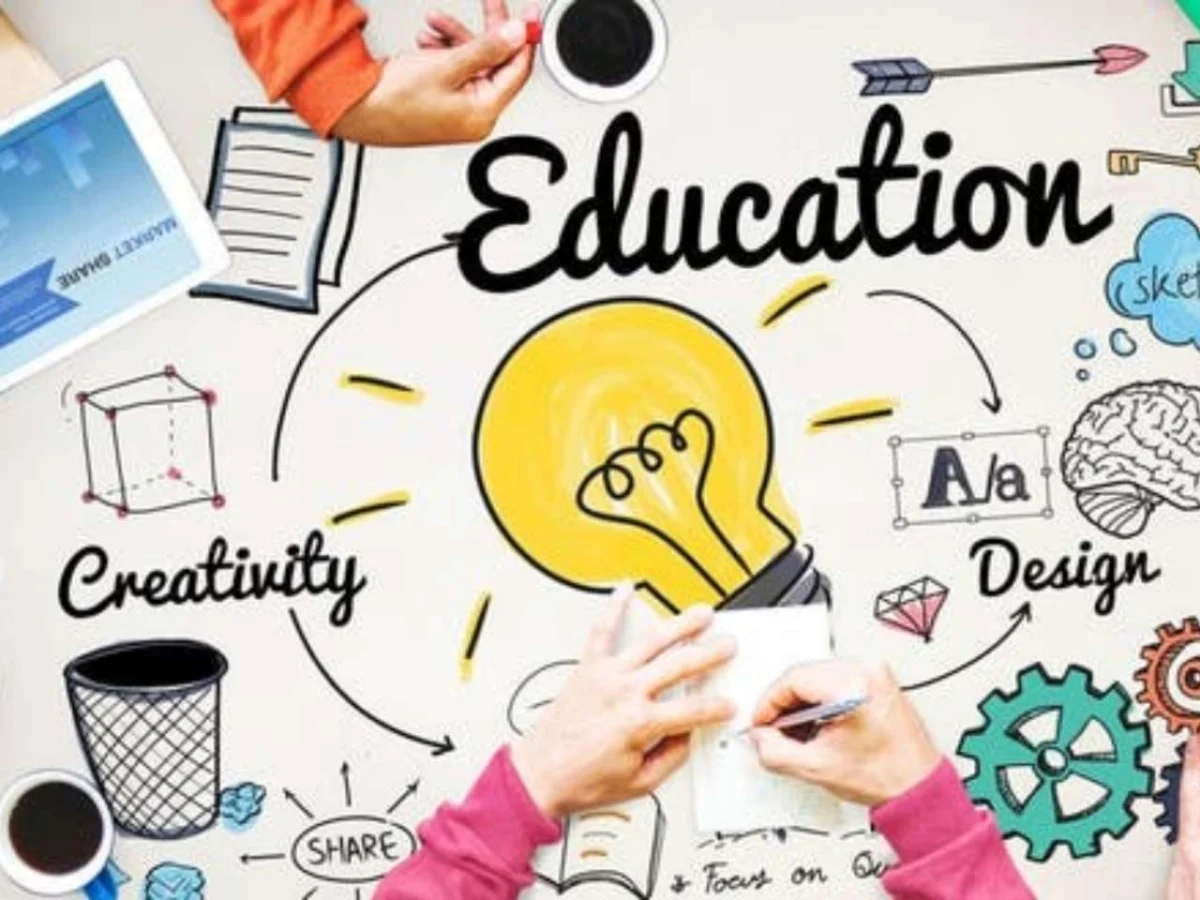
The grand pronouncements on creativity within educational discourse often mask a stark reality: inside the classroom, innovative thinking frequently takes a backseat to conformity. While policy documents and institutional visions champion imagination and original thought, the very structures designed to foster learning too often reward the regurgitation of expected answers. This fundamental contradiction is not merely an academic debate; it is a critical impediment to preparing young people for a future defined by uncertainty and complexity. For education to truly equip students for the challenges ahead, creativity must evolve from a celebrated but elusive ideal into a central, actionable principle that redefines teaching, assessment, and the very essence of learning.
The prevailing educational landscape, despite its aspirational rhetoric, is frequently characterized by a deep-seated bias towards the predictable. Students are encouraged to "think outside the box," yet their academic progress is overwhelmingly measured by their ability to produce answers that fit within pre-defined parameters. Innovation is lauded, but the dominant metrics of success – marks, examinations, and standardized outcomes – inherently favor rote memorization and the replication of established knowledge. This pervasive disconnect creates a paradox at the heart of contemporary education, hindering the development of the very skills that are increasingly vital for navigating an ever-evolving world.
)
The Deep-Rooted Crisis: Conformity Over Curiosity
The crisis in creativity education is not simply a matter of declining imaginative capacity among students. A more profound issue lies in the persistent tendency of educational structures to prioritize conformity over genuine curiosity. Classrooms often inadvertently elevate the "correct" answer above the incisive, thoughtful question. The rapid pace of syllabus completion frequently overshadows the value of slow, deliberate reflection. Consequently, intellectual exploration can become a secondary concern, overshadowed by the pressure to cover a prescribed amount of material.

This environment renders creativity an unlikely outcome, even when promoted through slogans and initiatives. Genuine flourishing of creative potential necessitates a fundamental re-evaluation of pedagogy, assessment methodologies, curriculum design, and the overarching institutional culture. It is crucial to recognize that creativity is not an isolated classroom technique; rather, it is an intricate ecosystem influenced by a multitude of factors, including the home environment, community engagement, linguistic diversity, technological access, and broader public policy. Addressing this crisis requires a holistic approach that acknowledges these interconnected influences.
)
Empowering Educators: The Unsung Architects of Creativity
A critical element in this transformation lies in a more realistic and supportive view of teachers. Educators are routinely tasked with nurturing creative learners, yet they frequently operate within stringent constraints. Rigid timetables, intense examination pressures, overcrowded classrooms, and limited professional development opportunities often stifle their capacity to innovate. Furthermore, many teachers are themselves products of highly examination-centric systems, making the expectation that they suddenly adopt creative pedagogies without adequate training, resources, and institutional backing an unrealistic burden.
)
For creativity to become an integral part of everyday learning, teacher education programs must evolve significantly. They need to move beyond a sole focus on content delivery and instead equip educators with the skills and confidence to design and implement inquiry-based, interdisciplinary, and reflective classroom experiences. Crucially, educational institutions must foster an environment that grants teachers the autonomy to experiment and take calculated risks. Creativity cannot be cultivated in settings where educators feel perpetually monitored, rushed, or undervalued. Investing in teacher well-being and professional growth is not an optional extra; it is a prerequisite for fostering a truly creative educational landscape.
)
Bridging the Divide: The Social Dimensions of Creative Potential
The social dimension of creativity is another often-overlooked aspect. While creativity is frequently framed as an individual talent, its development is profoundly shaped by access to resources, exposure to diverse experiences, linguistic proficiency, technological infrastructure, institutional support, and the cultivation of social confidence. Students in well-funded urban schools or elite higher education institutions often benefit from superior infrastructure, a wider array of extracurricular activities, robust research networks, and access to highly trained faculty.
)
Conversely, students in rural, semi-urban, or under-resourced institutions, despite potentially possessing equal imagination and intellectual spark, may lack the conducive conditions necessary for their creative potential to mature. Any earnest discussion about fostering creativity in education must, therefore, directly confront the pervasive issue of inequality. A system that celebrates innovation while simultaneously perpetuating unequal access risks transforming creativity into another exclusive marker of privilege, further marginalizing already disadvantaged students. Ensuring equitable opportunities for all learners to explore and express their creativity is paramount.
)
The AI Equation: A Double-Edged Sword in Creative Development
The rapid advancement and integration of artificial intelligence (AI) have injected a new layer of urgency into the creativity debate. AI should not be viewed solely as a threat to human creativity, nor should it be uncritically celebrated as an infallible solution. Its true value and impact on learning are contingent upon how learners are educated to utilize it.
)
If AI is perceived and employed as a mere shortcut for generating answers, it risks deepening student passivity and undermining the development of critical thinking skills. However, when AI is leveraged as a tool for comparing diverse perspectives, rigorously testing hypotheses, formulating more incisive questions, and engaging in thoughtful reflection on ethical implications, it possesses the potential to significantly enhance learning. The paramount task facing education in the age of AI is to safeguard and cultivate those human capabilities that AI cannot replicate: imagination, nuanced judgment, the wisdom derived from lived experience, empathy, and the capacity for independent thought.
)
AI Education: Beyond Technical Literacy to Critical Citizenship
The integration of AI into education must transcend mere technical literacy. Introducing students to artificial intelligence from an early stage can only be truly meaningful if it empowers them to critically examine the underlying human and societal questions embedded within the technology. This includes probing inquiries such as: Who are the designers of these AI systems? Whose knowledge and perspectives are represented, and whose are excluded? Who ultimately benefits from the deployment of AI, and who may be adversely affected or marginalized?
)
These are not peripheral distractions from technological learning; they are fundamental to fostering responsible citizenship in an increasingly digital world. Without this critical engagement, AI education risks producing a generation of passive technology users, rather than thoughtful individuals equipped to question and shape the trajectory of technological development. Education must equip students to be discerning creators and ethical stewards of technology, not merely its consumers.
)
Policy to Practice: Bridging the Implementation Gap
Policy frameworks, such as India’s National Education Policy (NEP), rightly highlight the importance of creativity, critical thinking, and holistic learning. However, the true measure of success lies not in the pronouncements of policy but in their effective implementation on the ground. Creativity cannot be conjured into existence through eloquent policy language alone. Its cultivation must be evident in the everyday realities of the classroom: in how lessons are meticulously planned, how questions are genuinely welcomed and explored, how mistakes are viewed as learning opportunities, how students collaborate effectively, and how institutions provide robust support to both teachers and learners, particularly in overcoming contextual inequalities.
)
Assessment methodologies must undergo a parallel transformation. If examinations continue to prioritize and reward the memorization of "certain" answers, then creative learning will inevitably remain a peripheral concern, perpetually struggling to gain traction within the core educational experience. A fundamental shift in assessment is required to recognize and value the process of inquiry, experimentation, and original thought.
)
The Ultimate Goal: Cultivating Thoughtful, Engaged Citizens
Ultimately, the pursuit of creativity in education is not about identifying and nurturing a select few exceptional innovators. Instead, it is about fostering a broader population of thoughtful, confident, and socially aware individuals who can engage deeply with knowledge rather than passively consuming it. Without the infusion of creativity, education risks devolving into a cyclical, uninspired process of memorization, examination, certification, and the pervasive anxiety surrounding future employment.
)
Conversely, with creativity at its core, education can transform into a dynamic space where learners not only understand themselves and their place in the world but also develop the capacity to critically question existing structures, challenge assumptions, and actively imagine and work towards more just, equitable, and meaningful futures for all. This is the transformative power of a truly creative education.
