

Main Facts: The Urban Frontline of the Climate Crisis
Cities are the dual engines of global growth and environmental degradation. Currently, urban centers are responsible for more than 70% of the world’s greenhouse gas (GHG) emissions while serving as home to more than half of the global population. This concentration of humanity and industry makes cities the primary contributors to global warming, but also the most vital laboratories for climate mitigation and adaptation.
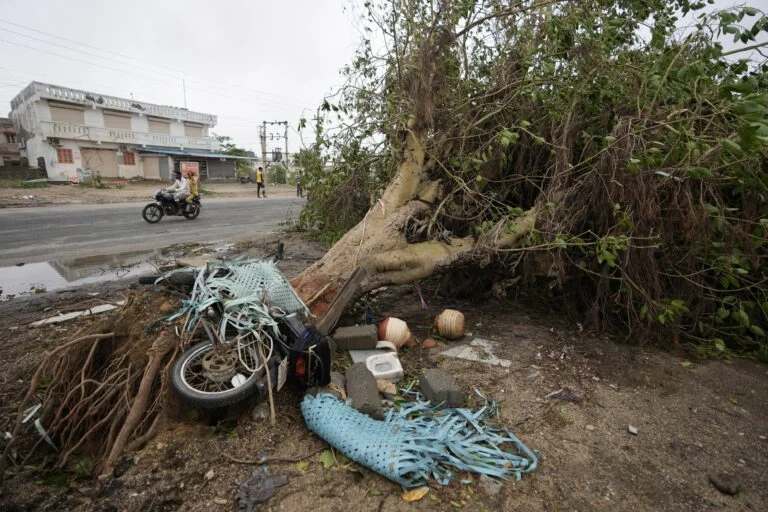
In India, the urban climate crisis is no longer a theoretical projection; it is a lived reality. From the devastating floods in Chennai and Bengaluru to the lethal heatwaves in Delhi and the sinking coastlines of Mumbai, Indian cities are facing a multi-pronged assault from a changing climate. According to recent data, 21 major Indian cities—including economic hubs like Hyderabad and Bengaluru—are rapidly approaching "Day Zero," where groundwater depletion will leave 100 million people without adequate water access.
The economic stakes are equally staggering. Poor urban planning and inadequate climate management are projected to cost Indian cities between $2.6 billion and $13 billion annually. Conversely, the potential for positive change is immense. The Coalition for Urban Transitions estimates that by adopting proven low-carbon measures in buildings, transport, and waste management, Indian cities could reduce urban emissions by 89% by 2050, saving 1,784 million tonnes of CO2 equivalent.
![India started measuring climate readiness of cities, then stalled [Commentary]](https://imgs.mongabay.com/wp-content/uploads/sites/30/2026/08/21132802/AP23168434501284-1200x800.jpg)
However, a critical bottleneck has emerged: the mechanism designed to track, measure, and incentivize these changes—the Climate Smart Cities Assessment Framework (CSCAF)—appears to have stalled. Without consistent data and public accountability, India’s path to urban resilience remains obscured.
Chronology: From Policy Formulation to Implementation Gaps
India’s journey toward urban climate resilience has evolved through several distinct phases of policy development:
- 2008: The Foundation. India launched the National Action Plan on Climate Change (NAPCC), identifying eight core missions. Among these was the National Mission on Sustainable Habitat, which first articulated the need for urban sustainability and resilience.
- 2015: The Global Commitment. Following the Paris Agreement, India’s Nationally Determined Contributions (NDCs) officially recognized cities as key sub-national actors. The focus shifted toward energy efficiency in buildings, waste-to-energy projects, and sustainable public transport.
- 2015–2019: The Mission Era. The Government of India (GoI) launched several flagship schemes, including the Smart Cities Mission, AMRUT (Atal Mission for Rejuvenation and Urban Transformation), and the Swachh Bharat Mission. These programs provided the first significant financial pipelines for climate-adjacent infrastructure like solar-powered streetlights and scientific waste treatment.
- 2019: The Birth of Measurement. Recognizing that "what gets measured gets managed," the Ministry of Housing and Urban Affairs (MoHUA) launched the Climate Smart Cities Assessment Framework (CSCAF) 1.0. It established a baseline for 96 cities.
- 2020: Institutionalization. The National Institute of Urban Affairs (NIUA), supported by MoHUA, established the Climate Centre for Cities (C-Cube) to serve as a "one-stop shop" for climate-informed urban development.
- 2021–2023: The Readiness Reports. CSCAF Phase 2 (covering 126 cities) and Phase 3 (covering 226 cities) were conducted. These reports provided a snapshot of urban climate readiness, showing a marginal improvement from a 30% national average in 2021 to 34% in 2023.
- 2024–Present: The Momentum Stall. Despite the established cycle, Phase 4.0 of the CSCAF has not been initiated. Publicly available data on city-level climate action has become increasingly fragmented, leaving stakeholders in the dark regarding recent progress.
Supporting Data: Hazards and the Performance Plateau
The data underlying India’s urban vulnerability paints a grim picture of the hazards facing the subcontinent. A report by the Indian Institute for Human Settlements (IIHS) for the Fifteenth Finance Commission identified flooding as the most widespread hazard. The plains of the Ganga and Brahmaputra are hit annually, while 5,700 km of India’s 7,500-km coastline remains highly exposed to cyclones and storm surges. With 40% of the population living within 100 km of the coast, the risk of mass displacement and infrastructure failure is acute.
The CSCAF was designed to address these risks by measuring performance across 28 indicators in five thematic areas:
![India started measuring climate readiness of cities, then stalled [Commentary]](https://imgs.mongabay.com/wp-content/uploads/sites/30/2026/08/21133620/pexels-siddique-sk-274855415-18228801-768x512.jpg)
- Urban Planning, Green Cover, and Biodiversity
- Energy and Green Buildings
- Mobility and Air Quality
- Water Management
- Waste Management
The Five-Star Scale of Readiness:
The CSCAF categorizes cities from one star (0–20% readiness) to five stars (80–100% readiness). The results from the 2023 Readiness Report reveal a concerning plateau:
- National Average: Only 34% readiness across 226 cities.
- The Surat Exception: Surat was the only city to move into the overall five-star category in the latest assessment.
- Sectoral Lags: While a few cities improved their green cover and biodiversity ratings, the vast majority remain in the one-to-three-star range for critical sectors like water management and air quality.
The lack of a 2024 assessment means there is currently no way to verify if the 2023 targets led to actual policy changes or if the 34% average has regressed due to the increasing frequency of extreme weather events.
Official Frameworks and Institutional Roles
The institutional architecture for climate action in India is robust on paper, centered around the Ministry of Housing and Urban Affairs (MoHUA) and the National Institute of Urban Affairs (NIUA).
The Climate Centre for Cities (C-Cube) was intended to be the bridge between policy and practice. With over 75 partner organizations, its mandate includes:
![India started measuring climate readiness of cities, then stalled [Commentary]](https://imgs.mongabay.com/wp-content/uploads/sites/30/2026/08/21134211/pexels-vgbingi-21832812-768x512.jpg)
- Building capacity within Urban Local Bodies (ULBs).
- Facilitating the preparation of City Climate Action Plans (CCAPs).
- Standardizing data collection for the CSCAF.
The government has also utilized the Smart Cities Mission and AMRUT to funnel funds into "climate-smart" capital infrastructure. This includes investments in electric bus fleets, rejuvenated urban wetlands to act as flood buffers, and the integration of renewable energy into municipal buildings.
However, the "Official Response" to the current data gap remains muted. While the frameworks exist, the lack of consolidated, publicly accessible information on the C-Cube website has drawn criticism. There is currently no central repository where a citizen or policymaker can see which cities have completed their Climate Action Plans, which are implementing "climate budgeting," or how much carbon has actually been sequestered through urban forestry initiatives.
Implications: The Danger of Inaction and the Path Forward
The suspension of regular, transparent climate assessments has profound implications for India’s urban future.
1. Accountability and Governance Crisis:
Measurement is the bedrock of accountability. Without the CSCAF 4.0, city leaders lack the "rankings" that previously incentivized competition and improvement. In the absence of data, municipal decisions are often based on short-term political gains rather than long-term climate science.
![India started measuring climate readiness of cities, then stalled [Commentary]](https://imgs.mongabay.com/wp-content/uploads/sites/30/2026/08/21134813/Eco_park-2-new_town_smart_city-kolkata-India-768x512.jpg)
2. The Financial Gap:
International climate finance often requires rigorous data to prove the efficacy of investments. If Indian cities cannot demonstrate their "readiness" or track the outcomes of their projects, they may find themselves ineligible for global green bonds or climate resilience grants.
3. Social and Economic Disparity:
Climate change is a "threat multiplier" that worsens social inequalities. In developing countries like India, the urban poor living in informal settlements are the first to lose their homes to floods and their livelihoods to heatwaves. A lack of structured climate action ensures that these disparities will only deepen, placing an even greater burden on the national economy in the long run.
The Path Forward:
To regain momentum, India must treat urban climate action as a continuous governance requirement rather than a series of one-off reports.
- Annualization of the CSCAF: The assessment must be carried out every year without fail, expanding its scope to include all 500 cities with populations over 100,000.
- Outcome-Based Metrics: Moving beyond "readiness" (plans on paper) to "outcomes" (actual reduction in emissions, measurable rise in groundwater levels, and decreased mortality during heatwaves).
- Public Disclosure: A "one-stop shop" for public disclosure is essential. Transparency fosters trust and allows civil society to participate in urban resilience building.
- Decentralized Governance: Empowering Urban Local Bodies with the financial and technical capacity to implement their own Climate Action Plans, rather than relying solely on top-down mandates.
As India continues its rapid urbanization—with 4,800 cities and towns growing at an unprecedented rate—the window for climate-smart development is closing. The foundation has been laid, but without the discipline of measurement and the sunlight of transparency, India’s cities risk building a future that is as fragile as it is expansive.
