

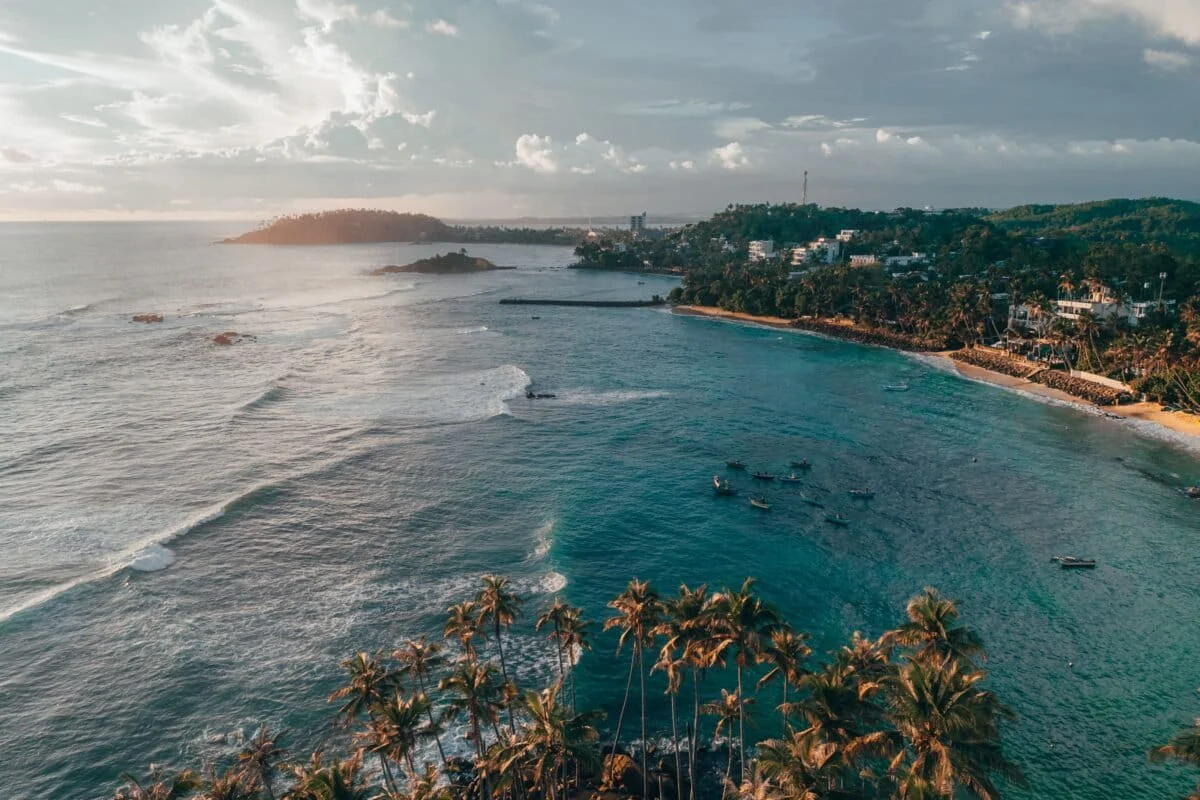
The Indian Ocean, a vast expanse of sapphire water covering nearly 20% of the Earth’s marine surface, is currently undergoing a transformation more rapid and profound than almost any other oceanic basin on the planet. As the geologically youngest of the world’s major oceans, it serves as a critical engine for the global climate, particularly through its governance of the monsoon systems that sustain over one-third of the human population. However, this dynamic cradle of biodiversity is now at a crossroads. From its ancient origins as the Tethys Sea to its current status as the fastest-warming tropical ocean, the Indian Ocean’s shifting currents and rising temperatures are rewriting the rules of marine ecology and regional meteorology.
Main Facts: A Basin of Extremes
The Indian Ocean is defined by its unique geography and its intense seasonal variability. Unlike the Atlantic or Pacific, it is landlocked to the north by the Asian landmass, a feature that prevents the escape of heat and drives the world’s most powerful monsoon system.
The Monsoon Engine
The defining characteristic of the Indian Ocean is the seasonal reversal of its winds and currents. During the summer monsoon, intense heating of the Tibetan Plateau creates a low-pressure system that draws moisture-laden air from the ocean toward the continent. This process triggers a massive reversal of coastal currents around the Indian subcontinent. In the Arabian Sea, this results in "upwelling"—a phenomenon where deep, nutrient-rich, cold water is pulled to the surface. This nutrient surge fuels massive phytoplankton blooms, making the Arabian Sea one of the most productive marine environments on Earth, supporting vast fisheries and a complex food web.
The Contrast of Two Seas
The basin is split into two distinct arms: the Arabian Sea to the west and the Bay of Bengal to the east. While they share a latitude, their characters are diametrically opposed. The Arabian Sea is high in salinity due to intense evaporation and receives little freshwater. Conversely, the Bay of Bengal is characterized by lower salinity, receiving massive freshwater runoff from the Ganga, Brahmaputra, and Irrawaddy rivers. This freshwater creates a stratified "lid" on the ocean surface, preventing the mixing of nutrients and making the Bay of Bengal significantly less productive than its western counterpart.
![Why do changes in the Indian Ocean matter? [Explainer]](https://imgs.mongabay.com/wp-content/uploads/sites/30/2026/08/20110746/pexels-batagov-29813525-1200x800.jpg)
The Warming Crisis
Data reveals that the Indian Ocean is warming at an accelerated rate compared to the global average. Over the last six decades, the basin’s surface temperature has risen by 1°C, outstripping the global average of 0.7°C. This thermal energy is the primary driver behind the intensification of cyclonic storms and the prolonged marine heatwaves that are currently devastating coral reefs from the Maldives to the Chagos Archipelago.
Chronology: From Ancient Tethys to the Anthropocene
The history of the Indian Ocean is a saga of tectonic collisions and evolutionary adaptation. To understand its current state, one must look back over 50 million years.
The Closure of the Tethys (50–20 Million Years Ago)
The Indian Ocean’s precursor was the Tethys Sea, a vast seaway that once connected the Atlantic and the Indian Oceans. As the Indian plate drifted northward and eventually collided with the Asian landmass, the Tethys began to close. This collision birthed the Himalayas and the Tibetan Plateau, which fundamentally altered global air circulation and established the modern monsoon system.
This geological shift had a profound impact on life. Fossils of Himalayacetus, an ancestor of modern whales dating back 52 million years, have been found in the Himalayan foothills—remnants of a time when these peaks were shallow, productive bays. As the sea closed, the center of marine biodiversity shifted eastward toward what is now Southeast Asia and the Coral Triangle.
![Why do changes in the Indian Ocean matter? [Explainer]](https://imgs.mongabay.com/wp-content/uploads/sites/30/2026/08/20111003/pexels-asadphoto-9080914-768x512.jpg)
The Pleistocene Isolation (2.5 Million – 11,700 Years Ago)
During the Pleistocene epoch, fluctuating sea levels and tectonic movements between the Australian and Eurasian plates created intermittent barriers between the Indian and Pacific Oceans. This isolation forced genetic divergence among marine species. Coral reefs, dugongs, and sea turtles in the Indian Ocean began to evolve independently from their Pacific cousins, leading to the high levels of endemism (species found nowhere else) seen in the Red Sea and the western Indian Ocean today.
The Modern Warming Era (1960–Present)
In the last 60 years, the Indian Ocean has entered a new chronological phase defined by anthropogenic (human-caused) climate change. The "Arabian Sea Mini Warm Pool" and other localized phenomena have begun to interact with global cycles like El Niño, leading to a decade-on-decade increase in heat content. Since the late 20th century, the frequency of "very severe cyclonic storms" in the Arabian Sea has tripled, signaling a departure from historical norms.
Supporting Data: The Mechanics of Change
The health and behavior of the Indian Ocean are monitored through a variety of metrics, from salinity levels to oxygen concentration.
Oxygen Minimum Zones (OMZs)
One of the most concerning data points is the expansion of Oxygen Minimum Zones. Because the Arabian Sea is so productive, the massive amount of organic matter (phytoplankton) eventually sinks and decomposes. This decomposition consumes oxygen, creating the thickest "dead zone" in the world’s oceans. As the ocean warms, it holds less dissolved oxygen, threatening to expand these zones and suffocate mid-water fish populations.
![Why do changes in the Indian Ocean matter? [Explainer]](https://imgs.mongabay.com/wp-content/uploads/sites/30/2026/08/20111701/Kozhikode_Beach-768x512.jpg)
The Indian Ocean Dipole (IOD)
The IOD is a "seesaw" of sea surface temperatures between the western and eastern parts of the ocean.
- Positive Phase: The western Indian Ocean (near Africa) becomes unusually warm, while the eastern part (near Indonesia) cools. This leads to floods in East Africa and India but causes droughts and wildfires in Australia.
- Negative Phase: The reverse occurs, with warmer waters shifting east.
Recent data suggests that about 50% of IOD events now coincide with El Niño Southern Oscillation (ENSO) cycles, creating "compound extremes" that make weather prediction increasingly difficult for regional meteorologists.
Megafauna Decline
The biological cost of human activity in the basin is starkly illustrated by fisheries data. Over the last 50 years, the global abundance of oceanic sharks and rays has declined by over 70%. In the western Indian Ocean, three-quarters of these species are now threatened with extinction. Furthermore, an estimated millions of dolphins and small whales have perished as bycatch in tuna gillnets over the past seven decades.
Official Responses and Scientific Consensus
International scientific bodies and regional governments have begun to sound the alarm regarding the Indian Ocean’s trajectory. The Intergovernmental Panel on Climate Change (IPCC) has identified the Indian Ocean as a primary site of concern for marine heatwaves.
The Scientific Perspective
Marine biologists and oceanographers emphasize that the Indian Ocean is no longer a stable system. Research published in journals such as Nature and Science highlights that the "genetic distinctness" of populations—such as the endangered resident humpback whales of the Arabian Sea—makes them particularly vulnerable. Unlike other humpbacks that migrate to the Antarctic to feed, this population stays in the northern Arabian Sea year-round. Scientists argue that losing such a unique population would be an irreparable blow to global genetic diversity.
![Why do changes in the Indian Ocean matter? [Explainer]](https://imgs.mongabay.com/wp-content/uploads/sites/30/2026/08/20112053/pexels-alain-margreve-154790459-13085897-768x512.jpg)
Policy and Protection
Responses from regional governments have been mixed. While there is an increasing number of "Important Shark and Ray Areas" (ISRAs) identified by conservationists, data shows that only 1% of these areas currently receive full protection from industrial fishing. Organizations like the Indian Ocean Tuna Commission (IOTC) are under mounting pressure to regulate gear types, specifically gillnets, which are responsible for the high rate of cetacean bycatch.
Implications: A Third of Humanity at Risk
The changes occurring in the Indian Ocean are not merely academic; they have direct, often devastating, implications for the 2.7 billion people living in the Rim countries.
Food Security and Livelihoods
As warming waters alter the distribution of fish stocks, traditional fishing communities are finding their primary source of protein and income disappearing. The decline in phytoplankton productivity—estimated by some studies to be as high as 20% in certain sectors—threatens the entire marine food chain. If the "lid" of warm, nutrient-poor water continues to thicken, the upwelling process that sustains the Arabian Sea’s fisheries could fail.
Extreme Weather and Infrastructure
The intensification of cyclones poses a direct threat to coastal megacities like Mumbai, Karachi, and Chittagong. Unlike the Bay of Bengal, the Arabian Sea was historically considered relatively quiet. The three-fold increase in severe storms means that infrastructure in countries like Oman and western India, which was not built to withstand such events, is now at high risk.
![Why do changes in the Indian Ocean matter? [Explainer]](https://imgs.mongabay.com/wp-content/uploads/sites/30/2026/08/20112722/Heptranchias_perlo_cochin-768x512.jpg)
Ecological Collapse
The most immediate implication is the potential loss of the region’s coral reefs. Reefs provide essential coastal protection from storm surges. However, with marine heatwaves predicted to last over 60% of the year by 2100, the window for reef recovery is closing. The loss of these "rainforests of the sea" would lead to a collapse of local biodiversity and a subsequent surge in coastal erosion.
In conclusion, the Indian Ocean is a masterpiece of natural engineering, a basin where geology, atmosphere, and biology have danced in a delicate balance for millions of years. Yet, the current pace of change is unprecedented. As it continues to absorb the lion’s share of global atmospheric heat, the Indian Ocean is transforming from a predictable provider into a volatile and dangerous frontier. The future of this ocean will depend on a global commitment to carbon reduction and a regional commitment to the stringent protection of its remaining biological treasures.
