

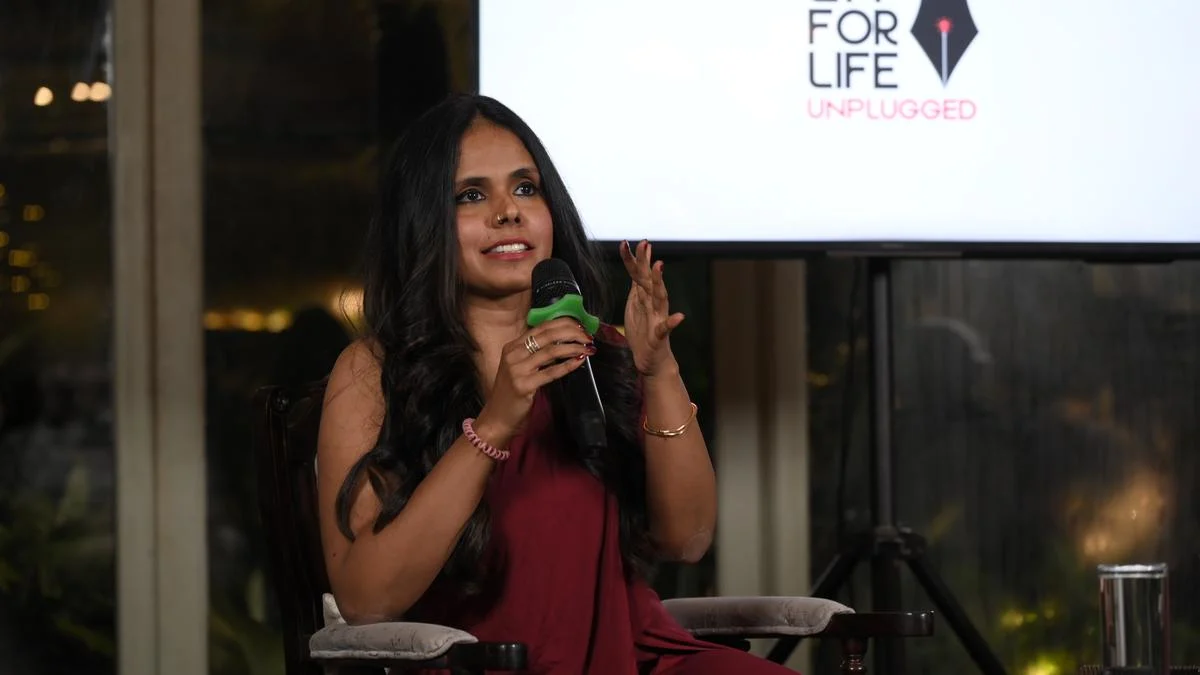
CHENNAI – In an era where the digital landscape has become the primary battleground for political and social discourse, the ninth edition of The Hindu’s Lit for Life Unplugged event served as a critical forum for dissecting the darker undercurrents of the internet. Held at the lush, atmospheric Wild Garden Bar at Amethyst, the event featured poet, author, and activist Meena Kandasamy in a wide-ranging conversation with Vaishna Roy, Editor of Frontline.
The evening focused on Kandasamy’s latest provocative work, Fieldwork as a Sex Object, published by HarperCollins. The discussion transcended the boundaries of a traditional book launch, evolving into a sociological autopsy of the modern Indian "manosphere," the weaponization of Big Tech against women, and the shifting definitions of political agency in an age of coordinated trolling.
Main Facts: The Unique Anatomy of the Indian ‘Incel’
The centerpiece of Kandasamy’s discourse was a sharp, localized redefinition of the "incel" (involuntary celibate). While the term originated in Western digital subcultures to describe men who feel marginalized and rejected by women—often characterized as "loners" who resent the "alpha male" or "Chad"—Kandasamy argued that the Indian iteration of this phenomenon is markedly different and significantly more dangerous.
"The Indian incel is fundamentally different from the conventional definition," Kandasamy told a captivated audience. "In the West, the incel is a loner who despises the ‘alpha.’ However, the far-right manosphere in India is actually full of ‘Chads.’ They do not operate in isolation; they operate in a corporatised manner."
This distinction is vital for understanding the current climate of online harassment in India. Kandasamy noted that these individuals are not social outcasts but are often well-integrated into political structures, utilizing "troll farms" and coordinated attack strategies. The goal, she argued, is not merely personal expression but "the political capture of power." By framing online misogyny as a organized political tool rather than a fringe psychological issue, Kandasamy highlighted how gendered violence in digital spaces has become a prerequisite for maintaining certain ideological hegemonies.
Chronology: The Genesis of ‘Fieldwork as a Sex Object’
The timeline of Kandasamy’s latest literary endeavor is rooted in both personal endurance and national tragedy. During the session, she traced the evolution of the book from its inception to its June release.
- 2017-2019: The Rising Tide of Harassment: As a vocal critic of caste-based oppression and right-wing extremism, Kandasamy became a primary target for digital vitriol on platforms like X (formerly Twitter). This period served as the "fieldwork" phase—an involuntary immersion into the mechanics of online abuse.
- 2019: The Pollachi Turning Point: Kandasamy identified the 2019 Pollachi sexual abuse and extortion case as the "fulcrum of blackmail" that informed her narrative. The case, which involved a network of men who filmed and blackmailed hundreds of women, underscored the terrifying reality of how technology is used to enforce patriarchal control.
- 2020-2023: Writing and Synthesis: During these years, Kandasamy synthesized her personal experiences with the broader sociological shifts occurring in India. She observed how the "Me Too" movement was being met with a fierce, organized backlash.
- June 2024: Publication: Fieldwork as a Sex Object was released, positioning itself as a critique of how the female body is commodified and scrutinized under the "male gaze" of the digital age.
By tracing this chronology, Kandasamy illustrated that her book is not just fiction or poetry, but a contemporary record of a "war on women’s agency" that has escalated over the last decade.
Supporting Data: Big Tech and the Illusion of Agency
Kandasamy’s arguments were supported by a scathing critique of Big Tech’s structural biases. She argued that the architecture of social media platforms is inherently misogynistic, prioritizing engagement metrics that often favor inflammatory, gendered attacks.
The Weaponization of AI
One of the most chilling points raised during the discussion involved the rise of Artificial Intelligence. Kandasamy noted that the traditional feminist discourse regarding the "female nude" or bodily autonomy has been bypassed by technology. "Anyone on the internet, with the use of AI, can denude a woman," she stated. This "non-consensual deepfake" phenomenon renders the concept of personal agency a "moot point" because the victim’s actual choices are irrelevant to the digital violence committed against them.
The Economy of Trolling
Kandasamy highlighted the "corporatised" nature of Indian troll farms. Unlike the spontaneous outrage seen in some Western contexts, Indian digital harassment is often a paid, systematic industry. Data from various digital rights organizations suggests that women in Indian politics and journalism receive a disproportionately higher volume of threats compared to their male counterparts, with caste-oppressed women receiving the most severe abuse.
Official Responses and Public Perspectives
The conversation, moderated by Vaishna Roy, also touched upon the institutional and social responses to these digital threats. Roy’s questions nudged the author to reflect on the effectiveness of movements like "Me Too" and the role of the "privileged" in activism.
On the ‘Me Too’ Movement
Kandasamy was firm in her belief that the gains made by the Me Too movement must be defended. While acknowledging that the "state of the world" might suggest a regression, she insisted that "no gains made across time have been lost." She urged women and allies across the political spectrum to "claim feminism for themselves" as a defensive and offensive tool against those who seek to "hound us into silence."

On Privilege and Performativity
Addressing a question on the "genuineness" of activists from privileged backgrounds, Kandasamy offered a pragmatic view. She suggested that while the privileged are often met with skepticism, the ultimate test is their commitment to the cause. Those who are "genuinely involved" and willing to face real-world consequences—such as imprisonment or physical risk—will eventually find support from the movements they join, provided their involvement isn’t merely "performative."
The "Good Feminist" Dilemma
In one of the evening’s lighter yet more profound moments, an audience member asked how to be a "good feminist." Kandasamy’s response—"I don’t know how one can be a feminist in bed"—elicited laughter but also pointed to the complexity of reconciling political ideology with the nuances of human desire and the private sphere.
Implications: The Future of Digital Safety and Political Resistance
The insights shared at The Hindu’s Lit for Life Unplugged have significant implications for the future of the Indian digital public square.
1. The Normalization of Digital Extortion
Kandasamy’s focus on the Pollachi case serves as a warning that digital blackmail is no longer an outlier but a systemic tool of patriarchal control. As AI becomes more accessible, the barrier to creating damaging, fake content lowers, necessitating new legal frameworks that go beyond current IT laws.
2. The Shift from Individual to Systemic Pushback
The author’s description of "corporatised" trolling implies that individual resilience is no longer enough. If the attack is systematic and political, the defense must also be organized. This suggests a future where digital self-defense and collective action are as central to activism as street protests.
3. The Crisis of Agency
If AI can "denude" any woman regardless of her choices, the feminist movement must redefine what "agency" looks like. It is no longer just about the right to choose what to reveal; it is about the right to exist in a digital space without one’s image being hijacked and weaponized.
4. Reclaiming the Narrative
Kandasamy’s presence and her book signify a refusal to be silenced. The primary implication of her talk is that the "inverse of patriarchy"—where women are vilified for exercising agency—must be met with a "shameless" reclaiming of identity. By "owning" the labels cast upon them by trolls, women can strip those labels of their power to shame.
Conclusion
The evening concluded with a book signing, leaving the audience to reflect on a sobering yet empowering message. Meena Kandasamy’s analysis of the "Indian Chad" and the corporatised manosphere provides a necessary vocabulary for understanding the specific brand of digital toxicity in India. As technology continues to outpace legislation, the voices of authors like Kandasamy remain a vital line of defense, reminding the public that while the tools of oppression may change, the spirit of resistance remains unyielding.
The ninth edition of Lit for Life Unplugged successfully highlighted that literature is not merely an escape from reality, but a "fieldwork" through which the harshest realities of our time can be confronted, analyzed, and ultimately challenged.
About the Author: Meena Kandasamy is an acclaimed poet, novelist, and translator whose work focuses on caste, gender, and the struggle for social justice. Her latest book, ‘Fieldwork as a Sex Object’, is available now.
About the Event: The Hindu’s Lit for Life Unplugged is a series of intimate literary sessions that bring readers and thinkers together to discuss contemporary issues through the lens of literature.
