Colombo, Sri Lanka – A significant moment of concern rippled through the Indian camp and among cricket fans worldwide on Day 1 of the second Test against Sri Lanka in Colombo, as star wicketkeeper-batter Rishabh Pant was forced to retire hurt after sustaining a painful blow to his left wrist. However, a much-needed wave of relief has since swept over the team, courtesy of a definitive update from India’s batting coach, Sitanshu Kotak, who assured reporters that Pant is expected to be fit to resume his innings on Day 2.
The incident occurred late in the day’s play, injecting an element of uncertainty into India’s promising first innings. Pant, renowned for his aggressive left-handed batting and crucial role behind the stumps, was struck by a short-pitched delivery from Sri Lankan pacer Lahiru Kumara. While the initial sight of Pant in visible discomfort was alarming, Kotak’s post-play statement has significantly alleviated fears, indicating that the injury is not as severe as initially perceived and that India’s strategy to build a formidable total remains largely on track.
This article delves into the sequence of events leading to Pant’s retirement, the significance of the coach’s update, the broader implications for the ongoing Test match, and Rishabh Pant’s indispensable value to the Indian Test squad.
The Incident Unfolds: A Moment of Concern on Day 1
The tranquil afternoon session at the R. Premadasa Stadium was momentarily shattered during the 58th over of India’s innings. With India steadily building towards a commanding total, the focus was on consolidating their position. Rishabh Pant, having just arrived at the crease, was looking to settle in alongside the in-form Devdutt Padikkal.
Sri Lankan fast bowler Lahiru Kumara, bowling from around the wicket, unleashed a sharp, short delivery aimed at Pant’s body. The ball, delivered with considerable pace and venom, caught Pant off guard. In an attempt to pull the ball behind square, Pant mistimed his shot, resulting in the ball crashing directly into his left wrist, just below the forearm. The impact was immediate and visibly painful.
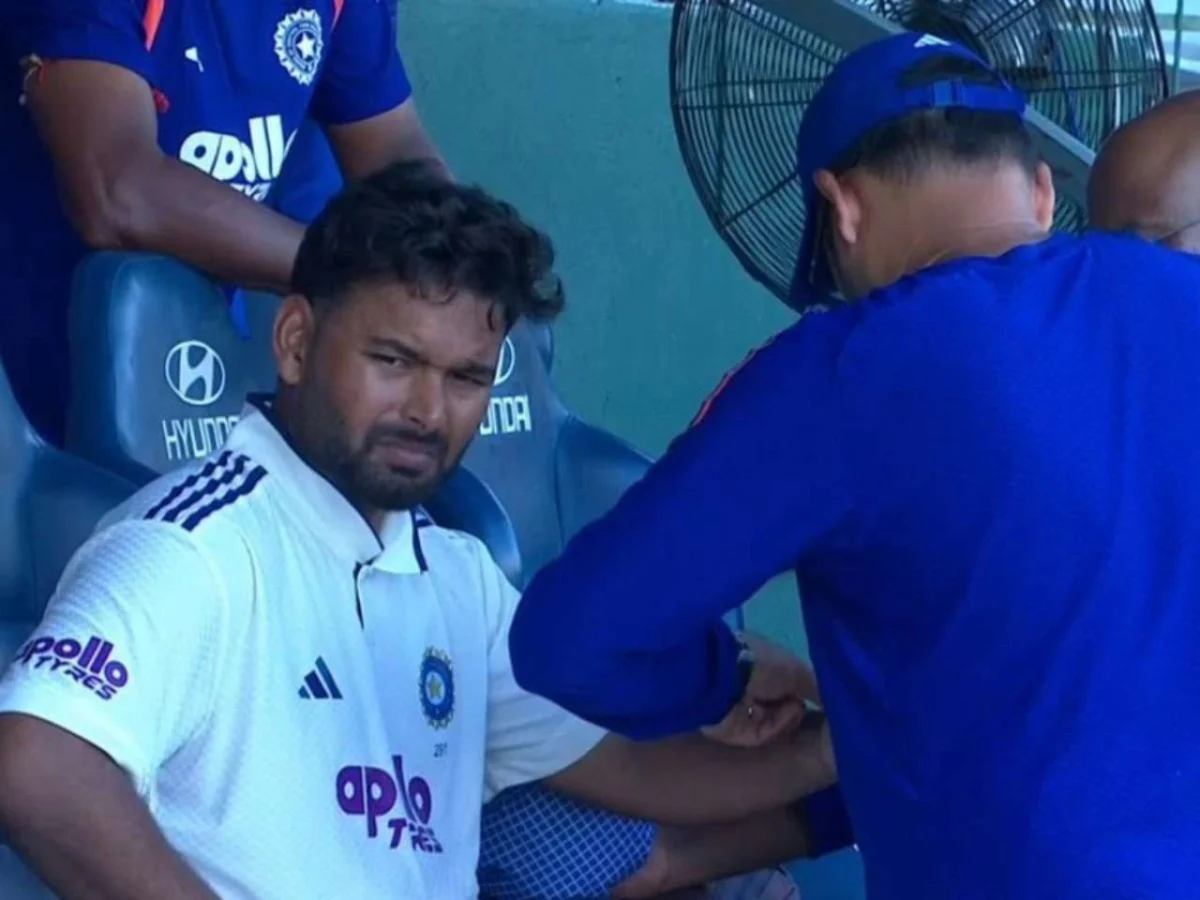
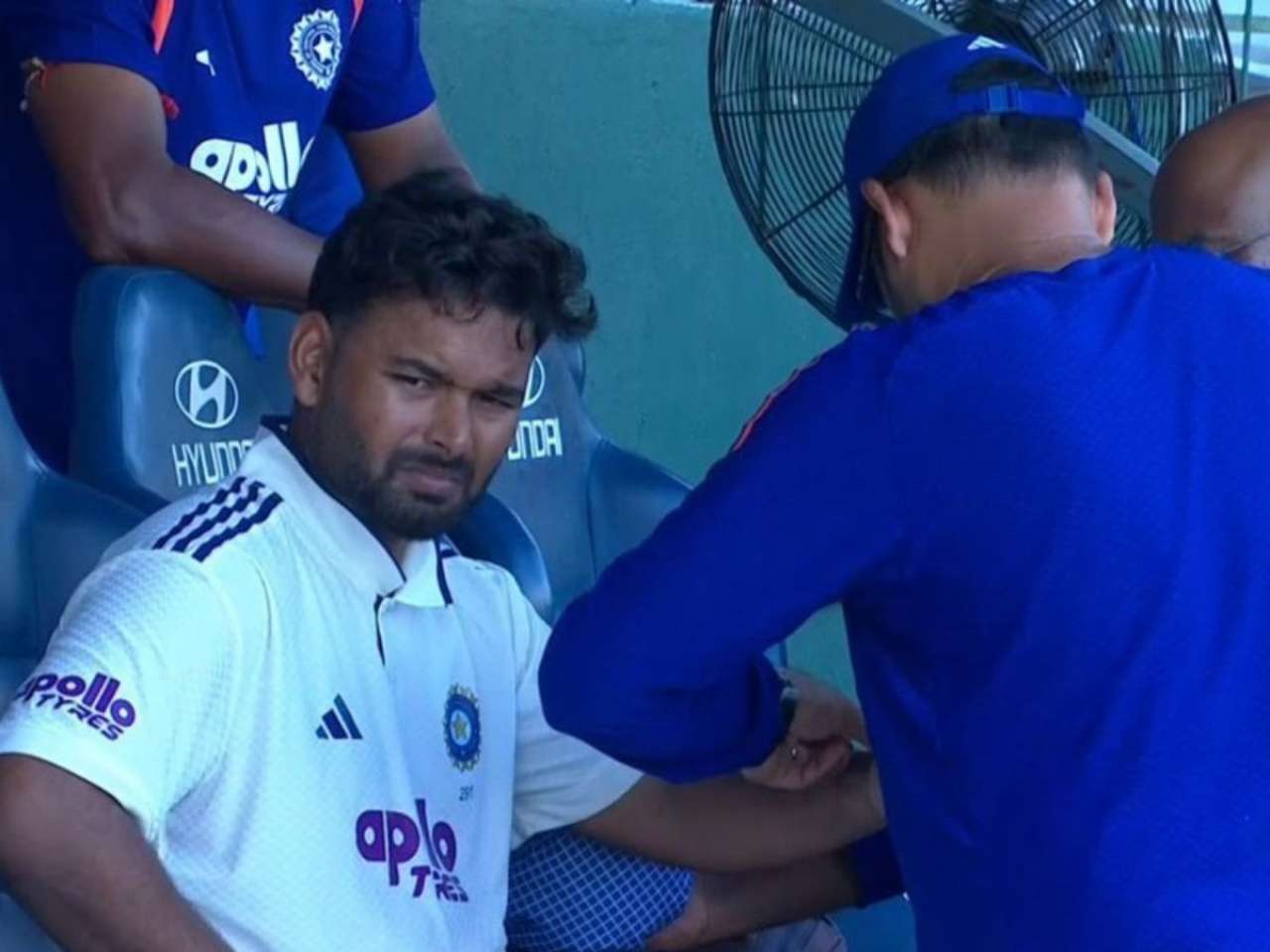
Pant’s reaction was one of clear distress. He immediately clutched his wrist, his face contorted in agony, signaling to the dressing room and the umpires that he was in considerable pain. The Indian team’s physio, Kamlesh Jain, rushed onto the field without hesitation, carrying an ice pack to provide immediate relief and assess the extent of the damage. The medical staff meticulously attended to Pant, applying an ice pack to control potential swelling and taping up his wrist in an attempt to stabilize it.
Despite the prompt medical attention and his earnest efforts to shake off the pain, Pant’s discomfort persisted. After a brief but intense discussion with the physio and the on-field umpires, it became evident that he was not in a suitable condition to continue batting. With just three runs scored off 15 balls, a visibly disappointed Pant reluctantly walked off the field, retiring hurt. The sight of the dynamic player leaving the field raised immediate concerns among teammates, coaching staff, and the legion of Indian fans following the game. Social media quickly became abuzz with well-wishes and speculation regarding the severity of his injury, highlighted by a widely shared tweet capturing Pant’s pained expression:
Rishabh Pant’s expression says it all. He looks to be in a lot of pain right now. Hope he’s okay and it’s nothing serious
#INDvSL #INDvsSL #SLvsIND
Following Pant’s departure, Ravindra Jadeja stepped in at number six, joining Devdutt Padikkal, who continued his stellar form, eventually bringing up his second Test hundred. Despite the setback of Pant’s injury, India managed to maintain their scoring momentum, although Sri Lanka’s bowlers, particularly with the second new ball late in the day, managed to keep the scoring in check. India concluded Day 1 at 300 for 5 in 85 overs.
Coach’s Reassurance: A Sigh of Relief for the Indian Camp
The immediate aftermath of Pant’s injury was naturally shrouded in anxiety. The prospect of losing a player of his caliber, especially in a crucial Test match, is always a worrying thought for any team. However, India’s batting coach, Sitanshu Kotak, delivered the news that the entire cricketing fraternity was eager to hear.
Addressing reporters after the close of play on Day 1, Kotak provided a crucial and reassuring update on Pant’s condition. "Rishabh Pant will be fine to bat tomorrow," Kotak stated unequivocally, directly from the source. This statement served as an immense sigh of relief, dispelling the immediate fears of a potentially serious injury that could sideline Pant for an extended period or even rule him out of the remainder of the match.
Kotak’s clear and concise message indicated that the medical assessment conducted by the team physio and doctors, likely including x-rays or scans, has shown no significant damage that would prevent Pant from returning to the crease. Such an immediate positive update is invaluable, not only for the morale of the team but also for the strategic planning moving into Day 2. It suggests that the pain experienced by Pant was primarily from the impact and subsequent bruising, rather than a more severe structural injury like a fracture.
The coach’s assurance implies that Pant will undergo further treatment and monitoring overnight, but the expectation is that he will be able to don his batting gear and contribute to India’s first innings total. This news allows the team management to proceed with their original game plan, without the need for drastic reshuffles or contingency measures that a more severe injury would necessitate. For the fans, it means they can anticipate seeing one of India’s most exciting cricketers back in action, continuing his aggressive brand of Test cricket.
Rishabh Pant’s Indispensable Role in the Indian Test Setup
Rishabh Pant’s presence in the Indian Test team extends far beyond his primary role as a wicketkeeper-batter; he is a genuine match-winner and a pivotal cog in the squad’s dynamics. His unique, aggressive, and often unconventional style of batting, particularly his fearless approach against fast bowlers, has redefined the role of a Test wicketkeeper.
Since his sensational emergence on the international stage, Pant has consistently delivered crucial performances, often turning the tide of Test matches with his audacious stroke play. Memories of his heroic innings at the Gabba against Australia, which sealed a historic series victory for India, or his vital contributions in home series against England, are still fresh in the minds of cricket enthusiasts. These performances are not merely statistical achievements; they embody his fearless spirit and his ability to thrive under pressure.
As a left-handed batter, Pant offers a crucial dimension to India’s predominantly right-handed batting lineup. His ability to disrupt the rhythm of opposition bowlers, forcing them to adjust their lines and lengths, is invaluable. He is known for accelerating the scoring rate, often converting half-chances into boundaries and shifting momentum decisively in India’s favour. In Test cricket, where attrition often dictates terms, Pant’s aggressive counter-attacking instincts provide a refreshing and effective strategy.
Beyond his batting, Pant’s wicketkeeping has also seen significant improvement, making him a reliable presence behind the stumps. His energy and constant chatter, particularly to the spinners, are an integral part of India’s on-field strategy, keeping the team motivated and focused.
The potential absence of a player of Pant’s caliber, even for a brief period, would create a significant void. It would impact not only the batting depth but also the delicate balance of the team, potentially necessitating changes in the wicketkeeping department and overall team composition. Kotak’s update, therefore, is not just about one player’s fitness; it’s about maintaining the integrity and strength of India’s Test XI. His return to bat will be a psychological boost, signaling to both teams that India’s formidable resources remain largely intact.
The Anatomy of a Cricket Injury: Wrist Blows and Recovery
Wrist injuries are an unfortunately common occurrence in cricket, particularly for batters facing fast, short-pitched bowling. The wrist, being a complex joint with numerous small bones, ligaments, and tendons, is highly vulnerable to direct impact. When a cricket ball, traveling at speeds exceeding 140 km/h, strikes the wrist, the consequences can range from a minor bruise to severe fractures or ligament damage.
The nature of the injury Pant sustained appears to be a contusion or a deep bruise, given the coach’s optimistic outlook. A direct impact can cause immediate pain, swelling, and restrict movement. The body’s natural response is to initiate an inflammatory process to repair the damaged tissues. Initial treatment typically involves the RICE protocol: Rest, Ice, Compression, and Elevation. The immediate application of an ice pack, as seen with Pant, helps to reduce swelling and numb the pain receptors. Taping or strapping provides compression and support, limiting further movement and potential damage.
For a deep bruise, recovery usually involves rest and pain management. The timeline can vary, but an assurance of being "fine to bat tomorrow" suggests that the team’s medical staff believes there is no underlying structural damage that would compromise his ability to hold the bat or face deliveries. If the injury had been more severe, such as a hairline fracture, the recovery period would be significantly longer, potentially ruling him out of the entire match or even the series.
Cricket physios and medical teams play a crucial role in assessing and managing such injuries. They utilize a combination of clinical examination, imaging techniques (like X-rays or MRI scans if necessary), and a deep understanding of biomechanics to determine the exact nature and severity of the injury. Their primary goal is to facilitate the player’s safe and timely return to play, ensuring that no long-term damage is incurred. In Pant’s case, the quick assessment and positive prognosis underscore the efficiency and expertise of the Indian team’s medical support staff.
Lahiru Kumara’s Aggression: A Bowler’s Weapon
The incident involving Rishabh Pant and Lahiru Kumara highlights a fundamental aspect of Test cricket: the strategic use of aggression by fast bowlers. Lahiru Kumara, known for his pace and ability to generate bounce, employed the short-pitched delivery as a tactical weapon. Bowling around the wicket, a common angle for right-arm pacers against left-handed batsmen, allows the ball to angle in towards the body before straightening or bouncing, creating discomfort and forcing the batter into defensive or awkward positions.
The short ball, or bouncer, is a legitimate and often highly effective delivery in Test cricket. Its purpose is multifaceted: to intimidate batters, to create doubt, to force false shots, and to potentially extract wickets through catches behind the wicket or in the cordon. While unfortunate for Pant, the delivery itself was a standard part of a fast bowler’s arsenal.
Kumara’s intent was clearly to unsettle Pant, who, despite his aggressive nature, can sometimes be vulnerable to well-directed short balls early in his innings. Such incidents, though regrettable, are an inherent part of the game’s competitive nature, where bowlers constantly test the mental and physical resilience of batsmen. The fine line between aggressive bowling and dangerous bowling is often debated, but in this instance, it appeared to be a legitimate delivery that, unfortunately, resulted in an injury. The spirit of the game dictates that while bowlers aim to challenge batters, there is no malicious intent behind such injuries.
India’s Innings: Responding to Adversity and Building a Platform
At the time of Pant’s injury, India was in a strong position, having overcome early setbacks to build a solid foundation. The team had navigated the initial overs cautiously before accelerating, primarily through the efforts of Devdutt Padikkal. Padikkal, who eventually went on to score a magnificent second Test century, displayed immense composure and skill, anchoring the innings beautifully.
The loss of Pant, even temporarily, could have had a psychological impact, potentially slowing down India’s scoring rate or making them more cautious. However, the subsequent arrival of Ravindra Jadeja, another seasoned all-rounder known for his gritty batting, ensured that India’s deep batting lineup could absorb the shock. Jadeja’s presence provided stability and allowed Padikkal to continue playing his natural game.
By stumps on Day 1, India had reached 300 for 5 in 85 overs. This is a respectable total, but the team will undoubtedly be looking to maximize their first innings, aiming for a score well in excess of 400 to put Sri Lanka under significant pressure. The pitch conditions, the opposition’s bowling attack, and the overall context of the series all play a role in determining what constitutes a "good" first innings total. In this Test, a substantial lead will be crucial for India to dictate terms and push for a victory. The fightback by Sri Lanka with the second new ball indicated that the pitch still offered something for the bowlers, making every run scored on Day 2 all the more critical.
Looking Ahead: Implications for Day 2 and Beyond
The news of Rishabh Pant’s fitness for Day 2 carries significant implications for India’s strategy and the trajectory of the match.
Impact on Day 2:
Batting Depth and Acceleration: Pant’s return to bat will allow India to deploy their full batting strength. His ability to score quickly can significantly boost India’s total, especially against a tiring Sri Lankan attack with the second new ball already taken. A rapid fifty or a quick century from Pant could take the game away from Sri Lanka.
Psychological Advantage: His presence at the crease will undoubtedly provide a psychological lift to the Indian dressing room and put pressure back on the Sri Lankan bowlers, who might have hoped for a diminished Indian batting lineup.
Strategic Flexibility: If Pant can bat and contribute effectively, it frees up the lower order to play more aggressively, knowing that a substantial total is within reach.
Broader Implications:
Series Context: India will be keen to secure a dominant first-innings lead to establish control in this Test. A win here would be crucial for their series aspirations. Pant’s full fitness is vital for their long-term plans in the series.
Future Fixtures: While Kotak’s update is positive for this Test, the team medical staff will continue to monitor Pant’s wrist closely. Ensuring his complete recovery and preventing any recurrence will be paramount for his availability in upcoming matches and tours. Cricket is a physically demanding sport, and managing player workload and minor injuries effectively is key to sustained performance.
Team Morale: The quick recovery and the coach’s confident update reinforce the team’s belief in their medical staff and the resilience of their players. Such incidents, when managed well, can even strengthen team bonding and resolve.
Should Pant be unable to keep wickets if his wrist is still bothering him significantly (though the coach’s statement suggests this is unlikely), India would have to consider alternatives. While the original article doesn’t specify other wicketkeepers in the squad, players like Ishan Kishan or KS Bharat are often part of Test squads as backup options. However, Kotak’s statement implies that Pant is expected to fulfill all his duties.
In conclusion, the initial alarm over Rishabh Pant’s injury has been largely quelled by India’s batting coach Sitanshu Kotak’s reassuring update. His expected return to bat on Day 2 is a massive positive for the Indian team, allowing them to pursue a dominant first-innings total without compromising their batting strength. As Day 2 dawns in Colombo, all eyes will be on Rishabh Pant, hoping he can shake off the remnants of the blow and once again unleash his formidable talent for the Indian cause.


)

)
)
)
)
)
)
)
)
)
)
)
)
